AI Short Dramas: A Successful Capital Relocation?
 11/18 2026
 558
Author | Li Ang
Editor | Li Xiaotian
Two years ago, Stella arrived in Wuhan with a handful of colleagues to start a short drama business. They rented a small office in an office building and hung a sign reading "Short Dramas" on the door. A neighbor from the company next door asked, "What's that?"
At the time, Zhengzhou—just over two hours' drive from Wuhan—had already begun undergoing earth-shaking changes.
Thanks to a mature feed-advertising ecosystem, Zhengzhou was the first to enter the short drama track back in 2022. Back then, Hongguo had not yet appeared, short dramas were still called "mini-program dramas," actors were interviewed online with a single card-based pass, and working on multiple sets at once was practically everyone's daily routine. Yet even in this wild frontier, industry rules had already taken shape: actors' pay rose by as much as 200% within three months, and shooting crews worked up to 15 hours a day.

A 3,000-square-meter feed-advertising shooting base with 26 sets in Zhengzhou, 2021. Image source: @Xibeiquan
In August 2022, Chinese Online's ReelShort launched, beginning Chinese short dramas' journey overseas. In 2023, Dianzhong Technology's DramaBox, Xinyue Times' GoodShort, and Jiuzhou Culture's ShortMax entered one after another. In November of that year, ReelShort topped the U.S. iOS entertainment chart, with cumulative downloads exceeding 11 million and net revenue reaching $22 million—setting the industry ablaze. A large number of domestic short drama companies became the first batch of entrants into "overseas short dramas."
As the newly rising short drama capital, Zhengzhou naturally took on the role without hesitation.
According to data released by Zhengzhou, in 2024 the city had about 30,000 micro-short drama practitioners and more than 820 related production companies; in 2025, those two figures reached 42,000 and 1,020 respectively. About 100 short dramas start shooting there every day, and production costs are 30% to 40% lower than in first-tier cities. This vast and cheap production capacity gives Zhengzhou the natural confidence to take on overseas orders. Since 2025, Zhengzhou has released more than 100 micro-short dramas overseas, with cumulative downloads of nearly 55 million.
"But Wuhan started very late. It barely got a taste of the live-action short drama broth."
When Stella first arrived in Wuhan at the end of 2024, she already felt the rhythm was out of sync. At that time, Wuhan did not yet have a true short drama aggregation base, hit works were few and far between, and leading short drama platforms such as Jiuzhou had only a dozen or so employees there. In February 2025, the Yangtze River Audio-Visual Micro-Short Drama Industrial Base was completed, bringing Wuhan a bit of short drama flavor—but not long after, this high-profile base ran headlong into AI.
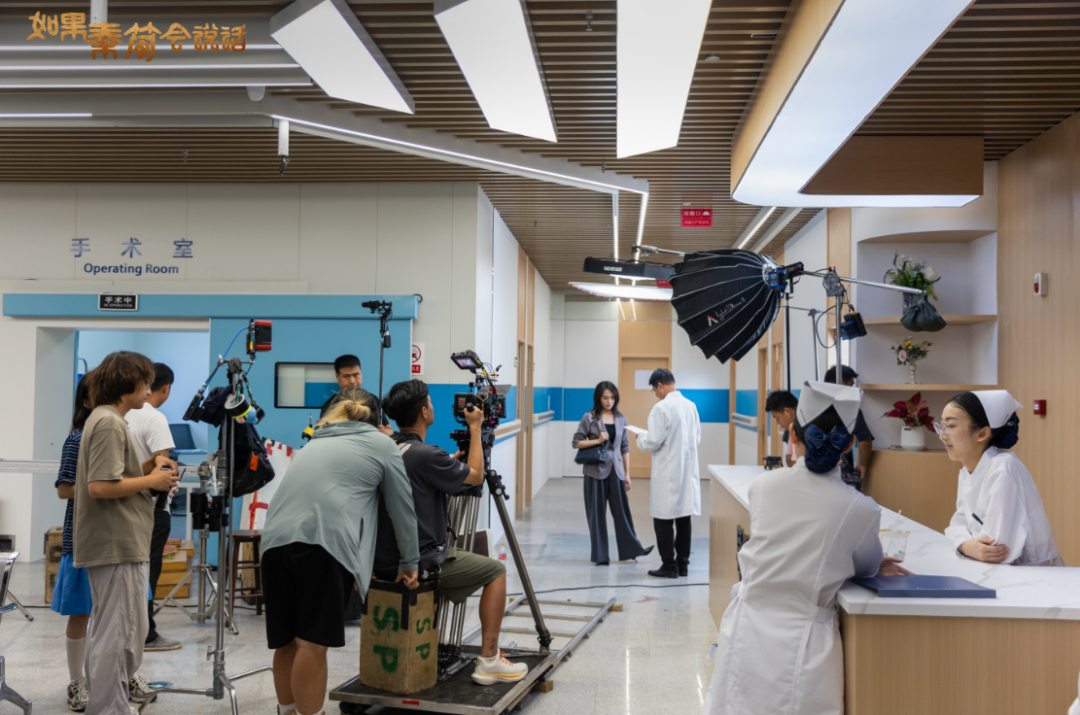
Image source: @ If Qin Jian could speak
Confusion, longing, fear—practitioners faced the transition with complex emotions, and the market, at this unavoidable turning point in the industry, was seeking new opportunities. More than a month ago, when Xiaguang Society spoke with Deng Chengye, CEO of Yun Workshop, he mentioned the brand-new industrial landscape spawned by this phase shift—AI short dramas have given rise to a new batch of "Four Little Dragons" (Hangzhou, Chongqing, Nanchang, Wuhan), and Wuhan is among them. As for the reason, the Wuhan Animation Institute providing solid talent reserves for the local area is probably an extremely important point.
So we wanted to explore whether this prosperity is real, and also try to see clearly the true situation of Wuhan's short drama industry beneath the word "prosperity."

Wuhan: The First to Bid Farewell to Live-Action Short Dramas
Four years ago, editor Xiao Li graduated with a major in film and television post-production, spent 8,000 yuan on a training course, and followed project teams to formally enter short drama post-production. In 2024, he first encountered AI when a director at his company studied a project together with him.
"At that time, Kling and Jimeng had not yet set up paid memberships, and videos could be generated for free. We used these platforms and official websites to learn how to generate videos."
But Xiao Li, who had already gotten an early taste, did not anticipate that the industry's contraction, transformation, and generational turnover would develop so quickly.
"By March this year, you could hardly find any live-action short drama editing jobs in Wuhan."
Xiao Li told Xiaguang Society with a sigh.
The reason behind this is that Wuhan's short drama ecosystem is "scattered."
Wuhan's top short drama companies are few and far between. In Xiao Li's view, the only one that truly deserves to be called top-tier is "Er Shi San Lou." Most companies have neither their own shooting teams nor talent agencies with signed actors, and director teams mostly take on projects elsewhere. The entire industry chain is incomplete, and they can only rely on external resources to keep operating.
But at the same time, this also means Wuhan has little baggage in transformation: unlike Zhengzhou and Hengdian, which have costly built live-action sets and mature crews too big to shed, these heavy assets have instead become sunk costs that are hard to reverse in the AI era—reluctant to part with, and impossible to turn around. Wuhan's live-action short drama ecosystem was "assembled" from the start, with no early-stage investment worth clinging to. When live-action short dramas receded, Wuhan was hit first, and was also the first and most thorough in pivoting fully to AI.
At this critical turning point, Wuhan's "weakness" turned into its "strength."
Around the Spring Festival of 2026, models such as Vidu Q3, Kling 3.0, and Seedance 2.0 collectively crossed the threshold of "mass-producible series," solving the problems of character consistency and audio-visual synchronization in AI video generation. Practitioners also did the math: taking an annual membership to Seedance 2.0 as the standard, and estimating a 10:1 success rate per generation attempt, the computing cost for one minute is roughly 60 yuan—a cliff-like drop compared with the previous mainstream quote of 2,000 yuan per minute.
Coupled with incentives from platforms such as Taobao, Kuaishou, Baidu, and Yuewen, AI short dramas instantly became the trending direction for the whole industry. In March, AI simulated live-action dramas accounted for 65% of new dramas on Douyin; a month earlier, that figure was only 12%.
In this wave, Wuhan quickly stood out—after the Spring Festival, "Huo Qubing," directed by Hubei director Yang Hanhan, went viral across major social platforms. A practitioner at a leading short drama company told Xiaguang Society that she immediately received a task to find the production team's contact information and, along the way, find out how much money the drama actually made.
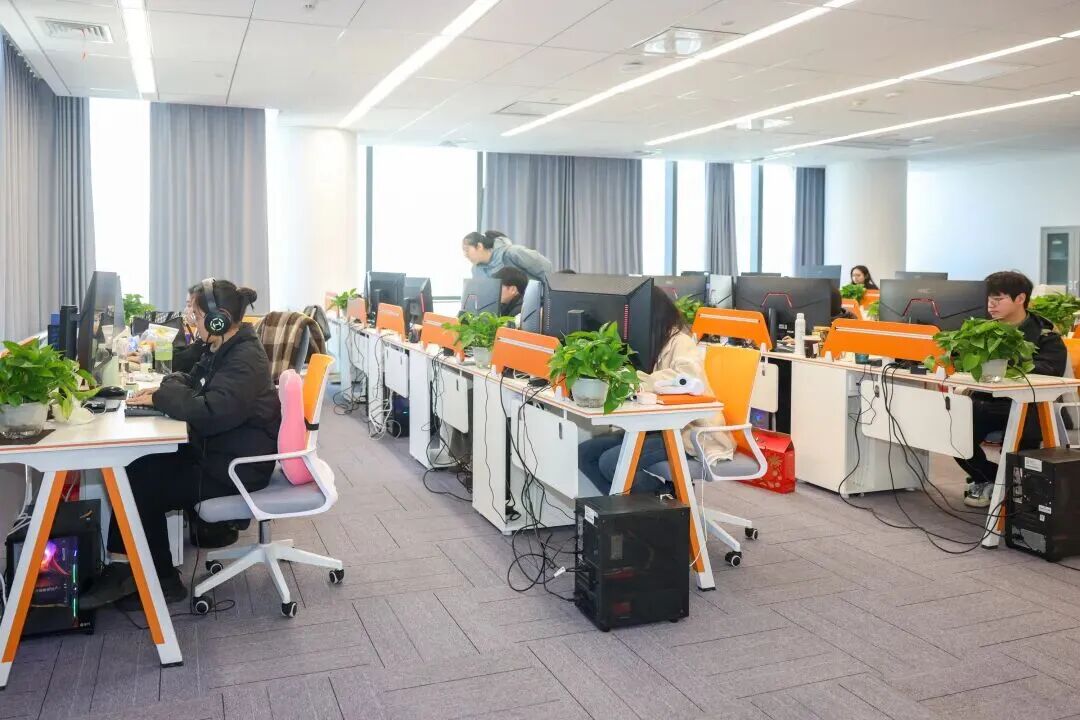
Image source: @ China Optics Valley
The industry influence brought by a hit was immediate. This time, the Wuhan government's policy response in support of the AI short drama and comic drama industry was exceptionally swift.
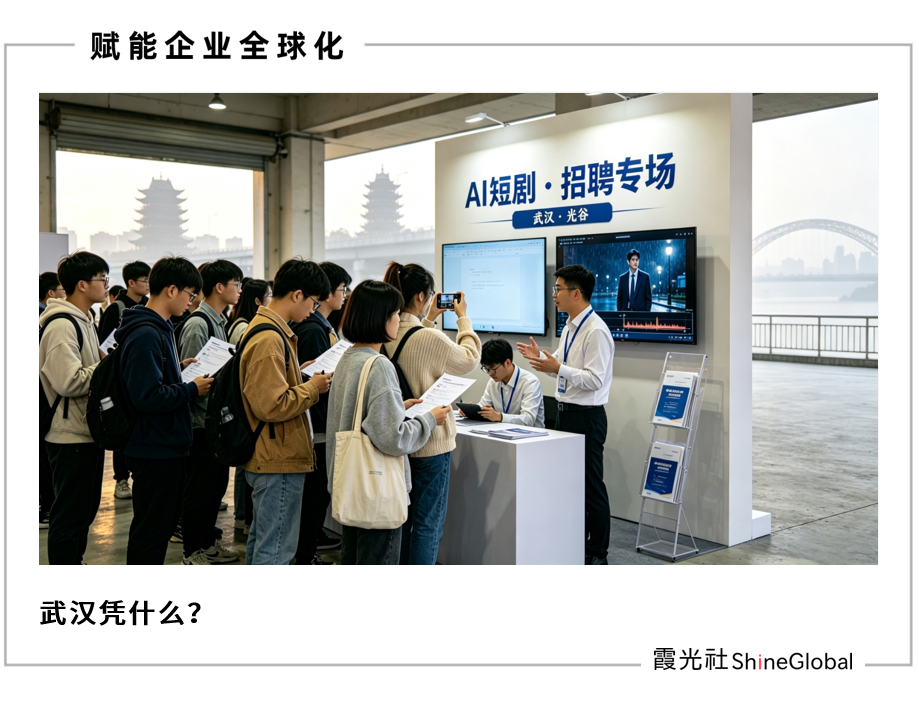
Optics Valley (Wuhan East Lake High-Tech Development Zone) built a free workstation OPC community of about 3,000 square meters, gathering about 80 AI drama and comic drama companies with more than 4,000 practitioners. Among them, in the first half of 2026, Duomi Network's revenue reached 300 million yuan, exceeding the whole of last year, and full-year revenue is expected to reach 600 million yuan.
In April 2026, the AI Film and Television Drama Industrial Base was officially unveiled, and an AI comic drama competition was launched at the same time, with six emerging projects signed up in the first batch. Urban landmarks such as the Optics Valley Sky Rail and pedestrian streets are open to production crews free of charge, and enterprises renting intelligent computing power can receive subsidies of up to 1 million yuan.
And this is also the key reason why Wuhan's own "strengths" could be carried forward in the era of AI short and comic dramas and achieve a leapfrog overtake. Unlike live-action short dramas, the core means of production for AI short dramas have shifted from sets and actors to computing power, models, and technical talent—exactly Optics Valley's strong suit. As a national cultural export base, Optics Valley was already built on optoelectronics and the digital economy, and has gathered dozens of short drama upstream and downstream enterprises, with more than 5,000P of intelligent computing power and a talent reserve of 800,000 university students.
The industry's development has been faster than expected—in just half a year, the AI comic drama company Lingjing Wanwei's team expanded from 18 people to over a hundred, with orders already booked through 2027; a batch of established live-action short drama companies such as Paopao Film and Laika Film also pivoted to AI short dramas this year.
"In Wuhan, no one can remain in the live-action short drama era anymore."
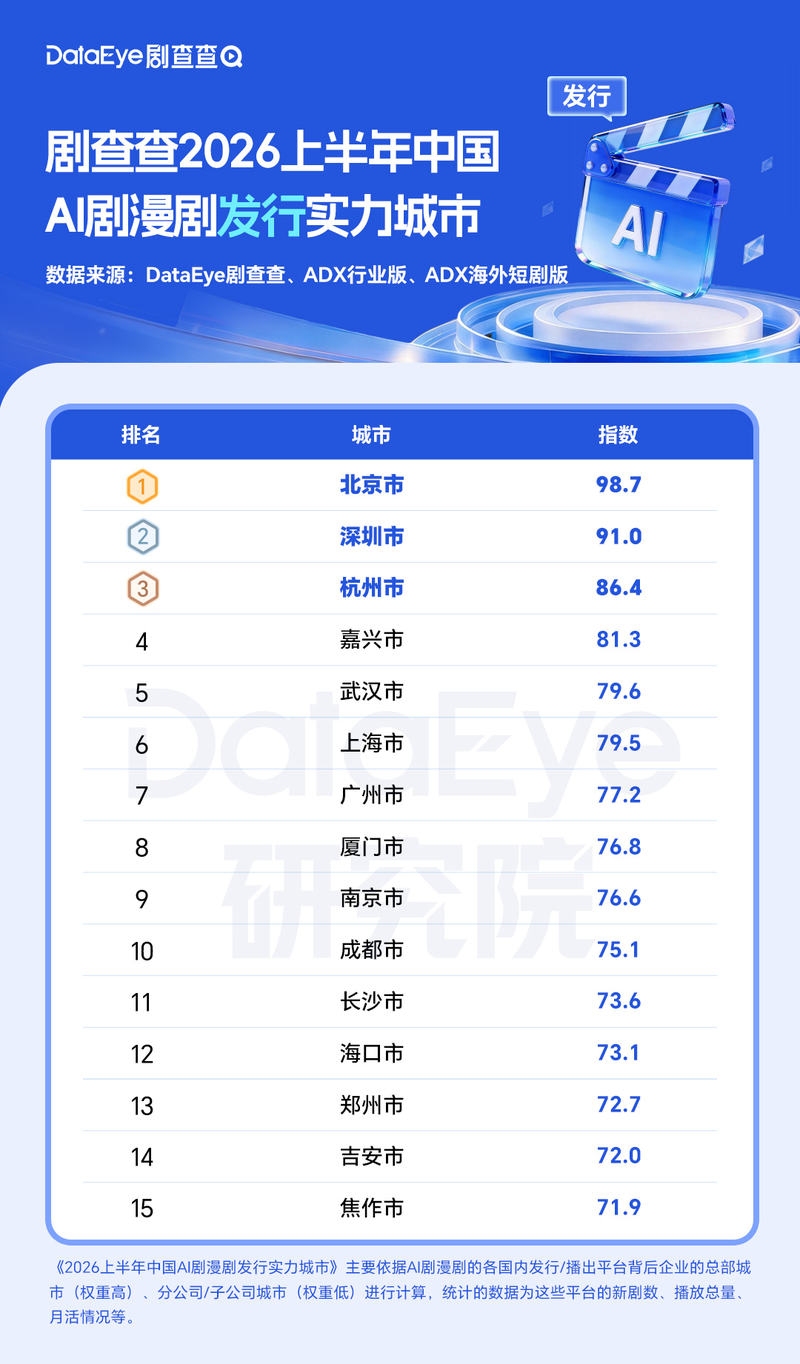
According to DataEye's "2026 First-Half Comprehensive Strength City Data Report on China's AI Drama and Comic Drama Industry" released in August this year, Wuhan ranks near the top of the AI drama and comic drama publisher list with a score of 79.6. Its advantages lie in a formed industrial cluster, abundant university talent supply, complete computing power support, combined with local web novel IP resources, continuous policy support for industrialized AI drama and comic drama production, outstanding hit-producing capability of local production teams, significant cost advantages, and rapid growth of leading enterprises driving coordinated upstream and downstream development.

The University City of the AI Era: The More People, the Less They Are Worth
"This place has the best student source in the country. Many people, few demands."
This is the view of most people when chatting with AI short drama practitioners about Wuhan.
Like Zhengzhou, Wuhan is a city "filled" with university students. According to 2025 statistical bulletins from various localities, Wuhan has 1.444 million university students, second only to Guangzhou and Zhengzhou and ranking third nationwide—more than twice that of Hangzhou. Zhengzhou's ability to become a "vertical studio" in the live-action short drama era owed much to its vast and cheap young labor force; now, Wuhan has replicated the same path in the AI short drama era.
AI short dramas appear to save actors and sets, but are essentially still a labor-intensive industry: writing prompts, repeated generation attempts, editing, and review—every step requires a large number of hands. More critically, AI has flattened the skill threshold. Post-production work that once required years of experience can now be handled by a university student who has taken a training course. Experience is no longer scarce, and people can be replaced at any time.
Editor Xiao Li feels this most deeply. He said live-action short dramas were once an industry where "gold could be picked up everywhere." At that time, post-production for premium short dramas could quote 300 to 400 yuan per episode, and even non-premium ones were around 150 yuan. "Freelance editors around me could earn up to 30,000 to 40,000 yuan a month, with an endless stream of orders. Some even quit their full-time jobs, feeling that office work got in the way of taking gigs." Now, the post-production price for AI short dramas has fallen to 120 yuan per episode, or even just a few dozen yuan. "People who have tasted the sweetness are unwilling to take them, but someone always will, and the price will only be pushed lower and lower."
Those taking the work are pouring continuously out of universities.
Zhang Ling, a sophomore at a university in Wuhan, interned for three months this summer at a short drama company in Optics Valley: alternating big and small weeks, working as late as 10 p.m., 50 yuan a day. "And I had to try really hard to even get this." For this internship, she spent 3,000 yuan on an AI short drama training course and asked a teacher to introduce her before she got the opportunity. "Many companies require experience or a portfolio. I took video clips I made to look for internships, and no one wanted them at all."
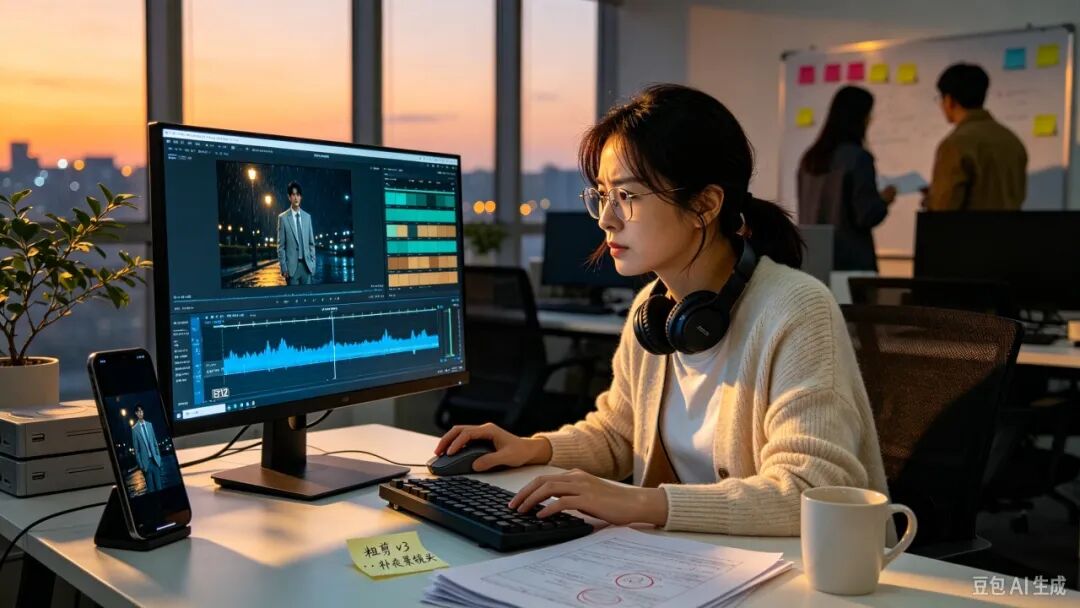
First spend 3,000 yuan, then earn 50 yuan a day. Many people, so people are cheap; AI has arrived, so people are even cheaper.
But many people does not mean easy to use. The hasty transformation has left the entire industry still in a rough stage, with wildly uneven quality.
In May this year, Xiao Li joined an AI short drama company that takes on overseas projects. The project requirements were actually not high, but the boss was a layman who only assigned tasks and did not understand review or quality control. "The boss doesn't understand, so employees can be perfunctory. As long as they deliver a finished product, the boss thinks there's no problem." As a result, the finished product was so poor that the client scolded the boss, the boss scolded the employees, and dissatisfaction was passed down layer by layer. Employees could not withstand the pressure, the boss could not land projects, and the company hovered on the edge of survival.
Employers are just as vocal with their complaints. Leon, a practitioner who switched to AI short dramas around 2023, put it bluntly: today's fresh graduates "honestly can't contribute, demand high pay, and want to reform the workplace." Director Ka, who produces premium short dramas in Wuhan, spent half a year recruiting and in the end only two master's graduates in the arts stayed on. "None of the other fresh graduates stayed." To find people who could genuinely deliver, he set up a free training class himself, provided computing power at no cost, and led students through projects for three months, retaining 19 out of 22. Several team leaders teach students during the day and rush projects at night. "If we didn't teach students, it might be easier than now, and we'd earn more." On one side is "too many people, not worth much"; on the other is "too many people, not easy to use." Everyone caught in the middle has already felt firsthand the deformity and pressure of this industry. A few weeks ago, Xiao Li submitted his resignation. He wants to give premium short dramas another try, or simply go try his luck in Hangzhou, "at least the average salary can rise from four or five thousand to six or seven thousand." But he isn't sure either: "I don't know how long AI short dramas can last, or whether they'll soon disappear like live-action short dramas." Zhang Ling, who handled nearly 50 projects in three months, also feels it is far from enough, "because not a single hit was made." The school still has no matching new courses, so she and her classmates can only teach themselves. "This road still has a long way to go," she said.

-
![]()
Share Link Won't Open: Tracing a URL Parameter Placement Bug
-
![]()
BAIC Group | October Terminal Sales: Product Mix Across Four Brands and 31 Models
-
![]()
Mercedes-Benz China Retail Sales in October: 28,820 Units — How Did Beijing Benz and smart Perform?
-
![]()
Tesla Invests €3 Billion to Upgrade German Factory, Sells Robotaxi — but You Still Pay Monthly to Drive
-
![]()
ARCFOX Slashes Huawei Smart Driving Threshold to the 150,000 Yuan Mark
-
![]()
The Korean Car Conundrum: Boxed In by the Supply Chain, Outmatched in Overseas Markets
-
Has Apple Really Cured the "Rogue App" Epidemic Among Domestic Apps?
-
![]()
AI Short Dramas: A Successful Capital Relocation?