Tesla Invests €3 Billion to Upgrade German Factory, Sells Robotaxi — but You Still Pay Monthly to Drive
 11/18 2026
 524
Produced by Zhineng Technology
On November 13, Tesla sent private purchase invitations for the Cybercab to select U.S. customers, priced at $29,990, with an autonomous driving subscription at $299 per month. The order page lists an estimated delivery date of December 2026.
Three days later, on November 16, Tesla announced an investment of approximately €3 billion to add Cybercab production facilities at its Gigafactory Berlin-Brandenburg in Grünheide, Germany, with production slated to begin in 2029 and a planned annual capacity of up to 1 million vehicles.
Now the car is on sale and the factory is gearing up for large-scale manufacturing — and both raise the same question: what exactly does the buyer actually get?
01 The Car Is Yours, but Driving Is Rented by the Month
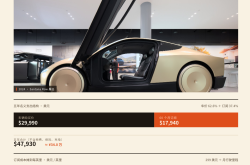
When the Cybercab first debuted in October 2024, it was a two-seater with no steering wheel and no pedals, upward-opening doors, two seats, and a large screen. From the very beginning of its design, no place was left for a driver.
In April 2026, Tesla started production in Texas. On September 3, it began carrying Robotaxi passengers in Austin, and the third-quarter financial report listed this as a milestone for the quarter.
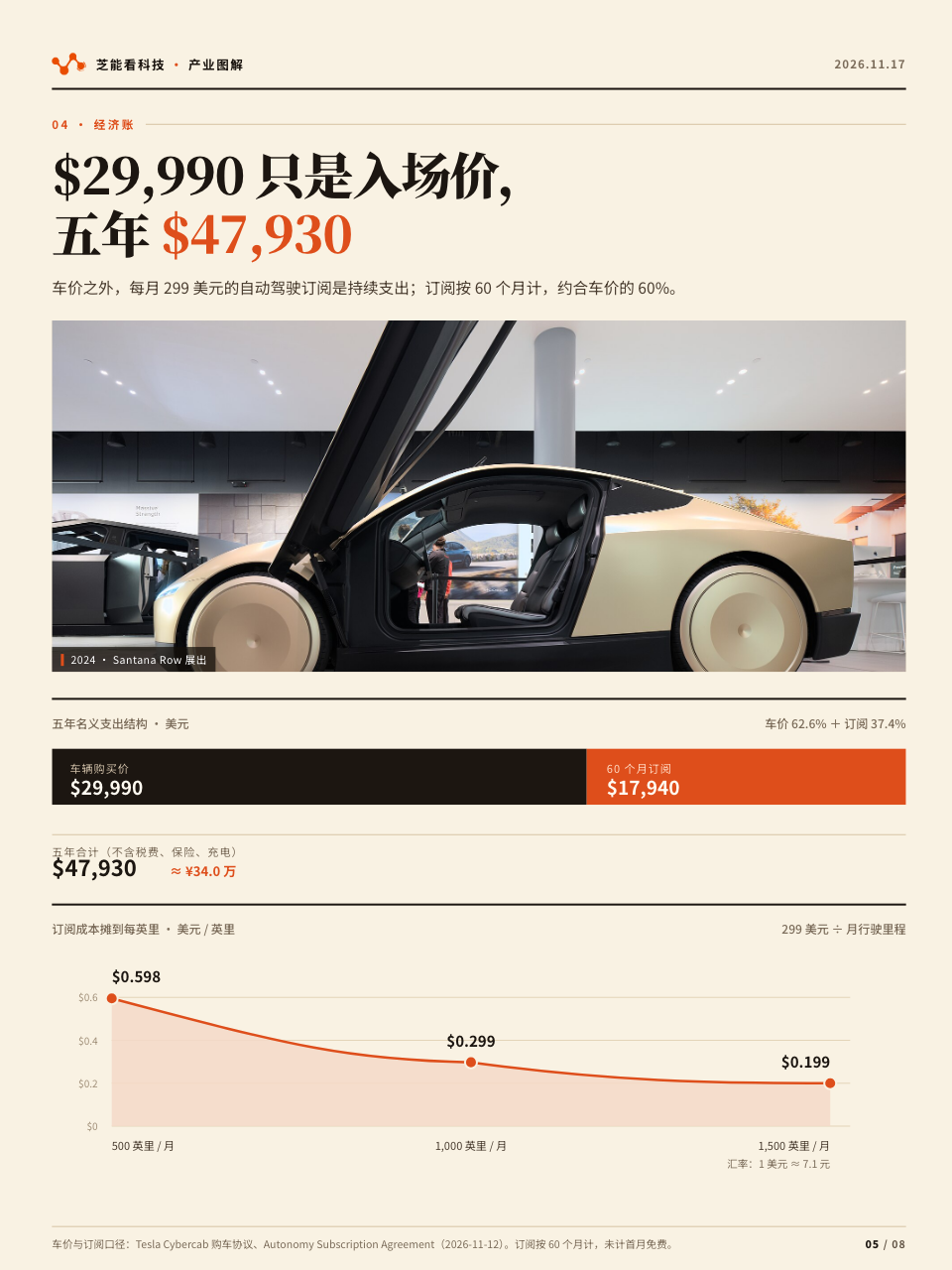
On the sales side, the order page shows a vehicle price of $29,990, plus a mandatory Autonomy Subscription of $299 per month, a $1,000 deposit, and estimated delivery in Austin in December 2026.
The document that truly clarifies this transaction is the Tesla November 12, 2026 version of the "Autonomy Subscription Agreement."
The first clause states plainly: without a valid autonomous driving subscription, the Cybercab cannot operate.
The car must remain connected, receive software updates, and rely on a mobile app to set destinations, manage trips, and arrange maintenance.
This is a different matter from buying a Model 3 or Model Y.
Traditional car owners who do not subscribe to advanced driver assistance can still hold the steering wheel themselves; the Cybercab offers only limited manual control through the in-car touchscreen to move the car at a maximum speed of 2 miles per hour (about 3.2 km/h), and this cannot be used as a way of driving on public roads.
After canceling the subscription, there is no option to revert to manual driving.
The subscription price is not locked in either; Tesla can adjust it with one month's notice. Software connection failures, mandatory updates, unfinished maintenance inspections, or improper use may all restrict vehicle operation; under certain circumstances, Tesla can remotely limit the vehicle, disable functions, or place it in a safe state.
The owner owns the physical vehicle, while Tesla continuously provides and controls the core driving service.
The manufacturer extends from one-time hardware revenue to monthly fees, and also takes on responsibility for remote support, connectivity services, part of maintenance, and software operation.
$29,990 is only the entry price.
At the current monthly fee, a five-year subscription of 60 months would cost $17,940, bringing the total with the vehicle price to $47,930; if one month of free subscription is included, the nominal expenditure would be reduced by $299 accordingly. Insurance, taxes, charging, parking, and maintenance not included in the subscription are not yet counted.
Mileage determines the software cost per kilometer: at 500 miles (about 805 km) per month, $299 works out to $0.598 per mile; at 1,000 miles it drops to $0.299; at 1,500 miles it drops to $0.199.
◎ For households with short commutes that often use public transportation, a car that seats only two people and still requires continuous payment is hard to justify on the bare vehicle price alone.
◎ For people whose daily life radius is concentrated, who travel frequently, and who find it inconvenient to drive themselves, it offers new possibilities: no need to hire a driver, and no need to hold the steering wheel themselves.
02 Where This Car Can Go Is Determined by Maps and Regulation
The Cybercab agreement is very detailed: the vehicle can only drive within Tesla-supported Robotaxi geofences and operational restriction areas, and Tesla can expand, shrink, or relocate operating areas through software, maps, or notifications.
The areas, times, and conditions supported for private vehicles usually follow Tesla's Robotaxi service, but are not guaranteed to be completely identical.
This changes how the car is used.
Users living in downtown Austin might be able to take the car from home to work, shopping malls, and restaurants; once a destination falls outside the supported area, there is no path back to manual driving.
If operational restrictions are triggered by highways, heavy rain, road construction, or communication conditions, whether a trip can be completed also depends on system support.
Cross-city family visits, airport pickups, and weekend short trips—important scenarios that traditionally belong to car consumption—mean that if geofences remain scattered as isolated cities for a long time, the Cybercab is better suited to local high-frequency short trips rather than being a family's only vehicle.
Expanding operating areas also requires keeping pace with remote assistance, accident handling, after-sales maintenance, cleaning, insurance, and adaptation to specific roads.
Each new city requires reorganizing service capabilities; software can be replicated, but operational responsibility cannot.
Whether the car can be sent out to take orders and earn money after purchase is another question.
Tesla's November 2026 private vehicle purchase agreement limits vehicle use to personal, non-commercial purposes. Without written authorization or in-car function activation, owners may not add it to the Tesla Robotaxi Network, nor use it on third-party ride-hailing, delivery, or rental platforms.
The imagined revenue model of taking the owner to work in the morning, automatically going out to take orders during the day, and coming back to pick someone up at night does not hold under the current private agreement.
Tesla's official website also has a registration entry for commercial purchases of single vehicles or fleets, which belongs to another contractual path; management also said on the third-quarter earnings call that most Cybercab deployments are expected to remain Tesla-owned and provided as transportation services.
Fleet utilization, cleaning, maintenance timeliness, passenger disputes, and safety responsibility all need unified management. When just starting out, keeping the cars in its own hands makes problems easier to control.
The United States and Europe face two sets of regulatory exams.
On September 4, 2026, the U.S. National Highway Traffic Safety Administration (NHTSA) began reviewing the basis for Tesla's self-certification that the Cybercab complies with federal motor vehicle safety standards, focusing on how products without traditional driving controls apply under the regulations.
Europe already has a framework: EU Implementing Regulation (EU) 2022/1426 sets out the technical and procedural requirements for type approval of ADS systems for fully automated vehicles, and Germany has established a legal framework for L4 autonomous driving in designated areas since 2021, requiring approval for vehicles and operating areas.
German local media reported on November 16 that the Cybercab has not yet obtained relevant permits in Germany and the European Union.
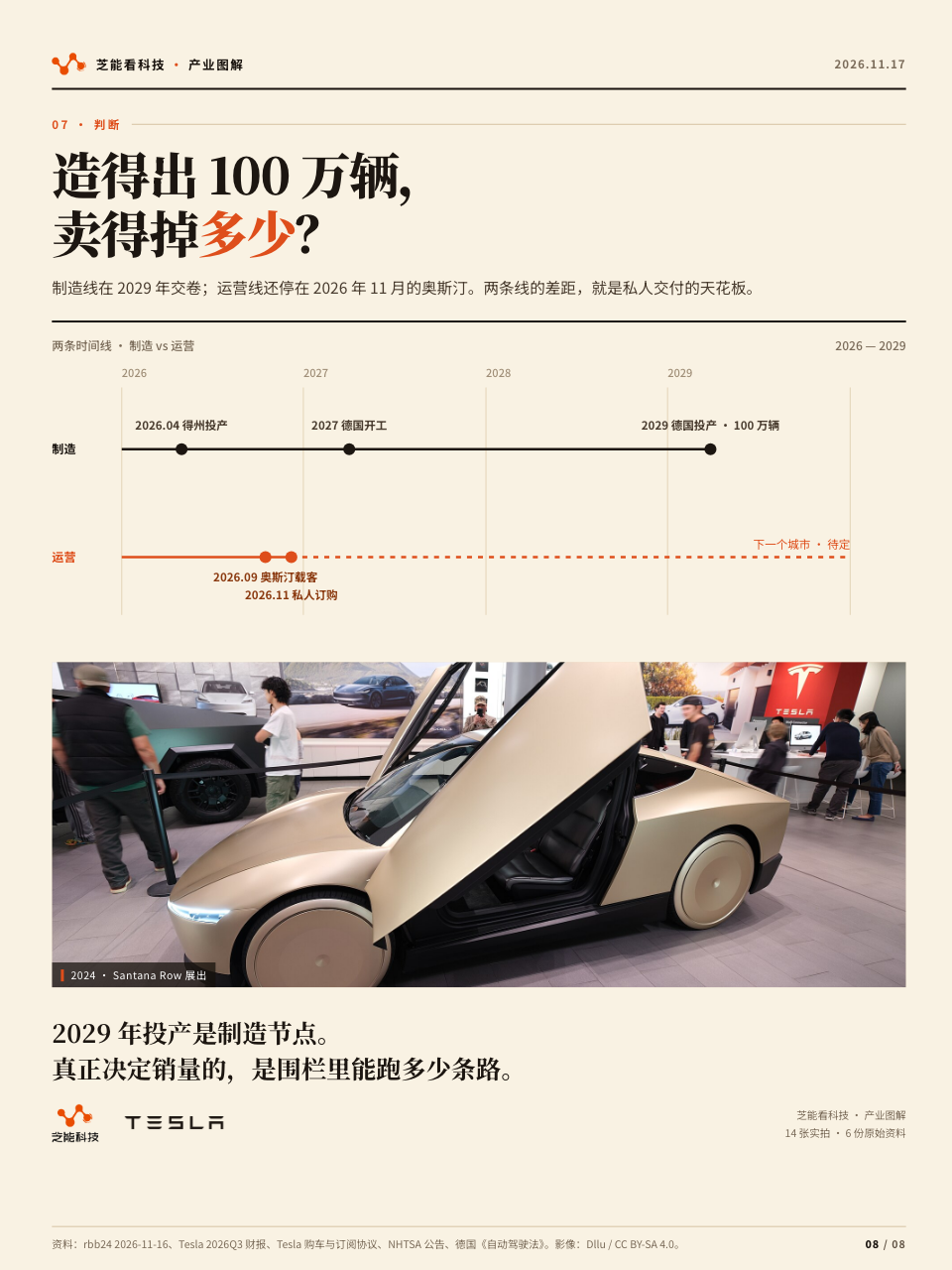
2029 is the manufacturing milestone. Which road sections are allowed, who performs remote technical supervision, and when manual intervention is required must be determined by regulatory and operational arrangements.
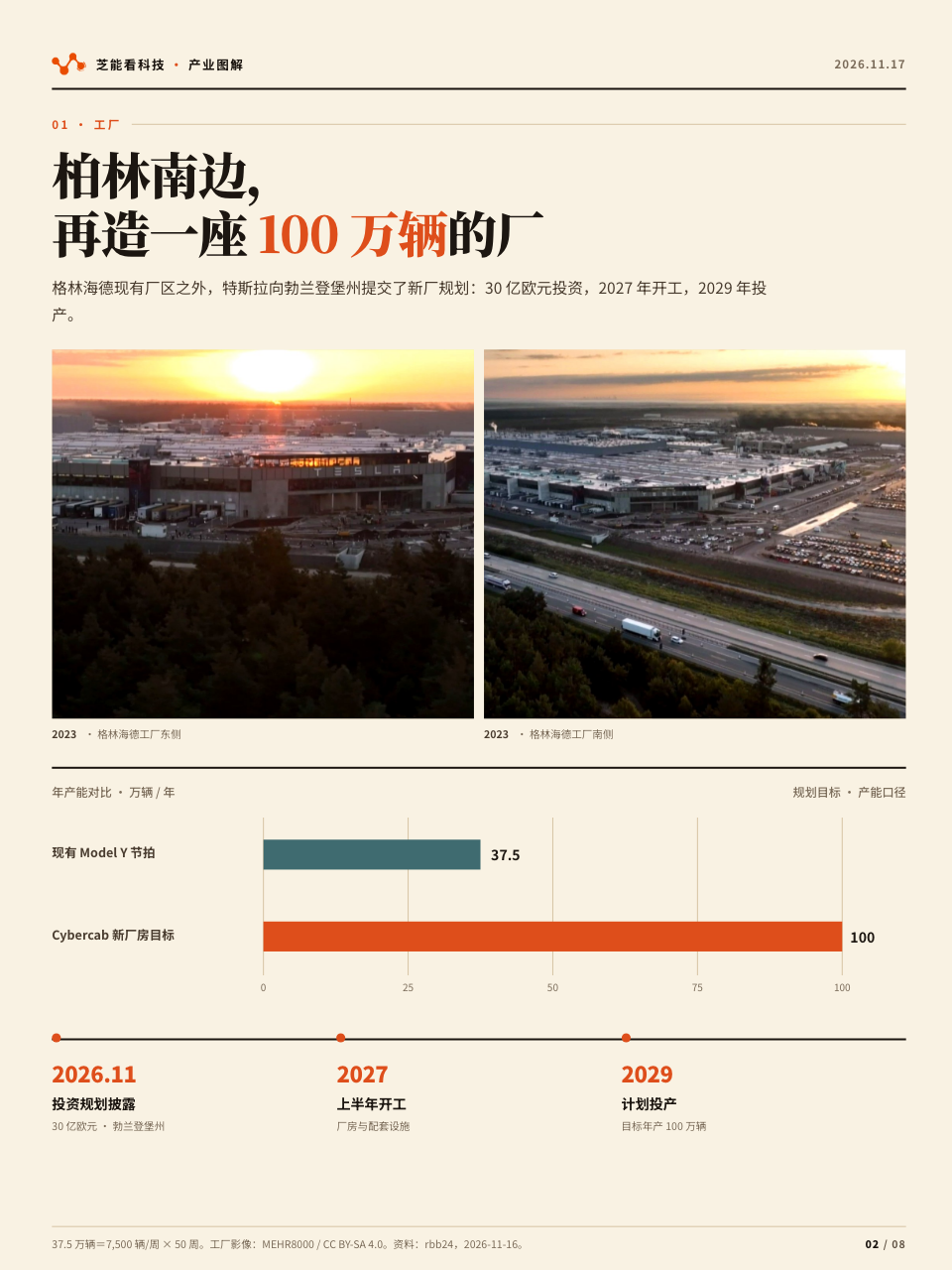
The €3 billion in Germany is mainly directed to production facilities and basic supporting infrastructure, including sewage treatment and other infrastructure, with project planning to start in the first half of 2027.
The plant currently mainly produces Model Y. Based on the recent production line target of 7,500 vehicles per week, annualized output is about 375,000 vehicles; if a million-vehicle plant is built, manufacturing processes, parts supply, and organizational forms will all need to be redesigned around high cycle rates.
But the sales pace of Robotaxi depends more on whether a city is open and whether there is an operable road network. What determines effective capacity is how many vehicles are approved globally each year, how many cities support operations, and how high a utilization rate vehicles can achieve.
The plant still has to go through phased permits for land, water resources, and environmental protection, which is a separate approval chain from L4 road operation licenses.
Summary
The Cybercab separates the body, battery, autonomous driving algorithms, online connectivity, operable maps, and service contract. The owner pays, but cannot obtain full driving capability without the service contract.
Tesla thus gains a more stable structure: hardware sales recover cash, subscriptions cover software and services, and the self-operated fleet charges by trip or mileage.
New troubles also follow: whether the car can still receive subscription support after five or six years, how second-hand transfers work, who bears asset depreciation when operating areas shrink, and how responsibility is divided among the owner, autonomous driving service provider, and operator in the event of an accident—all of these remain questions.
-
![]()
Share Link Won't Open: Tracing a URL Parameter Placement Bug
-
![]()
BAIC Group | October Terminal Sales: Product Mix Across Four Brands and 31 Models
-
![]()
Mercedes-Benz China Retail Sales in October: 28,820 Units — How Did Beijing Benz and smart Perform?
-
![]()
Tesla Invests €3 Billion to Upgrade German Factory, Sells Robotaxi — but You Still Pay Monthly to Drive
-
![]()
ARCFOX Slashes Huawei Smart Driving Threshold to the 150,000 Yuan Mark
-
![]()
The Korean Car Conundrum: Boxed In by the Supply Chain, Outmatched in Overseas Markets
-
Has Apple Really Cured the "Rogue App" Epidemic Among Domestic Apps?
-
![]()
AI Short Dramas: A Successful Capital Relocation?