After a Bloodbath, Nvidia Wipes Out 18 Trillion Yuan in Value—Is the AI Feast Coming to an End?
 11/23 2026
 502
By Yang Jianyong
Recently, global markets have been roiled by Jensen Huang's resignation, with AI-related companies taking a particularly heavy beating. Even Anthropic, a leading large-model company that the market had held in high hopes, failed to shore up confidence in AI. A wave of frenzied selling swept through tech stocks, marking the most severe de-risking in 20 years.
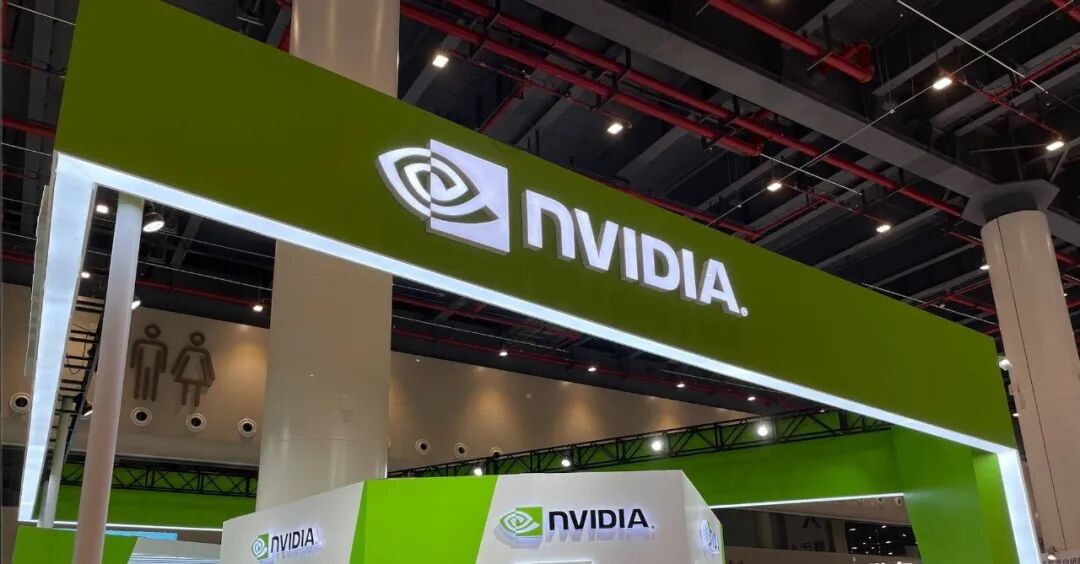
In this round of turmoil in the AI sector, Nvidia has been hit the hardest, falling 23% this week—its largest single-week decline since October 2008. Notably, after hitting an all-time high in October, the stock fell for seven consecutive weeks—its longest losing streak since 2008—and has now declined 48% cumulatively.
With losses of nearly half, Nvidia's market value has plunged from a peak of $5.82 trillion to $3.03 trillion, evaporating a cumulative $2.79 trillion (about 18.6 trillion yuan).
This sharp decline has been driven by a mix of factors. Global cloud providers continue to aggressively ramp up AI data centers, with massive spending continuously devouring cash flow. The market has begun to question the long-term returns on AI investment, which in turn has weighed on the global AI computing ecosystem.
On the other hand, the departure of Jensen Huang, who helmed the company for 33 years, became an important trigger. The company strategy, technology roadmap, and CUDA ecosystem he led now face uncertainty, compounded by rumors of an investigation related to accounting practices, further intensifying the volatility.
First: whether aggressive AI infrastructure spending can deliver returns has raised concerns.
To seize the AI market, tech giants have been quite aggressive in AI infrastructure spending, with major cloud providers such as Amazon, Microsoft, and Google raising their 2026 spending to $710 billion.
Among domestic tech giants, Tencent's capital expenditure from January to September this year reached 166.1 billion yuan, up 179% year on year, including 81.4 billion yuan in the third quarter alone, up 527% year on year. Capital expenditure includes investment in IT infrastructure, data centers, land use rights, and more.
Alibaba's capital expenditure in the first half of fiscal 2027 (April to September 2026) was 118.1 billion yuan, a sharp year-on-year increase, also reflecting continued investment in AI infrastructure.
Frenzied spending has devoured cash flow, pushing Meta, Amazon, Google, Tencent, and Alibaba into negative cash flow. As a result, market concerns about returns on AI infrastructure investment have intensified, leading to a pullback in capital expenditure. Against this backdrop, key global AI suppliers have been affected, and the market has begun to reduce concentration in AI holdings.
Second, the added blow of Jensen Huang's departure made matters worse.
Nvidia was founded by Jensen Huang and others, and during his 33 years at the helm, it started with graphics chips and established itself with gaming graphics cards. GPUs born for gaming have become an important force driving global technological development in the AI era.
Because tech giants cannot develop AI without Nvidia's high-performance chips, market demand for Nvidia's AI infrastructure has been off the charts. Revenue in the third quarter of fiscal 2027 was $115.8 billion, up 103% year on year; among that, data center revenue was $107.6 billion, up 110% year on year.
Global hyperscale cloud service providers' demand for Nvidia chips is unprecedentedly strong. Driven by AI demand and Vera Rubin, Nvidia expects fourth-quarter revenue of $130 billion and revenue growth of 75% in fiscal 2028.
However, strong results still could not stop the market sell-off; the core issue is the Jensen Huang turmoil, which sent Nvidia plunging in the market. Since the scandal broke, the company faces multiple challenges in corporate governance, review, and security.
It should be noted that because Jensen Huang helmed Nvidia for 33 years, he deeply dominated the company's long-term strategy, technology roadmap, and CUDA ecosystem development. After his departure, this system that underpins Nvidia's high valuation faces variables. Most critically, reports say Nvidia's accounting practices are being investigated, adding pressure on the company.
Nvidia's blowout results are driven by a series of circular investments, such as helping customers finance the construction of data centers and the purchase of Nvidia chips. These operations have made Nvidia's backlog of chip orders snowball, with backlog orders in the cloud industry reaching $2.5 trillion.
But such transactions also make the market worry about financial risk, while concerns that AI infrastructure spending will slow are also growing by the day.
Finally, Nvidia's market performance will be crucial to global markets.
As the global benchmark for AI computing power, its volatility is not just a revaluation of its own valuation, but also affects the repricing of the global AI ecosystem and even sentiment across the global tech sector.
After Friday's panic selling, large tech stocks such as Nvidia, Google, and Intel have rebounded in after-hours trading, and market sentiment is expected to recover. But without Jensen Huang at the helm, Nvidia's subsequent trajectory will remain under intense market scrutiny; its changes will not only have a profound impact on the global AI ecosystem but also serve as a bellwether for how the market prices tech assets.
Yang Jianyong is a Forbes China contributor; the views expressed are his own. He focuses on in-depth observation of tech fields such as large models, artificial intelligence, robotics, the Internet of Things, cloud computing, and smart home appliances.
-
![]()
After a Bloodbath, Nvidia Wipes Out 18 Trillion Yuan in Value—Is the AI Feast Coming to an End?
-
![]()
Weekly Stock Review | Profit Margin 1.4%: When 'Golden September and Silver October' Becomes 'Golden September, Silver Losses'
-
![]()
Ultrafast Nonlinear Optical Technology Series, Part 108: Multi-Pass Cells Generate Terawatt-Class Sub-Two-Cycle Pulses
-
![]()
Why Do Voyah and Luxeed Still Need This "Birth Certificate" in 2026?
-
![]()
Mary Barra's Exit Looms as General Motors Hunts for a Successor
-
![]()
First-Tier Joint Ventures Launch Counteroffensive—What About Second-Tier Players?
-
![]()
A New Wave of Overseas Cars with a Full "Chinese Flavor" Is About to Debut at the Guangzhou Auto Show
-
![]()
Low Prices No Longer the Whole Story: Joint Venture EVs Are Finally Catching Up