First-Tier Joint Ventures Launch Counteroffensive—What About Second-Tier Players?
 11/23 2026
 336
The ID. ERA 5S has now topped 7,000 units for two consecutive months, while the ID.AURA T6 racked up 33,000 locked orders in its first month alone. Volkswagen's latest electrification push has shaken off its earlier slump and delivered strong results right out of the gate, driving overseas brands' new energy offensive in China to a new peak.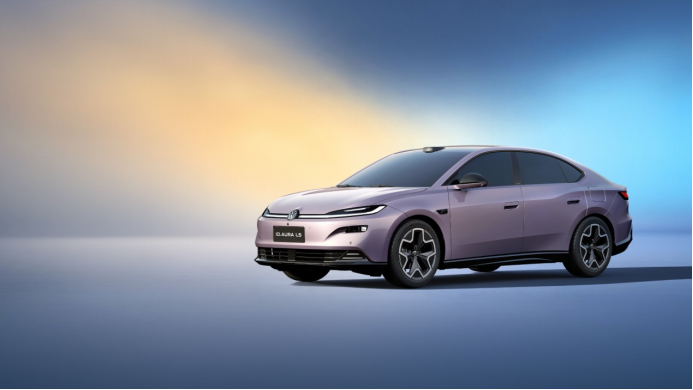
Over the past two years, overseas brands such as Toyota, Nissan, and Volkswagen have all announced localization R&D strategies. A new wave of electrified models—including the Toyota bZ3X, Nissan N7, and Buick Zhijing series—has since rolled out one after another and begun to win recognition from Chinese consumers. After years of electrification development in China's auto market, the new energy offensive of first-tier overseas brands is now in full swing.
Second-tier overseas brands, by contrast, have a far lower profile. Admittedly, while first-tier joint venture automakers are undergoing comprehensive transformation, second-tier players are also exploring localization solutions—just moving a bit slower and taking smaller steps. Beijing Hyundai is a case in point.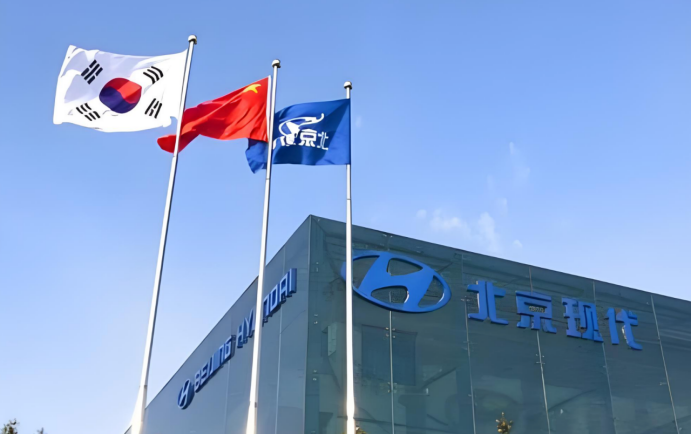
During the years when China's auto market was booming with electrification, Beijing Hyundai remained in a wait-and-see mode. While domestic automakers were rolling out new energy products at a rapid clip, Beijing Hyundai even went the opposite direction: not only did its "2025 New Plan"—which promised 4-5 pure electric models before 2025—come to nothing, but the company also discontinued multiple electrified products, including the Kona Electric, Lafesta Electric, Elantra Electric, Leadling PHEV, and Sonata PHEV.
Until the launch of the Elexio, Beijing Hyundai's EV lineup remained blank. During the same period, Hyundai was selling five electrified passenger vehicle products in the U.S. market and eleven in Europe, covering pure electric, plug-in hybrid, and hybrid vehicles. Clearly, Hyundai has consistently maintained a cautious stance toward China.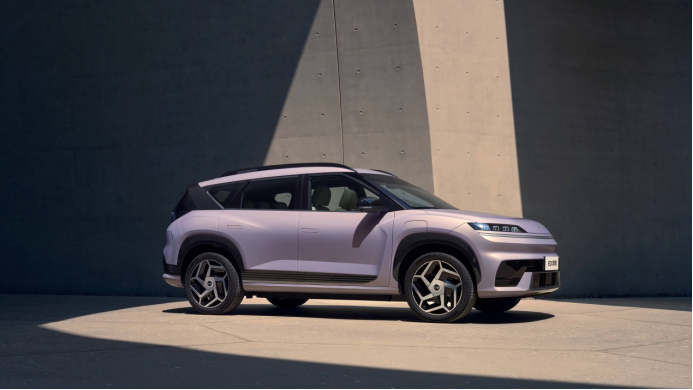
At the end of 2024, Hyundai Motor announced additional investment in Beijing Hyundai for the development of customized electric vehicles for the Chinese market. In early 2025, Hyundai Group expanded its China business division into a China Regional Headquarters to strengthen local operations and respond to market changes. Then, on November 10, 2025, Hyundai Motor made an unprecedented move by appointing Chinese executive Li Fenggang as general manager of Beijing Hyundai Motor Co., Ltd.
In the autumn of 2025 and 2026, the EO Elexio and Ioniq V built for the Chinese market successively entered the Chinese market. Various signs indicate that Hyundai Motor is actively embracing the Chinese market. However, Li Fenggang's departure has sparked speculation from the outside world. On the first day of November, Li Fenggang, who had served as general manager of Beijing Hyundai for less than a year, officially left his post. As the first Chinese general manager dispatched by the Korean side of Beijing Hyundai, Li Fenggang's departure also marked that Hyundai Motor's approach of "using people who better understand the local market to operate the local market" remained a slogan.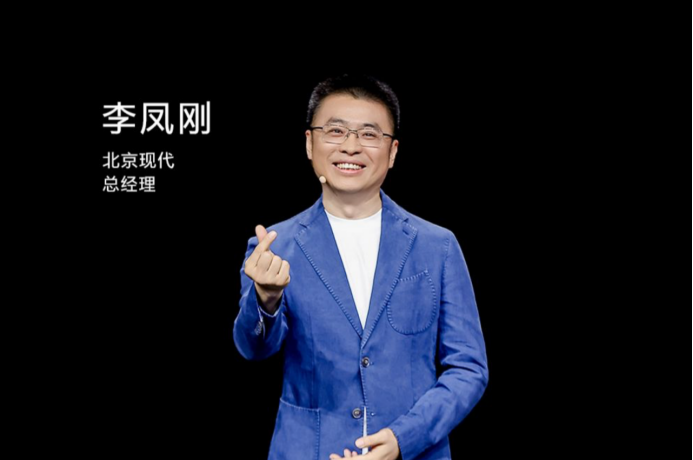
As for the reasons behind Li Fenggang's departure, multiple media outlets pointed to a power struggle between Chinese and Korean shareholders at Beijing Hyundai. According to media reports citing insiders, the Chinese side wanted more thorough localization, faster cost reduction, more aggressive pricing, and to boost sales through price incentives. The Korean side, however, wanted to maintain brand premium and global standards.
Some analysts noted that the Korean shareholders are unwilling to truly delegate power—and won't—so the Chinese side's enthusiasm and proactiveness will naturally be worn away bit by bit. As a result, Beijing Hyundai's prospects are fraught with uncertainty. Unlike the hesitant Beijing Hyundai, another joint venture automaker, Dongfeng Peugeot Citroen, is actively laying out its plans. After several years of an "asset-light" model, Stellantis and Dongfeng Motor Group have restarted cooperation.
In May this year, Stellantis and Dongfeng Group signed a strategic cooperation agreement. Under the agreement, Dongfeng Peugeot Citroen will integrate Stellantis' global platform heritage with Dongfeng's local intelligent advantages to jointly develop a new global shared platform; the powertrain and electronic architecture will be based on Dongfeng's mature solutions; the smart cockpit and intelligent driving systems will prioritize leading domestic ecosystems; and key chassis components will be tuned in Europe.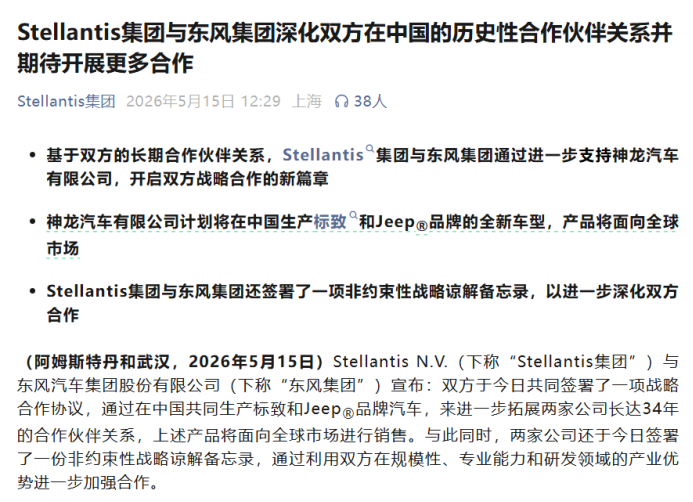
According to the agreement, starting from 2027, Dongfeng Peugeot Citroen's Wuhan plant will successively produce multiple all-new Peugeot brand new energy models and will also produce the Jeep brand. In the future, these products will be sold in global markets including China. At this year's Beijing Auto Show, Dongfeng Peugeot Citroen's two brands—Dongfeng Peugeot and Dongfeng Citroen—appeared together.
Peugeot brought two intelligent electric flagship concept cars, the Concept 6 Lion's Fang and Concept 8 Liuming, while the Polygon concept car also made its Asian debut. Citroen brought the ELO concept car built on a pure electric platform and the FE Electric Formula GEN3 Evo race car. The lineup of new cars signaled Dongfeng Peugeot Citroen's high-profile return.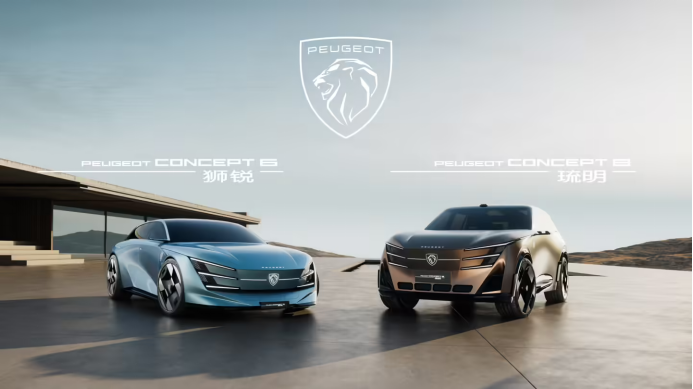
On August 17, Dongfeng Peugeot Citroen Technology (Wuhan) Co., Ltd. was officially registered and established. In October this year, Dongfeng Peugeot Citroen Technology signed a global strategic cooperation with Momenta to jointly develop a high-level intelligent assisted driving system based on Momenta's R7 world model, to be equipped on all-new production models of Peugeot and Jeep for sale in China and Europe. On November 11, Dongfeng Peugeot Citroen Technology (Wuhan) Co., Ltd. and Volcano Engine signed a comprehensive strategic cooperation agreement in Wuhan.
The cooperation covers joint development of smart cockpit systems, co-creation of application software, SoC chip product planning, and forward-looking technology research. Dongfeng Peugeot Citroen Technology thus became the first among joint venture automakers to equip Volcano Engine's AI cockpit assistant. It is reported that Dongfeng Peugeot Citroen Technology has planned four all-new new energy models in the first phase—two for Jeep and two for Peugeot. All four models will adopt localized technology solutions, be produced by Dongfeng Peugeot Citroen's Wuhan plant starting in 2027, and be sold globally through Stellantis Group's international sales network.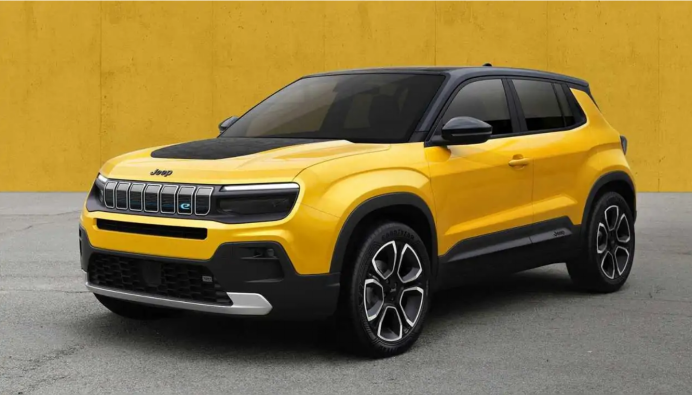
Judging by the current timeline, Dongfeng Peugeot Citroen's "restart" came a bit late, but if the plan goes smoothly, it is still worth looking forward to. Looking back, Changan Mazda is an example. Among second-tier joint venture automakers, the most active in transformation is Changan Mazda. Of course, the one with the best market performance is also Changan Mazda. As early as 2023, Mazda CEO Masahiro Moro said bluntly that Mazda needed to thoroughly reform its strategy in China, the world's largest auto market.
During that year's Shanghai Auto Show, Mazda announced that it would deepen its cooperative relationship with partner Changan Automobile, fully leveraging both sides' advantages while going beyond the traditional joint venture cooperation framework to establish a new cooperation model, jointly advance the development of electrified products, and launch new energy vehicle (NEV) models developed and produced in China.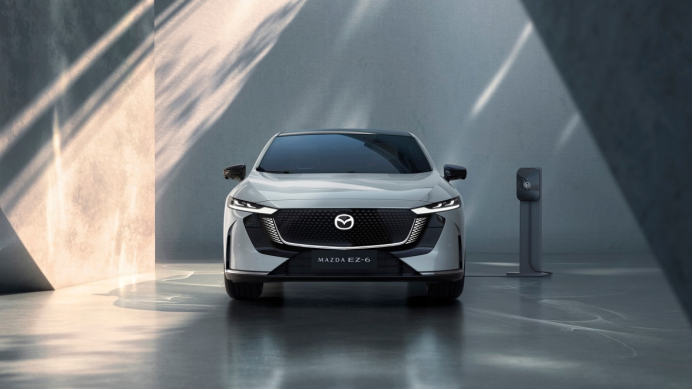
In the following 2024 and 2025, the Mazda EZ-6 and Mazda EZ-60, two all-new electrified products developed on Changan's technology platform, hit the market with pricing and product strength approaching those of domestic brand models in the same class. As expected, the market performance of these two all-new electrified models was noteworthy. Since March this year, the Mazda EZ-6's monthly sales have remained stable in the four-digit range.
In September and October, the Mazda EZ-6 sold 2,454 and 2,706 units, respectively. Even more impressive is the Mazda EZ-60, which exceeded 5,000 units in monthly sales in each of the past two months, becoming one of the leaders among joint venture new energy products. Currently, the Mazda EZ-60 has become Changan Mazda's best-selling model, and the Mazda EZ-6's market performance is also approaching that of Changan Mazda's former sales pillar, the CX-5. It can be said that Changan Mazda is quietly completing its transformation toward localization and new energy.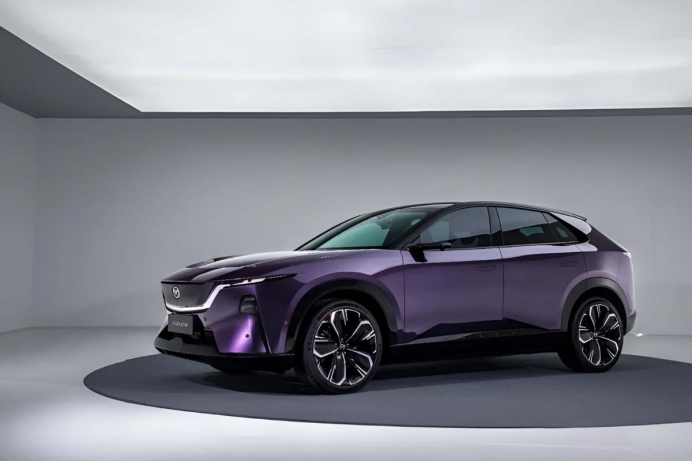
Editor's Summary: Over the past two years, overseas brands have begun handing over leadership to Chinese hands. This is true for first-tier joint venture automakers and equally true for second-tier automakers. It is just that market attention is slightly lower. But judging from feedback on the market side, Changan Mazda has not only transformed quickly but also relatively successfully, and can even be said to be the most successfully transformed joint venture automaker at present.
(Images are from the internet and will be deleted if infringing)
-
![]()
After a Bloodbath, Nvidia Wipes Out 18 Trillion Yuan in Value—Is the AI Feast Coming to an End?
-
![]()
Weekly Stock Review | Profit Margin 1.4%: When 'Golden September and Silver October' Becomes 'Golden September, Silver Losses'
-
![]()
Ultrafast Nonlinear Optical Technology Series, Part 108: Multi-Pass Cells Generate Terawatt-Class Sub-Two-Cycle Pulses
-
![]()
Why Do Voyah and Luxeed Still Need This "Birth Certificate" in 2026?
-
![]()
Mary Barra's Exit Looms as General Motors Hunts for a Successor
-
![]()
First-Tier Joint Ventures Launch Counteroffensive—What About Second-Tier Players?
-
![]()
A New Wave of Overseas Cars with a Full "Chinese Flavor" Is About to Debut at the Guangzhou Auto Show
-
![]()
Low Prices No Longer the Whole Story: Joint Venture EVs Are Finally Catching Up