Smartphones: Are Prices Soaring? Is the Affordable Phone Era Fading?
 09/10 2026
 571
571
Smartphone prices are on the rise.
With the September wave of new releases, manufacturers have propelled foldable phone prices to unprecedented levels. Huawei's Mate XT2 reaches up to 24,999 yuan, Xiaomi's top-tier 18 Fold variant is priced at 14,999 yuan, and Apple's inaugural foldable iPhone Duo starts at 15,999 yuan in China, escalating to 26,499 yuan for the 2TB model—making it Apple's priciest iPhone yet.
Concurrently, prices for conventional flagship phones are also escalating. Brands such as Huawei, Xiaomi, and Honor have hiked prices across various models, with increases spanning from 200 to 1,000 yuan, affecting price ranges from budget to high-end flagships.
This trend is fueled by two main factors: the AI boom has inflated memory chip prices, elevating smartphone manufacturing costs, while phone makers are increasingly banking on premium products, particularly foldables, to boost average selling prices and profit margins.
As costs surge and phones become more expensive, will consumers continue to shell out for their next device?
I. Smartphone Manufacturers Unanimously Hike Prices
The smartphone industry rarely witnesses three flagship launches from leading manufacturers in such rapid succession within a 72-hour window.
On the afternoon of September 7, Huawei took center stage first, unveiling the second-generation triple-fold Mate XT 2. Later that evening, Xiaomi followed suit with the Xiaomi 18 Fold, with less than five hours separating the two events.
Three days later, Apple concluded the show. In the early hours of September 10, Apple launched its first foldable iPhone Duo. Thus, Huawei, Xiaomi, and Apple—the top three smartphone makers—revealed their visions for next-generation premium phones in under 72 hours.
All three focused on the same category: foldables.
Huawei continues to bet big on triple-fold designs. The Mate XT 2 unfolds to 10.2 inches, with prices starting at 19,999 yuan and peaking at 24,999 yuan—a 2,000 yuan increase over its predecessor. It remains one of the most expensive foldables on the market.
The primary technical hurdle for triple-folds lies in the hinge, screen, and body structure, which must endure more frequent bending and complex stress. The Mate XT 2 further refines its hinge and screen structure while reducing overall thickness and weight, striving for ultimate portability.
When unfolded, the Mate XT 2's 10.2-inch screen ventures into tablet territory. For Huawei, triple-folds aim to encompass smartphones, tablets, and even some mobile office scenarios.
At the launch event, Yu Chengdong directly addressed the price hike, attributing it to over 2,000 yuan in increased memory costs, high expenses for the privacy screen, manufacturing challenges, and new technological upgrades contributing to cost pressures. However, he described the final pricing as "very reasonable."
In contrast, Xiaomi opted for a more consumer-friendly mid-fold approach.
The Xiaomi 18 Fold starts at 10,999 yuan and goes up to 14,999 yuan, featuring a 7.58-inch screen when unfolded, a 5.02mm thickness, and a weight of 219 grams. Rather than pursuing the ultra-large screen of triple-folds, Xiaomi prioritized "slimness and lightness."
This highlights another challenge for foldables: they struggle to feel like conventional phones. Adding hinges and flexible screens naturally makes them thicker and heavier than traditional slate phones. Meanwhile, foldable structures necessitate constant trade-offs between reliability, cooling, battery capacity, and internal space.
The Xiaomi 18 Fold achieves a 5.02mm thickness and 219-gram weight, effectively addressing these issues. It hopes consumers will first perceive it as a slim flagship, secondarily as a foldable.
For Xiaomi, this product is of significant importance. Priced starting at 10,999 yuan, it represents one of Xiaomi's highest-priced phones to date. Known for cost-effectiveness, Xiaomi is now venturing into the premium segment with foldables, Ultras, and other offerings.
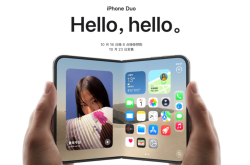
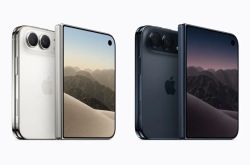
Apple entered the foldable market later but garnered the most attention. Its first foldable iPhone Duo adopts an inward-folding design, unfolding to about 7.6 inches. Priced starting at 15,999 yuan in China, it offers up to 2TB of storage, with the overseas starting price at $1,999.
The most significant change with foldables isn't just a larger screen—it demands altered software interaction. Apple adjusted iOS's multitasking and window experiences for the Duo, enabling the expanded screen to handle more content simultaneously. It also leverages the App Store and iPhone ecosystem to amplify the foldable's value.
These three manufacturers are employing distinct product strategies to drive competition toward the premium segment. They're vying for pricing and product definition rights in the next generation of high-end phones, with foldables as the critical battleground.
II. Why the Emphasis on Foldables?
Foldables are not a new concept.
After Samsung launched the first Galaxy Fold in 2019, Huawei, Honor, OPPO, vivo, and Xiaomi entered the market. Yet, years later, foldables have not become the mainstream smartphone form factor.
The reasons are straightforward. Early models were expensive, bulky, and plagued by creases and durability issues. For most consumers, the enhanced experience of unfolding a phone into a larger screen wasn't compelling enough to justify the thousands of yuan premium.
Thus, foldables remained niche products showcasing manufacturers' technical prowess, with limited market penetration.
Until this year, when the market began showing different signals.
Counterpoint predicts global foldable smartphone shipments will surpass 100 million units by 2026. While impressive, foldables still account for just approximately 2% of the total smartphone market.
The market is far from saturated. Counterpoint forecasts foldable iPhone shipments will reach 6 million units by 2026, with Apple capturing 25% of the global market—second only to Samsung (38%) and ahead of Huawei (22%).
Though small, the foldable market is becoming pivotal for manufacturers targeting the premium segment. One reason: traditional slate phones have reached maturity.
Chip performance and camera upgrades continue annually, but these changes increasingly fail to motivate consumers to upgrade. For manufacturers, parameter improvements on a fixed-size screen offer diminishing differentiation.
Foldables provide a fresh product narrative and a relatable "reason to be expensive."
More pragmatically, the smartphone industry faces rising costs for upstream components like memory chips this year.
Counterpoint data shows Q2 2026 material costs surged 70% for budget phones, 52% for mid-range models, and nearly 50% for flagships. While SoC processors dominate phone costs in 2025, DRAM and NAND memory chips account for 8% and 5%, respectively. By 2026, memory chip prices will spike, rapidly increasing their cost share.
The smartphone industry is grappling with rising prices for memory chips (DRAM/NAND) and core components. Traditional slate phones have low pricing power, with consumers highly sensitive to price hikes. Manufacturers struggle to fully pass on soaring BOM (bill of materials) costs.
Foldables, priced at 10,000 yuan or higher, naturally position as "luxury goods" and "productivity tools." Their high margins better absorb upstream cost increases, making them crucial for preserving manufacturers' overall profitability.
Another shift comes from AI.
On-device AI large models demand expansive interfaces. Scenarios like processing long documents, viewing multiple pages simultaneously, switching between images and text, or chatting while delegating tasks to AI require more screen space than traditional phones offer.
Foldables' 7–10-inch unfolded screens naturally suit complex AI tasks like multitasking, AI document processing, and image/video generation, transforming hardware premiums into ecosystem value.
Yet a practical contradiction remains. Foldables' approximately 2% market share means they're far from mainstream. Will consumers pay thousands—even tens of thousands—of yuan extra for larger screens?
III. Is the Era of Affordable Smartphones Over?
Judging solely by launch events, one might assume the smartphone industry is entering a thriving premium era. The reality is the opposite: the industry is in a clear downturn.
IDC's latest forecast projects a 16.7% YoY decline in global smartphone shipments by 2026, falling to just over 1 billion units—the largest annual drop on record.
Yet a paradox emerges: while sales shrink, market value grows. IDC expects the global smartphone market to expand 6.3% to $613 billion by 2026, with average selling prices rising 27.6% to $581.
In other words, the industry is entering a phase of "selling fewer but pricier" devices.
Cost pressures drive this trend. AI data centers are consuming vast storage resources, squeezing supply for DRAM and NAND chips used in phones. Counterpoint predicts the global storage crisis will persist through 2026, hitting budget phones hardest.
For budget phones, this is nearly insurmountable. A 2,000-yuan phone can't easily pass on even a few hundred yuan in cost increases. Budget users are price-sensitive, and manufacturers' slim margins make further hikes risky for sales.
In March, OPPO led price increases for select A-series, K-series, and OnePlus models, with hikes ranging from 300 to 500 yuan. vivo and Honor followed suit.
Consumers quickly noticed. Some prices previously starting with "1" now began with "2"; others reconsidered purchases after a 400-yuan spike.
Even Xiaomi, the champion of cost-effectiveness, couldn't escape entirely.
In March, Xiaomi President Lu Weibing responded to questions about price hikes: "I understand why competitors are raising prices. Everyone's struggling. We're hurting too."
This sentiment encapsulates the 2026 smartphone industry. Domestic manufacturers once relied on lower prices to drive volume, especially for budget and mid-range phones with thin margins. But with soaring costs for core components like memory, this model becomes unsustainable.
For 10,000-yuan flagships, the dynamic differs. A few hundred yuan in cost increases is less noticeable at such price points. Manufacturers have more flexibility to absorb costs via higher prices, adjusted configurations, or reduced promotions.
Thus, an upstream cost issue is further driving market concentration toward premium products.
IDC's data confirms this. In H2 2026, global smartphone shipments are projected to drop 27.2% YoY, with sub-$100 models facing existential pressure.
According to Counterpoint Research's U.S. smartphone channel share report for Q2 2026, sub-$100 smartphone sales in the U.S. plunged 64% YoY. Some manufacturers stopped supplying this segment, while others pushed former budget models above the $100 threshold via price hikes.
Sales decline, prices rise. The smartphone industry is shifting from scale-driven growth to a market share battle reliant on premium products.
-
Smartphones: Are Prices Soaring? Is the Affordable Phone Era Fading?
-
When Genuine Elderly-Friendly Home Appliances Meet Pseudo-Smart Features: Bridging the Intergenerational Gap in Appliance Consumption
-
![]()
When the iPhone Finally 'Folds', Who Will Seize the Right to Define the Next Generation of Smartphones?
-
![]()
When the iPhone Finally 'Folds,' Who Will Seize the Right to Define the Next Generation of Smartphones?
-
![]()
Seven Years After Foldable Phones Emerged, Why Has Apple Just Launched the iPhone Duo?
-
![]()
July’s Online Speaker Market: Harman Kardon Adjusts Strategy, Philips Breaks Through, and Outdoor and Home KTV Trends Reshape the Landscape
-
The Awkwardness of AI Long Series: Cost Reduction is Easy, but Profitability is Hard
-
What is the Real Issue with Foldable Screens? iPhone Duo Didn't Provide a Complete Answer