Chinese Air Conditioners Gain Momentum in Europe: Can Indian Companies Follow Suit on the Global Stage?
 09/14 2026
 407
407
In the sweltering summer of 2026, Europe faced unprecedented extreme weather conditions, triggering a significant surge in Chinese air conditioner exports. This development has sparked ambitions within the Indian air conditioning sector to make inroads into the European market.
Traditionally, Europe's temperate climate and aging housing infrastructure meant that air conditioners were not deemed essential. However, the recent heatwaves have made it challenging for many to cope with the soaring temperatures.
Paris saw outdoor temperatures soar above 45°C, while certain regions in southern Spain reached a scorching 46°C. The World Health Organization has repeatedly cautioned that Europe is warming at nearly twice the global average rate, making it one of the fastest-warming regions worldwide.
This heatwave is fundamentally altering Europeans' views on air conditioners, which are increasingly being seen as a necessity rather than a luxury in a growing number of households.
This shift has opened up new export opportunities for established Chinese air conditioning companies.
With a comprehensive supply chain, advanced manufacturing capabilities, and experience in catering to diverse markets, Chinese brands are rapidly expanding their footprint in Europe.
Meanwhile, the Indian air conditioning industry has also started to take note of the evolving market demands in Europe.
—After years of observation, Indian manufacturers aspire to emulate China's global success and chart their own growth path.
Chinese Air Conditioner Exports to Europe Continue to Soar
Chinese customs data reveals that in the first half of 2026, China's air conditioner exports to the EU reached $3.76 billion, marking a year-on-year increase of 43.2% and setting a new record for the same period. In June alone, exports surged by 72.8% year-on-year, with particularly robust growth in Western European markets such as the UK, Belgium, France, and the Netherlands.
Over a longer timeframe, China's export dominance in air conditioners has become increasingly entrenched.
During the 2025 cooling season (August 2024–July 2025), China exported nearly 94 million air conditioners, with Europe witnessing a 39.5% increase. Chinese brands' market share in Europe rose from 27% in 2023 to 41% in the 2025 cooling season.
In contrast, Europe's domestic production capacity falls significantly short of demand. Currently, Europe's annual air conditioner production capacity stands at around 3.2 million units, while market demand exceeds 10 million units, creating a substantial supply-demand gap.
This has provided ample opportunities for Chinese companies to enter the market. Brands such as Haier, Midea, Hisense, and Changhong are accelerating their local presence.
In the first half of this year, Haier's European air conditioner sales grew by approximately 30% year-on-year; it held a 34% market share in Eastern Europe, ranking first, and increased its Western European share to 9%, reaching 22.4% in Germany. In Spain, Haier's self-branded air conditioners ranked first in both sales volume and value, with a 14% share and a compound annual growth rate of 34.5% over the past five years.
Midea quickly gained market traction with its PortaSplit installation-free split air conditioner—a solution tailored to Europe's numerous aging residential buildings, where exterior wall modifications are heavily restricted, making traditional split-unit installations costly and challenging. The product has garnered significant attention in the German market.
During the same period, Hisense's sales in Western Europe grew by over 20% year-on-year, with France experiencing growth exceeding 100%. Changhong also achieved record-high shipments and sales in Europe in the first five months of the year.
Chinese brands' success in Europe is not solely based on price advantages.
More crucially, they have made localized adjustments to cater to the European market. For instance, many European older buildings have strict regulations against exterior wall drilling, posing a significant barrier to purchase due to installation difficulties. Haier's Expert series, featuring single-screw modular designs, and Midea's optimized pre-connected indoor-outdoor unit structures directly address this issue.
Simultaneously, tightening EU energy efficiency standards have made high-efficiency, low-energy products a key focus for Chinese brands seeking to capture market share.
India Faces Significant Challenges in Replicating Success
Observing Chinese companies' breakthroughs in Europe, the Indian air conditioning industry is also exploring opportunities.
According to local media reports, leading Indian companies such as Godrej, Havells, Amber, and Voltas are researching the European market. The Indian government also plans to drive industrial upgrades, aiming to increase air conditioner exports from about 2 million units currently to 15–16 million units in the coming years, participating in global competition.
However, expanding into Europe is not as straightforward as "increasing production capacity."
India's primary weakness lies in its supply chain. Currently, Indian household air conditioners heavily rely on imports for compressors, most inverter core components, motors, copper tubes, seals, and other key parts. Chinese companies like GMCC, Highly, and Changhong Huayi have long been major suppliers. Establishing a complete domestic industrial chain will require considerable time.
Cost advantages are also not apparent. Industry data indicates that Chinese and Korean brands' air conditioner production costs are 15–18% lower than those of Indian domestic companies. Voltas management has publicly acknowledged significant competitive pressure from Chinese brands in terms of scale and cost.
Furthermore, Europe's stringent requirements for energy efficiency, environmental protection, and safety certifications, along with the need to adapt products to local heat pump-dominated demand and older building installation environments, are not capabilities that can be acquired quickly.
The Gap Remains Substantial: Accumulation is Key
A comparison of Chinese and Indian data reveals a significant gap.
In 2024, China exported 87.42 million air conditioners (excluding components), with an export value reaching $16.7 billion; according to Industry Online, household air conditioner exports totaled 85.004 million units. In contrast, India's air conditioner export value in the 2024–2025 fiscal year was about ₹36.83 billion (approximately $435 million)—less than 1/40th of China's export value.
In just the first half of 2026, China's air conditioner exports to the EU reached $3.76 billion, already surpassing India's full-year export scale.
China's deeper advantage lies in its years of accumulated, complete industrial chain, enabling rapid response to diverse market demands from core components to finished product manufacturing.
While India is also making efforts, with brands like LG, Daikin, and Haier investing in local production, these moves are more part of global supply chain layouts and do not indicate that India's domestic industry has gained independent competitive capabilities.
The window of opportunity created by Europe's heatwave is open to all, but the companies that truly seize it will be those with supply chain, technological, and market adaptation capabilities.
Chinese brands have gained an early advantage through years of accumulation, while India must still systematically strengthen its industrial chain and product capabilities—there are no shortcuts.
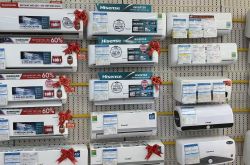
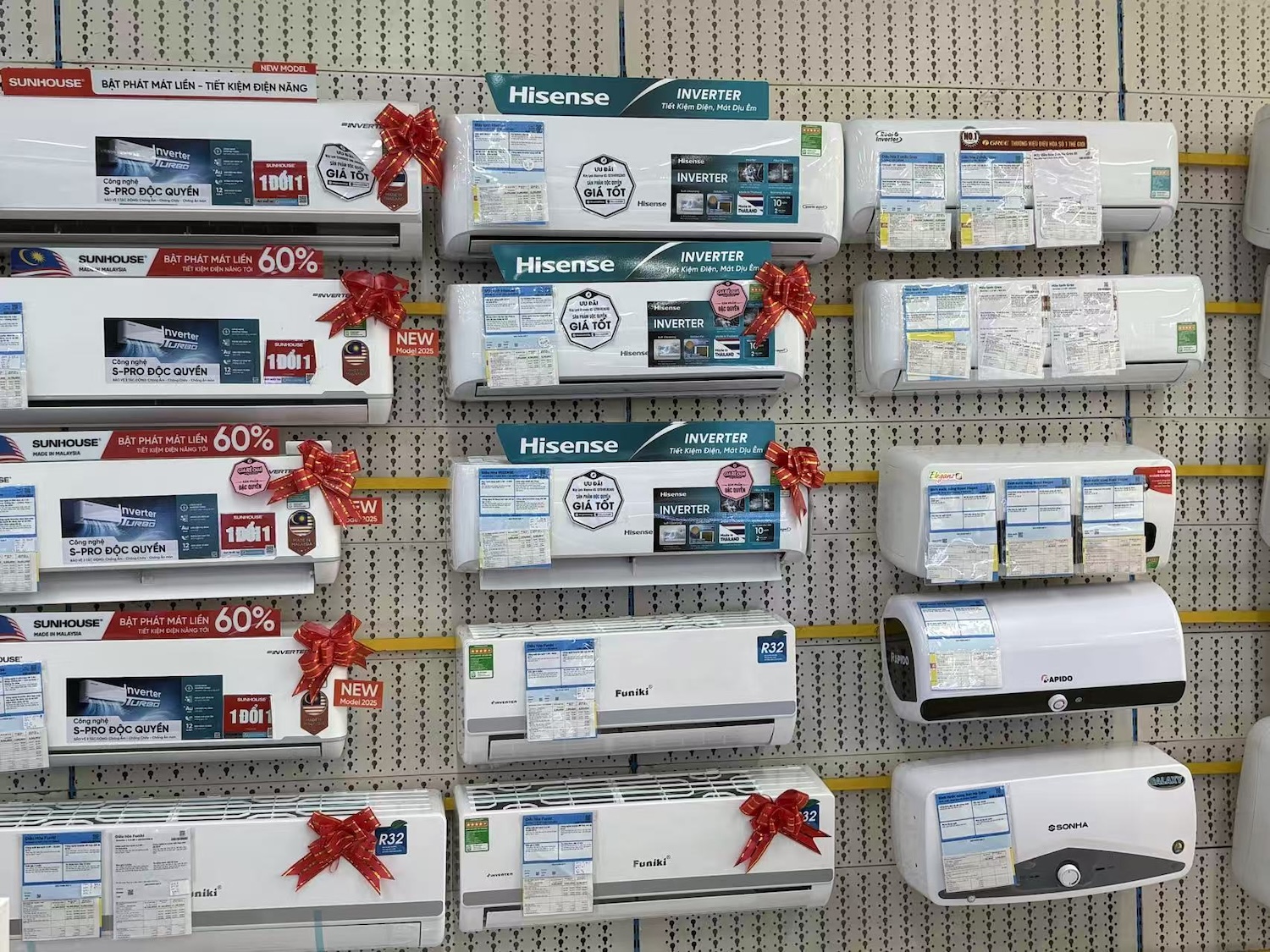
(Note: The image is sourced from Southeast Asia and is unrelated to this article.)
-
![]()
Apple, Huawei, and Xiaomi Vie for Dominance in the 10,000-Yuan Smartphone Segment: Has the Smartphone Market Embraced the Luxury Era?
-
![]()
Chinese Air Conditioners Gain Momentum in Europe: Can Indian Companies Follow Suit on the Global Stage?
-
![]()
Xingyu Shares Cancels Contracts of 107 New Graduates—Not for Listing, but for a Far Grimmer Reason
-
Rebirth: My New Role as the "Factory Director" at the Bund Conference
-
![]()
Can Neta Automobile Truly Be Revived? Will Taiyi Shenglian Rejuvenate It with 3 Billion Yuan?
-
![]()
Zotye Auto Initiates Trial Production of New Vehicle, Signaling a Potential Comeback
-
![]()
"Chinese Version of Cullinan" is Here: A Sneak Peek at New Cars from MIIT
-
![]()
Growth Slows Again: Denza Z9GT Makes Car Buying More Accessible