ZTE’s New Doubao Phone: Playing It Safe in the AI Race
 09/20 2026
 534
534

Source | YuanSight
ZTE and Doubao appear to be inextricably linked, for better or worse.
Recently, ZTE’s subsidiary Nubia unveiled the NaviX Ultra, hailed as the “world’s first AI agent phone,” with a strong emphasis on native AI capabilities. Priced at 5,999 yuan, the phone drops to 5,499 yuan after national subsidies—more than 2,000 yuan higher than its predecessor, the Nubia M153, known as the “first-generation Doubao phone,” positioning it firmly as a flagship-tier device.
However, as the heir to the once-internet-famous Doubao phone, the NaviX Ultra seems to be generating less market excitement than its forerunner.
Despite Nubia claiming that the new phone’s “sales exceeded 100 million yuan in one second” post-launch, ample manufacturer inventory means that most secondary market retail prices remain at or below the original asking price. Following its release, mainstream e-commerce platforms like JD.com largely had the device in stock, a stark contrast to the initial frenzy surrounding the Nubia M153.
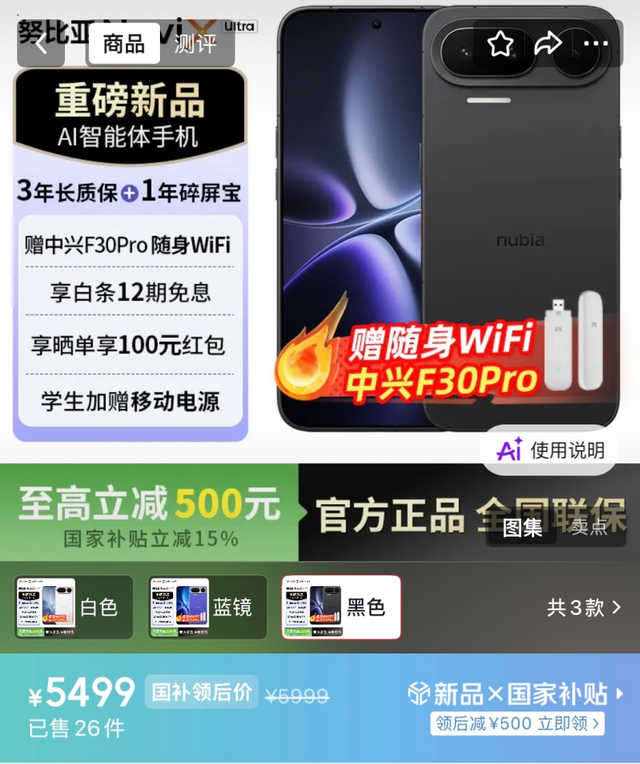
Image Source: JD.com
Late last year, a limited release of the Nubia M153, an engineering prototype featuring a technical preview of the Doubao phone assistant, triggered a buying spree. Originally priced at just 3,499 yuan, the M153’s resale value soared to tens of thousands of yuan on secondary markets. The hype around this single model even drove ZTE’s A-share stock to limit up, with daily trading volume exceeding 14.6 billion yuan.
The unexpected popularity of this experimental AI engineering phone became one of ZTE’s few bright spots in the mobile market in recent years. At its annual results briefing in March, ZTE explicitly stated it would strengthen the Nubia brand while steadily advancing an innovative “AI phone + gaming phone” layout to create differentiated competition. Collaborating with ByteDance to jointly develop and launch a new generation of AI phones has become a cornerstone of ZTE’s “AI for All” strategy.
01
A Successor That Falls Short
Less than a week after its release, Nubia’s second-generation Doubao phone is already being dubbed the “ByteDance-exclusive machine” by early adopters.
According to Nubia, the NaviX Ultra’s launch marks the official transition of AI agent phones from engineering prototypes to mass-scale commercial production. However, mass production also implies “compromises.” While the new model’s flagship positioning brings stronger hardware performance, it also becomes more compliant and conservative in terms of app operation permissions.
As a phone promoting native AI experiences, the NaviX Ultra leads in hardware design with an independent AI button on the side, integrating fingerprint recognition. It supports single-click, double-click, and long-press to activate different AI functions. Through fingerprint recognition, it can specifically invoke the owner’s personalized Doubao phone assistant, delivering the most direct native AI experience.
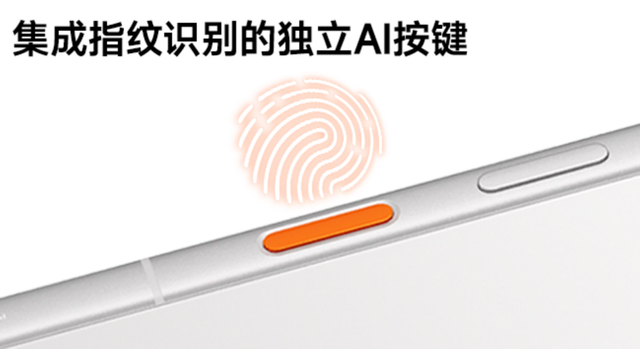
Image Source: ZTE Mall
Additionally, the new model’s AI functions, built on the Doubao phone assistant, gain high access permissions in ByteDance apps like Douyin and Feishu. Almost all operations—such as price comparisons in Douyin’s mall, video likes and comments, and work scheduling and document management in Feishu—can be handled by the AI backend, with user confirmation required only for sensitive actions like payment or login.
Overall, in apps with open APIs, the second-generation Doubao phone’s AI capabilities can nearly replicate manual operations.
However, according to recent user feedback, many commonly used apps like Alipay, WeChat, Meituan, Didi, and Xiaohongshu encounter varying degrees of usability issues on the Doubao phone, primarily due to restricted in-app permission access.
This situation is largely consistent with the issues faced by the first-generation Doubao phone.
The “Doubao phone” that sparked debate late last year—the Nubia M153 engineering prototype—initially implemented AI functions through a crude method: directly reading screen content via AI and simulating human finger taps to manipulate the screen, enabling cross-app task execution. Since this bypassed official app permission restrictions, many manufacturers quickly flagged such operations as high-risk. For example, WeChat would display a “login environment abnormal” alert, Alipay would show “access denied,” and multiple banking apps would terminate login or payment due to “risky environments.”
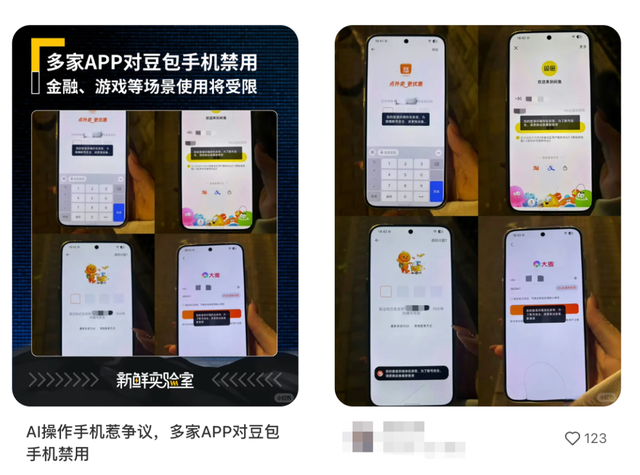
Image Source: Xiaohongshu
In response, Nubia and Doubao swiftly updated operation restrictions and disabled related AI functions, a trend further formalized in the new mass-produced model, the NaviX Ultra.
Specifically, the second-generation Doubao phone introduced protocols like MCP (Model Context Protocol) and A2A (AI Agent Interaction) to enable AI capabilities through active API access by app developers. Additionally, Doubao launched the SAEP (Screen Automation Operation Declaration) protocol to further encourage apps to open AI operation APIs.
The SAEP protocol clearly states that during a 30-day notification period, apps can declare permission to allow or refuse specific actions like posting, deletion, or check-ins. Moreover, except for system apps, ZTE apps, ByteDance apps, and explicitly consenting third-party apps, all others remain closed by default.
In essence, the SAEP protocol provides a more conservative but explicit AI interface operation framework, placing greater initiative in third-party apps’ willingness to open up. However, based on current usage, this “AI agent phone” that ZTE pins high hopes on essentially revolves around the ByteDance and Doubao ecosystems.
02
The “Doubao Phone” Goes Mainstream
From prototype to mass production, Nubia released two “Doubao phones” within nine months, with pricing soaring from the mid-range 3,499 yuan to a flagship starting price of 5,999 yuan. Yet, beneath the seemingly massive market hype, Nubia’s actual prospects remain bleak.
According to a recent report by Yicai, the NaviX Ultra’s total inventory is around 200,000 units, with an initial batch of less than 100,000. This marks a significant increase from the Nubia M153’s initial batch of about 30,000 units but remains negligible in China’s overall mobile market. For context, domestic mobile phone shipments exceeded 69 million units in the first quarter of this year.
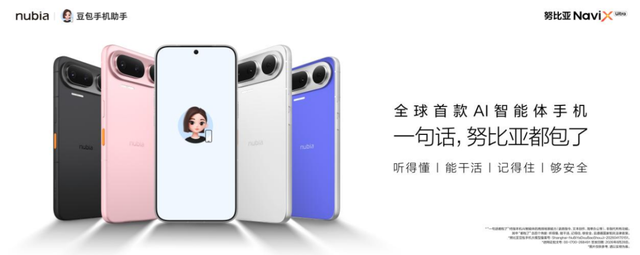
Image Source: ZTE
Additionally, IDC statistics show that as early as 2018, ZTE’s domestic market share, including Nubia, had slid to 0.75%. Brands like Sony, Sharp, and Meizu, which ranked below ZTE at the time, have now become relics of the past in the Chinese market.
Declining shipments directly erode Nubia’s bargaining power in the supply chain. According to industry insiders cited by media, constrained by shipment volumes, Nubia’s ability to negotiate with core suppliers like Qualcomm and Sony continues to weaken. Components like screens, batteries, and image sensors cost 8% to 15% more than those of leading brands, posing severe challenges to the brand’s pricing strategy.
During the same period, due to changes in the international environment, reduced financial support from ZTE’s parent company forced Nubia to cut R&D investment. Financial reports show that from 2018 to 2021, Nubia’s R&D expenditure ratio dropped from 8.2% to 4.5%. This contraction in R&D and technology further diminished Nubia’s market competitiveness.
According to Tianyancha data, Nubia (nubia), founded in 2012, is ZTE’s high-end mobile brand. Co-founder Ni Fei is also ZTE’s Terminal CEO and Nubia’s Chairman.
In recent years, Nubia, which once carved out a niche in photography, has largely disappeared from the mainstream mobile scene, with its domestic market share hovering below 1%. Nubia has become ZTE’s strategic reserve brand in consumer terminals, serving as a technological testbed—a fact that foreshadowed its deep integration with the Doubao phone.
After the “Doubao phone,” the Nubia M153, went viral in December last year, the AI phone strategy built around the ByteDance ecosystem was significantly elevated in priority. At its annual results briefing in March, ZTE explicitly stated that the technical preview of the Doubao phone assistant in the Nubia M153 drove the practical implementation of cutting-edge AI technologies on terminal devices, marking a major milestone in the development of native AI phones.
Building on this, ZTE said it is deepening cooperation with mainstream ecosystem partners like ByteDance to jointly develop and launch a new generation of AI phones, doubling down on its “AI for All” strategy. Additionally, ZTE stated it is further upgrading system-level AI capabilities, integrating its proprietary Co Claw intelligent scheduling technology to enable seamless cross-app and cross-ecosystem collaboration, supporting automated task execution in more complex scenarios, and enhancing user operational efficiency and interaction intelligence.
Evidently, for ZTE Nubia, the partnership with ByteDance’s Doubao has shifted from experimental exploration to a comprehensive strategic collaboration. More critically, for Nubia—increasingly marginalized from the mainstream—clinging to the Doubao phone as a lifeline to restore brand visibility and market attention may be the best option available.
03
ZTE’s Mobile Business Accelerates Transformation
Facing intensifying competition in the mobile market, ZTE is leveraging the Doubao phone’s popularity to accelerate a comprehensive transformation of its mobile business.
According to Huxiu, citing ZTE sources, before the second-generation Doubao phone’s release, ZTE’s mobile business underwent a new round of adjustments. Domestically, the Nubia brand will fully take over the Doubao phone business, while the ZTE brand will focus on custom models for telecom operators. Overseas markets will be operated under the Nubia brand, and the RedMagic gaming phone will also be integrated into the Nubia brand ecosystem.
This adjustment signifies that ZTE’s mobile business will accelerate its shift toward the Nubia brand. In fact, as early as 2025, Nubia launched the nubia Neo series, dubbed “young people’s first gaming phone,” blurring the lines between its original brand and RedMagic’s esports products.
According to ZTE, its mobile business will focus on “AI + gaming” to differentiate from “all-rounder” phones and compete in the AI + gaming segment, driving brand value elevation. On one hand, it will continue collaborating with ByteDance to build AI-native phone series, establishing Nubia as a pioneer in AI phones. On the other hand, through dual-brand synergy with RedMagic and a complete product matrix covering professional esports and trendy entertainment, it aims to strengthen global young audiences’ recognition of the Nubia brand.
However, judging by actual performance, beyond mobile terminals, ZTE’s consumer business is also accelerating efforts to create additional revenue streams.
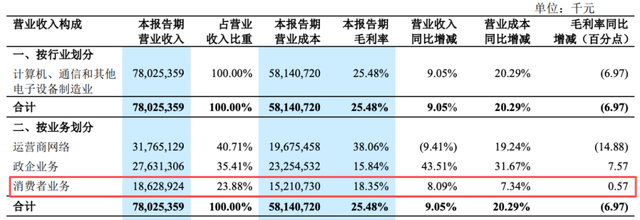
ZTE’s 2026 interim report shows consumer business revenue reached 18.629 billion yuan, up 8.09% year-on-year, with a gross margin of 18.35%, a 0.57 percentage point increase, primarily due to improved margins in home terminals. The consumer business is building a full-scene AI terminal matrix, including home terminals, mobile phones, mobile internet products, and cloud computers.
Source: ZTE 2026 Interim Report
Specifically, ZTE’s home terminal business, including FTTR, home routers, and home cameras, maintains a leading market share in the domestic operator segment. Its smart mid-screen devices have become the top brand in the operator market. Internationally, ZTE’s Wi-Fi 7 products are shipping at scale to customers in Europe, Asia, and Latin America, solidifying its global leadership in home terminals.
Cloud computers, a new growth area for ZTE’s consumer business, primarily build secure, efficient, and intelligent cloud-based office systems for enterprise and government clients, maintaining the top shipment volume in the operator market.
In mobile phones, beyond terminals, ZTE is focusing on key countries and large telecom operator markets, continuously expanding channel reach and open market presence, with 2C operations becoming a new engine for revenue growth.
Some images sourced from the internet. Please notify us for removal if there is any infringement.
-
![]()
ZTE’s New Doubao Phone: Playing It Safe in the AI Race
-
ZTE’s New Doubao Phone: A More Cautious Approach
-
![]()
Samsung, Spurred by Apple, Steps Up Its Game, with LY Technology Reaping the Greatest Benefits
-
Blue Heart Xiaov Set to Introduce Paid Pro Version, Revealing vivo’s Large Model Strategy
-
Three-Way Struggle for Market Share: BYD, Chery, and Geely Challenge Great Wall, Posing Immediate Risks to Wei Jianjun
-
![]()
The Reason Behind Valve's Headset Price Surge of 2400 Yuan: The End of an Era of Selling at a Loss
-
![]()
Decoding the '4S' Architecture | Report on Enterprise-Level AI Services in China
-
![]()
Li Auto Aims to Sell Three Technologies, First Buyers Unlikely to Be Major Automakers