Transsion's Mobile Phone Profits Halved, Yet Energy Storage Revenue Surges 825% in Two Years! Africa's Mobile Phone King Pivots to Energy Storage—Can Channel Strength Outpace Technological Barriers?
 10/03 2026
 366
366
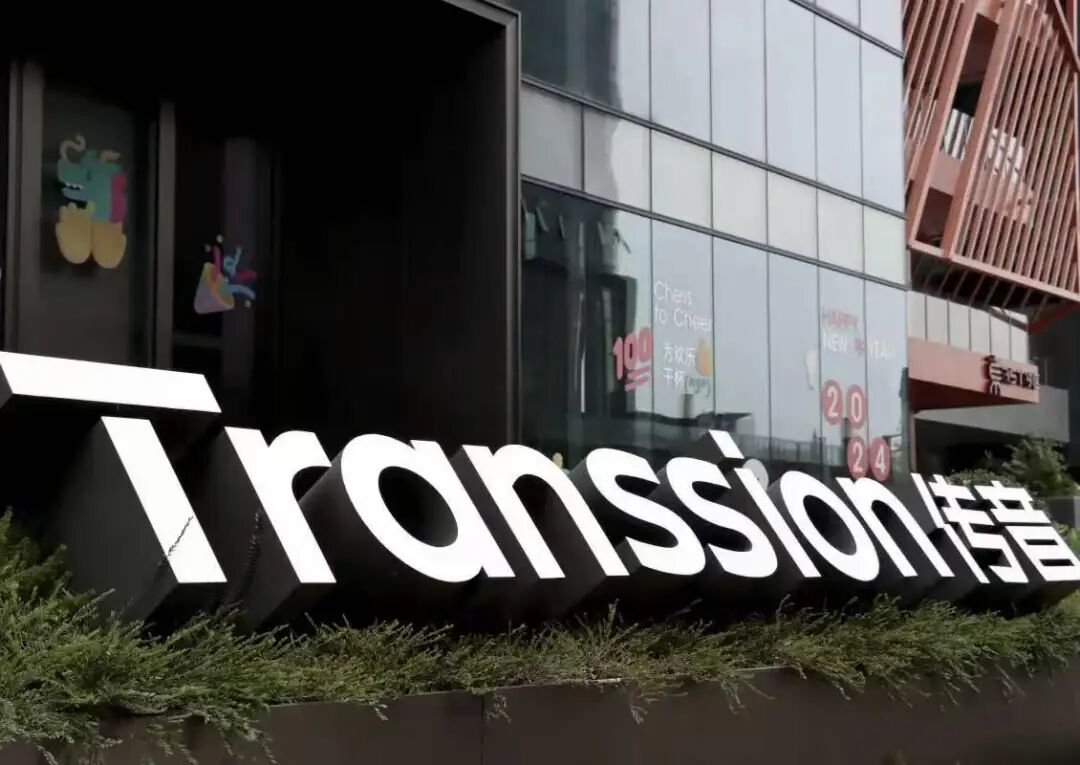
Transsion's Mobile Profits Halved, Energy Storage Revenue Jumps from 4.17M to 358M, African Retail Network Becomes Key Channel.
Foreseen Energy Research reveals that Transsion Holdings' energy storage revenue skyrocketed from RMB 4.178 million in 2023 to RMB 358 million in 2025, with a two-year CAGR of approximately 825%.
Meanwhile, the company's net profit plummeted from RMB 5.597 billion to RMB 2.6 billion, nearly halving. Africa's mobile phone king is now attempting to craft a new capital narrative with batteries.

Transsion Sells Power in Africa: What Does It See?
Sub-Saharan Africa has approximately 600 million people lacking reliable electricity, with daily blackouts spanning hours in populous nations like Nigeria. According to the African Solar Industry Association, Africa's total installed energy storage capacity stood at just 1.64GWh in 2024, indicating early-stage market penetration.
Globally, this figure is negligible. However, its small scale translates to staggering growth potential.
Africa's residential lithium-ion energy storage market is projected to surge from $450M-$550M in 2026 to $2.8B-$3.6B by 2035, maintaining a CAGR of 18%-25%. While currently insignificant, the market is poised to multiply several times over the next decade. Chinese inverter exports to Africa have already grown 49%, with Nigeria and South Africa as key drivers.
Transsion's approach mirrors its mobile phone strategy from two decades ago: identifying gaps overlooked by major players and unmet by local firms, then filling them with cost-effective, localized solutions. In 2023, it launched Titan Energy with two brands—itel Energy (offering a 2kWh base model at $199 with installment plans) and DYQUE Energy (targeting mid-to-high-end markets with AI management systems). Leveraging its existing dealer network and 2,000+ Carlcare service centers, Transsion possesses channel assets difficult for competitors to replicate.
Transsion isn't betting on technological leadership but on channel expansion speed.

Behind the 825% Growth: A Hidden Weakness
The growth is impressive—energy storage revenue climbed from RMB 4.178M in 2023 to RMB 358M in 2025, with RMB 455M generated in the first four months of 2026 alone, surpassing 2025's total and marking a 240.74% YoY increase.
However, a critical detail is often overlooked: Transsion's early energy storage business relied entirely on ODM manufacturing, with 100% ODM dependency in 2023 and 2024. OEM production rose to just 6.7% in 2025 and 22% in the first four months of 2026.
Most energy storage products sold by Transsion are manufactured by third parties. The company focuses on branding, distribution, and after-sales service—akin to a restaurant where dishes are prepared in a neighboring kitchen while you serve and collect payments.
This model offers light asset operations and rapid scaling. The question remains: Where is the competitive moat? If leading energy storage firms accelerate channel expansion in Africa, Transsion's advantage built on channels and pricing may erode faster than anticipated.
Competition is already mounting. Huawei signed a partnership with an Egyptian firm to localize grid-forming energy storage systems with a 4GWh capacity. Jinko Solar deployed a 15MWh system in Senegal, powering 45 remote villages. Tianneng is rapidly capturing African market share.
Transsion's rivals are far stronger than Africa's past local mobile phone players. Huawei brings three decades of power electronics expertise, while Jinko is a global solar panel leader. What does Transsion offer? Channels. But channel barriers are far less formidable than technological ones.

From Mobile Phones to Energy: A Bigger Leap Than Imagined
Transsion's mobile phone business faces significant headwinds. Memory chips accounted for 20.9% of costs in 2023, surging to 48.4% in the first four months of 2026. Three major raw materials comprised 64.3% of sales costs. Inventories doubled from RMB 8.9B to RMB 18.935B in H1 2026, squeezing operating cash flow to -RMB 5.861B.
Price hikes temporarily boosted profits—smartphone ASP rose from RMB 538.8 to RMB 705.5, driving a 46.22% H1 net profit rebound. However, this relied on timing—low-cost inventory depletion preceded high-cost material accounting. Once high-priced raw materials are fully recognized, gross margin pressures will resurface.
In Africa, Transsion's mobile market share slipped from 51% to 48% in 2025, per Omdia. Xiaomi and Honor grew shipments by 27% and 144%, respectively, far outpacing Transsion's 7%.
Energy storage now contributes just ~2% of Transsion's total revenue but represents its fastest-growing segment. Beyond AI R&D, Hong Kong IPO proceeds will heavily fund energy storage as a core component of its IoT ecosystem.
The issue lies in capability transferability. Mobile phones operate on a consumer goods logic driven by branding, channels, and affordability. Energy storage follows an energy equipment logic, where safety, cycle life, and system efficiency matter most—metrics unattainable through ODM alone. While Transsion enjoys strong brand recognition in Africa for mobile phones, will households buy energy storage systems simply because they recognize the brand? Unlikely.
Transsion's African energy storage strategy essentially monetizes its channel assets twice. It repurposes its mobile phone dealer network and after-sales infrastructure for a severely underserved market. This logic holds in the early stages, as evidenced by the 825% growth.
However, energy storage competition will inevitably shift from channels to products. Transsion's OEM production just rose from zero to 22%, with core technological gaps remaining. The Hong Kong IPO provides a funding window to address these shortcomings, but it won't stay open indefinitely. Huawei's 4GWh Egyptian project is already operational, while Jinko Solar expands across Sub-Saharan Africa. Transsion may have only two or three fiscal quarters to transition from brand licensing to autonomous manufacturing.
Africa's power deficits are real, and market growth is undeniable. Whether Transsion can capitalize on this Dividend (bonus) depends on its willingness to invest heavily in R&D rather than relying solely on channel advantages.
Transsion enters energy storage with channels and branding as its initial strengths. However, channel advantages lack the cumulative, sustainable nature of technological barriers. Building its mobile phone empire took nearly two decades; replicating that success in energy storage by merely leveraging existing channels to sell third-party products will not establish equally deep competitive moats. The true test lies in whether Transsion can develop autonomous technological and product capabilities before channel advantages diminish. The window of opportunity is narrowing.
-
![]()
Transsion's Mobile Phone Profits Halved, Yet Energy Storage Revenue Surges 825% in Two Years! Africa's Mobile Phone King Pivots to Energy Storage—Can Channel Strength Outpace Technological Barriers?
-
Undoubtedly, Xiaomi's Goal of 550,000 Vehicle Sales This Year Is Unattainable!
-
Tencent, ByteDance, and Kimi All Dispatch Staff to Customer Locations
-
![]()
Huawei Unveils Mate 90 Series: Priced from 5999 Yuan, Available for Purchase at Noon Today
-
Pengcheng N70/N90 Models Are Flying Off the Shelves, and Xiaomi Auto Hits Another 40,000-Unit Milestone!
-
This is absolutely ridiculous! Trump renames AI to 'SI' from now on
-
Tech Innovation | Silicon-Based Flow’s ‘Token Factory’ Debuts on HKEX as MaaS Revenue Soars 653%
-
The Anxieties of 007: Humanity’s Enduring Fear of Technological Evil