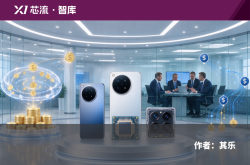
The Enigma of the $1.2 Billion Loan and the Flagship Price Surge: Why is OPPO Raising Funds Amid an Industry Slump?
 10/10 2026
 437
437
【Abstract】As the smartphone industry grapples with a prolonged downturn and memory chip prices in the upstream supply chain soar, terminal manufacturers are struggling to stay afloat. A recent report that OPPO is seeking a $1.2 billion syndicated loan has sparked considerable attention.
On one hand, the flagship Find X10 series has witnessed a price hike, while on the other, OPPO is planning a $1.2 billion syndicated loan. Is this a short-term emergency move to cope with cost pressures or a long-term strategic move to gain a foothold in next-generation smart hardware?
In an era where consumers are taking longer to replace their smartphones, where does OPPO's confidence lie in daring to raise substantial funds against the industry trend? Can this ambitious strategy of technological and overseas expansion help OPPO break through the downturn and secure a ticket to the next growth cycle?
Here is the main text:

The Confidence Behind the 'Big Year' and the $1.2 Billion Speculation
Recently, Chinese smartphone manufacturer OPPO is seeking a syndicated loan worth approximately $1.2 billion (around RMB 8.05 billion). This news quickly ignited heated discussions in both the tech and financial sectors.
In international financial markets, syndicated loans involve multiple multinational banks forming a consortium to jointly provide funding. The approval criteria for applicant companies are stringent, encompassing financial transparency, profitability, asset-liability ratios, and long-term credit evaluations.
This is not OPPO's first venture into overseas syndicated financing. In 2022, OPPO completed its first overseas syndicated loan, initially aiming to raise $1 billion. After receiving overwhelming participation from 10 international banks and achieving oversubscription, the final funding was increased to $1.2 billion, split into three-year and five-year tranches. This set a benchmark for debt financing in the consumer electronics industry at the time.
Four years later, OPPO is launching another syndicated loan of the same scale. As of public reports, the loan is still in the solicitation phase, with details such as term, interest rate, participating banks, and fund usage undisclosed. The final subscription amount and scale remain uncertain. Opting to raise substantial funds during a period of widespread industry capital expenditure tightening reflects OPPO's confidence in its creditworthiness and the financing environment.
OPPO's willingness to pursue large-scale financing amid industry-wide capital restraint stems from its leading market position.
According to IDC, China's smartphone shipments reached approximately 69.04 million units in Q1 2026. Despite a slight 3.3% year-over-year decline, OPPO maintained its top-three position domestically through a strong product portfolio and channel resilience.
In Q2 2026, global smartphone shipments reached 277.5 million units, down 6.7% year-over-year, with a polarized market. OPPO's global shipments reached approximately 28.9 million units, holding a 10.5% market share and ranking fourth globally.
In the Chinese market, Q2 2026 shipments totaled 66.01 million units, with OPPO shipping 10.56 million units and capturing a 16.0% market share, tying with vivo for third place domestically.
Notably, OPPO's overseas business has long surpassed its domestic operations, with overseas shipments and revenue consistently accounting for over 60%. Southeast Asia, Europe, and Latin America are its core markets. Domestically, OPPO faces structural pressures, with its high-end Find series driving volume while lower-priced models weaken due to rising memory costs. The large-scale financing appears to be less about expansion and more about stockpiling resources amid cost and market share pressures.
Analyzing its fund allocation, OPPO is targeting three strategic areas for the next three to five years: First, advancing foldable screen technology by investing heavily in R&D for lightweight hinges, flexible display flatness, and hinge durability.
Second, competing in the global premium market through the Find X10 series and Hasselblad imaging innovations, directly challenging Apple and Samsung in the $700+ segment.
Third, pioneering next-generation AI hardware entry points by building an independent AI hardware ecosystem beyond smartphones.

Supply Chain and Overseas Expansion: The 'Trust Chain' for Navigating Cycles
Looking at the 2026 consumer electronics supply chain upstream, the industry is experiencing an unprecedented 'cost storm.'
According to overseas analysts, global smartphone memory chip (DRAM and NAND Flash) prices surged in Q2 2026, with quarterly increases exceeding 80%. DRAM, once secondary to SoC processors in BOM costs, now surpasses them, becoming the most expensive single component in flagship smartphones.
Electronics component giant Murata announced in mid-September 2026 that it would halt production of certain consumer-grade MLCCs with gross margins below 5%, shifting capacity to more profitable AI servers and automotive electronics. Qualcomm also raised chip procurement prices starting September 1. These simultaneous supply chain price hikes have severely squeezed terminal manufacturers.
Against this backdrop, terminal price increases have become an industry-wide response. Counterpoint data shows the global smartphone average selling price (ASP) rose 17% year-over-year in Q2 2026.
OPPO has made targeted adjustments amid market changes. In March 2026, it slightly raised prices for select A series, K series, and OnePlus models, followed by a moderate increase for the Find X9 standard edition in April. By September 22, 2026, the Find X10 standard edition (12GB+256GB) debuted at RMB 5,499, up RMB 1,100 from the previous generation's equivalent model, while the top-tier 16GB+1TB version saw a RMB 1,700 increase.
This round of price hikes is cost-driven rather than demand-driven. While price increases protect per-unit margins, they further suppress replacement cycles and accelerate market consolidation toward top players, creating a dilemma: 'Not raising prices hurts margins; raising prices risks market share.'
Counterpoint's analysis confirms that while OPPO's ASP grew 9% year-over-year, its proactive DRAM/NAND capacity lock-ins and optimizations prevented runaway terminal price hikes, maintaining consumer trust and brand acceptance while ensuring product quality.
Beyond supply chain mastery, OPPO has undergone profound strategic restructuring in its internal brand architecture and overseas localization.
In January 2026, realme officially integrated into OPPO as a sub-brand to deepen R&D and supply chain synergies. By July, OPPO clarified its global brand regional roles: realme ceased new product launches in China to focus on overseas high-growth markets; OnePlus refocused on the domestic market, pausing updates in Europe and North America while maintaining its India strategy. These moves significantly reduced internal resource duplication, improving capital and channel efficiency.
OPPO has accelerated overseas localization and premium channel construction.
In May and June 2026, OPPO formed deep manufacturing partnerships with India's Amber Group and Bhagwati Products. Amber will handle manufacturing for OPPO, OnePlus, and realme brands, targeting full-scale production by 2027. In the Middle East and Africa, OPPO's Egyptian factory, which began operations last year, expanded from 17 to 20 production lines in 2026, boosting monthly capacity to 500,000 units, with plans to export to key Arab and African markets by late 2026.
These overseas factories in India and Egypt represent heavy asset investments to hedge against tariffs and comply with local regulations, with long construction and ramp-up periods and delayed returns. This likely constitutes a major use of the $1.2 billion loan. In contrast, vivo relies more on long-established local distributors in India and Southeast Asia, while Honor partners primarily with European and Middle Eastern carriers. OPPO has chosen a capital-intensive self-built capacity route, requiring more upfront investment with slower returns.

New Business Lines and AIoT: The Second Growth Curve Powered by the 'AI Heartbeat Ball'
While smartphones remain OPPO's core business, its breakthroughs in AIoT and next-generation wearable AI hardware drive its second growth curve.
In September 2026, at the highly anticipated OPPO Developer Conference (ODC26) and autumn product launch, OPPO unveiled the groundbreaking 'OPPO AI Heartbeat Ball.' Weighing just 9.8 grams, this elegantly designed collar-worn device offers 24-hour seamless operation and is priced affordably at RMB 499, targeting AI applications beyond smartphones.
The 'OPPO AI Heartbeat Ball' integrates with the system-level open MCP (Model Context Protocol) protocol, enabling seamless bottom-layer data and contextual interactions with Find X10 series phones running ColorOS 17 and the new OPPO Watch S2 smartwatch. Worn on the collar, it captures real-time voice commands, environmental semantics, and emotional states, combining with Watch S2's health vitals data for processing by Find X10's on-device and cloud-based large models, creating a 'smartphone + wearable + AI assistant' trinity for full-scenario experiences.
The Heartbeat Ball represents OPPO's low-cost ecosystem experiment for ColorOS. To date, no smartphone maker has launched a verified hit in wearable AI hardware; it functions more as an 'option' than a proven business for navigating industry cycles.
In the AI large model and hardware integration race, leading manufacturers have diverged strategically.
vivo upgraded its 'Blue Heart Large Model' matrix in 2026, embedding Blue Heart Mini V deeply into OriginOS for generative office assistance and image processing on smartphones. Honor leveraged MagicOS's 'Magic Portal' and cross-device AI for seamless intent recognition and service orchestration.
OPPO's innovation lies in its dual focus: creating an ultra-smooth ColorOS 17 while pioneering the 'wearable AI hardware' category. However, this requires substantial supply chain customization, algorithm tuning, and marketing investments.

Epilogue
From raising nearly $1.2 billion overseas to defying industry downturns in supply chain management, from fierce competition in premium markets to the debut of groundbreaking wearable AI hardware, OPPO demonstrates its resolve to shape the future amid industry headwinds.
The $1.2 billion syndicated loan remains in the solicitation phase. If successfully secured, it could alleviate funding pressures from memory price hikes and support long-term investments in overseas factories and AI hardware. However, financing alone does not build competitiveness. OPPO's ability to navigate this cycle ultimately hinges on converting premiumization and new business initiatives into tangible revenue.
*Header image generated by AI
- XINLIU -
-
![]()
The Rise of AI Travel in a New Era | WeTides
-
![]()
Huawei Mate 90 Pro Max Review: Stellar Imaging, HarmonyOS Ecosystem Excels
-
![]()
The Enigma of the $1.2 Billion Loan and the Flagship Price Surge: Why is OPPO Raising Funds Amid an Industry Slump?
-
![]()
A Puzzle Behind $1.2 Billion Loan and Flagship Price Hike: What Is OPPO Preparing for During Industry Adjustment Period?
-
![]()
BYD’s 8T8R Millimeter-Wave Radar Chip Delegates Perception and Computation to Central Brain
-
![]()
Did the 'Golden September' Phenomenon Fail to Materialize? Auto Market Experiences Sales Dip Amidst High Base, Yet 'Not Cold'
-
![]()
Circular Aperture, Square Aperture, Double Slit: Three Optical Fingerprints of Diffraction and Interference
-
![]()
Post-90s Tsinghua PhD Raises 300 Million Yuan for AI Video Startup