When Ambition Meets Boundaries, Building a Step-Change Future is Tougher Than Building a Phone
 10/25 2026
 413
By He Ying
Edited by Zhang Xiao
A single phone can almost embody all the aspirations large model companies have for AI applications.
Enabling AI to understand user intent, invoke services, execute tasks, and even handle complex cross-application workflows on behalf of users has become a key direction in the development of intelligent agent technology.
Such a future seems undeniably attractive.
On October 13, Journey Stars (hereinafter referred to as Journey) officially launched its first intelligent agent phone, STEPX Neo, integrating self-developed models and intelligent agents into a single device. The move attempts to enable AI to handle more operations that previously required users to perform themselves.
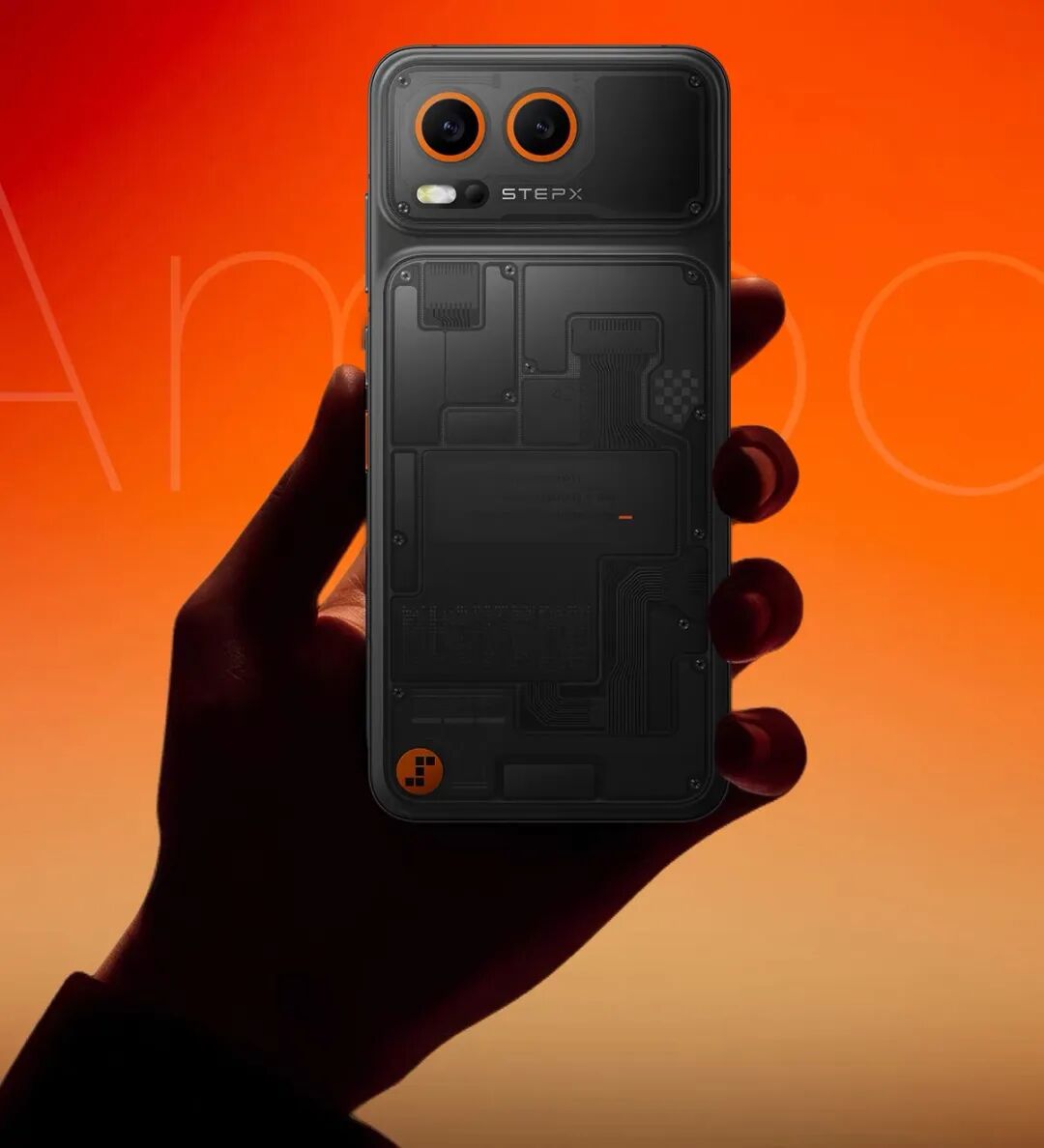
Image: STEPX Taobao Official Flagship Store Product Details Page
However, the integration of AI into phones is hardly new.
Mainstream manufacturers such as Huawei, OPPO, and Honor are all pushing AI assistants deeper into their operating systems, with many features now achievable through system upgrades on existing products.
As the capabilities of AI phones continue to expand, the question remains: How much unique value can a phone specifically designed around AI offer that existing products cannot?
For Journey, phones might represent an opportunity to explore the next generation of AI products. But as AI becomes a common capability across all phones, what advantage does entering this competition early with STEPX Neo truly provide?
01
Why Is Journey Building Its Own Phone?
As one of the "Six Little Tigers" in large models, once on par with Moonshot AI, Journey has struggled to gain significant traction among consumer users amid domestic competition.
Early on, Journey launched a chat assistant named "Yuewen" and a role-playing product called "Maopaoya." However, facing competition from the likes of Doubao and Kimi, these attempts failed to secure a broad user base.
By the end of 2024, Journey ceased large-scale investment in Maopaoya, shifting its business focus to the B-side and targeting smart terminals like phones and cars as key avenues for model commercialization.
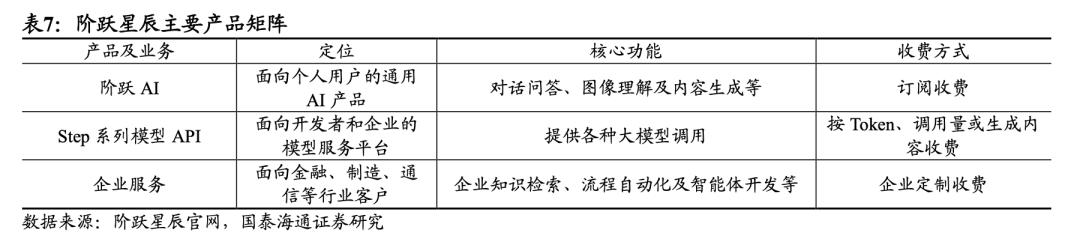
Rather than cultivating consumer habits for a new AI application from scratch, leveraging the sales channels of established hardware manufacturers to bring models directly to the consumer market offers a more scalable path.
By deploying models at scale through terminal shipments, Journey avoids bearing the costs of whole-device sales, inventory, and after-sales support independently. For a large model company with high R&D expenses, this represents a commercially viable approach.
This strategy has indeed yielded promising results for Journey.
By the end of 2025, the cumulative installations of its Step-series multimodal models on mobile devices exceeded 42 million units, covering brands like OPPO, Honor, and ZTE.
Yet, the question remains: How much commercial value can 42 million installations truly deliver for Journey?
While installations demonstrate Journey's technical deployment capabilities, they do not directly translate into revenue or user scale. Control over entry points, product experience, and interaction data management remains with phone manufacturers. The extent to which models can participate in functions and the resulting benefits for model providers depend on specific partnerships.
This industrial division of labor is not difficult to understand. However, as AI penetrates deeper into phone operating systems and becomes a primary battleground for smartphone competition, the position of large model companies is evolving.
Historically, phone manufacturers integrated large models primarily to support features like voice assistants, intelligent search, and content generation.
Today, intelligent agents are attempting to understand user intent, plan tasks, and even invoke services across applications. The ultimate experience now depends not only on model performance but also on system permissions, task scheduling, and third-party application cooperation.
These capabilities are precisely the areas where phone manufacturers are increasing their investments.
In September, OPPO released ColorOS 17, further enhancing on-device models and intelligent agent frameworks. Its Xiao Bu assistant can now invoke approximately 200 Alipay services. Huawei, Honor, and other manufacturers are also continuously upgrading system-level AI capabilities.
As phone manufacturers begin organizing the entire AI experience themselves, a potential risk for third-party model providers is that model capabilities may increasingly be viewed as modular components that can be procured, combined, or even replaced.
Moreover, even in terms of performance, disparities in on-device adaptation persist. Phone manufacturers have no obligation to bear all R&D costs independently. However, for model providers, technological leadership does not necessarily equate to equivalent product influence or commercial bargaining power.
For Journey, having models installed in tens of millions of devices is one thing. Whether the technical value of these models can be converted into higher commercial value as intelligent agents penetrate operating systems is another.

As intelligent agents transition from answering questions to executing tasks, the practical value of models increasingly relies on cooperation with operating systems, tool invocations, and third-party services. Even with exceptional model capabilities, model providers struggle to independently determine how these capabilities are ultimately delivered to users, let alone secure commercial returns.
In July of this year, Yin Qi, Chairman of Journey, stated during a product launch that the existing mobile ecosystem makes it difficult to fully showcase Journey's models, operating systems, and intelligent agent capabilities. Therefore, the company hopes to establish a complete product system through its own terminals. However, he also clarified that the original B-side business would continue and that Journey remains open to providing Step AOS and intelligent agent capabilities to other manufacturers in the future.
This choice must also be understood within the context of the current competitive landscape in China's large model industry.
Over the past few years, domestic large model companies have engaged in round after round of competition over technical performance, ranging from parameter scale and reasoning ability to multimodality. As models continue to iterate, the questions enterprises must answer become increasingly specific: Beyond providing model capabilities to clients, can these technologies be transformed into products that are genuinely and continuously used?
For Journey, continuing to supply models to phone manufacturers can expand technological deployment scale. However, specific products still need to be developed around the needs of partners.
Journey needs to find a more distinctive product.
From this perspective, rather than continuing to invest heavily in competing for chat assistant users, owning a terminal offers an opportunity: It allows Journey to organize models, operating systems, intelligent agents, and hardware according to its own product vision and validate this approach through real-world usage.
More importantly, Journey does not necessarily need to sell a large volume of phones to derive commercial value.
Yin Qi previously stated that the first phase of the initial phone launch would not focus solely on shipment volume. He also views the integration of hardware and software as a long-term commercialization direction for Journey, with the aspiration to provide mature intelligent agent systems to more terminal manufacturers in the future.
If Step AOS is ultimately validated on phones, Journey will have the opportunity to further offer intelligent agent systems and related technical services to other manufacturers beyond just models.
However, this vision hinges on a prerequisite: The proprietary phone must demonstrate product capabilities that are sufficiently valuable and difficult to achieve under existing collaboration models. Otherwise, the significance of Journey's investment in hardware R&D would be hard to justify through mere technical demonstration.
While the future of AI phones may be worth betting on, building phones oneself is not necessarily a profitable venture.
02
When the Ambition of AI Phones Clashes with Internet Boundaries
Journey's foray into phone manufacturing cannot entirely bypass Doubao's example.
The day after STEPX Neo's official launch, Doubao Phone Assistant released a list of over 150 applications explicitly refusing GUI automation permissions, including mainstream products like WeChat, Alipay, Taobao, and Meituan.
Meanwhile, at its launch event, Journey announced that its intelligent agent, Amoo, had forged ecological partnerships with nearly 100 enterprises or products, including Alipay, Ctrip, Didi, and Meituan.
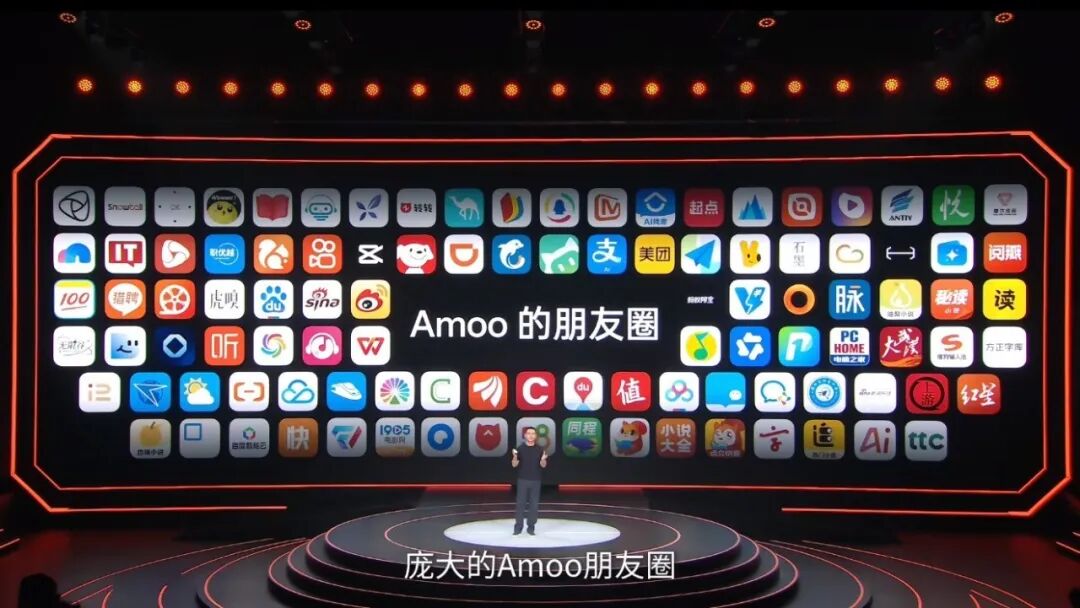
While both aim to enable AI to take over more phone operations, the internet ecosystems they face exhibit starkly different attitudes.
This divergence stems from their chosen technical approaches.
Doubao Phone Assistant relies heavily on GUI automation, identifying screen content and simulating user actions within applications. This method offers strong versatility, theoretically enabling cross-application tasks even without dedicated service interfaces.
Journey, on the other hand, primarily uses protocols like MCP and A2A to enable Amoo to invoke professional service agents provided by partners.
Behind these two approaches lie fundamentally different partnership dynamics.
For internet platforms, GUI automation means external agents can directly manipulate application interfaces, making it difficult for platforms to predefine service invocation scopes as they would with formal APIs. By contrast, opening capabilities through interfaces allows platforms to decide which features to provide to third parties and the rules governing their use.
Of course, GUI automation is not without its limitations. Doubao's SAEP protocol allows developers to declare permission boundaries for automation, and system rules still constrain operations involving account security.
From the current ecological response, internet platforms clearly prefer cooperative approaches that allow explicit control over service scopes.
However, Journey securing nearly 100 partnerships does not mean Amoo can freely operate nearly 100 apps.
For instance, while Journey has partnered with Meituan, the latter initially only opened errand-related functions, excluding food delivery services. Tencent's initial cooperative products included WorkBuddy, Enterprise WeChat, and WeChat Reading, but not WeChat itself.
This means that while formal cooperation reduces ecological access barriers for Journey, it also accepts the reality that partners define the scope of intelligent agent services.
For AI phones, this represents a significant limitation.

The true promise of intelligent agents lies in their ability to autonomously find and combine services based on user demands. For example, when planning a trip, users need not specify which platform to use; the agent can compare options based on budget and itinerary and complete bookings.
However, when certain platforms do not open corresponding interfaces or lack necessary collaboration capabilities, even if the model can plan tasks, execution may falter.
The harsh reality is that not all these limitations can be resolved through technological progress.
Over the past decade, the mobile internet has established a relatively mature commercial order.
Users shop on Taobao, order food on Meituan, and book hotels through Ctrip. Internet platforms not only provide services but also influence user choices through their search and recommendation systems, monetizing through advertising and commissions.
Intelligent agents seek to disrupt this service distribution model.
When users become accustomed to directly expressing demands to AI, the commodity comparison and service selection processes that once occurred within individual apps may now happen during the AI's task planning phase.
For internet platforms, this means that the battleground for user demands may no longer lie entirely within their own apps.
Platforms have reasons to cooperate with intelligent agents. New service entry points can generate additional orders, and interface invocations help platforms reach more users. As long as critical transaction and fulfillment processes remain under platform control, such cooperation has a realistic commercial foundation.
However, if intelligent agents gradually gain control over product recommendations and service selections, the situation becomes far more complex.
Take e-commerce and local services as examples. Search rankings and product exposure are integral components of platform monetization. If more users bypass apps and rely on agents, platforms' existing traffic allocation capabilities could be undermined.
From this perspective, Journey's current ecological support differs from Doubao's. Unlike Doubao, Journey lacks direct competition with super apps on the scale of Alibaba, Tencent, or Meituan. This relatively neutral position may reduce resistance when establishing partnerships with other platforms.
But herein lies the problem.
Journey's current ease in securing cooperation may stem partly from its lack of a user base significant enough to influence platform traffic allocation.
If Amoo evolves into a major consumer service entry point capable of persistently shaping user choices—which platforms to use or which products to buy—Journey's relationship with internet giants could shift.
At that point, whether platforms continue to offer the same service capabilities and how commercial benefits from intelligent agents are allocated would require renegotiation.
Moreover, cooperative relationships established through formal interfaces do not necessarily constitute a unique competitive advantage for Journey. If platforms choose to extend similar capabilities to other phone manufacturers, some of the service experiences currently provided by Amoo could be replicated.
Indeed, the realities facing AI phones have always been complex.
Technologically, models are gaining stronger task planning and execution capabilities, and GUI automation is not incompatible with formal interfaces. However, in commercial scenarios, service openness, user authorization, account security, and transactions still require coordination among multiple stakeholders.
From a security standpoint, platforms' retention of permissions is not solely driven by commercial interests. Restricting third-party automation is reasonable when personal information, account security, and payment liabilities are at stake. Doubao's SAEP protocol, which attempts to clarify automation boundaries for developers, reflects efforts to address these concerns.
Ultimately, the technological boundaries and commercial interests of the mobile internet are deeply intertwined.
And these issues cannot be resolved by simply launching an AI phone.
03
A Heavy Business Proposition
Shipment volume is clearly not Journey's primary metric for defining the success of STEPX Neo at this stage.
As mentioned earlier, in July of this year, Yin Qi stated that the initial phone launch would not focus solely on shipment volume.
Yet, to develop this phone, Journey has assembled an independent hardware team of over 500 people.
Journey is advancing large models and intelligent agent terminals as two strategic lines, with the phone business undertaken by a separately established company. The terminal team has also recruited management personnel with backgrounds at Huawei and Honor, including Ni Jiayue, President of Terminals, who previously served in Huawei and Honor's organizational structures for many years.
Obviously, Jieyue is well-prepared for long-term operation in the terminal business.
However, manufacturing mobile phones inevitably brings additional investments.
Even with ODM manufacturers like Huaqin shouldering part of the R&D and manufacturing work, Jieyue still needs to address issues such as supply chain coordination, stocking, sales channels, after-sales service, and product iteration.
These investments cannot be entirely eliminated just because Jieyue is not currently pursuing shipment volumes.
Moreover, the current mobile phone industry does not offer many opportunities for new players to enter easily.
IDC data shows that in the third quarter of 2026, smartphone shipments in the Chinese market were approximately 57.9 million units, down 15.4% year-on-year, marking the sixth consecutive quarter of decline. Rising prices of components such as storage have further squeezed the operating space for mobile phone manufacturers.
With weakening market demand, established brands still need to repeatedly weigh costs against selling prices. For new brands to gain consumer recognition, it will naturally not be any easier.
Not to mention that for a new brand, 3999 yuan is not a price at which consumers can overlook brand recognition, system maturity, and after-sales service.
Jieyue possesses large model R&D capabilities and can redesign the phone's interaction methods around intelligent agents. However, for users, the new experiences brought by AI ultimately still need to be compared with the phone's daily usability.
Especially when mainstream manufacturers are continuously adding AI functions through system upgrades, Jieyue still needs to convince consumers that purchasing a STEPX Neo specifically is sufficiently necessary.
So, rather than saying Yin Qi is not in a hurry to pursue sales volume for the first-generation product, it would be more accurate to say that he is also 'maintaining despair.'
However, Yin Qi also emphasizes that the first mobile phone still needs to achieve a certain scale as quickly as possible to allow real users to participate in product iteration. He has also borrowed experience from the hardware industry, stating that a product often requires multiple generations of updates to truly mature.
For Jieyue, this means a longer-term investment.
With limited initial sales, Jieyue can view the mobile phone as part of product R&D and technical validation. As an independent team, subsequent models, and a service system are gradually established, the investments required to sustain this business will continue. How to ensure these investments yield corresponding returns will inevitably become an operational issue sooner or later.
Not to mention that Jieyue's original large model competition has not ended.
It still requires continuous investment in computing power, algorithms, and R&D talent to maintain the technological competitiveness of its foundational models while building new product and operational capabilities for intelligent agent terminals.
Ideally, the STEPX Neo can accumulate real users, help refine Step AOS, and then provide mature intelligent agent capabilities to more terminal manufacturers.
However, there is still a considerable gap between these potential benefits and the investments already made.
There is currently no public data to prove how much incremental revenue mobile phones can bring to Jieyue's original model business. Even if Step AOS can be exported externally, whether other terminal manufacturers are willing to adopt it on a large scale remains uncertain.

If the STEPX Neo ultimately remains a niche mobile phone, but Jieyue develops an intelligent agent system that other manufacturers can adopt, then this investment still has the opportunity to yield returns beyond hardware sales.
Conversely, if user demand for independent AI mobile phones remains limited, and established mobile phone manufacturers prefer to develop their own intelligent agent systems, Jieyue may bear the operational costs of the terminal business long-term without achieving the expected commercial growth.
Moreover, the reality that is even harder to ignore is that as intelligent agents gradually become a fundamental capability of mobile phones, manufacturers with large user bases may find it easier to promote the widespread adoption of this technology.
After all, when purchasing a mobile phone, users ultimately still consider the overall experience. No matter how strong the AI capabilities are, they must still undergo market selection alongside the brand, system, and other features.
More directly, even if AI mobile phones become mainstream in the future, the benefits of market growth may not be evenly distributed among all participants.
The potential of AI mobile phones may be vast, but many who rise early in the AI era end up arriving late to the market.
For Jieyue, what truly needs to be proven in the future is not just the capability boundaries of this AI mobile phone but also how big a business it can build from it.
-
Has Tesla Lost Its Lead and Missed the Chance to Enter China? Time is Running Out for Tesla's FSD in the Chinese Market
-
![]()
When Ambition Meets Boundaries, Building a Step-Change Future is Tougher Than Building a Phone
-
NIO’s Battery Swap Stations Now Accommodate an Additional Battery Model
-
![]()
Why Are Smartphones Selling Fewer Units but at Higher Prices?
-
iPhone Duo Sees Just 900 Yuan Price Hike, Scalpers in Frenzied Resale Race
-
![]()
Focus | Warburg Pincus Considers Selling Chinese Parking Operator Yangguang Haitian, Valuation May Reach US$300 Million
-
![]()
What? The Audi A8 is Set to Be Manufactured in China, in Partnership with Huawei
-
![]()
AUMOVIO’s Latest MTXN3 Automotive Remote Key: Powered by NXP NCF29A1/A2 Chip, Supporting 125kHz, 433MHz, and UWB Frequencies!