Apple Faces Criticism from Tech Aficionados, Yet Consumers Flock to Purchase—The Real Story Behind Its Robust Sales Is Far More Complex
 10/26 2026
 376
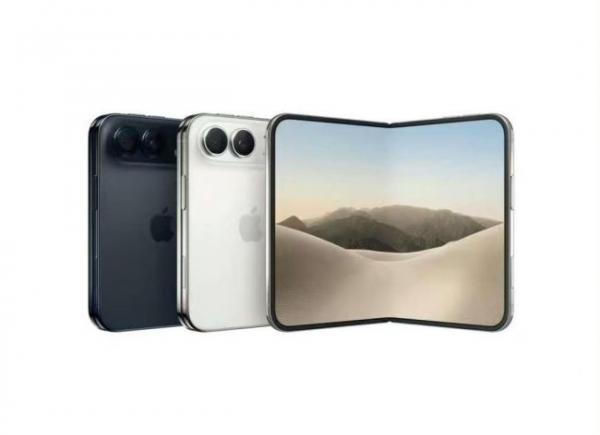
Those well-acquainted with Apple are aware that it stands out as one of the few smartphone makers where public opinion diverges sharply from consumer purchasing behavior—it faces criticism yet sells out rapidly. This year, the phenomenon has been particularly striking. Consider the recently unveiled iPhone Duo, Apple’s much-anticipated first foldable flagship device. It has drawn flak for its high price, scaled-back features, and underdeveloped ecosystem. Even Luo Yonghao publicly ridiculed it, citing seven instances of 'plagiarism.'
However, market data tells a contrasting tale: the pre-sale website crashed within minutes, shipments are booked solid until next January, and scalper markups once skyrocketed to tens of thousands of yuan. Even after the initial sales frenzy, while premiums have decreased, some consumers are still willing to pay extra. From an industry standpoint, Apple’s performance remains remarkable. In the third quarter of this year, its global shipments increased by 2.4% year-on-year, while shipments in China rose by 2.8%, achieving growth despite an overall industry downturn.
In reality, the reasons behind this are not overly complex. Those voicing opinions online are predominantly tech enthusiasts and review bloggers, whereas the actual buyers are ordinary users seeking stability, ease of use, and low long-term costs. These two groups operate under entirely different sets of evaluation criteria.
Why the Criticism?
This year, Apple has faced criticism on four primary fronts:
① Exorbitant price hikes: The iPhone 18 Pro series saw a 1,000 yuan price increase, with older models also rising in price instead of decreasing. The iPhone Duo starts at 15,999 yuan for the domestic version, with the top-tier model reaching as high as 26,499 yuan.
② Lack of innovation: The foldable screen lags several generations behind domestic competitors, with the removal of Face ID, no telephoto lens, and only eSIM support.
③ Absence of AI features in China: In the era of artificial intelligence, Apple Intelligence has been slow to launch in China, and the Siri AI experience has yet to fully catch up.
④ Incomplete ecosystem adaptation: The initial batch of foldable screen apps is not fully optimized, with some apps displaying black bars or improper aspect ratios.
To be fair, these criticisms leveled at Apple are not without merit. A key reason lies in the inherent expectation gap between Apple and Android users. The public holds the highest expectations for Apple, assuming it should deliver revolutionary innovation. Even if the product itself is not subpar, incremental upgrades are easily labeled as lacking sincerity. In contrast, expectations for new Android products are lower, making small upgrades more likely to receive praise.
In my opinion, the real issue is that the criticism primarily stems from those comparing specifications, while the buyers are more often users entrenched in the Apple ecosystem.
Why the Selling Frenzy?
I summarize four main reasons why Apple continues to be highly sought after by its fans:
1. High switching costs. Someone who has used an iPhone for years has photos stored in iCloud, along with an Apple Watch, AirPods, Mac, and iPad all integrated into the Apple ecosystem. Switching phones is not merely about changing a device but dismantling an entire digital lifestyle. The shortcomings in specifications are not sufficient to justify this hidden migration cost.
2. Residual value logic supports high prices. The iPhone is one of the most value-retentive smartphones on the secondhand market. For cost-conscious users, the true cost of ownership is not the purchase price but the purchase price minus the resale value. Many long-term users understand this calculation and are willing to continue upgrading. The scalper premiums for the iPhone Duo are essentially an extreme manifestation of this residual value expectation.
3. Limited options in the ultra-premium market. At price points above 8,000 yuan, consumers are not just purchasing specifications but brand certainty, after-sales support, system stability, and psychological reassurance against mistakes. While domestic smartphones dominate the sub-6,000 yuan market, Apple still occupies a unique position in the ultra-premium segment. In other words, although domestic high-end phones have improved rapidly, they have yet to form a strong enough alternative in terms of user perception, cross-device ecosystem, and globally unified experience.
4. The first-sale mechanism amplifies hype. Website crashes, three-month waitlists, and scalper price hikes all signal scarcity, which in turn stimulates hesitant buyers to place orders. However, it is worth noting that the rapid decline in iPhone Duo scalper premiums indicates that actual demand was not as exaggerated as pre-sales suggested, with speculative demand fading quickly.
This Reflects Apple’s Business Strategy
Apple now operates more like a premium brand operator than a hardware company focused solely on specifications. It does not aim to sell to everyone but rather to ensure that those willing to pay a premium continue doing so. From my observations, Apple’s pricing strategy has become increasingly sophisticated: the initial Pro series sets a high price anchor, making the standard version released the following spring seem more cost-effective. Combined with official trade-in programs and installment plans, this smooths out the pressure of high prices.
Against the backdrop of declining industry shipments and rising storage costs, Apple has managed to withstand pressure through its high-end product matrix. While this makes its short-term financials look good, it may also pose long-term risks: the higher the price, the longer the replacement cycle, and the weaker the overall demand.
More Worrying Signs
Of course, Apple is not without concerns. The rapid collapse of scalper premiums, some users reporting that the foldable screen experience falls short of expectations, and the incomplete rollout of domestic AI features all suggest that its brand appeal is shifting from blind purchasing to conditional buying. Simply put, Apple’s ability to sell well amid criticism hinges on its shortcomings being limited to specifications and not undermining users’ core needs for stability and ecosystem integration. If the core experience falters, users will vote with their feet.
Public opinion questions the product’s cost-effectiveness, while the market pursues the ecosystem, brand, and scarcity. Apple does not win on specifications but on the migration and trust costs users have already invested. However, this moat is not unlimited—if subsequent foldable screen experiences, AI capabilities, and pricing strategies remain imbalanced, the gap between reputation and sales may widen further.
In short, specifications are for debate, while stability and peace of mind are for daily use. Public opinion focuses on individual shortcomings, while consumers calculate long-term value. This is the underlying contradiction behind Apple’s situation of being 'criticized yet snapped up.' What do you think?
-
![]()
He Gang, Yu Chengdong's 'Trusted Partner,' Promoted to Huawei Director: A Pivotal Phone Call 13 Years Ago Altered His Career Path
-
![]()
Breaking News: Huawei Inks Landmark Deal with Century-Old Audi
-
![]()
Laying Cards on the Table! Tesla Q3 2026: Vehicle Sales Peak, All Funds Poured into AI
-
![]()
What We Can Learn from the 2026 WICV Speeches: Where Are Weride, DeepRoute, and ZhiJia Xincheng Betting on the Next Wave of Intelligent Driving?
-
![]()
Why Does Water Still Penetrate Despite IP68 Waterproofing?
-
![]()
Bridging the Gap: From Understanding to Safely Executing Intelligent Driving Commands
-
![]()
Why I’m Skeptical About the Near-Term Commercial Viability of L3 Autonomous Driving
-
![]()
Why Do Similar Problems Persist in Intelligent Driving Systems Despite Growing Training Data?