Breaking News: Huawei Inks Landmark Deal with Century-Old Audi
 10/26 2026
 353
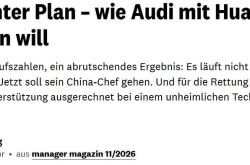
A groundbreaking report from Germany's Manager Magazin has sent ripples across the luxury automotive landscape.
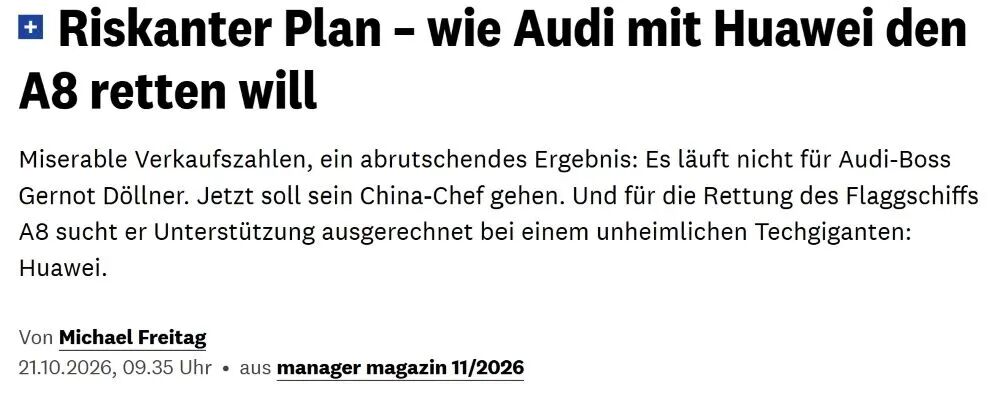
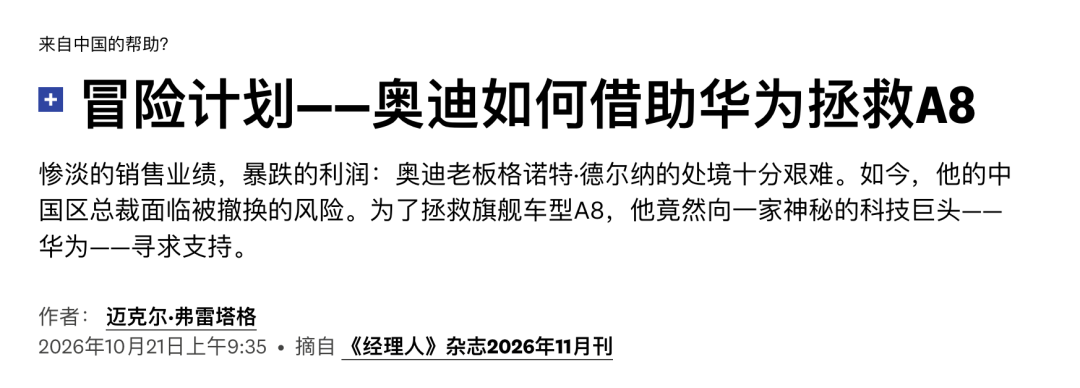
Image Source: Screenshot and translation of a report from Germany's Manager Magazin
Audi is in advanced negotiations with Huawei to co-develop a new-generation A8 sedan, exclusively tailored for the Chinese market. This flagship model, which will no longer be imported from Germany, is set to be manufactured directly in Changchun. Additionally, the two companies are planning to launch a high-end large SUV, with production slated for the end of 2028.
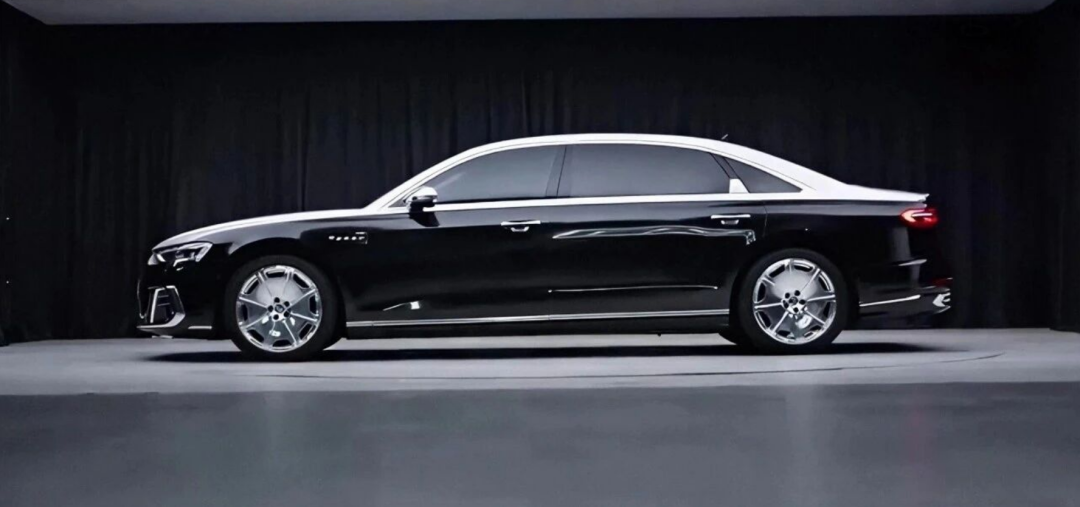
Image Source: Autohome
This news comes on the heels of Audi's official announcement of a leadership change, with Zhang Jun, a Chinese national, taking the helm as President of Audi China for the first time. Insiders view this move as more than just a trial run with a smart driving system; it represents a significant strategic gamble for Audi.
One online comment aptly captures the essence: "Audi is determined to reclaim its rightful place."
This sentiment resonates deeply.
Audi aims to restore its former stronghold in China's luxury car market, rekindle the D-segment flagship allure among older consumers, and seize the comeback opportunity that slipped away amid the intelligence wave.
The old luxury paradigm is no longer tenable.
Historically, the A8, Mercedes S-Class, and BMW 7 Series set the standard for D-segment luxury cars. Back then, car buyers focused on comparing chassis, craftsmanship, and power. Audi, with its robust mechanical foundation, firmly established itself in the top tier.
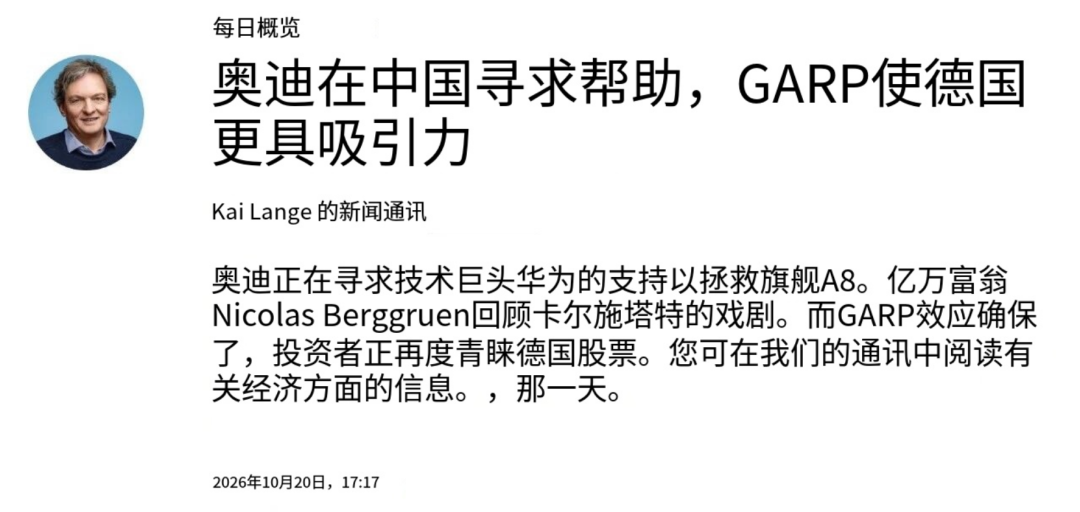
Image Source: Foreign Media
But times have changed.
Nowadays, when purchasing a luxury car worth millions, brand and chassis remain crucial, but the usability of the infotainment system, smart driving capabilities, and adaptability to local road conditions and usage habits have become equally vital. Traditional luxury brands generally lag in intelligence, while domestic new energy brands are rapidly iterating, slowly eroding the advantages of established luxury brands.
While many assume Audi and Huawei's partnership is a recent development, the two companies have a long history of collaboration, with seeds planted early on.
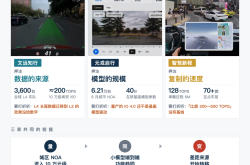
In 2018, they signed a smart networking cooperation agreement and tested Audi prototypes equipped with Huawei's autonomous driving solutions. Over the years, they have progressed from L4 long-term technology to mass-producible L2+ assisted driving. Currently sold models like the A5L and Q6L e-tron already feature Huawei's intelligent driving solutions.
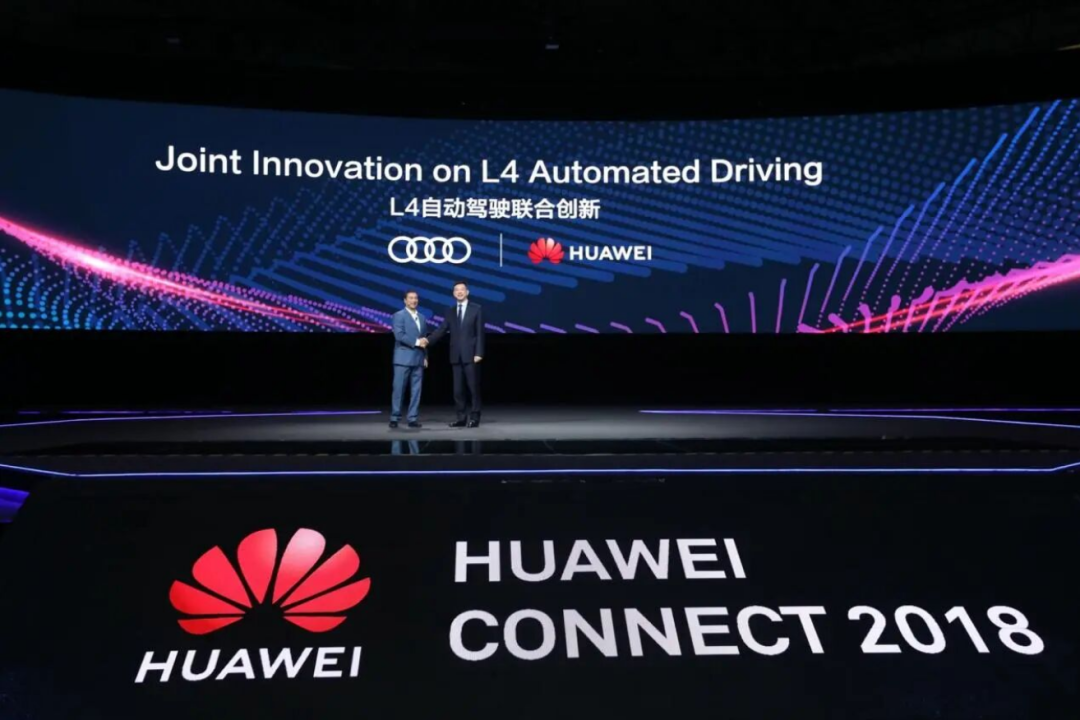
Image Source: Weibo
An old rumor persists online: the Seres M9 was initially dubbed the Audi M9, with plans for deep integration that allegedly fell through due to external sanctions. Objectively, this claim lacks concrete evidence and should be taken as mere hearsay. However, it underscores one point: Audi has long been eyeing Huawei's intelligent capabilities.
The A8 project, however, marks a significant departure from previous collaborations.
Previously, Audi would build the complete vehicle and simply integrate Huawei's intelligent driving and cockpit solutions as components. Audi retained full control over vehicle definition and architecture design.
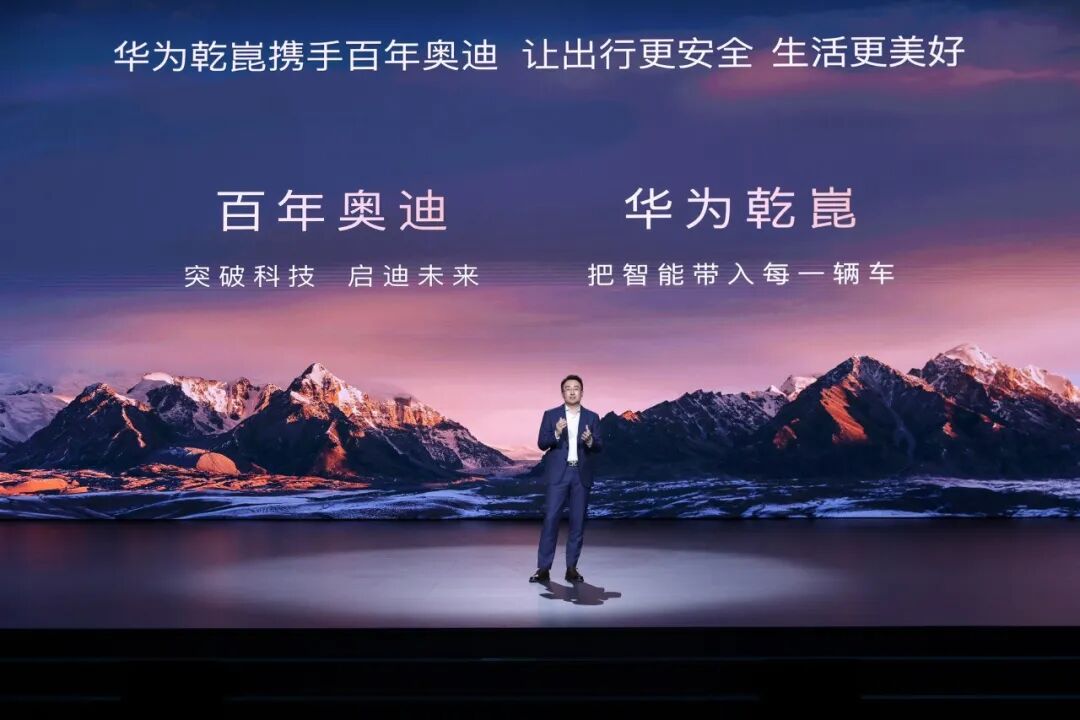
Image Source: Weibo
If this deal succeeds, the dynamics will shift dramatically. Reports indicate that the Chinese version of the A8 will be jointly developed based on Huawei's intelligent architecture. This means Huawei will be deeply involved from the design phase, collaborating on electronic architecture, software-hardware integration, and subsequent OTA updates. Audi will leverage its decades of expertise in chassis tuning and vehicle engineering, while Huawei handles the core intelligent experience, transforming their relationship from supplier-client to co-developers.
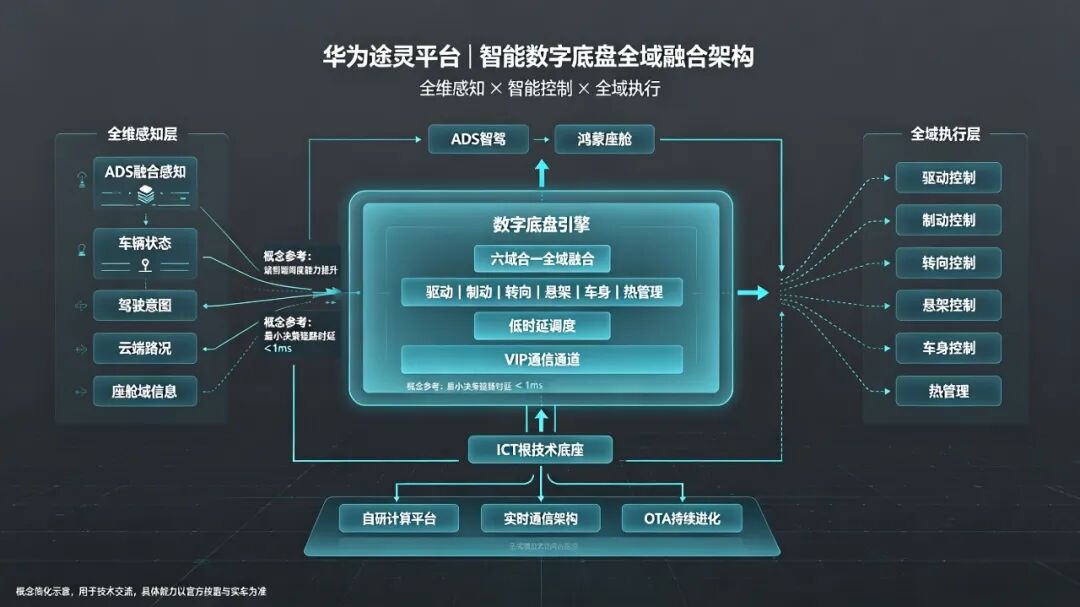
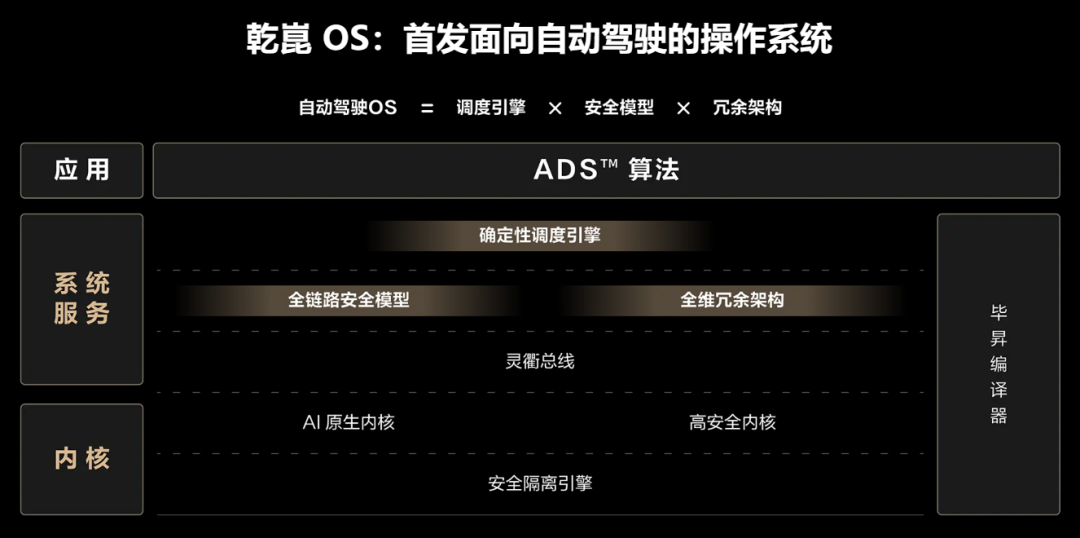
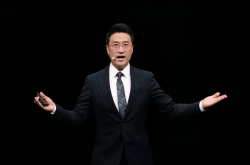
Image Source: Huawei
German media have dubbed this plan Audi's "China Adventure," a fitting term. It acknowledges Huawei's strength in intelligent vehicles while revealing the German headquarters' hesitation: entrusting core R&D of their flagship sedan to a Chinese tech company is a tough call. To clarify, the core development refers to the intelligence sector, not replacing Audi's entire vehicle platform—no need for overinterpretation.
A High-Stakes Gamble Forced by Sales Crisis
This bold adventure is essentially Audi's self-rescue after being cornered.
The numbers don't lie—they're grim.
Industry estimates suggest Audi's global sales will barely exceed 1.4 million units in 2026, potentially hitting a low not seen since 2011. In late September, Audi received a profit warning from Volkswagen Group.
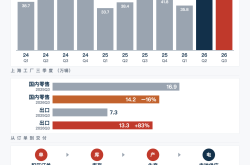
China, once Audi's most profitable market, is now under immense pressure. While Audi still expects over 600,000 sales in China in 2025, projections for 2026 plummet to just over 420,000, a nearly 30% drop and the worst performance since 2012. Internal alarms even warn of Audi's first annual loss in China since its entry.
Imported luxury cars fare even worse. Models like the A8 and RS, once highly profitable, now languish in warehouses. Audi's PPE plant in Changchun, built with a €2.6 billion investment and a planned annual capacity of 150,000 units, has halted production due to poor sales of the Q6L e-tron and A6L e-tron, leaving costly capacity idle.
While fuel car sales decline, electric models fail to gain traction. A painful reality: cross-border communication delays intelligent driving updates. Domestic brands refresh their systems every few months, while Audi models often lag by two or three generations. This is manageable for models like the A6 or Q5, but for the flagship A8, falling behind in intelligence means conceding defeat in the most visible arena.
Audi has devised a dual-track strategy for the next-gen A8:
- The overseas version will continue using the MSB platform shared with the Porsche Panamera, produced in Leipzig, emphasizing traditional luxury for global markets.
- The China-exclusive version, produced in Changchun, will involve Huawei in intelligent development, targeting domestic consumers, revitalizing the idle PPE plant, and later expanding the lineup with a high-end SUV.
The leadership change aligns with this strategy. On November 1, Zhang Jun officially became President of Audi China, partnered with Rolf Michl as COO, streamlining management to shift decision-making power to China. The goal? Reduce remote control from German headquarters and accelerate execution.
Of course, obstacles abound.
Funding is the first hurdle, with production line upgrades and R&D estimated to cost over €1 billion. Internal resistance runs high: many at German plants and within the group's management are skeptical. After all, the A8 has been built in Neckarsulm, Germany, for 34 years. Relocating production and co-developing a flagship with an external company will spark considerable doubt. Unresolved brand split disputes between FAW and SAIC, along with Huawei's partnerships with multiple automakers, further complicate negotiations on boundaries and collaboration scopes.
As of now, no cooperation agreements are finalized. Gerd Neumann will present the plan to Volkswagen Group's management in November.
The Shifting Balance of Power in Luxury Cars
The true significance of this move extends beyond a single new model.
For years, BBA's "localization" efforts largely meant adding length to vehicles, adjusting configurations, and switching to domestic suppliers. The core design and architecture decisions remained firmly in German hands. China was merely a sales and manufacturing hub, not a research and development center for flagship models.
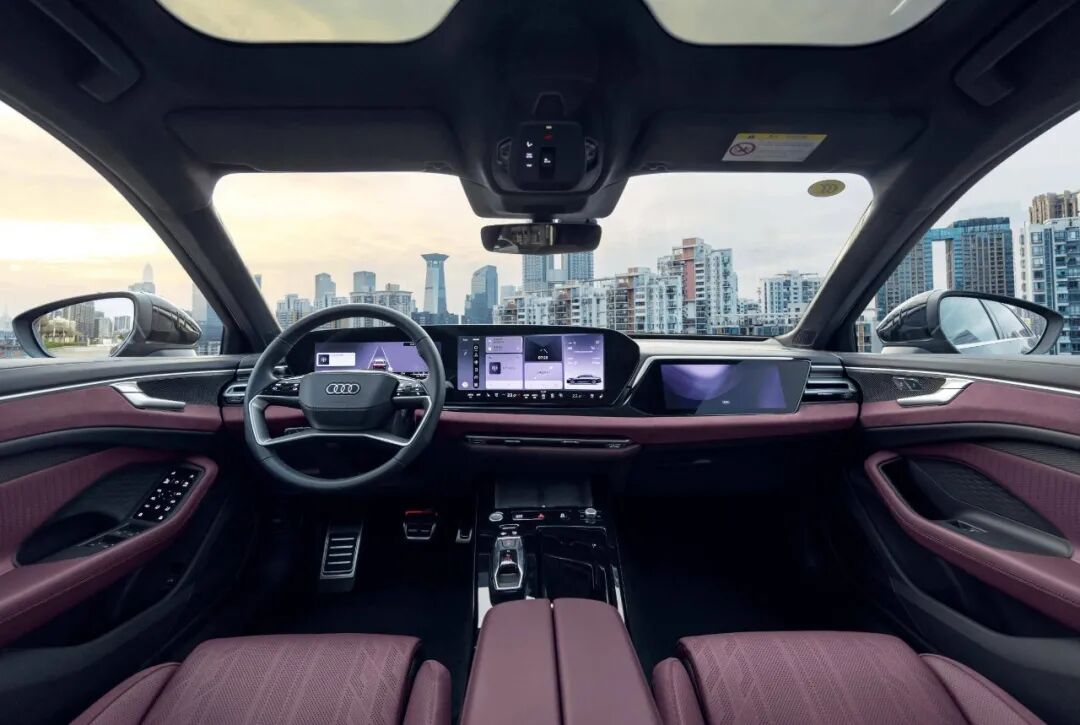
Image Source: Weibo
But in the era of smart vehicles, update speed equals competitiveness. Domestic automakers rapidly collect user feedback and push OTA updates, a rhythm difficult for German headquarters to match across time zones and cultural divides. They struggle to grasp the intense competition around urban NOA and mapless intelligent driving in China.
If the Chinese version A8 materializes, it will mark the first time a D-segment luxury flagship cedes partial control over intelligent definition to China.
Retaining Audi's signature chassis quality and luxury tuning, paired with top-tier domestic intelligent cockpits and driving assistance, and locally manufactured in Changchun, every design aspect will cater to Chinese users. It aims to prove that a traditional luxury flagship can offer an intelligent experience on par with domestic new forces.
BMW previously reaped benefits from localizing the X5L. Now, Audi aims to replicate this success but takes a bolder step by targeting the D-segment sedan—the highest threshold.
Online reactions are split. Some long-time Audi owners balk at the idea of Huawei technology, vowing to sell their cars. Others anticipate an affordable, intelligent domestic version.
Both perspectives are understandable. The clash between German sentiment from the fuel era and new playbooks in the intelligence era is inevitable.
But the market doesn't care for sentiment. With Mercedes and BMW accelerating their own localization and intelligence efforts, and domestic high-end flagships rising rapidly, Audi's room for trial and error is shrinking.
Success hinges not on whether Huawei can revive the A8, but whether German headquarters will truly relinquish control, allowing the Chinese team and Huawei to redefine a D-segment luxury sedan according to China's market dynamics.
With production still years away, negotiations, internal persuasion, and funding must all align. But if the cooperation succeeds, the domestic luxury car market will face a major reshuffle.
Century-old Audi is making its boldest move ever in China.
Interactive Topic: If this Huawei-powered, Changchun-made A8 launches, do you think it can outperform the Mercedes S-Class and BMW 7 Series? Share your thoughts in the comments.
Disclaimer: This article is solely a financial commentary from a major industry player and does not constitute investment advice. All corporate data and regulatory events mentioned are sourced from publicly available information and are for reference only; official announcements shall prevail. Image sources are online; please contact us for copyright removal if needed.
-
![]()
From Lucent to NVIDIA: When History Echoes
-
![]()
Thermal Effects on Femtosecond Filamentation and Supercontinuum Generation in YAG Crystals: Insights from Ultrafast Nonlinear Optics Study No. 105
-
![]()
The Next Bottleneck for AI May Not Be Chips
-
![]()
What's Next? The HarmonyOS Ecosystem Accelerates Its Expansion, While Luxeed and Aito Move Away from Huawei ADS Overseas
-
![]()
He Gang, Yu Chengdong's 'Trusted Partner,' Promoted to Huawei Director: A Pivotal Phone Call 13 Years Ago Altered His Career Path
-
![]()
Breaking News: Huawei Inks Landmark Deal with Century-Old Audi
-
![]()
Laying Cards on the Table! Tesla Q3 2026: Vehicle Sales Peak, All Funds Poured into AI
-
![]()
What We Can Learn from the 2026 WICV Speeches: Where Are Weride, DeepRoute, and ZhiJia Xincheng Betting on the Next Wave of Intelligent Driving?