Apple Finally Announces Beta Timeline for Apple Intelligence in China
 11/02 2026
 361
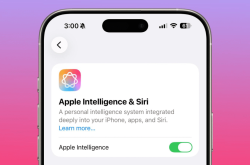
In the early hours of October 31, Apple posted a press release of fewer than a thousand words on its official website. The release confirmed one thing: Apple Intelligence is officially set to launch in China.
Testing will open on November 4 with the latest iOS developer beta. In December, it will roll out to all Chinese users alongside the official iOS 27.3 release.
Supported models include iPhone 15 Pro, iPhone 15 Pro Max, iPhone 16 and later, iPhone Air, and iPhone Duo. Siri and device language must be set to Simplified Chinese or English.
After two years of waiting, Chinese iPhone users no longer have to stare longingly at screenshots of Genmoji and AI erase shared by users overseas.
But if you were expecting the next-generation Siri—the one that can understand screen content and handle tasks across apps for you—that is not part of this update.
01 What's Actually Usable in the First Batch of Features
Apple's feature list is long, but when broken down, the ones that actually land in daily usage scenarios are mainly these.
Real-time translation on AirPods is the most widely discussed item in this update.
Real-time translation is integrated into Messages, FaceTime calls, and the Phone app. During face-to-face communication, when wearing AirPods 4 (ANC), AirPods 5, AirPods Pro 2 and later, or AirPods Max 2 with active noise cancellation, what the other person says can be translated in real time through the earbuds.
When traveling abroad or communicating face-to-face with foreign colleagues, this scenario is far more practical than tapping around on a screen.
Writing tools and photo erase are the kind of features where having them is better than not having them.
Writing tools can be invoked in system apps and a wide range of third-party apps. Wherever the cursor appears, they can be used, with three functions: rewrite, proofread, and summarize.
Photo erase is handled by an on-device model and does not require uploading to the cloud. The entire smudging and erasing process takes no more than three seconds.
However, some early feedback mentions that when erasing complex backgrounds, shadow residue and blurred edges can appear. Compared with similar features driven by cloud-based large models, there is a visible gap in precision.
Visual intelligence and Genmoji are features you use casually.
Point the camera at an object or place to instantly recognize it and pull up information; enter a text description to generate a custom emoji, such as a panda wearing sunglasses.
These two are not stunning, but they do not feel awkward to use either. Organization-type features such as notification summaries, priority mail, smart replies, and note transcription summaries are also included.
They will not make you feel that AI has arrived, but they can indeed sort out the pile of notifications stacked on the lock screen.
02 The Absent Protagonist May Be What Everyone Was Really Looking Forward To
Apple wrote one sentence in the press release: "This update does not include Siri AI and other next-generation Apple intelligence features Apple announced at WWDC 2026."
Siri itself has improvements. It supports text input conversations, better understands slips of the tongue and pauses, can maintain context in continuous conversations, and can access Qwen's knowledge base when handling specific requests.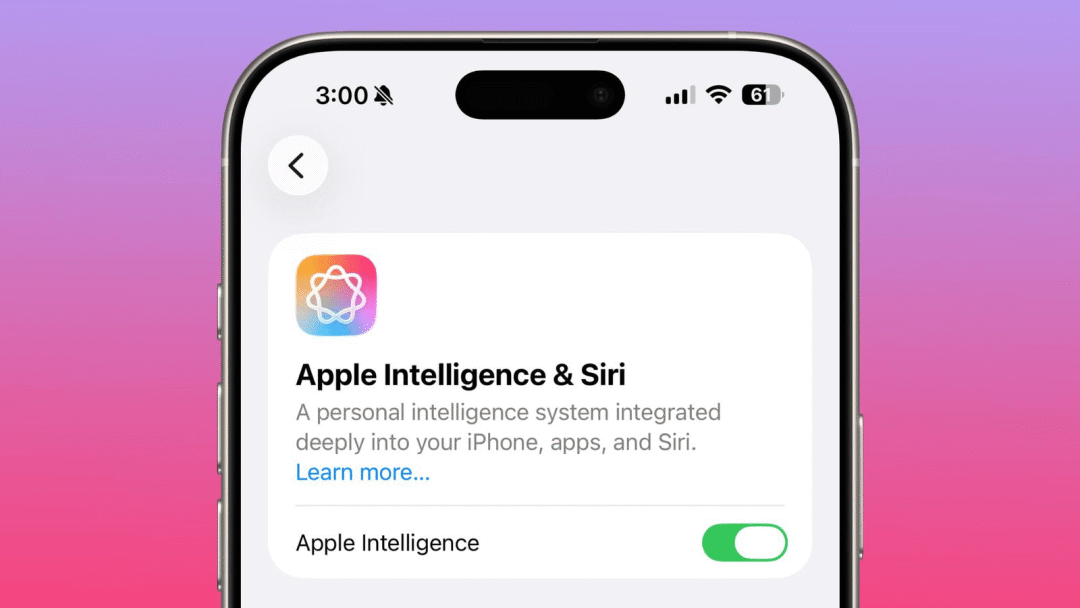
Image source: Internet
But that Siri—the one that can understand what is being discussed on your screen and can send messages and book tickets across apps for you—is not in this batch.
In other words, Chinese users are getting a set of AI tools embedded throughout the system, not an AI assistant that can handle tasks for you.
The gap between the two may be much larger than the length of the feature list suggests.
03 Qwen Is In, but the Choice Is in Your Hands
Apple Intelligence in China is a collaboration between Apple and Alibaba.
Qwen has been integrated into Siri, writing tools, and visual intelligence, covering text and image understanding and content generation.
Users can log in to a Qwen account, or sign in with Apple, to invoke it within the system without jumping to a standalone app.
But Qwen integration is optional. Users can decide for themselves whether to enable this feature.
Basic capabilities are completed on-device by Apple's self-developed models, and personal data does not need to be uploaded; only complex tasks invoke Qwen.
Image source: Internet
User requests and generated replies will not be used by Alibaba for model training.
This design at least returns the choice of whether to use external models to users.
It should be noted that the November 4 beta is prepared for developers and people willing to tinker.
For most people, the time when they can truly use it is the official rollout of iOS 27.3 in December.
Other platforms such as iPad and Mac will have to wait until the necessary approvals are obtained.
#ApplePhone #AppleIntelligence
-
![]()
Apple Finally Announces Beta Timeline for Apple Intelligence in China
-
![]()
A Nonexistent Poor Child Is Draining Your Parents' Wallets
-
![]()
Is Automatic Parking Really the Touchstone for Intelligent Driving?
-
![]()
Final Word: Why Has the "Golden September and Silver October" Disappeared from China's Auto Market This Year?
-
![]()
Behind the 18-Satellite Launch: Who Determines the Fate of China's Commercial Rockets?
-
Anthropic's IPO Challenge: Can It Outrun Compute Bills and Loss Pressures?
-
Insta360 Innovation Q3 Report: New Products Accelerate, Ecosystem Synergy Builds Strength for a New Cycle of All-Scenario Intelligent Imaging
-
New Forces Reshuffle: Xiaomi Breaks 50,000 Again, Secures Top 3 — Has "Xiao-Wei-Li" Taken Shape?