Behind the 18-Satellite Launch: Who Determines the Fate of China's Commercial Rockets?
 11/02 2026
 518
CAS Space's Lijian-2 is about to embark on its second launch. Under the previously announced plan, the rocket will carry 18 Qianfan constellation satellites to support the construction of a low-orbit satellite internet constellation. Following its successful maiden flight on March 30, Lijian-2 will for the first time face the test of batch launches for a large constellation.
On September 15 this year, LandSpace's upgraded Zhuque-2 sent 10 Qianfan satellites into orbit. Less than 16 hours later, Orienspace's Gravity-1 launched another eight Qianfan satellites from the sea, along with one EUHT technology test satellite. Earlier, rockets including the Long March 6A and Long March 8 had also completed multiple 18-satellite constellation missions.
The same constellation is now being served by different companies and different rocket models jointly undertaking launch missions.
As large constellations accelerate construction, China's commercial rocket industry is forming new competitive relationships. Operators such as Qianfan influence rocket companies' market opportunities through procurement standards and order allocation; rocket companies, in turn, need to gradually build large-scale operational capabilities through actual launch missions.
Who can continuously secure launch orders for large constellations is becoming a key factor shaping the future market landscape of China's commercial rockets.
01 Customers Begin to Set Standards
In July 2025, Shanghai Yuanxin Satellite Technology Co., Ltd., the Qianfan operator, released a launch service procurement announcement with a total budget of 1.336 billion yuan, planning to deploy 94 satellites through seven launches. Of these, four launches will carry 10 satellites each and three will carry 18 satellites each, with tax-inclusive maximum prices of 55,000 yuan and 50,000 yuan per kilogram, respectively.
The procurement conditions clearly specify the target orbit, payload capacity, flight record, and delivery time. The 18-satellite launch service requires the rocket to be capable of sending no less than 4.8 tons of payload into an 800-kilometer near-polar orbit. The project adopts an in-orbit delivery method, and the quotation must also cover launch site services, third-party liability insurance, and other related costs.
These requirements translate the rocket's technical capabilities into specific commercial procurement standards and provide a basis for customers to compare different launch solutions.
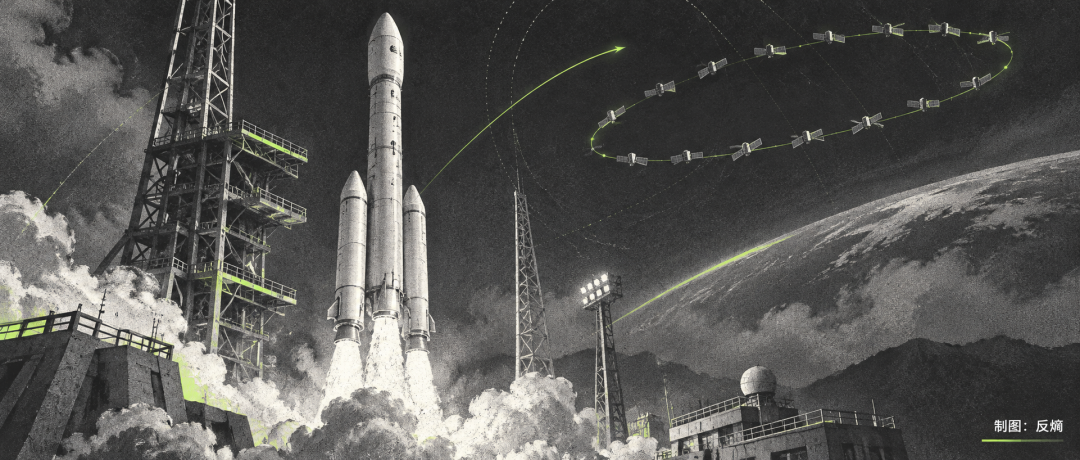
The maximum price of 50,000 yuan per kilogram indicates that Qianfan has already set clear requirements for launch service prices. For now, however, qualified capacity supply remains tight, and securing sufficient launch resources is more urgent than further lowering procurement prices. Only as more commercial rockets complete verification and enter the market can price competition among suppliers deepen further.
The 18-satellite mission planned for Lijian-2 will provide Qianfan with new batch constellation construction capability and also give CAS Space an opportunity to secure follow-up orders.
Rockets with greater capacity are also worth anticipating. Space Pioneer's Tianlong-3, with a low-Earth orbit capacity in the 22-ton class, has completed fault resolution after the failure of its maiden flight on Y1; Y2 has completed final assembly and overall testing, with a return to flight planned for the fourth quarter of 2026 as appropriate. According to the company's plan, it has the potential for 36-satellite constellation missions, which can further increase the single-deployment scale of large constellations.
For operators that need to continuously deploy large numbers of satellites, a richer supply of capacity will provide more choices for subsequent constellation construction.
02 Where Is the Capacity Gap?
Several launch service tenders for Qianfan in 2025 were once hindered by insufficient suppliers.
In February of that year, Yuanxin Satellite organized two launch service tenders, both of which could not be completed due to insufficient registered suppliers. After adjusting the procurement plan in July, the winning candidates for the 18-satellite launch service announced on August 14 were LandSpace, Space Pioneer, and CAS Space; the 10-satellite launch service again failed to attract bids because fewer than three suppliers met the procedural requirements.
Compared with the 10-satellite procurement, which requires successful flight experience, the 18-satellite procurement allows new models that have not yet completed their maiden flights to participate. Qianfan hopes to expand sources of capacity supply, while mature models capable of undertaking large-batch constellation missions were still limited at that time.
New products continue to emerge in China's commercial rocket sector, but from completion of model development to the formation of stable commercial launch capability, flight verification, satellite-rocket adaptation, and the construction of production and launch support systems are still needed. Adding rocket models in the short term cannot immediately fill the qualified capacity gap.
Tight capacity has already affected related industrial chains.
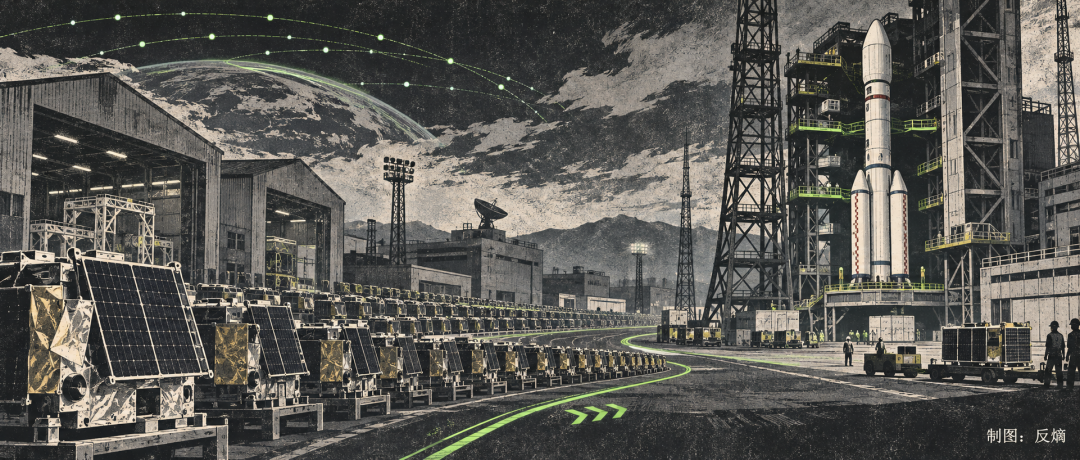
On May 26, 2026, Shanghai Hi-Way, a supplier of the Qianfan constellation communication system, disclosed in a response document for a private placement review that in 2025 domestic low-orbit satellite launch resources were periodically tight, and the launch pace of the Qianfan constellation slowed somewhat. Affected by this, the delivery of some ground communication equipment and supporting products was correspondingly delayed; arrangements such as ground deployment, testing, and verification will also affect the delivery pace of related products.
This means that satellite launch progress is directly related to the constellation construction plan and will also affect the production and delivery arrangements of related equipment suppliers.
Since the beginning of this year, Qianfan has used different rockets such as the Long March series, the upgraded Zhuque-2, and Gravity-1 to carry out constellation missions, and sources of capacity have gradually become richer. If Lijian-2 successfully completes this launch, CAS Space will also formally join the batch constellation construction team for the Qianfan constellation.
Different rockets differ in payload capacity, target orbit adaptability, payload interfaces, and launch site conditions, and operators need to choose suitable models according to specific missions. More rockets participating in constellation construction can improve the flexibility of launch arrangements.
From multiple failed tenders in 2025 to more commercial rockets undertaking constellation missions in 2026, the capacity supply of China's commercial space sector is expanding.
The constellation construction demand continuously released by large constellations provides opportunities for a new generation of commercial rockets to enter the market. Whoever can form stable batch launch capability as soon as possible will have a better chance of undertaking new orders.
03 Competition Behind Orders
An important change that satellite internet brings to the commercial rocket industry is sustained launch demand.
Large constellations need to complete constellation construction in batches, and satellite replacement and replenishment will follow. For rocket companies with huge R&D investment and high production facility costs, continuous orders can stabilize production rhythms, improve equipment utilization, and improve cost structures by expanding procurement and manufacturing scale.

CAS Space's prospectus disclosed that Lijian-1 successfully launched once in 2023 and successfully launched three times in 2024, with another mission failure, and the gross margin of the launch service business, after adjustment, improved from -122.85% to -74.55%. In 2025, five launches were completed, and this indicator fell back to -83.84%. The company disclosed that the relevant changes were affected by factors such as the average selling price per rocket, raw material procurement costs, and fixed cost allocation.
This set of data shows that expanding scale has created conditions for reducing unit costs, but whether profitability can be improved still depends on contract prices and production efficiency.
For CAS Space, Lijian-2's participation in Qianfan constellation construction provides a new opportunity to expand the scale of commercial launches. If it can continuously secure orders for the same model, the company will be in a position to organize batch production, improve the utilization efficiency of supply chains and manufacturing facilities, and reduce the cost per launch.
The value of long-term orders is also reflected here. Rocket companies need to invest in engine manufacturing, final assembly, testing, and launch facilities in advance, and stable mission demand can improve capacity utilization and improve the returns on early investment.
As more new models complete flight verification, qualified capacity supply is expected to gradually increase, and constellation operators will also have more choices. At that time, companies with similar capacity will compete around launch reliability, delivery capability, production efficiency, and contract prices.
Whether orders can be continuously secured and a reasonable profit model established in stable delivery will directly affect the future market share of commercial rocket companies.
For now, Qianfan still needs more rockets to complete constellation construction. As capacity supply continues to expand, more and more rockets will also compete for customers like Qianfan.
From satellites looking for rockets to rockets seeking satellite orders, competition in China's commercial space sector is moving toward a new stage.
-
![]()
Apple Finally Announces Beta Timeline for Apple Intelligence in China
-
![]()
A Nonexistent Poor Child Is Draining Your Parents' Wallets
-
![]()
Is Automatic Parking Really the Touchstone for Intelligent Driving?
-
![]()
Final Word: Why Has the "Golden September and Silver October" Disappeared from China's Auto Market This Year?
-
![]()
Behind the 18-Satellite Launch: Who Determines the Fate of China's Commercial Rockets?
-
Anthropic's IPO Challenge: Can It Outrun Compute Bills and Loss Pressures?
-
Insta360 Innovation Q3 Report: New Products Accelerate, Ecosystem Synergy Builds Strength for a New Cycle of All-Scenario Intelligent Imaging
-
New Forces Reshuffle: Xiaomi Breaks 50,000 Again, Secures Top 3 — Has "Xiao-Wei-Li" Taken Shape?