Intel Stock Crashes, AMD Diverges Sharply: AI Servers Are Flying Off the Shelves—Where Do Ordinary PCs Go from Here?
 11/05 2026
 539
Are traditional PCs on the verge of extinction?
To be honest, before Intel released its fiscal 2026 Q3 report, Xiao Lei thought that riding this wave of AI infrastructure frenzy, this semiconductor giant could at least pull off a beautiful comeback. After all, on paper, Intel's quarterly revenue was $16.5 billion, up 21% year-over-year, beating Wall Street's previous expectations.
However, after the report was released, Intel closed down a whopping 28.6% to $65.76 the next day, marking its worst single-day drop in decades. Right after that, old rival AMD also delivered its Q3 report card: quarterly revenue of $13.38 billion, a year-over-year surge of 45%, with after-hours shares first rising nearly 7%, only to fall back again before the U.S. market open on November 4.
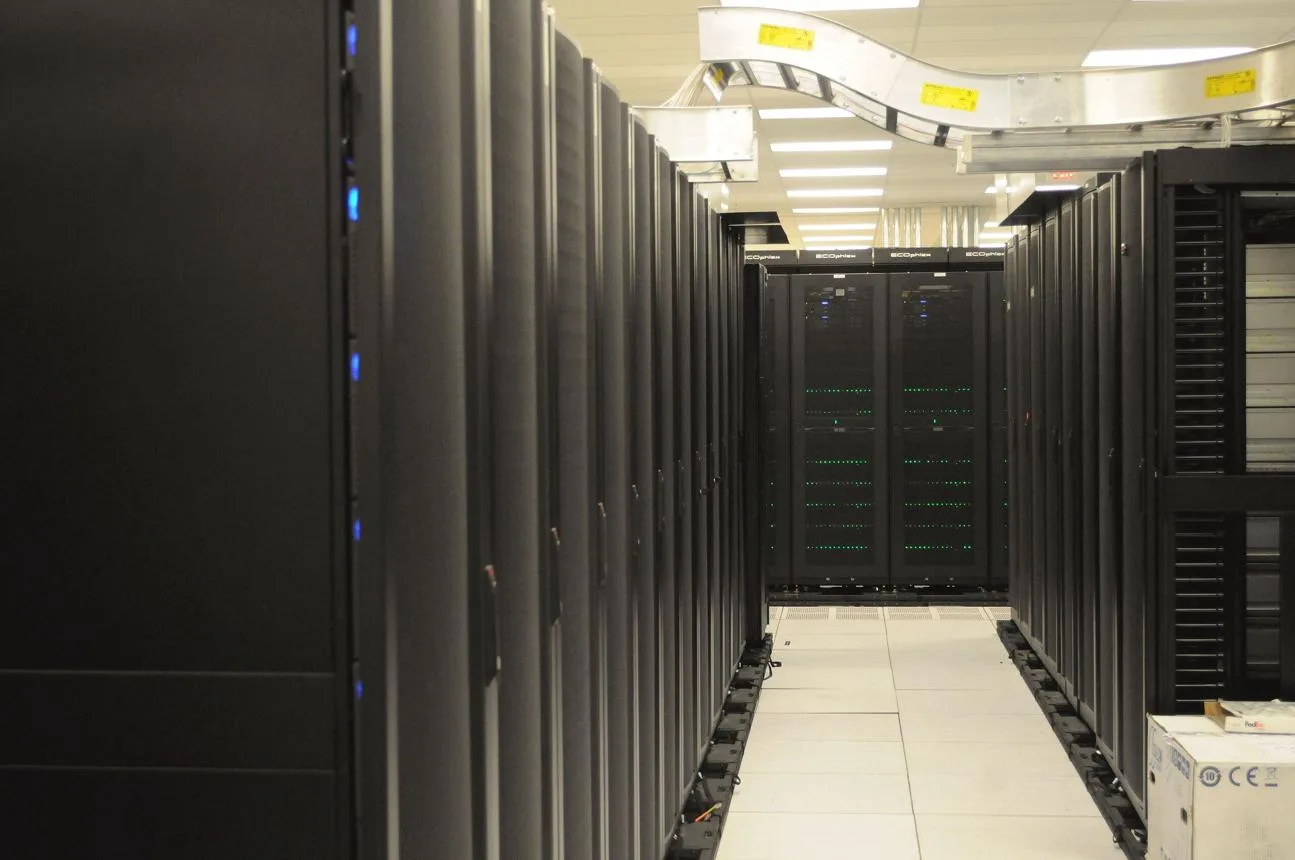
Image source: wikimedia
The bizarre stock performance reflects the change in attitude in the secondary market toward the semiconductor industry and even the entire AI supply chain: from firmly bullish to wavering, with huge divergence. In fact, a closer look at the financial reports of these two giants reveals that whether it's the plummeting Intel or the bizarre AMD, their AI server and data center businesses all sold explosively, but the traditional personal PC segment that underpins their base business cooled on both sides.
Some say it's because hardware such as memory and hard drives rose in price, making PCs too expensive—which is indeed true—but looking at global personal PC shipments, the sequential decline in shipments had already begun in the first quarter, when hardware prices had not yet risen to today's terrifying levels.
At the same time, Intel's and AMD's AI server businesses took off around roughly the same period, so much so that Xiao Lei wonders whether there is a direct relationship between the two?
Chips are sold out—so why is Intel facing a "historic crash"?
Let's first look at the question everyone is most confused about: since Intel's AI server chips are selling so well, why did its stock price still fall so miserably?
In Intel's Q3 report, growth mainly came from the Data Center and AI group, with quarterly revenue reaching $7.318 billion, a year-over-year surge of 78%, and operating profit soaring from $964 million in the same period last year to $3.039 billion.
Intel CEO Chen Liwu admitted that due to the explosive growth of AI inference and Agent applications, servers need to handle massive amounts of general-purpose computing and task scheduling, and demand for Xeon processors has far outstripped the factory's supply capacity.
Coincidentally, AMD's Q3 data center revenue also surged 97% year-over-year to $8.5 billion, with its share of total revenue jumping directly from 47% in the same period last year to 64%.
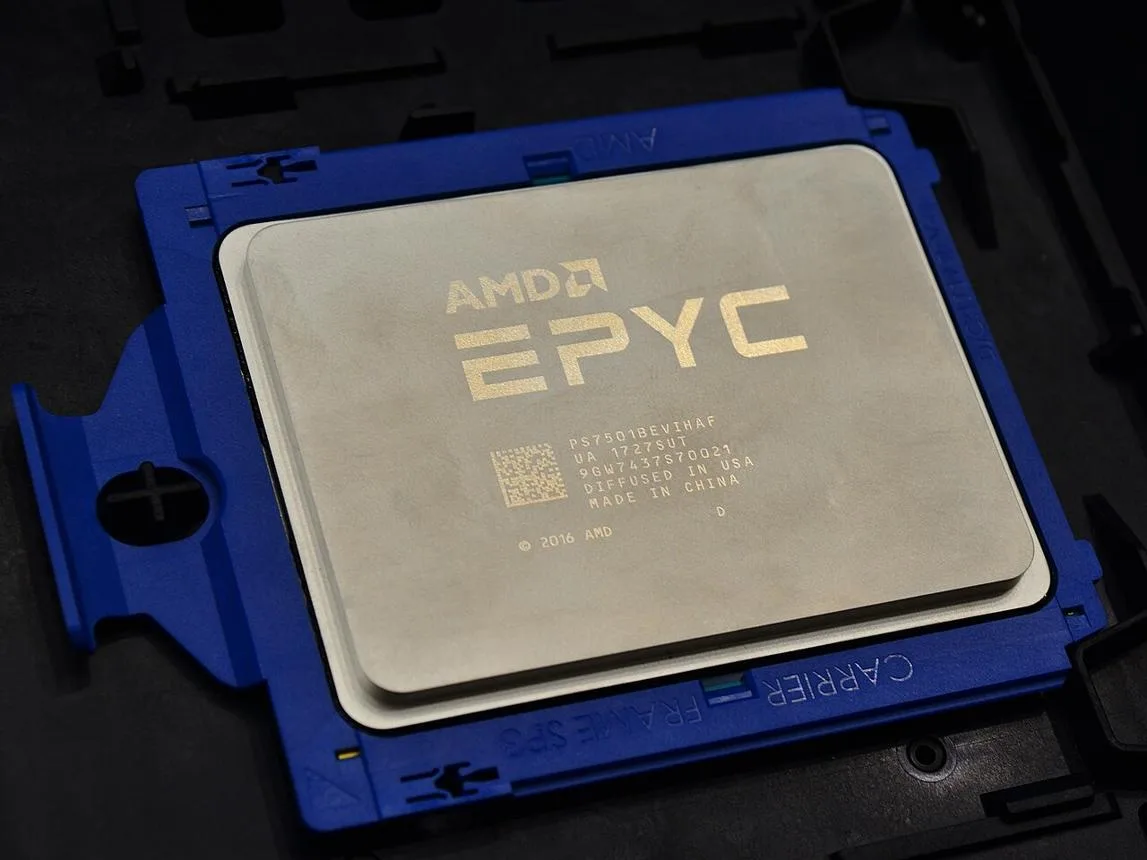
Image source: wikimedia
Logically, with AI server chips in short supply, Intel should be counting money until its hands cramp, but the problem lies in its PC base business and what can be called a "disastrous" fourth-quarter guidance.
First, Intel's largest revenue pillar—the Client Computing and Physical AI group (CCPG, i.e., the PC chip business)—saw Q3 revenue fall 5% year-over-year to $8.097 billion, missing expectations of $8.98 billion. Moreover, Intel also expects Q4 client computing revenue to plunge more than 20% quarter-over-quarter, and directly gave a very pessimistic forecast: global PC shipments are expected to decline about 12% in 2026 (with a drop of more than 20% in the second half), and decline another about 10% in 2027.
This means that Intel, as the big brother of the personal PC market, believes that the current "miserable state" of the PC market is actually far from "bottoming out."
Second, in order to go all-in on Intel 18A and 14A advanced processes, Intel raised its full-year capital expenditure forecast to $20 billion. Although the foundry division, once highly anticipated, saw some revenue growth, it still lost $1.853 billion in the quarter.
There was also a "black swan" event: due to regional conflicts and other factors, Intel's Fab 28 wafer plant in Israel suddenly suffered an accident and halted production, and about $300 million of the plant's Q4 revenue is expected to be directly affected. With multiple negative factors stacking up, although Intel is confident that its AI-related business will still maintain growth in Q4, it gave Q4 revenue guidance of only $15 billion to $16 billion, and its gross margin guidance fell off a cliff from 44.1% to 38%.
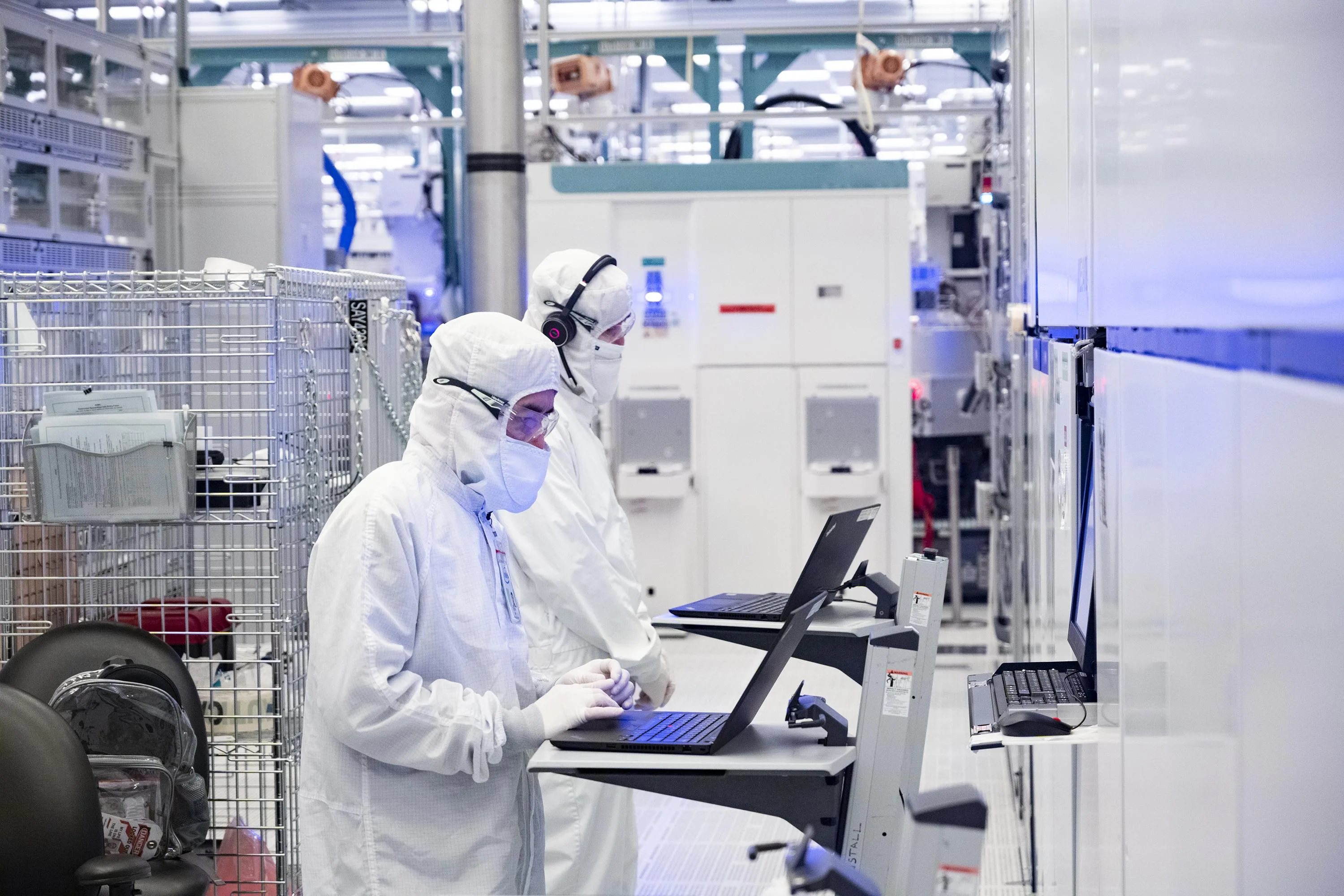
Image source: Intel
What about AMD? The biggest difference between AMD and Intel is that all of AMD's chip manufacturing is outsourced to third parties. Although this makes its profit margin lower than Intel's, its asset-light nature is more welcomed by the market. Moreover, data centers already account for as much as 64% of revenue, so even if PC and gaming business revenue also fell 8% in Q3, AI servers alone can still drive overall revenue up, and R&D spending is significantly lower than Intel's (no need to consider process technology development).
Intel, on the other hand, has to bear the huge depreciation of its heavy-asset wafer plants, and its PC business accounts for half of its revenue. Once the PC business plunges, the money earned from AI servers will not easily fill the hole, which is why the market is pessimistic about Intel's subsequent stock performance.
The stronger AI gets, the harder ordinary PCs are to sell
At this point, some may ask: "Weren't the whole industry shouting two years ago that AI would trigger a PC replacement wave? So why is it that AI servers are selling like hotcakes, while ordinary computers are instead not being bought?"
Xiao Lei has discussed this question with friends many times. If we really dig into it, it is precisely the explosion of AI itself that has caused the PC business to plummet.
The first culprit is naturally memory price hikes. Whether it is Intel CEO Chen Liwu or AMD CEO Su Zifeng, both called out memory shortages and soaring prices at their Q3 earnings calls, which directly affected PC sales.
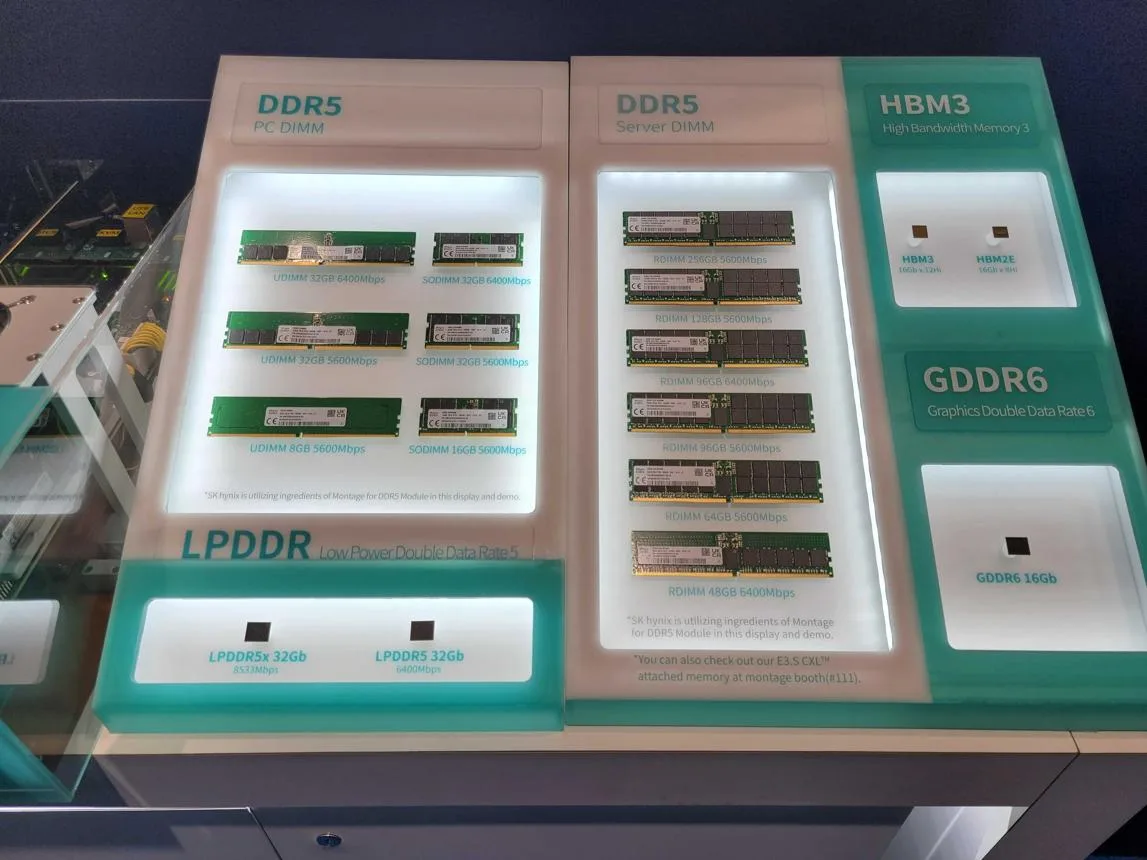
Image source: wikimedia
Memory price hikes do not affect only memory; SSD prices have likewise doubled, and the same goes for graphics card prices. Moreover, considering that graphics cards themselves are already very expensive, with multiple effects stacking up, the total budget for a PC with the same configuration has directly doubled compared with the same period last year.
The second reason is the rise of AI Agents, which is actually reducing the value of the existence of traditional "ordinary computers."
OpenClaw, which exploded in popularity in early 2026, has after more than half a year of development evolved AI from a chat box into an AI Agent with autonomous planning and cross-application execution capabilities. Many friends have probably experienced it: you only need to give requirements, and tasks such as PPTs and spreadsheet organization can basically be completed easily, sometimes even better than doing it yourself.
However, current mainstream Agents run entirely on cloud servers (which is exactly why Intel's and AMD's server chips are selling like hotcakes). That turns the computer in your hands into merely "a display terminal with a screen and keyboard." Since all the heavy lifting is done in the cloud, and an old computer I bought three or five years ago can still open web pages smoothly, why should I spend five or six thousand yuan to replace it with an "ordinary new computer" that is essentially no different?
As for the on-device AI promoted by PC manufacturers, if you want to run truly useful on-device Agents and 70B-level large models locally, the vast majority of "ordinary traditional PCs" on the market with only 16GB of memory and mediocre computing power simply cannot run them, and buying one would still leave you clueless.
So ordinary PCs are stuck in the middle: their performance is neither strong enough to meet AAA game demands, nor are they cheap enough. It can be said that they have fallen into an unprecedented positioning awkwardness.
Agents are unstoppable—is the post-PC era coming?
Since ordinary PCs are becoming harder and harder to sell, does that mean personal computers are heading toward complete decline?
In Lei Technology's view, what is dying is only the "ordinary PC in its traditional form," while the "new-generation personal computing terminal" rebuilt around AI Agents in both software and hardware is instead entering a golden explosive period. What is a new-generation personal computing terminal? Some manufacturers call it AI PC, some call it Agent PC, and some simply coined a new concept called AC: Agent Computer.
The strongest evidence is Lenovo, which firmly sits atop the global PC market. When the entire traditional PC supply chain is under pressure, Lenovo's latest financial report (fiscal 2026/27 Q1) instead hit a historic high against the trend: quarterly total revenue reached 183.4 billion yuan, a year-over-year surge of 43%, and adjusted net profit exceeded 7.3 billion yuan, a year-over-year surge of 176%.
Among that, the IDG intelligent devices business with PCs at its core generated revenue of 116.4 billion yuan, up 27% year-over-year, and its global PC market share expanded to 24.2%, widening its gap with the runner-up for 10 consecutive quarters, while the group's AI-related business revenue surged 60% year-over-year to 63.4 billion yuan, accounting for 35% of total revenue.
Why is it that others find computers hard to sell, while Lenovo can keep growing its PC business? Because Lenovo saw that in the Agent era, it can no longer follow the old path of "stacking specs and selling metal boxes," but must redesign personal PCs from the two directions of "product form" and "on-device AI Agent," while also sorting out and integrating its ordinary PC product lines.
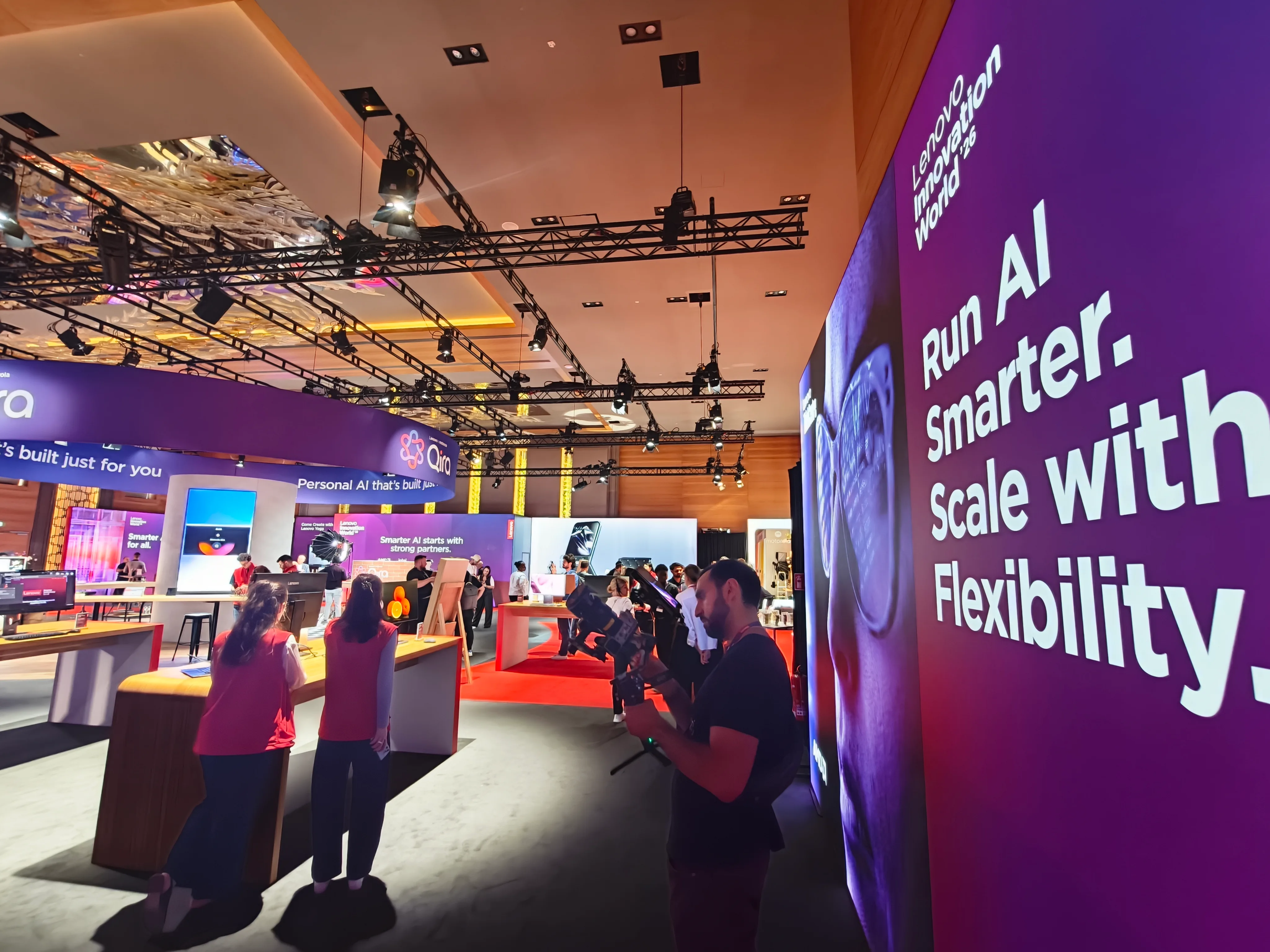
Image source: Lei Technology
When Xiao Lei experienced Lenovo's new products on site at exhibitions such as IFA 2026 in Berlin this year, he saw Lenovo's new-generation rollable-screen product. This computer is usually a compact 14-inch laptop, but when you need to collaborate with AI across multiple windows, you can expand it to a 17-inch screen, allowing you to fit two to three windows.
There is also the airflow blade Project AeroBlade concept laptop, which uses fanless solid-state active cooling technology. With the new-generation processor, its battery life has improved very noticeably, and it produces no cooling noise at all during operation, so a PC running an Agent continuously will not affect you in the slightest.
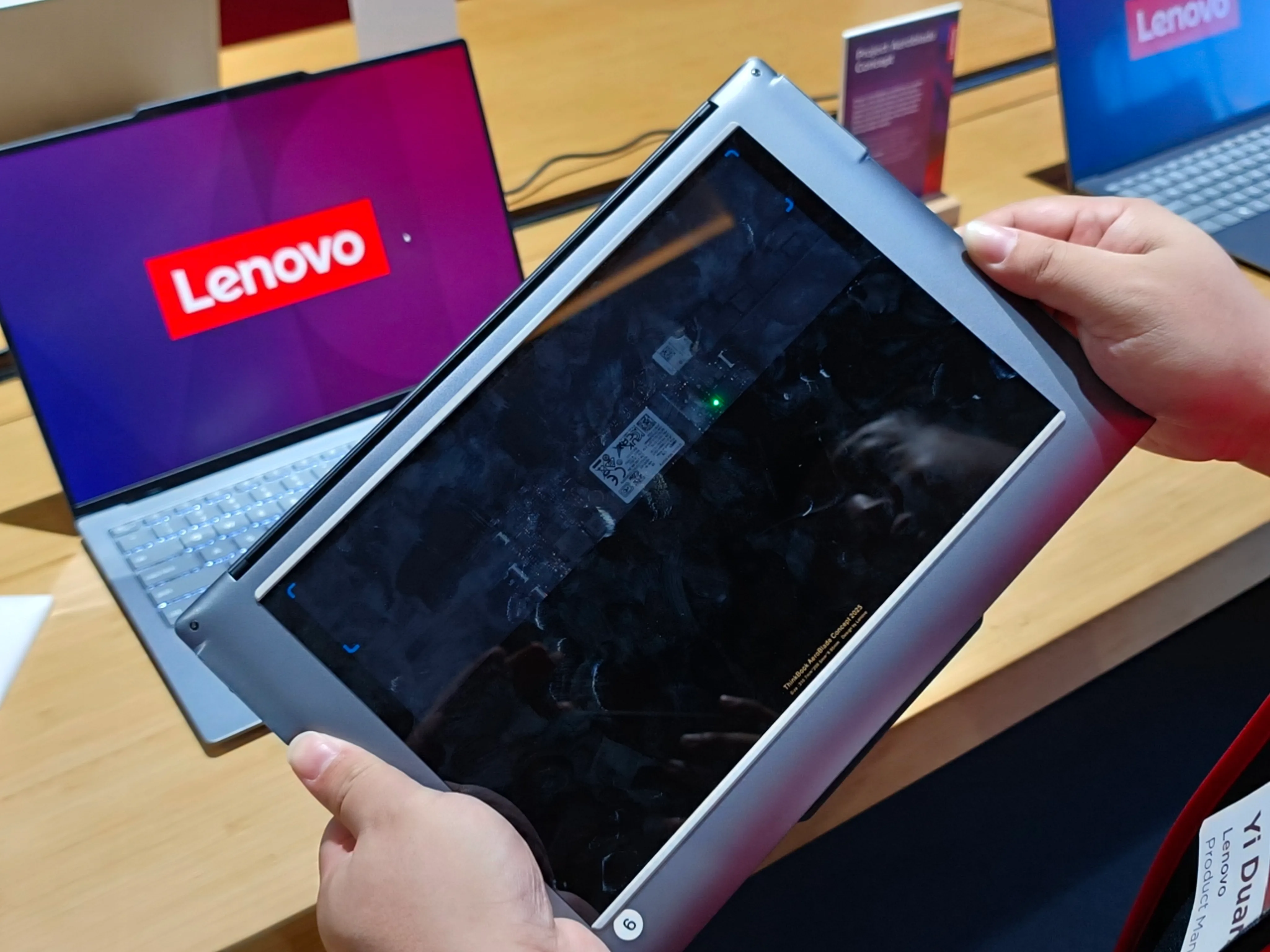
Image source: Lei Technology
These products designed based on AI needs are precisely Lenovo's view of the PC of the future. PCs will no longer be rigid tools fixed on a desktop, but will become "embodied intelligent terminals" that can actively cater to users' usage scenarios.
Looking back, Intel's nearly 29% single-day crash, and the contrast in Intel's and AMD's financial reports of "servers soaring, traditional PCs under pressure," are essentially due to the changing positioning of personal PCs in the AI era.
It can be said that if a computer in the future merely gets a routine processor upgrade but offers no qualitative change in on-device AI experience, then under the dual influence of computing power moving to the cloud and storage price hikes, consumers will inevitably refuse to keep paying for mediocrity.
But if a PC can collaborate with a personal AI Agent and bring users a completely different experience, then it is no longer an "ordinary computer" that can be replaced at any time, and naturally it can stand out in the fiercely competitive market.
Finally, a reminder to everyone: although Lenovo's AI PC transformation has succeeded and its AI computing center business is developing impressively, its stock price also nearly halved in October—even so, its stock price is still double what it was so far in 2026. In the short term, stock prices are voting machines, not weighing machines; what rises a lot will fall, and what falls a lot will rise. Stock performance sometimes may not necessarily be directly linked to business fundamentals, and the influence of the environment is important. So it is still that saying: entering the market carries risk, and investment must be cautious.
Source: Lei Technology
Images in this article are from: 123RF licensed image library Source: Lei Technology
-
![]()
496.22 km/h: BYD Claims the Global Automotive Top-Speed Crown, Xiaomi Executive Shares in Tribute
-
![]()
Doubao Overtaken? Qwen Tops the Growth Chart — But the Full Story Is More Complicated
-
![]()
Two Months, Three Core Executives Depart: Chery Tightens Its Grip on Exeed to Rebuild an "Audi"
-
US Automakers Push Congress to Ban Chinese Cars: Why Isn't China Retaliating in Kind Against American Cars?
-
Can Layoffs Save BMW Brilliance? Only Cars That Make Consumers Open Their Wallets Can
-
![]()
Intel Stock Crashes, AMD Diverges Sharply: AI Servers Are Flying Off the Shelves—Where Do Ordinary PCs Go from Here?
-
![]()
Huawei's Wide-Screen Straight Phone Is Selling Like Hotcakes: 1 Million Units in 50 Days! How Much Longer for the iPhone KUO?
-
![]()
Qualcomm Renews Long-Term Technology Licensing Agreement with Huawei, Reports Earnings as Declining Phone Sales Weigh on Revenue