Gree Electric: Draining the Reservoir
 11/06 2026
 555
Gree's channel reform is already showing up in its financial statements. Over the coming quarters, two questions will reveal more about the quality of this transformation than any single-quarter year-on-year profit figure: whether contract liabilities can find a stable floor under the new "sell as you go, replenish as you go" normal, and whether terminal retail can hold its shipment share without the push of inventory loading.
Before 2014, Gree and Midea were still the twin stars of the white goods industry.
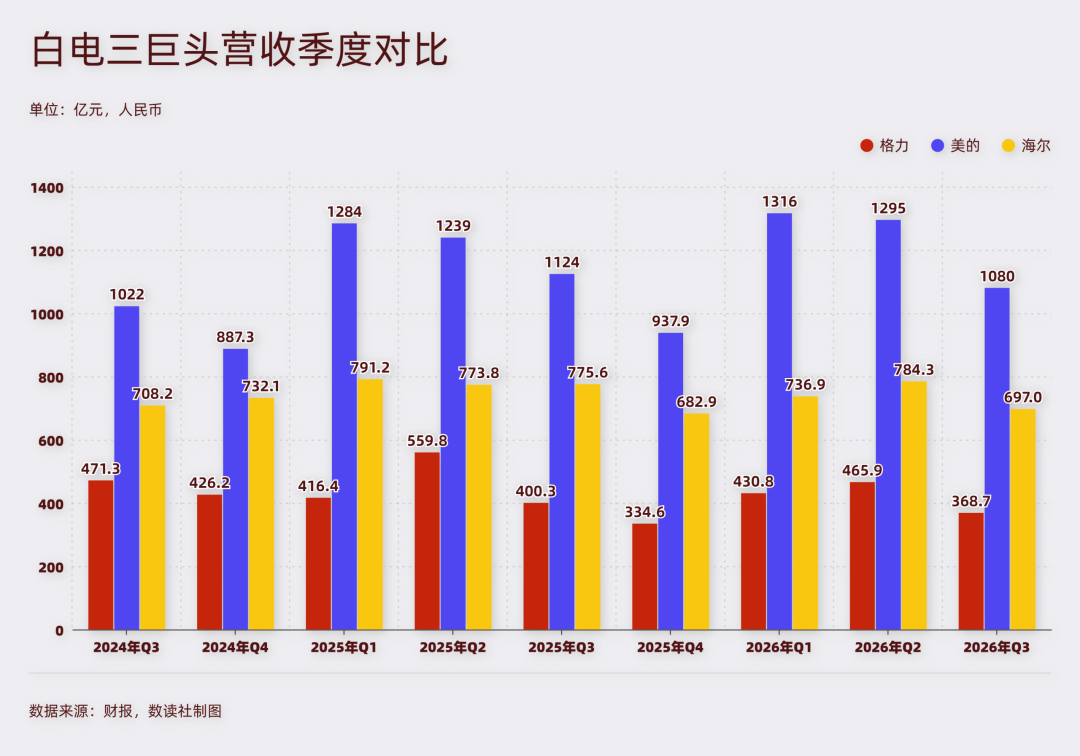
Over 12 years, the market value gap between them widened twofold. Even Haier, once trailing behind, now posts annual revenue nearly twice Gree's.
In the upcycle, Gree barely moved forward; in the downcycle, its difficulties became all the more glaring.
Part.01 A Deliberate Release of the Flood
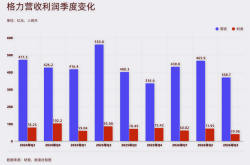
In the third quarter, Gree's revenue came in at 36.871 billion yuan, down 7.90% year-on-year; net profit attributable to shareholders was 3.996 billion yuan, down 43.31% year-on-year. Revenue fell by a single digit while profit nearly halved—the steepest profit contraction among the three white goods giants.
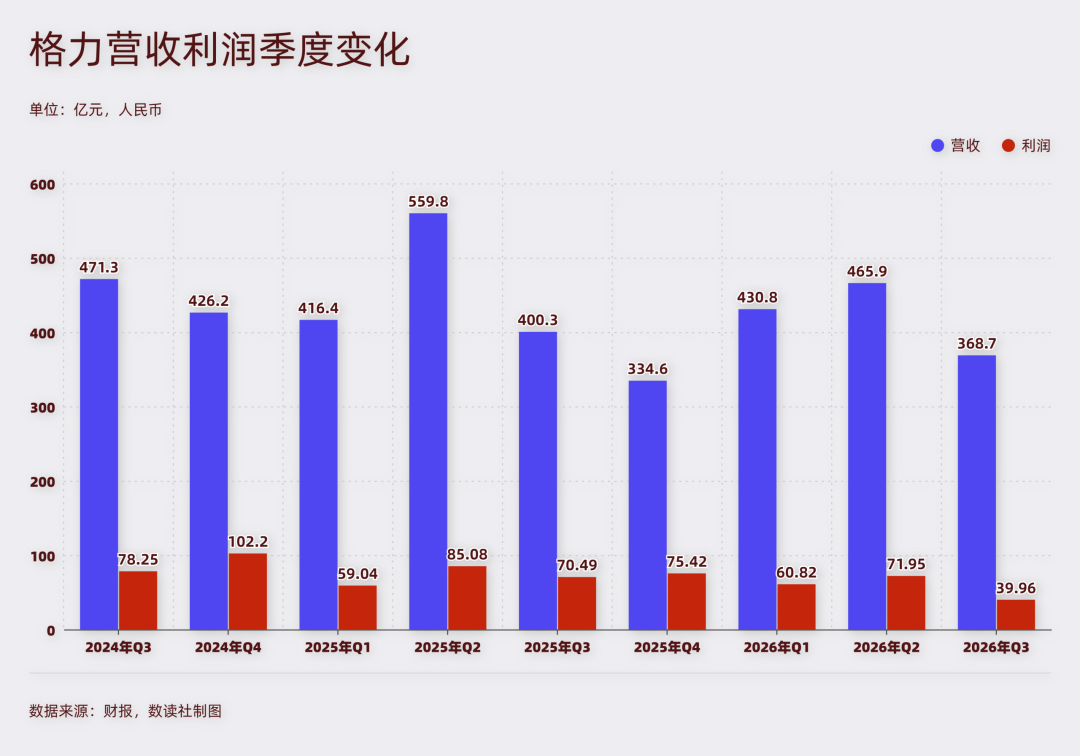
The official explanation was terse: the decline was mainly due to a year-on-year drop in the consumer appliances business, and the company insists on "competing on quality, not price."
But raw material price increases and pricing strategy alone cannot account for this gap between revenue and profit.
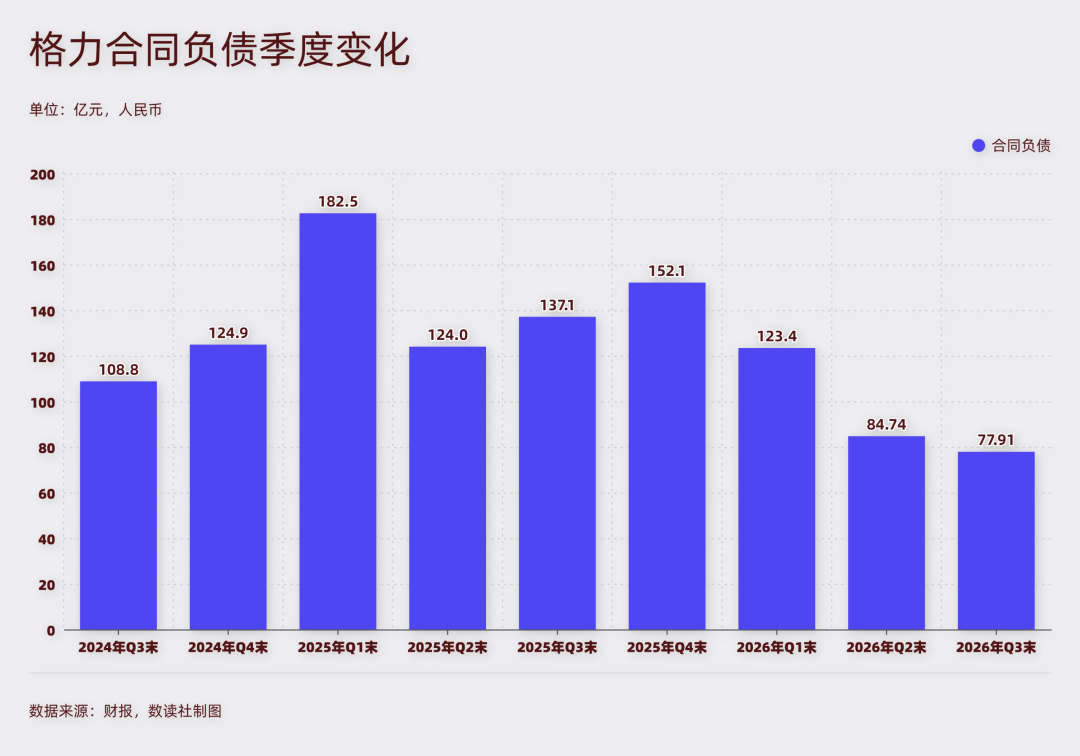
A closer look reveals three sets of numbers pointing to the same conclusion. Contract liabilities fell from around 13.7 billion yuan in the same period last year to 7.791 billion yuan, a year-on-year decline of 43.2%. The single-quarter gross margin slid from 28.3% to 22.7%. Absolute selling expenses were 6.723 billion yuan, down 11.41% year-on-year, yet the expense ratio rose 0.9 percentage points.
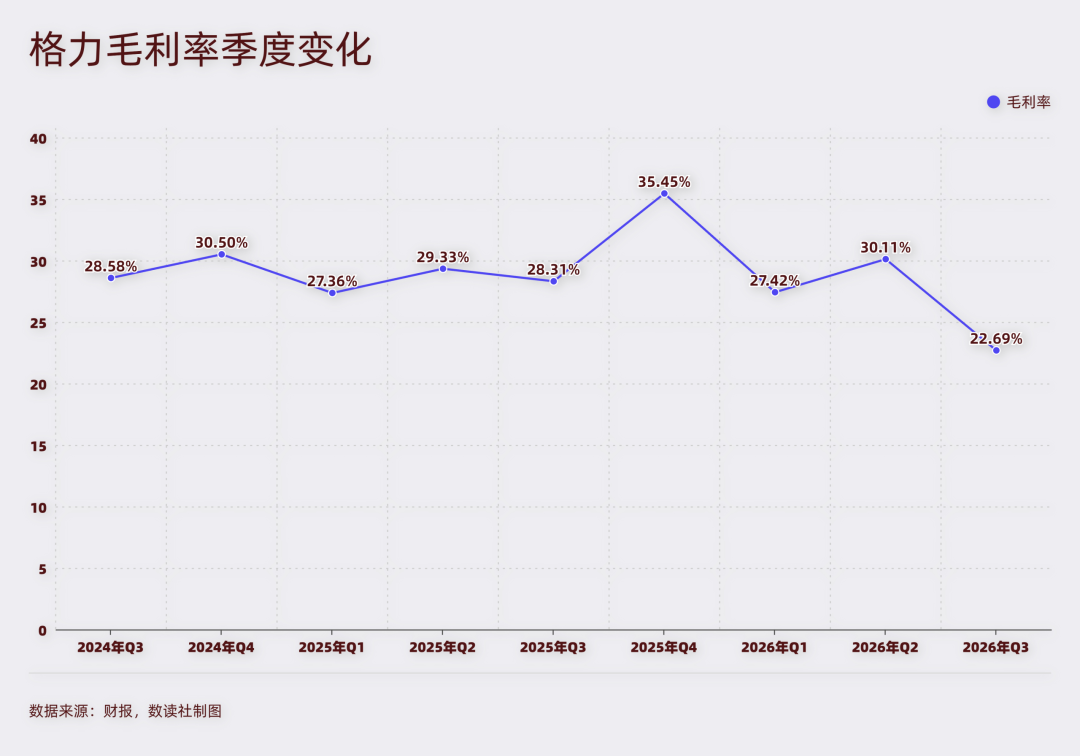
The sharp drop in contract liabilities corresponds to Gree's cancellation in the third quarter of 2026 of its years-long off-season opening prepayment and inventory-loading policy, under which dealers are no longer required to park large sums on Gree's books in advance. The gross margin contraction and expense ratio increase are the knock-on effects of this move on the production and revenue sides.
These shifting numbers sketch a concrete picture: Gree is quietly overhauling its old channel model, and this is precisely the painful passage of that transformation.
Contract liabilities have an informal but apt name in the air conditioning industry: the "reservoir."
The mechanism works like this: at the start of each new cooling year, Gree uses off-season rebates and sales incentives to entice provincial sales companies and dealers to pay in advance and stock up during the off-season. This money sits on the balance sheet before goods are shipped and revenue is recognized, becoming interest-free working capital at the company's disposal.
For Gree, contract liabilities serve both as a leading indicator of future revenue and as a hidden financial lever to support production scheduling and cash flow turnover.
During the air conditioner penetration era, this model allowed Gree to leverage dealers' money to drive scale and share. In 1995, Gree's production and sales volume leapt to first in the industry, and it held the top domestic air conditioner market share for more than 20 consecutive years thereafter.
The premise for this model to work is that channel inventory turnover keeps pace with the prepayment rhythm. Once terminal retail slows and goods sit in dealer warehouses instead of reaching consumers' homes, they become huge inventory, tying up cash flow and bringing operational risk. Willingness to make the next round of prepayments then cools.
In the third quarter of 2025, Gree's contract liabilities were still at the 13.7 billion yuan level, still growing year-on-year—a sign that the old "reservoir" logic was still operating.
The sharp drop in 2026 coincides in time with a series of advance moves by Gree on the channel side.
Since the second half of 2025, Gree has gradually transformed its "Shengshi" provincial sales platforms—originally funded by core agents—into "Hengxin" subsidiary platforms dominated by professional managers. The online wholesale system has completed entity migration in many places across the country, and pricing power and sales policies have concentrated at the manufacturer.
On this already flattened organizational foundation, in the third quarter of 2026 Gree canceled off-season prepayment and inventory loading, effectively severing the last link of the old cycle of "advance payment—inventory loading—rebates."
This, then, is a deliberate release of the flood from the "reservoir," as Gree attempts to bid farewell to the channel model it once created and relied on for too long.
Part.02 The Cost of Joint Operations
Gree's move against its channels was not a whim. The benefits the old model brought Gree were real, but after the industry shifted from incremental growth to stock, the limitations it exposed were equally structural.
In 1997, Gree's four major dealers in Hubei competed to cut prices during an industry price war; low-priced goods flowed across regions, and Gree's price system in Hubei was torn apart.
Dong Mingzhu's approach was to bring dealers together and establish regional sales companies jointly invested in by manufacturers and dealers, unifying prices and channels, with profits distributed according to shares. In 1998, the Hubei sales company's sales grew 45%, and price competition and cross-regional dumping were basically stopped.
This model was later replicated nationwide. In 2007, regional sales companies further took stakes in Gree Electric, the listed company, completing the binding of manufacturer and dealer interests at the equity level. This "manufacturer-dealer joint operation" gave Gree the most solid offline network in the home appliance industry for more than 20 years, with over 30,000 specialty stores reaching deep into counties and townships, dealers paying before delivery, and Gree's accounts receivable days long-term lower than peers.
But the cost of the joint operation system gradually accumulated over time.
After regional sales companies grew too powerful, some used pricing power to squeeze the profits of second- and third-tier dealers, dampening sales enthusiasm in the terminal network.
The more fundamental change occurred in the competitive environment. Starting in 2012, Midea implemented the "T+3" model in its air conditioning business, driving production by customer orders: order on T day, prepare materials on T+1, produce on T+2, ship on T+3—pushing channel inventory to extremely low levels and shifting from "push-style inventory loading" to "pull-style replenishment."
A 2020 research report by a brokerage estimated that the difference in domestic production cost per air conditioner between Gree and Midea widened from Gree being only 4 yuan higher in 2015 to 175 yuan higher in 2019.
A CICC report provided a channel-side estimate: the terminal price gap per air conditioner between Gree and Midea was as high as 586 yuan (including VAT), of which only about one quarter translated into extra net profit, while the remaining three quarters settled into various costs, including warehousing, logistics, capital occupation, and management costs.
The two data sets use different calibers, but they point in the same direction. Gree maintained a higher terminal selling price than Midea, but the portion of the price gap that fell into the listed company's profit was far smaller than the price gap itself; a considerable part was consumed in the circulation links of multi-layer agents.
A horizontal comparison with the other two paths makes the pressure on Gree's old model even clearer.
Haier relies on RRS logistics for unified warehousing and distribution and integrated delivery and installation. By the end of 2025, unified warehousing TC covered more than 3,200 customers and over 17,000 township outlets, and the integrated delivery-installation rate rose to 97%, turning delivery capability itself into a source of channel efficiency.
AUX, around 2019, attacked the market with "internet direct sales" and the online wholesale model, cutting out agent tiers. In the first half of 2019, its online share once exceeded 30%, but brand stickiness was not established, and after Gree reported falsely labeled energy efficiency, the share was lost again.
Gree's situation lies between the two. It cannot completely abandon its heavy offline asset network like AUX, because more than 30,000 specialty stores and the installation and after-sales system are part of Gree's brand premium. Nor can it adopt the approach of Midea and Haier in bypassing middlemen, because the gap in channel efficiency will ultimately be reflected in share through price competitiveness. The decline in Gree's air conditioner retail share in 2019 was the first concentrated manifestation of this pressure.
For Gree, channel reform is not a multiple-choice question—the marginal returns of the old model have fallen to the point where they no longer cover friction costs, and reform is inevitable.
Part.03 The New Dilemma
From the "Dong Mingzhu's Store" and livestreaming experiments in 2020 to the Hengxin system taking over the online wholesale system in 2025, Gree's channel flattening has been advancing for several years. The core of the reform is to compress provincial sales companies from middlemen earning markups into distribution service nodes collecting commissions.
Evidence of channel profit flowing back began to appear in the 2026 interim report. In the first half of the year, the selling expense ratio fell 0.6 percentage points year-on-year, which a China Galaxy Securities research report attributed to "the company's years of continuous channel flattening reform having had some effect, with current support for dealer selling expenses reduced." Inventory turnover days fell from over 100 days in 2022 to around 78 days in 2026.
But the costs are equally clear. Around 2022, Hebei dealer Xu Zifa exited Gree, Jinghai Internet reduced its holdings in June 2022, and offline share visibly shrank between 2019 and 2022. Offline share only basically stabilized after 2023.
The channel pain only eased somewhat in 2025, when Jinghai Internet increased its holdings in Gree by 46.3827 million shares through centralized bidding, amounting to 2.099 billion yuan; in October 2026, Jinghai Internet again proposed an increase plan of 600 million to 1.2 billion yuan. Dealer shareholders continued to add stakes in a quarter of sharp profit decline, which at least shows that confidence within the channel system did not further collapse when the statements looked their worst.
As channel problems were gradually resolved, Gree's terminal performance gradually stabilized.
In the first three quarters of 2026, China's domestic household air conditioner shipment volume fell 11.7% year-on-year, with the single-quarter decline in the third quarter widening to 27.9%. Gree's domestic air conditioner shipment volume fell 13.8% over the same period, a smaller decline than the industry, and its shipment share rose from 22.6% in the first quarter to 32% in the third quarter.
In the quarter with the most severe industry downturn, Gree outperformed the industry on the shipment side, with share expanding rather than contracting—an indication that terminal retail did not suffer a cliff-like collapse.
But after the channel reform, Gree receives less money in advance, which will affect operational stability. In the first three quarters, net operating cash flow was 24.063 billion yuan, down 47.38% year-on-year. In the third quarter alone, operating cash flow was about 5.3 billion yuan, down about 70% year-on-year.
The only solutions are interest-bearing debt and bill extensions. As of the end of the third quarter, Gree's short-term borrowings rose from 66.1 billion yuan in the same period last year to 80.8 billion yuan, an increase of 14.7 billion yuan, and notes payable rose from 17.3 billion yuan to 25.8 billion yuan, an increase of 8.5 billion yuan.
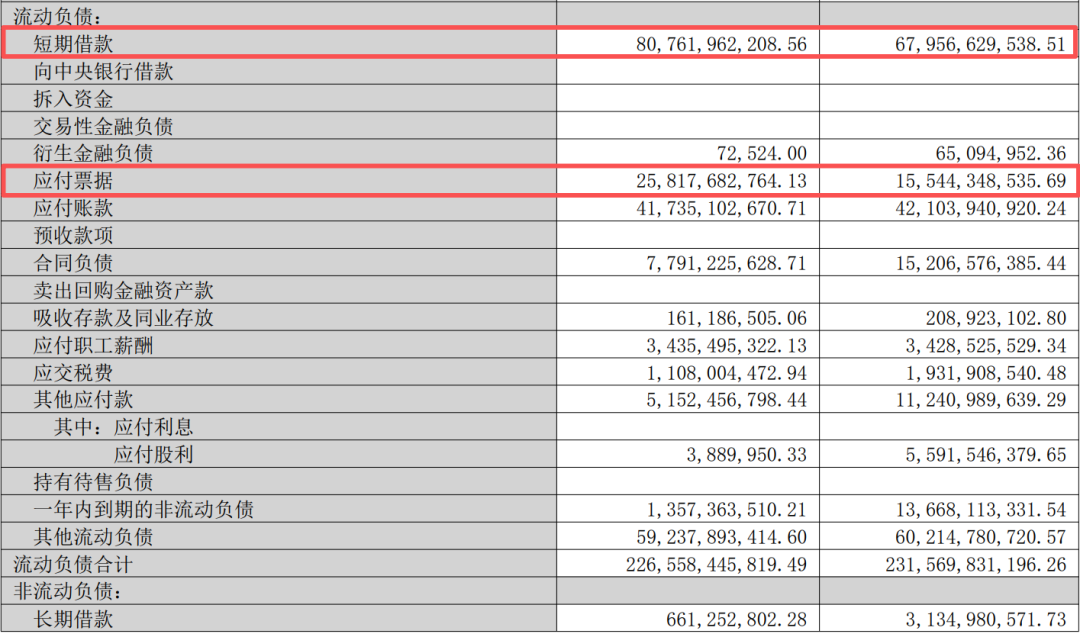
Rising raw material prices are another straw. In the third quarter, Gree's gross margin fell about 5.62 percentage points.
The most direct reason for the gross margin decline is on the cost side. In the third quarter of 2026, copper prices rose about 35% year-on-year and aluminum prices rose about 15%. Gree maintained relative stability in product selling prices while raw material costs rose sharply.
With dealers no longer paying in advance, Gree's cash inflow from channels naturally contracted, shifting to interest-bearing debt that increases the cost of capital and puts pressure on overall profit. Rising raw material prices suppressed gross margin, ultimately leading to a 43.3% decline in net profit attributable to shareholders.
This is Gree's new issue at present. As channel reform gradually enters deep water, Gree must face a gap of several billion yuan and higher capital costs. Combined with pressure from the macroeconomic environment such as rising raw material prices, its operational stability is being tested.
What Gree needs to solve is not a 40% profit decline, but how long it will take a company accustomed to using channel leverage to drive scale to establish a new equilibrium after actively dismantling that leverage. Within this time window, how to catch up with Midea and Haier in a stock market is an even more thorny problem.
Terminal retail has not collapsed, share has not been lost, inventory turnover is accelerating, and dealer shareholders continue to increase holdings at low levels. These are the signs that the reform has not yet spun out of control.
However, the effects of Gree's channel reform are already evident in its financial statements. In the coming quarters, two factors will reveal more about the quality of this transformation than year-on-year single-quarter profit figures: whether contract liabilities can find a stable floor under the new normal of "sell as you go, replenish as you go," and whether terminal retail can sustain its shipment share without the boost of inventory loading.
-
![]()
Why Can Longgang's Cross-Border E-Commerce Keep Its Lead Steady Despite Industry-Wide Headwinds?
-
10 Years On: Chip Performance Has Grown 40-Fold and Memory 8-Fold—So Why Do Phones Still Lag?
-
![]()
B2B Buyer's Guide: Waveguide Supplier Directory and Technology Roadmap Comparison
-
![]()
Will Automotive Chips Keep Getting More Expensive in 2027? How Much Will Cars Cost Across Four Price Tiers?
-
![]()
Gree Electric: Draining the Reservoir
-
Volkswagen Is Feeling the Pain—Badly
-
![]()
Five-Meter Body and Magnetorheological Suspension: Can the Second-Generation Seal 07 Max Out Driving Control?
-
![]()
Global Automotive Glass Leader with a Strong Dividend Track Record