Robot Vacuum Cleaners: Drawing the "Kill Line"
 11/10 2026
 459
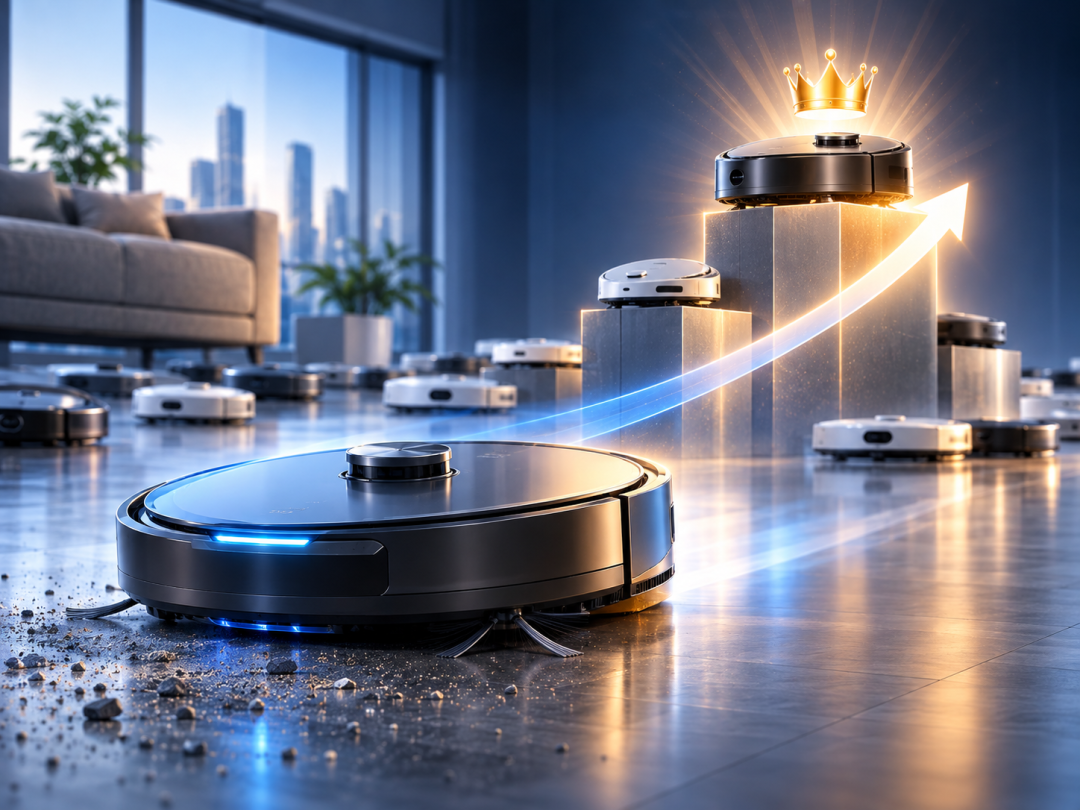
Once the competitive landscape stabilizes, what do the companies still at the table rely on to make consumers choose them? The answer lies not only in spec sheets. Differentiation is more likely to come from a deep understanding of home cleaning scenarios and the ability to translate that understanding into a consistent product experience.
In the second quarter of 2026, the top five manufacturers (CR5) in the global robot vacuum cleaner market accounted for 75% of shipment share and 82% of sales value share.
Signs of a market "clearing the field" began to emerge in China. In just half a year, 11 brands and 73 models vanished from online channels.
The year before, robot vacuum cleaners had been lavished with attention. DJI entered the market, and Dreame drew plenty of attention. Behind the noise, industry concentration rose across the board, and this important growth market had already entered a stock period.
Part. 01 Small and Medium-Sized Brands Are Being Drained Dry by the Leaders
After the trade-in policy was introduced in July 2024, provinces included robot vacuum cleaners in their subsidy scope on their own initiative. In places such as Beijing, the maximum subsidy reached 2,000 yuan.
In 2024, robot vacuum cleaner sales surged 41.1% to 19.36 billion yuan, and in 2025 they exceeded 21 billion yuan. Subsidies concentrated a large amount of replacement demand that would otherwise have been spread over the next two or three years.
On December 30, 2025, national subsidies were scaled back. Although local subsidies continued in some provinces and cities, their coverage and intensity were no longer as strong as the previous year.
Subsidies amounted to releasing demand in advance, and the "withdrawal reaction" after the reduction was obvious. A person close to the home appliance supply chain told the media: "In March and April, after the subsidies receded, dealers of many small and medium-sized brands simply stopped placing orders."
Data from RUNTO Technology shows that in January-February 2026, China's online sales of robot vacuum cleaners were 621,000 units, down 22.2% year on year.
The chill at the terminal quickly spread upstream. According to reports, multiple suppliers of Dreame reported that arrears began to appear in concentrated fashion from the second quarter of 2026, ranging from tens of thousands of yuan to tens of millions of yuan. Even leading companies faced cash flow and supply chain pressure, let alone small and medium-sized brands.
This difficult environment accelerated the divergence that was already taking place.
According to IDC, in the second quarter of 2026, Roborock's share was 23.7%, up 2.9 percentage points year on year. Dreame rose from 12.2% to 21.2%, an increase of 9 percentage points, and Ecovacs also increased by 2.7 percentage points. At the same time, the share classified as "others" fell from 38.3% to 25%, a decrease of 13.3 percentage points.
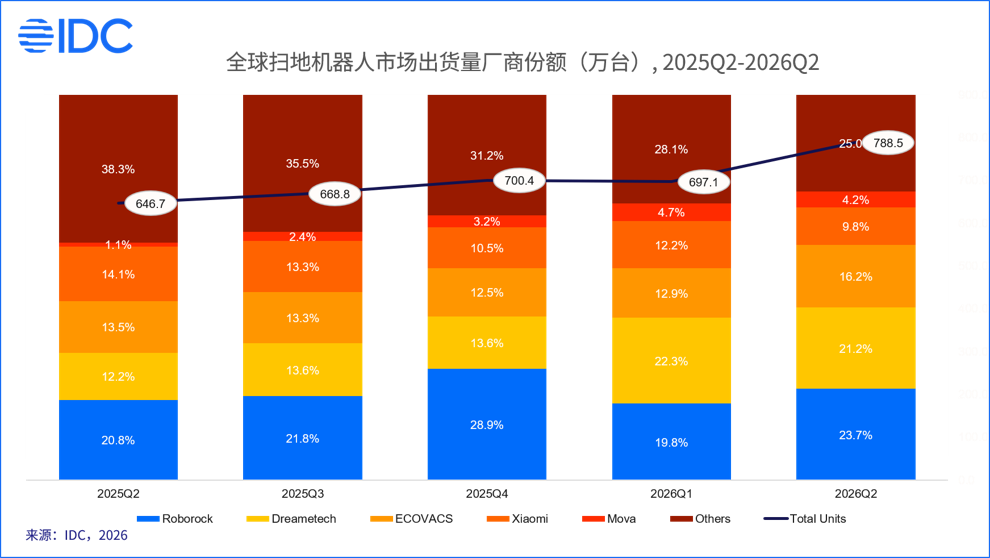
The leaders are absorbing the vacuum left after the tail-end players disappear.
Most white-label and small and medium-sized brands are stuck precisely between "usable" and "worth it." Functional descriptions are uniform: laser navigation, AI obstacle avoidance, automatic dust collection, hot water mopping and washing, with no essential difference from two or three years ago. Facing competition from major brands, without differentiated market positioning or a technological premium, it is very difficult to survive.
With new brands such as DJI and MOVA (under Dreame) disrupting the market, even mid-tier manufacturers like Narwal have entered the "others" category. The market's kill line is increasingly converging with that of the home appliance market.
Part. 02 Overseas Expansion Is the Main Growth Engine
When the domestic market entered a stock-market battle and small and medium-sized brands began to be squeezed out, the leaders did not stay in China to fight a price war. Instead, they bet incremental growth on overseas markets. Going overseas is not the only path, but it is currently the most certain source of growth for leading companies.
Roborock's revenue in the first half of the year was 10.084 billion yuan, up 27.60% year on year, and net profit attributable to shareholders was 986 million yuan, up 45.60% year on year. Of this, overseas revenue was 6.073 billion yuan, accounting for more than 60%, compared with less than 50% in the same period of 2025.
In the first half of the year, overseas revenue as a share of total brand revenue rose 8.2 percentage points year on year to 49.0%, and in the second quarter it exceeded the domestic share for the first time, reaching 51.0%. Ecovacs brand overseas revenue grew 46.5% year on year, and overseas revenue from new categories grew 75.1% year on year. Ecovacs, once listed on the capital market as the "first stock of robot vacuum cleaners," is becoming a company mainly dependent on overseas revenue.
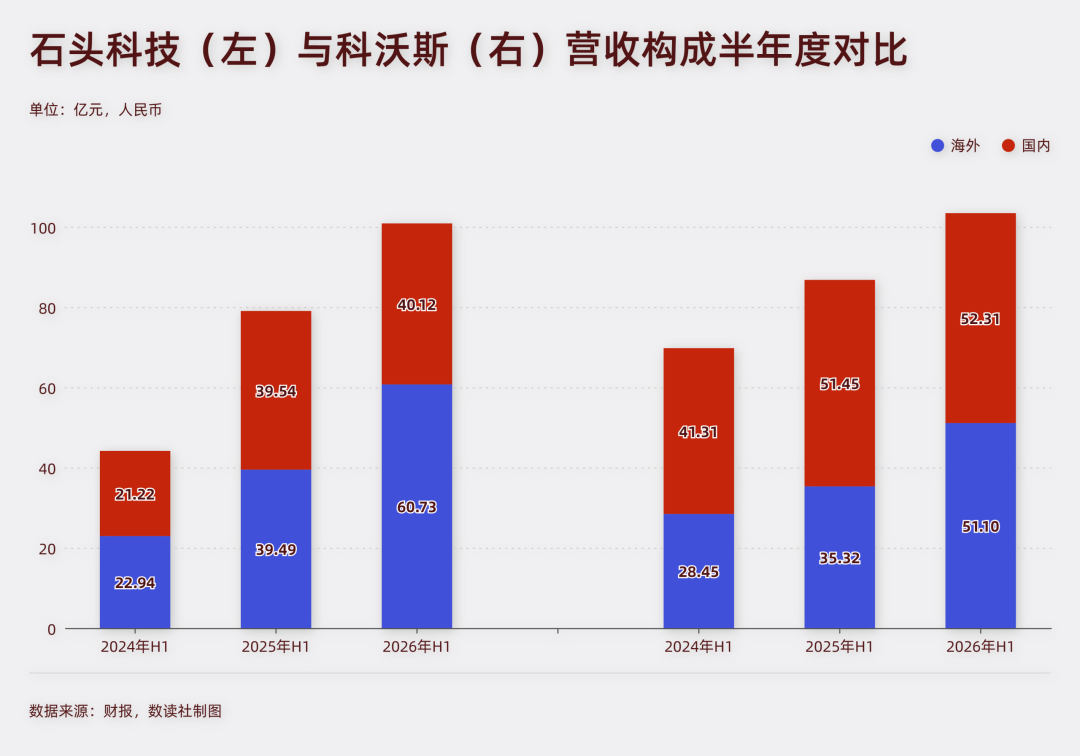
The other side of high growth in overseas markets is a structural decline in net profit margin.
Ecovacs' revenue in the first half of the year was 10.341 billion yuan, up 19.18% year on year, and net profit attributable to shareholders was 1.248 billion yuan, up 27.4% year on year. Net profit attributable to shareholders after deducting non-recurring gains and losses fell 6.37% year on year. A considerable part of profit came from investment gains from the Hong Kong listing of Xiangong Intelligence and from Ruiman Intelligent, which together contributed about 406 million yuan. After excluding these non-recurring gains and losses, main business profit was under pressure.
The strategic logic of these two companies is two sides of the same coin: Roborock trades channel expansion for scale, while Ecovacs trades category expansion for structure.
In North America and Europe, Roborock rapidly built volume through offline key accounts such as Costco and MediaMarkt, but these leading channels are costly.
Ecovacs, meanwhile, bet on lawn mowing, window cleaning, and pool cleaning robots beyond robot vacuum cleaners. Overseas revenue from new categories grew rapidly, using new scenarios to hedge against the growth ceiling of the single robot vacuum cleaner category. But these categories are currently small in scale, and whether this growth rate can be maintained at a larger scale still needs to be observed.
Xiaomi's overseas path for robot vacuum cleaners differs from those of Roborock and Ecovacs, relying more on the Xiaomi ecosystem. Xiaomi's overseas advantage lies in brand awareness and channel reuse capability, but robot vacuum cleaners are not its main category after all, and how many resources it can obtain remains unknown.
Going overseas is not a risk-free smooth path.
Policy risks are unavoidable. In July 2026, new FCC rules were introduced in the United States. New models meeting conditions such as navigation and obstacle avoidance, networking, and complete machines (including base stations) weighing more than 2 kg will find it difficult to obtain conventional authorization and will need to go through a higher-threshold conditional review channel. The more countries in which a company operates, the more diverse the policy risks become.
More broadly, profit margins in overseas markets are constrained by channel costs, policy volatility, and localization capabilities.
Part. 03 From Expansion to Focus
Since the beginning of this year, the noise of the past has died down. Companies have shifted from high-profile to low-profile, and robot vacuum cleaner companies are gradually abandoning blind expansion.
Dreame is the sample most worth analyzing in 2026. On August 28, 2025, Dreame Technology officially announced its entry into the new energy vehicle field.

But a year later, on September 1, 2026, Dreame Technology confirmed to the media that its automotive business had abandoned mass production plans and would only serve as a technical reserve, with related operations merged into the Industrial Research Institute for management.
A Shanghai Securities News reporter's on-site visit found that there were no longer traces of car manufacturing at Dreame's Suzhou headquarters campus. The RV workshop at its Quanjiao factory in Anhui was pitch dark, and the car-making team had shrunk from nearly 1,000 people to fewer than 100.
Previously, Dreame's internal business units had at one point expanded to more than 200, extending from robot vacuum cleaners to cars, mobile phones, chips, and even milk tea, with a workforce of nearly 28,000.
In mid-2026, Dreame compressed more than 200 BUs into four major segments, retaining only tracks with high potential and technical synergy, and cutting inefficient business units with no technical relevance and no long-term profitability.
The industrial meaning of this move is clear: at a stage when competition in the main business is intensifying, the second curve cannot drag down the core business.
The main robot vacuum cleaner business requires continuous R&D investment, channel building, and maintenance of the pricing system. If organizational resources are overly dispersed into exploratory businesses that do not generate synergy, the competitiveness of the core business will be eroded.
Narwal is another case. Zhang Junbin once positioned himself as a "super product manager," regarding engineering and products as the core battlefield and "paying very little attention" to marketing.
It was not until he personally took over the marketing system in the second half of 2025 that he realized that product and marketing are not an additive relationship but a multiplicative logic: "if any one item approaches zero, the result is zero."
The cost of this cognitive shift was enormous. In 2025, the company's 5 billion yuan revenue target ultimately fell short. In most months, revenue could not cover marketing and operating costs, and only brief recoveries came from major promotions such as 618 and Double 11. The company remained in a loss for the full year.
Co-founder Wu Yihao stepped down from management duties on the eve of the IPO, and the team was streamlined from 1,600 to 1,400 people. After organizational adjustments, Narwal's overseas revenue grew nearly 50% year on year from January to April 2026, and the group's gross profit margin increased by more than 10 percentage points compared with before Zhang Junbin took over marketing. This shows that after organizational efficiency is repaired, product strength can be translated into commercial results.
The practices of these companies point in the same direction: the margin for error in the robot vacuum cleaner industry has narrowed, and founders' "willfulness" and extensive organizational expansion both need to be corrected. Focus, organization, and a closed commercial loop together determine competitiveness.
Part. 04 Depth, Precision, and Business Restraint
"Clearing the field" is not the end but the beginning of a new competitive rhythm. The opponents ahead will mainly be the leaders, and the cost of error is declining.
The depth of global implementation determines the upper limit of growth. Overseas revenue shares at Roborock and Ecovacs have already approached or exceeded 50%. Both companies face the same challenge: how to maintain a positive profit cycle in overseas markets with lower gross margins. "Revenue growth without profit growth" is a structural feature of the overseas expansion stage.
DJI provides a different reference: it does not pursue low-price volume. The ROMO 2 series saw online channel growth of 217% year on year in its first week of launch in Europe, and offline growth of 170%. In France alone, it entered more than 100 offline stores, all with high-end pricing above 4,500 yuan.
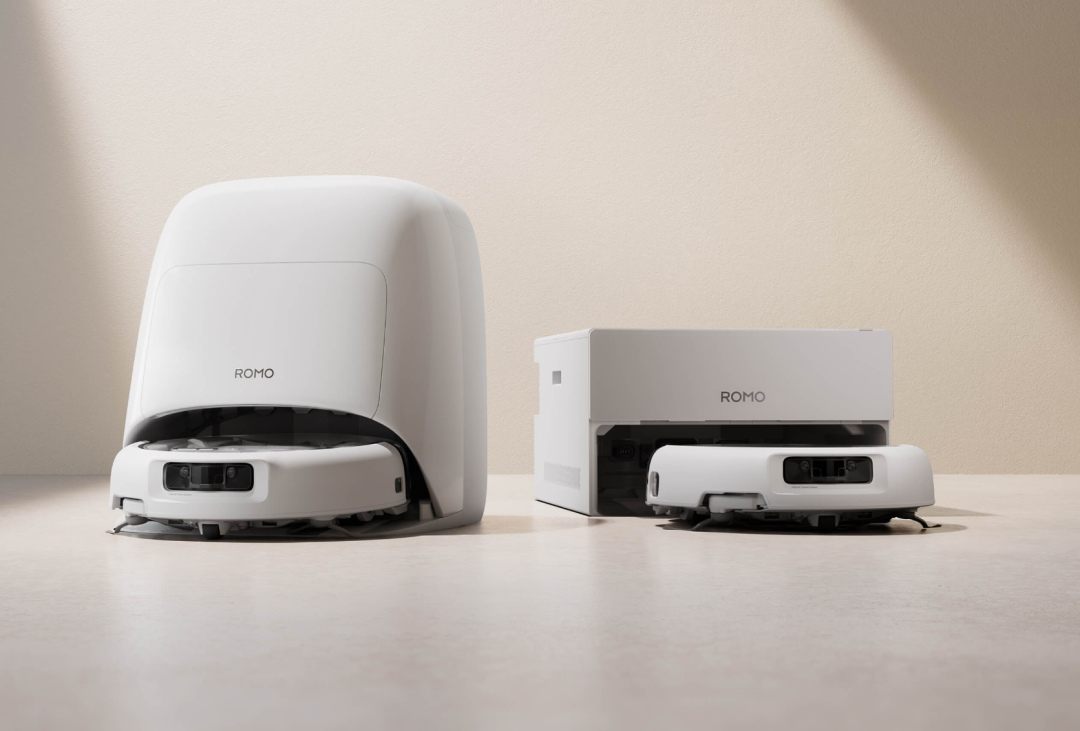
DJI's logic is "same-source technology": redesigning the perception, obstacle avoidance, and algorithm capabilities accumulated in drones for home scenarios, using technological labeling to gain pricing power in the high-end market.
This path is harder to walk, but once it succeeds, profit margins are far higher than those of low-price volume. DJI's overall scale in the robot vacuum cleaner market is still limited, and whether its success can be replicated at a larger shipment level still needs time to verify.
The precision of organizational efficiency determines the lower limit of survival. Dreame compressed more than 200 BUs into four major segments, and Narwal streamlined from 1,600 to 1,400 people. Both are corrections to the extensive expansion of the past few years. At a stage of intensifying competition, every bit of organizational redundancy consumes the competitiveness of the core business.
Zhang Junbin told the media that Narwal's major structural adjustments have basically been completed, coordination gaps between marketing and products are being repaired one by one, and the group's gross profit margin has increased by more than 10 percentage points.
But Narwal's problems are also obvious. After the organizational structure adjustment is completed, returning to the competitive ranks has become extremely difficult. In the second quarter, Narwal's share was even surpassed by MOVA, falling below 4.5%, compared with 7.5% in the first three quarters of last year. There is not much share left to capture.
The degree of restraint in the second curve determines the room for error. Dreame's abandonment of car manufacturing is a landmark event. It shows that even among the leading camp, resources are not unlimited, and the profit margins of the main robot vacuum cleaner business are insufficient to support multiple capital-intensive new business explorations at the same time. A better second curve is category extension with technical synergy with the main business, rather than cross-industry ventures starting from zero.
Finally, return to the simplest question: when the competitive landscape stabilizes, what do the companies remaining at the table rely on to make consumers choose them?
The answer doesn't lie solely in spec sheets. True differentiation is more likely to stem from a deep understanding of home cleaning scenarios—and the ability to translate that understanding into a consistently stable product experience.
-
![]()
The First Country Built by AI—How Is It Doing Now?
-
![]()
Robot Vacuum Cleaners: Drawing the "Kill Line"
-
![]()
Mobile Phones Aren't Selling, and Tablets Are Suffering Too—What Exactly Is Going On?
-
![]()
Car Buyers Are Getting Older and Older—So Why Are Cars Still Marketed as Youth-Oriented?
-
![]()
Domestic Profits Are Plummeting: BYD, Chery and Geely Race to Expand Overseas | A Deep Dive into the CPCA's October Auto Market Review
-
After Propelling Geely Galaxy, the Million-Unit Xingyuan Phenomenon Comes at a Cost
-
![]()
Even Environmental Groups Can't Do Without AI—But Is All That Electricity Worth It?
-
![]()
Lei Jun's "Boast" Comes True: Xiaomi Pengcheng Secures October's "Double Championship"! Harmony Intelligent Mobility Drops Out of Top Three