The Next Stop for Large-Screen TVs: From Content Consumption to Content Creation
 11/11 2026
 524
If large-screen TVs had no future, would LG Display still invest in a 111-inch product line?
Obviously not.
On October 28, LG Display and Guangzhou Development District Holding Group plan to invest an additional 1 billion yuan to upgrade the Guangzhou OLED module production line, with product specifications covering 77 inches, 83 inches, 97 inches, and 111 inches. LG Display holds a 70% stake, while the Guangzhou side holds 30%.
Now that phones have become essential tools for people to obtain information and entertainment, what new value can large TV screens still create? Is the appeal of television declining?
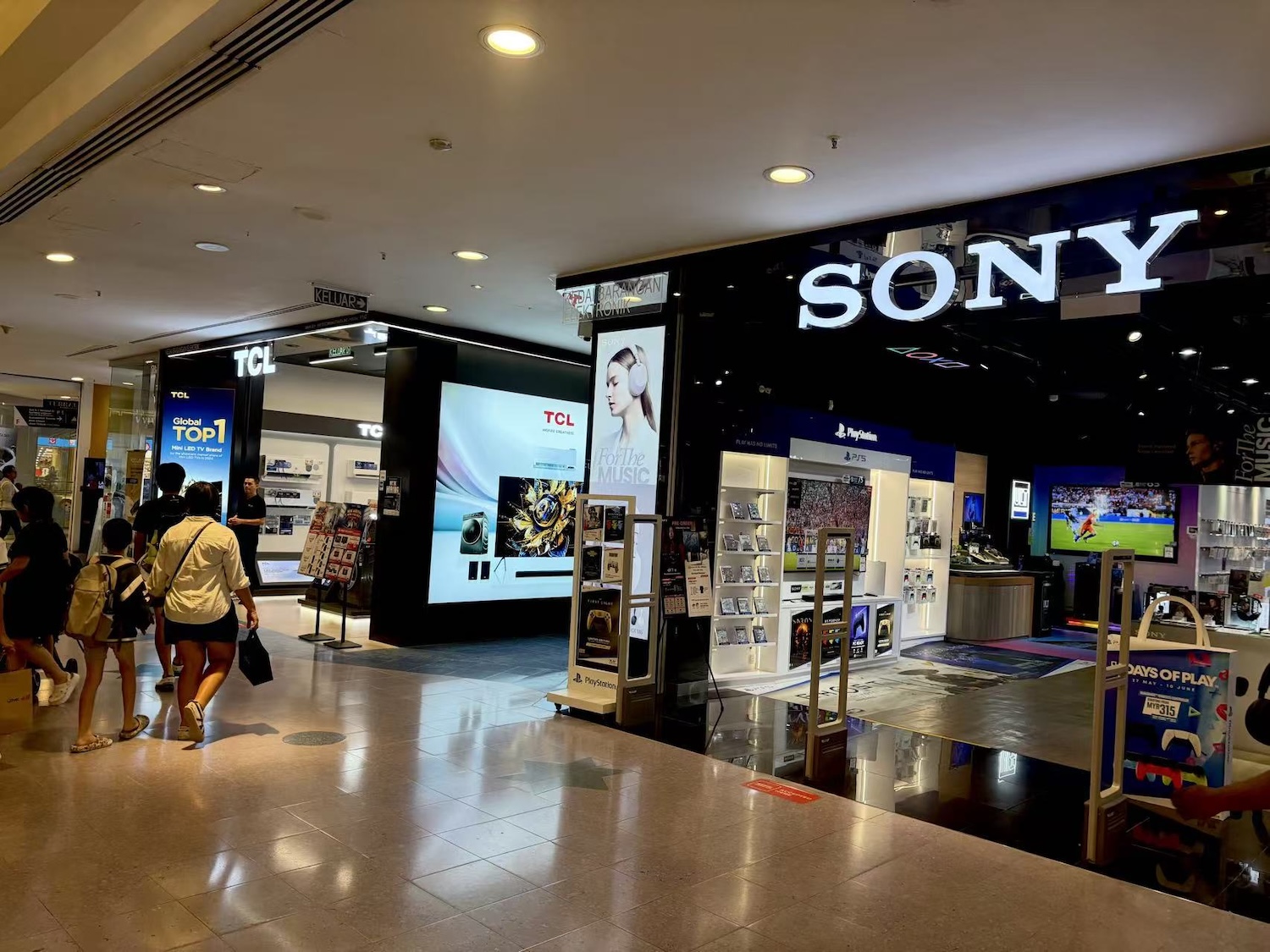
The large-screen market has not lost its appeal
Market data offers another answer.
A forecast released by Omdia in September 2025 shows that global shipments of TVs 80 inches and above were about 9 million units in 2025 and are expected to exceed 13 million units by 2029. Similar shifts have appeared in the European market, where 75-inch, 85-inch, and even 98-inch TVs are gradually entering more households, and the average TV size continues to expand.
The growth in large-screen demand is certainly related to consumption upgrading, but it can no longer be explained solely by improvements in picture quality and size. Home viewing, gaming, sports events, and multi-person interaction are all providing new reasons to use large screens.
A 111-inch TV will clearly not become a common choice for ordinary households. Price, living space, viewing distance, and installation conditions will all limit its market size. But the significance of ultra-large sizes is not just about how many units are sold. Extending production technology to larger sizes may also drive manufacturing capabilities and product layouts for 77-inch, 83-inch, and other products.
TVs and phones are not substitutes
Phones make it convenient for individuals to obtain information at any time, while TVs are suited to enlarging content so that multiple people can watch together. The two serve different purposes, and there is no need to simply judge which will replace the other.
The 2026 living room study released by RTL AdAlliance (a European international media advertising and marketing company headquartered in Luxembourg and Hamburg, Germany) covered 17 markets and more than 15,500 respondents. The report shows that 90% of European respondents have a TV at home, and 64% watch video via TV every day. Among people aged 18 to 34, 39% watch programs on TV that they previously discovered on social media.
This data shows that after young people discover content through phones, they may still return to the TV to watch it. Social platforms have changed the way content is discovered, but they have not completely changed the viewing value of large screens.
Competition among TV manufacturers is also changing. In the past, screen size, resolution, and picture quality were important selling points; today, operating systems and content platforms also affect users' choices.
Omdia predicts that by 2030, emerging TV operating systems that appeared after 2022 are expected to reach a 30% share of the European market, up from 21% in 2025. Competition among platforms such as VIDAA, Titan OS, and TiVo shows that TV manufacturers have realized that what users see after turning on the TV and how they find content are also related to product value.
Will viewers become content creators?
What is more worth discussing than changes in screen size is the possible change in TV usage brought about by generative AI.
In the past, when family users turned on the TV, they mainly watched movies, TV dramas, sports events, and games. Content was produced by professional organizations, and consumers were responsible for choosing and watching. AI tools have lowered the threshold for content production, and this relationship may change.
Users can use AI to generate stories, characters, and images, and can also participate in video production. Family members can discuss the plot around a story, modify characters, and even jointly complete a video, then display it on the TV large screen.
However, phones and computers can also handle AI creation, so why is a TV still needed?
The key may not lie in generation capability, but in the way of participation. Phones are suitable for individuals to input instructions and modify details, computers can be used for further editing, and TVs can enlarge the creative results so that several people can watch, discuss, and offer revision opinions at the same time. A TV is not necessarily a content production tool, but it may become a display space for shared family creation.
Deloitte's 2026 digital media trends survey covered 3,575 U.S. consumers. The survey shows that among entertainment content enthusiasts, nearly 40% are willing to accept clearly labeled AI-generated content, and 24% are willing to co-create with generative AI, for example by changing story endings.
This data cannot yet prove that family AI creation has formed widespread demand, but at least it reflects consumers' interest in participating in content production. As AI tools become more widespread, family members jointly making a video or designing a story may no longer require professional equipment and complex software.
Luo Qingqi, senior director of Parle Consulting, believes that AI is changing the way information is produced and presented. In the future, a large amount of information in daily life and production activities may appear in visual form, and combined reality such as virtual reality and augmented reality will become an important form of information. With the development of digital twins and intelligent automation, people's demand for video information and display devices will also change accordingly.
If TVs can connect with phones, computers, and AI applications, large screens will have an opportunity to participate. In the past, a family sat around the TV watching others tell stories; in the future, they may also decide together how the story develops.
The value of large screens lies in shared participation
There is another obvious difference between TVs and phones: phones usually serve individuals, while TVs are more likely to become devices shared by family members.
Gaming has already provided relatively mature application scenarios. Multiplayer games, console games, and motion-sensing interaction all require larger display space. Home fitness can also use TVs to display movements and courses, allowing users to follow the screen for training. As smart home devices increase, TVs may also take on the functions of displaying the status of home devices and serving as control entrances.
These applications may not all become mainstream TV functions, but they have already extended the uses of large screens beyond video playback.
Luo Qingqi's judgment on future large screens is not limited to TVs returning to the living room. He believes that what people need is not just larger televisions; the presentation form, organization method, and utilization method of information are all changing. Ultra-large screens should not be limited to traditional living rooms, but may enter all nodes that need to present combined reality information, and the scale of large-screen adoption may also far exceed today's imagination.
This means that the market boundary of large screens may no longer be determined by the family living room. Whether it is home entertainment, workspaces, or other places that need to present information in a concentrated way, all may become new application scenarios for display devices. Of course, whether this change can reach scale still depends on technology costs, content ecosystems, and specific usage needs.
For TV manufacturers, the question is not just how to make screens larger and picture quality better, but why users are willing to turn on the TV every day and whether family members can find a reason for shared participation on the same screen.
What LG Display is betting on is not just size
Returning to LG Display's investment, this is first of all a manufacturing-side layout. It needs to be clarified that LG Display produces display panels and modules and does not directly determine the functions, operating systems, and content ecosystems of complete TV sets. Whether the 111-inch module can ultimately form a market with scale still depends on terminal brands' product planning, prices, and consumer demand.
Ultra-large OLED also faces practical thresholds. Manufacturing costs, yield rates, and final prices will all affect whether products can enter a broader consumer market. At the same time, Chinese manufacturers have already formed competitive advantages in the field of Mini LED TVs above 100 inches. For OLED to enter this market, it still needs to prove its competitiveness in picture quality and cost.
Therefore, it cannot be judged solely from one 111-inch production line that ultra-large OLED will rapidly become widespread. But if this investment is evaluated only by how many 111-inch TVs can be sold in the future, that is also not comprehensive enough. The manufacturing capabilities of 77-inch, 83-inch, and 97-inch products may also benefit from the production line upgrade.
The future competition in the TV industry may no longer be limited to panel technology, size, and picture quality. AI is changing the way content is produced, smart devices are changing the way information is obtained, and display technology needs to adapt to increasingly diverse information needs.
From this perspective, LG Display's investment in the 111-inch production line, although first of all an upgrade of manufacturing capabilities, also makes the TV industry face a question again: when screens are no longer just tools for playing content, can they also become entrances for people to obtain information, participate in creation, and connect with real life?
From content consumption to content creation, the next stop for large-screen TVs may not just be larger screens, but broader application space.
-
![]()
Cars That Sell Well Will All Be Replaced by Cheaper Alternatives Eventually
-
![]()
The 'Golden September and Silver October' Phenomenon Has All but Vanished: The Auto Market Enters an Era of Pure Survival
-
![]()
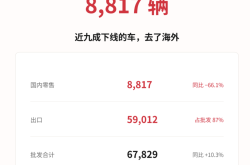
Tesla Sold Just 8,817 Vehicles in October—But the Factory Didn't Build a Single One Fewer
-
The King of Mobile Chips Shifts Battlefields
-
Amid the Personal Agent Boom, Xiaohongshu Enters the Fray with "Mishu"
-
![]()
Geely Auto October Sales: Xingyuan Hits 50,000 Units a Month, but What Does the Bigger Picture Look Like?
-
Chinese Brands Capture 90% of Thailand's Pure Electric Market—How Did the Japanese "Backyard" Slip Away?
-
![]()
Memory Price Hikes Leave Notebook Market Reeling: Q3 Sales Plunge 14%, Yet Apple Gains Ground