US in a Panic! Apple CEO Cook Endorses "Made in China" Before Stepping Down, Making Shocking Remarks
 11/24 2026
 330

Image source: Weibo
Cook's line that "China isn't about being cheap" actually only told half the story.
After handing over the Apple CEO role at age 65, Cook transitioned to executive chairman, wrapping up a 15-year tenure at the helm. On his final China trip before stepping down, he put it bluntly: We are holding fast to Made in China not because labor is cheap, but because no one can truly replace it. Those words heartened China's supply chain and grated on Washington. The other half he didn't say out loud: Apple is desperately building production lines in India and Vietnam not to replace China, but to buy insurance for China's production capacity.
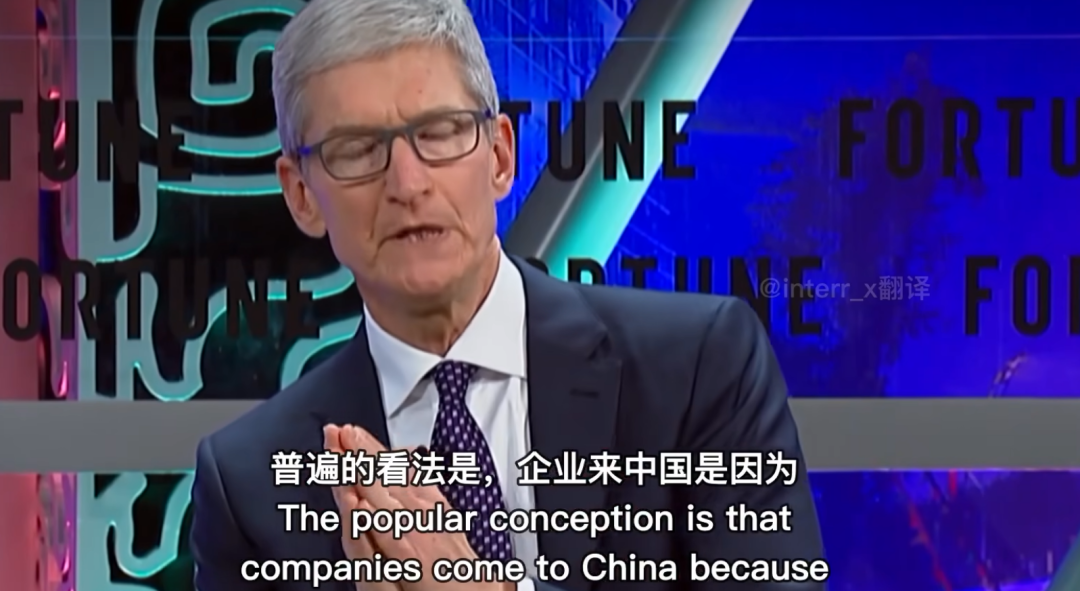
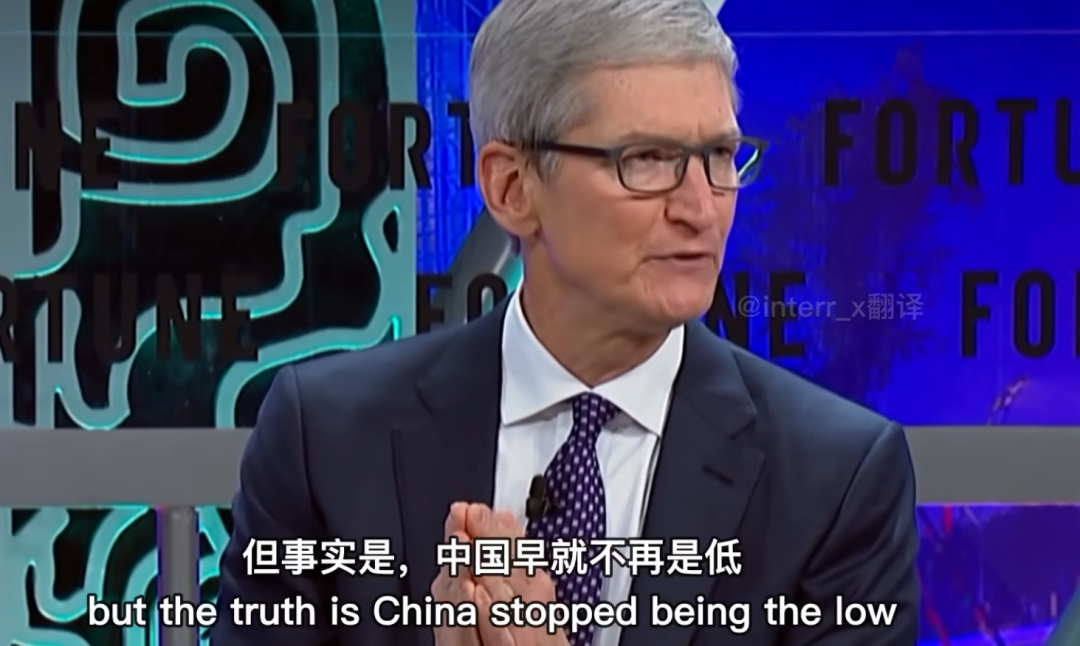
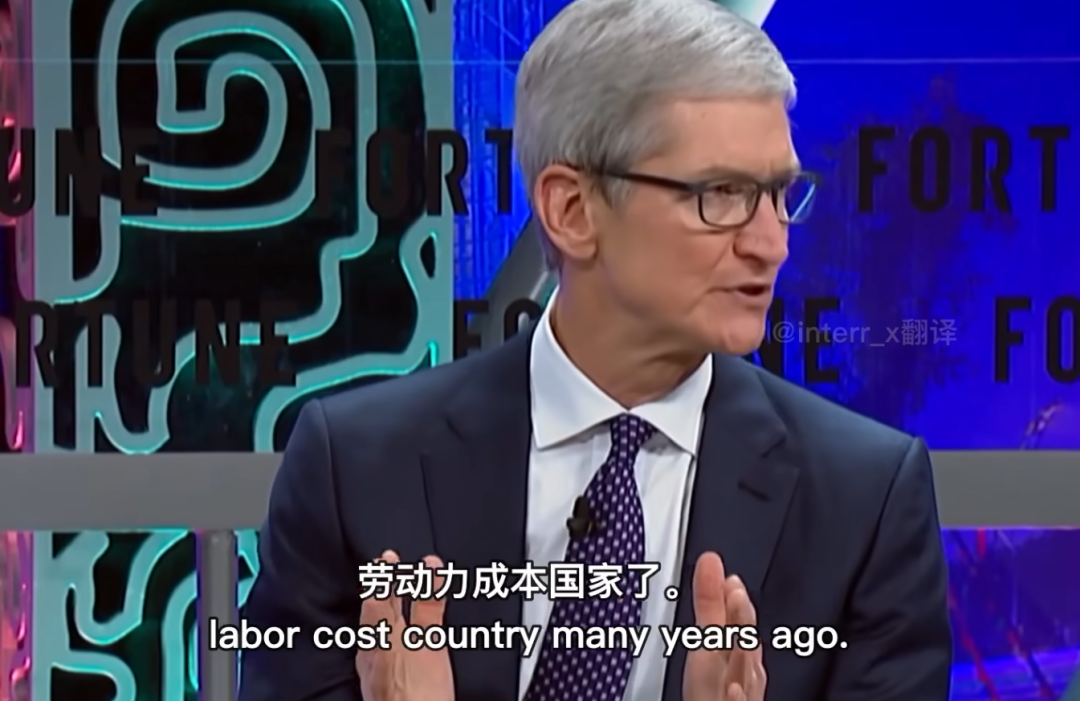 Image source: Weibo
What panics the US is not that Apple sells well in China, but that the words "no one can replace it" knock down the whole stage. In recent years, the cry for manufacturing reshoring has been loud: raising tariffs, offering subsidies, pressing companies to move production lines to India and Vietnam, with Apple as the most important showcase. Yet the CEO of that showcase company went to China before stepping down and admitted in person that it cannot be replaced. That is effectively acknowledging before the whole world that reshoring is stuck at the China link.
More subtly, Apple itself is quietly buying insurance. Pouring money into building lines in India and Vietnam is not about replacing China's supply chain, but leaving a fallback for core capacity. It's like internet companies setting up remote disaster recovery: burning money to maintain it in normal times so that when the main server goes down, operations don't stop. What Apple fears is not China raising prices, but one day being cut off and unable to get goods. Overseas factories are only a spare tire, not a second home field.
How hard it is to run that spare tire is beyond what outsiders can imagine. India-made iPhones account for over 7%, which looks like a successful transfer, but Indian factories have ground away for three years and yield rates have only barely caught up to China's starting level. The money sunk into shipping, training, and trial and error has long eaten up the labor cost gap. Cook's math is clear: if China keeps supplying, overseas capacity is pure cost; if supply is cut off, having no backup would be catastrophic.
What truly can't be moved is the craftsmanship that can't be written into manuals
The gap is not on the assembly line, but in the "special skills" that can't be written into manuals. The master craftsmen cultivated over decades of machine-tool hum in the Pearl River Delta can tell a gear is off by 0.01 mm just by listening to the hum; one touch of a sample's edge tells them exactly how many hundredths of a millimeter the mold needs to be adjusted. This is called tacit knowledge; it can't be packaged into code, nor can it be dug up overnight.
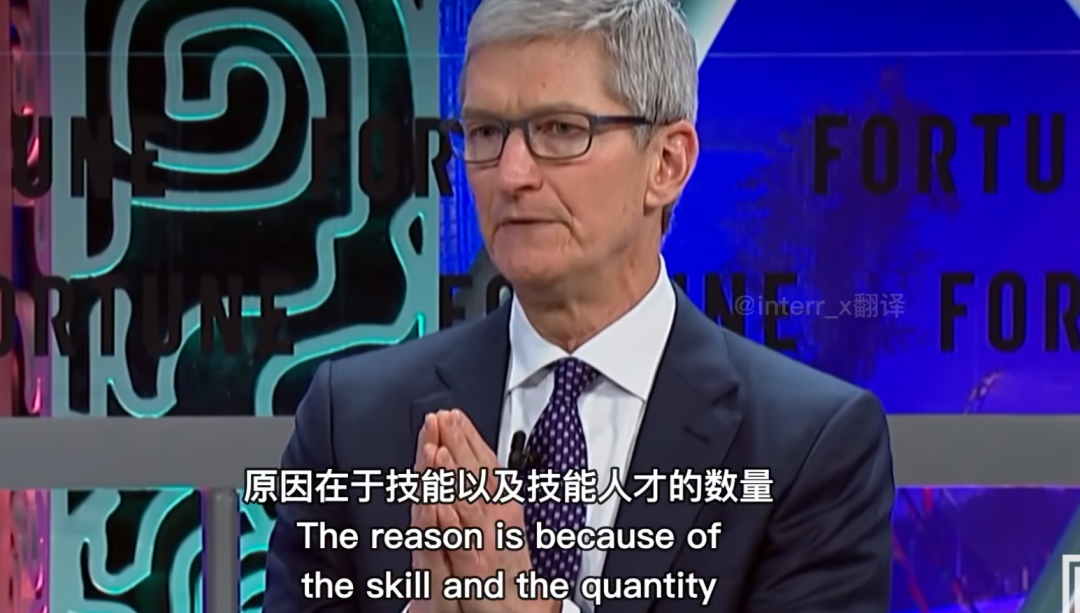
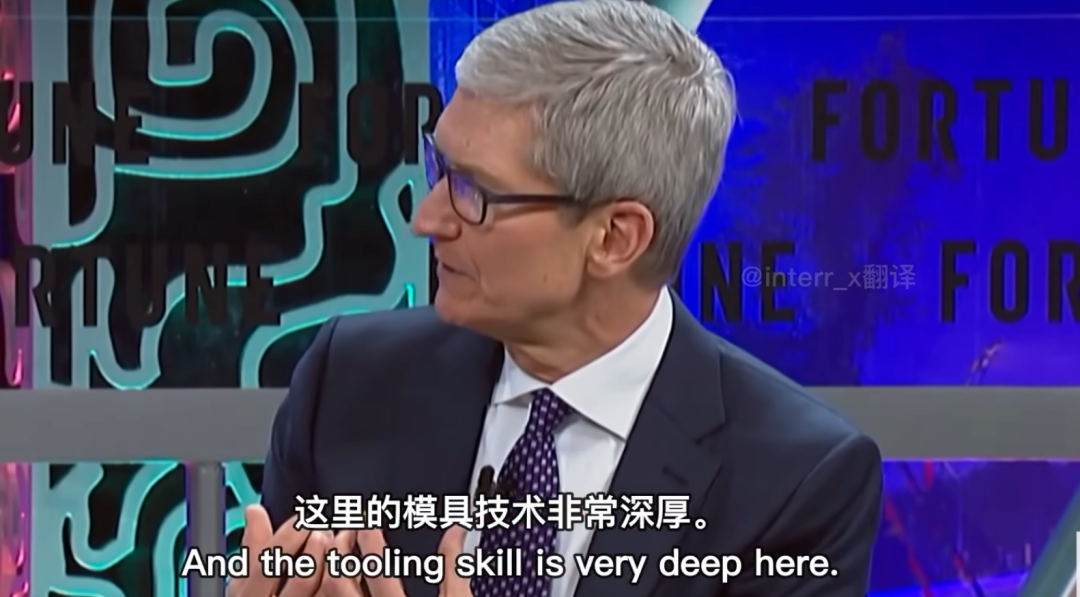
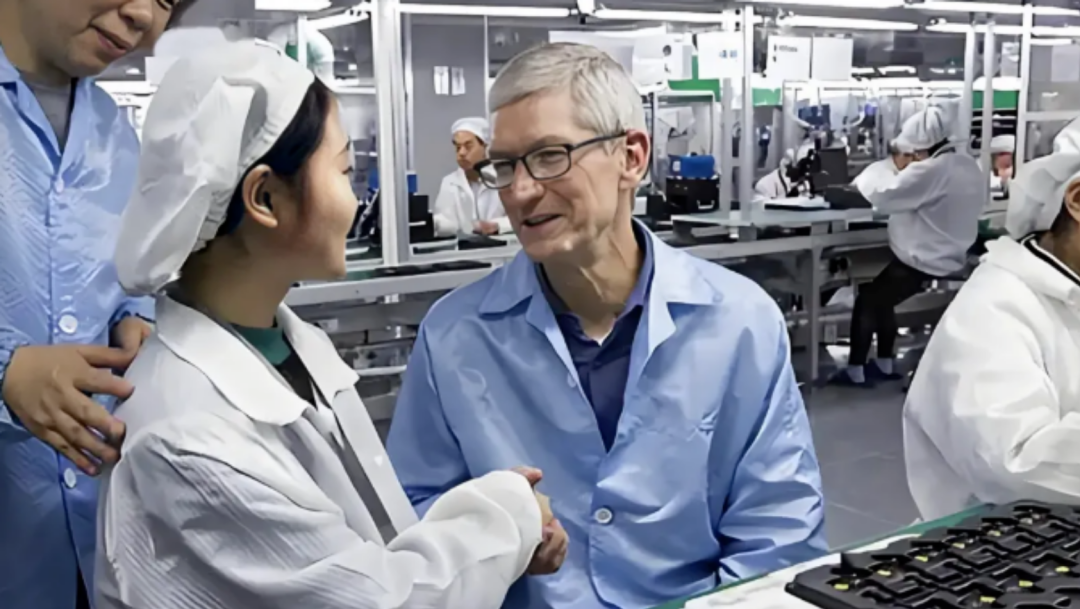 Image source: Weibo
India and Vietnam can recruit smart engineers; what they lack is an environment where upstream and downstream cluster together. Overseas factories can assemble the same phone, but they can't assemble the same stability in their bones.
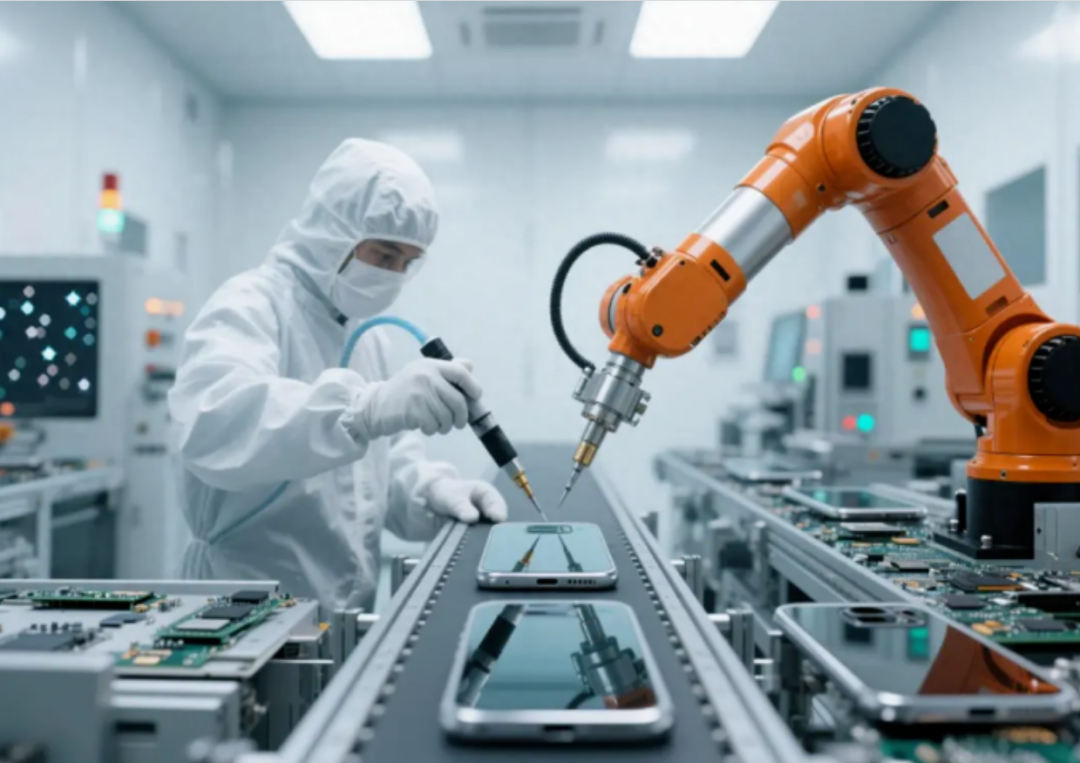 Image source: Weibo
When netizens hear that foreign companies are building factories in Southeast Asia, they shout "foreign capital is running away," but they're only looking at the easiest links to move: screwing screws and applying films, which can be learned in a few months. What truly grips the throat—mold development, high-precision machining, complex modules—still has the bulk pinned in China. It's not that they don't want to move it; they can't. A phone has over a thousand parts, backed by a supporting ecosystem of molds, polishing, electroplating, and testing all within a five-kilometer radius. A client changes a design in the afternoon, engineers meet in the evening, and a sample is out by dawn—that speed can't be replicated by throwing money at building industrial parks.
The identity of the Apple chain has changed: from contract manufacturing to co-defining
Ten years ago, Chinese companies in the Apple chain basically manufactured to drawings and earned hard money. Now it's different: Lens Technology participates in glass cover design, Luxshare leads structural innovation for AirPods, and BYD Electronics supplies Apple while also serving Huawei.
Apple's high standards force suppliers to tackle patents and hone processes, and the skills spill outward. In the supply chains of DJI, Xiaomi, and NIO, engineers and mature solutions from the Apple chain are everywhere. Made in China is shifting from "executor" to "co-definer." Apple can't do without China partly because this supply chain has grown into a part of its body.
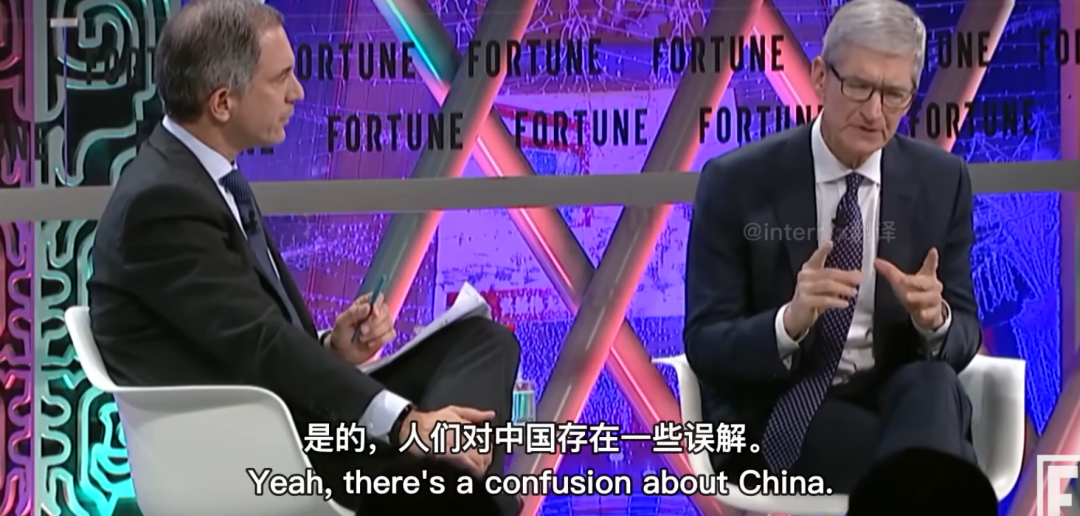 Image source: Weibo
But don't get carried away. Advantages are always dynamic: once it relied on having many people and being cheap, later on skill density and fast supporting capacity; next it must rely on new materials, new processes, and new equipment. It must upgrade from "turning drawings into goods" to "defining the next generation of products." Assembly lines can be moved, but a group of people willing to grind away on the shop floor and venture in the lab is the trump card that can't be taken away.
The real crisis is technological routes being bypassed
Having orders moved away is not scary; what's scary is future technology directly bypassing our advantages.
Signs are already there. Metal 3D printing may enable unibody midframes, eliminating dozens of mold processes; modular design turns phones into LEGO-style snap-together kits, causing demand for precision supporting parts to plummet; generative AI may one day directly output manufacturable plans. By then, the master craftsmen's half-lifetime experience will shrink. These aren't science fiction; they're happening in laboratories right now.
Once mass-produced, skill density and supporting ecosystems may overnight no longer be necessities. In the end, manufacturing competes not on where land is cheap, but on who has a group of people who can keep evolving and a soil where they can take root and inspire each other. That's what Cook values, and that's what we must defend.
iPhone Duo goes viral: exclusively Made in China, both a dividend and a major test
Cook's visit to China this time had another iconic moment: he accompanied US Commerce Secretary Raimondo on a tour of the new Chinese Mac Mini factory, using holographic cabinets and 3D sand tables to recreate the full chain from assembly to testing. A US cabinet secretary standing before a holographic sand table of a Chinese factory viewing the entire production line—that image is more blunt than any statement.
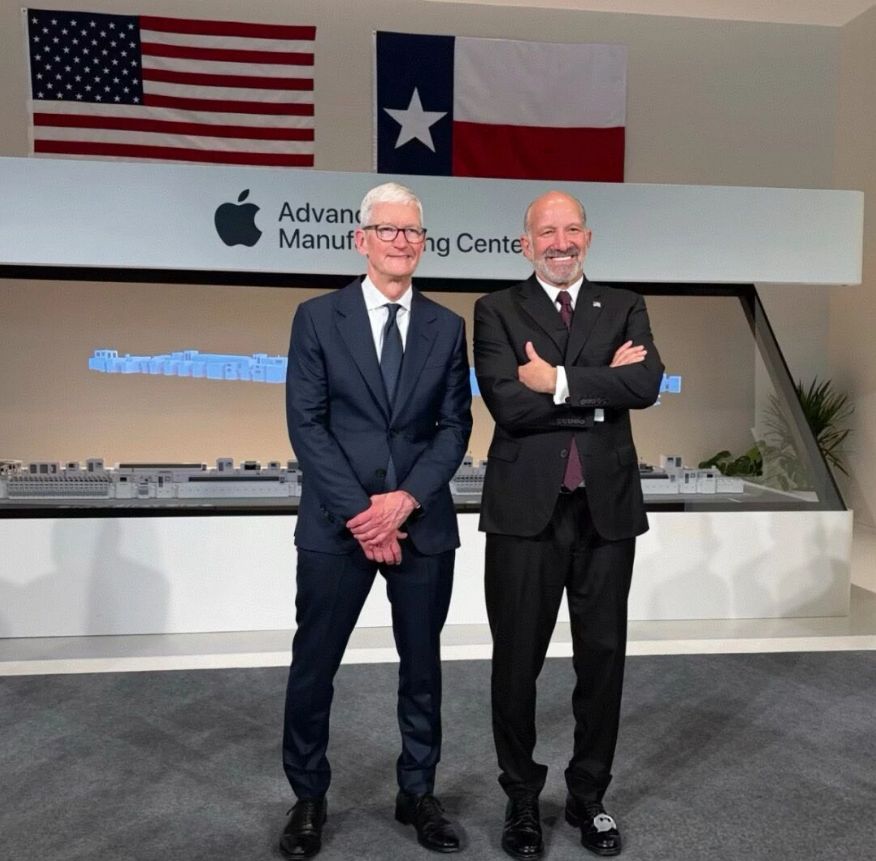 Image source: X social platform
Then news flooded the screens: Apple's first foldable phone, the iPhone Duo, is entirely made in China. This most expensive iPhone ever starts at $1,999, with the top configuration selling for 26,499 yuan. Pre-orders sold out instantly on October 16, with the official website, JD.com, and Tmall all out of stock, and shipping pushed to December 5—seven or eight weeks later than the original October 23. Cook endorsed it in Shanghai, praising it without reservation: it feels fantastic. COO Sabih Khan plunged into Zhengzhou Foxconn, saying the hinge's hundreds of parts each need precise matching, making this Apple's most challenging product to date.
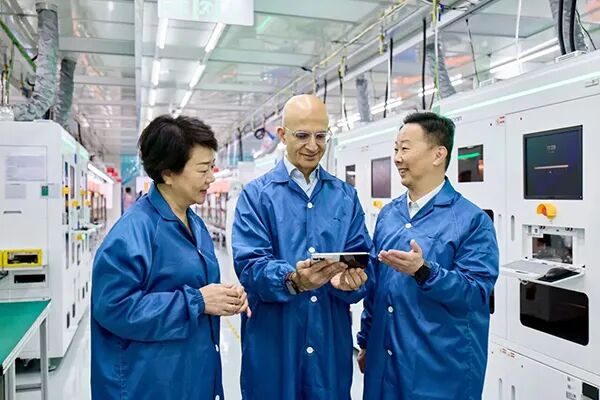
On October 11, Apple Chief Operating Officer Sabih Khan and his delegation visited the Foxconn Technology Park in Zhengzhou, Henan. Foxconn official account
But Cook's praise is not a favor. Apple betting its most expensive capacity on China is not favoritism; it has no choice—at this stage only Foxconn, Luxshare, and that batch of suppliers can handle hinges, screen bonding, and packaging. The shortcomings are also plain: panels are still dictated by Samsung and LG, BOE hasn't passed validation, and UTG ultra-thin flexible glass still relies on imports. Chinese factories do the most precise assembly and earn hard money, while the fattest panel profits remain in Korean hands.
Cook said China's foldable screen market is second to none, and the data is right: about 10 million units shipped in 2025, nearly half the global total. But this is also arsenic. In week 41 of 2026, Huawei held 72.7%, Honor 6.9%, Samsung 6.7%, vivo 6.1%, OPPO 4.0%, Xiaomi 3.1%; in the ultra-high-end segment above 10,000 yuan, Huawei accounted for 85%. Relying on a single iPhone Duo to shake Huawei's base would be very difficult.
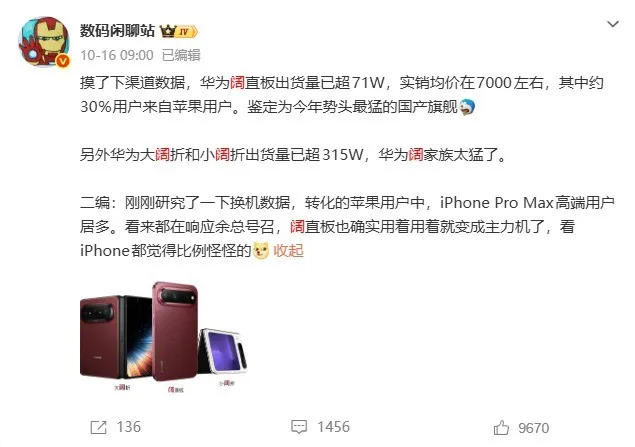
Image source: Weibo
More critically, the window won't stay open forever. Apple's old playbook: debut new technology in China, and after yield rates run smoothly and processes mature, gradually disperse capacity. Chinese factories will shift from "exclusive manufacturing" to "core manufacturing," and finally to "one of the important manufacturing bases." This wave of orders is a dividend, but the big test is not assembly—it's the domestic content rate of hinges, UTG glass, and flexible screens. We need to make Apple unable to leave, not just make Cook praise us.
23 visits to China: how Cook reshaped Made in China
Cook is not a product genius like Jobs; he is a top-tier operations master.
Poached from Compaq by Jobs in 1998, the first thing he did was slash inventory. Cook's famous line: Inventory is milk that spoils. Apple's inventory turnover was originally 31 days, compressed to 6 days within months, and later to 2 days. His management carried an invisible pressure: when a production line had a problem in a meeting, he would calmly say "someone should go to China to solve it," then half an hour later stare at Sabih Khan and ask "why are you still here," and the man would fly to China on the spot.
In 15 years, Apple's profits tripled and its market value rose tenfold to $4 trillion. The heaviest legacy he left to China's manufacturing industry is a set of rigorous standards. More than 80% of the world's 200 core suppliers have factories in China, affecting 2 million workers. Apple isn't looking for suppliers; it's manufacturing suppliers: the industry standard tolerance for midframes is plus or minus 0.05 mm, and Apple pushes it to 0.01 mm, forcing Luxshare and Lens Technology to develop their own machine tools; production line data is networked in real time, forcing workshops to upgrade into digital factories.
When the first-generation iPhone hastily switched to a large glass screen, no one could make it. Zhou Qunfei and Apple executives spent months in the factory, turning the impossible into mass production. The Apple chain also became a talent West Point: engineers flowed to Huawei, Xiaomi, DJI, and NIO; Han's Laser and Lead Intelligent iterated equipment on Apple orders and now serve batteries and semiconductors. Under Cook, Apple was like a strict mentor, forcing China's supply chain to complete 30 years of industrial lessons in 15 years.
Of course he has his limits: skilled at optimizing mature products, hard-pressed to replicate disruptive innovation. Vision Pro was a big bet, and market feedback has been mediocre.
Cook turns and walks away, taking with him the medals of a $4 trillion empire, leaving behind 2 million workers and key personnel disciplined by extreme standards, and the world's most resilient supply chain. That is exactly what truly panics the US: high-end precision manufacturing can't be moved just because someone wants to move it.
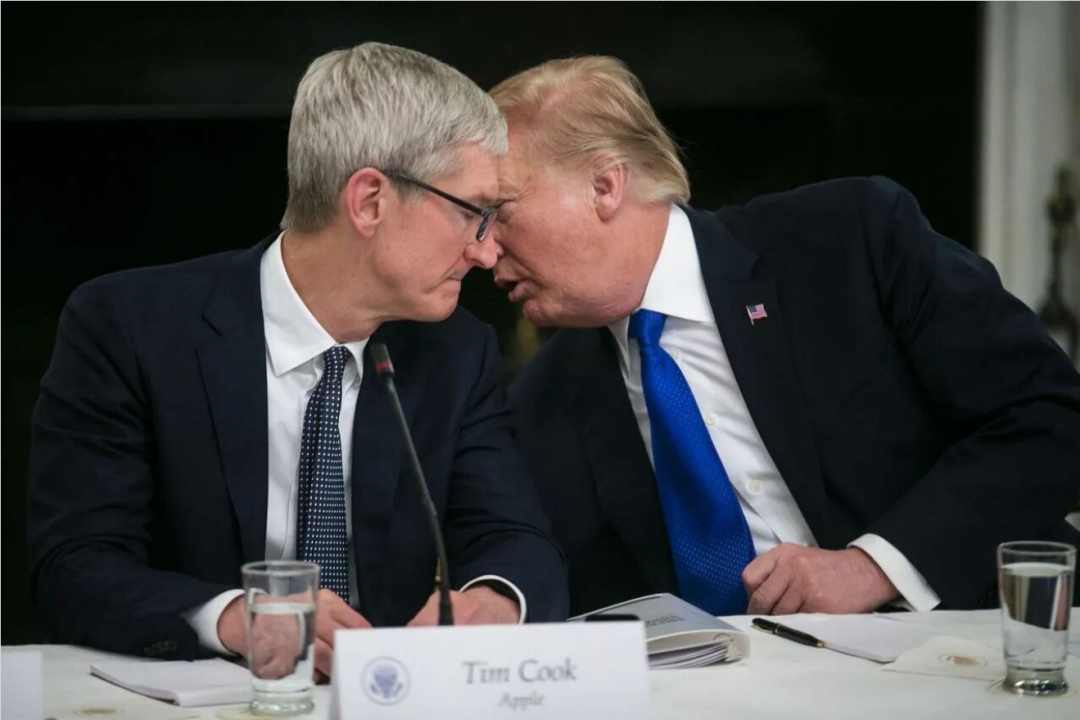 Image source: X social platform
Trump once wanted Apple to build factories in the US and criticized Apple for not making iPhones in America. So last year, Cook gave Trump a 24K gold gift to avoid Trump imposing tariffs on Apple. In reality, apart from China, it is very difficult for any other country in the world to achieve the same technological, cost, supply chain, and efficiency advantages as China.
But the game has no end. Others' praise is a bonus, not a moat. Assembly lines can migrate and orders can be redistributed; only continuously iterating technology, independently controllable materials, and a locally rooted engineer ecosystem are true confidence.
Cook's story ends, and the second half of Made in China has just begun. The so-called "US in a panic" is never about a compliment, but about the set of immovable industrial capabilities behind that compliment.
Discussion topic: Do you think the iPhone Duo can shake Huawei's high-end foldable dominance? What is the next breakthrough for the Apple chain—screens, glass, or hinges? Welcome to chat in the comments.
Disclaimer: This article is only a financial commentary on major companies and does not constitute any investment advice. The corporate data and regulatory events mentioned are all from public information and are for reference only; specifics are subject to official releases. Image sources are from the internet; if there is any copyright issue, please contact us for deletion.
-
![]()
US in a Panic! Apple CEO Cook Endorses "Made in China" Before Stepping Down, Making Shocking Remarks
-
![]()
Control Over AI Companies Is No Longer Written Into Equity
-
![]()
When the Law Advances One Step, the Devil Advances Ten? EU Moves to Cap Hybrid Imports, Chinese Automakers Pivot to Extended-Range Vehicles
-
Lingguang Wants to Keep Users Coming Back After the Job Is Done
-
Single-Day Subsidies Exceed Ten Million Yuan: Pinduoduo's "Appeal Compensation" Offers Merchants a Safety Net
-
Jietu Traveler EV Set to Launch on November 24; Official Pricing Predicted to Undercut Presale Figures
-
![]()
Honor 700 Pro Review: A Light Flagship with Over-Tier Specs and an Unmistakable Rear Screen Advantage
-
![]()
Second-Hand Domestic Phones: African Buyers' Alternative to Transsion