Xiaomi's Quiet Build-Up Amid Industry Headwinds
 11/26 2026
 399
On November 24, Xiaomi Group released its Q3 2026 financial report. On the face of it, the numbers are hardly spectacular—but set against what may be the toughest industry environment in history, the results are already quite impressive. After the Hong Kong market opened today, Xiaomi's share price climbed more than 5%; by the time of writing, the gain had widened to nearly 8%.
Xiaomi's performance this quarter can be summed up in a single word: resilience. On one hand, this is reflected in the stabilization of its core business; on the other, new businesses are beginning to gather accelerating momentum.
Specifically, Xiaomi's quarterly revenue came in at 107.2 billion yuan, holding above the 100 billion mark for a second consecutive quarter, while the group's gross margin improved quarter-over-quarter. Within that, smartphone revenue beat market expectations, global share rose quarter-over-quarter for a third straight quarter, and the global average selling price jumped 39.8% year-over-year; the IoT business continued to improve its profitability, and internet services also advanced steadily, with monthly active users hitting a record high.
On the innovation front, vehicle scale is expanding at an accelerating pace, with the Pengcheng series even achieving counter-trend growth; with 9.2 billion yuan in R&D investment for the quarter, progress in chips, AI large models, robotics, and other segments has also been relatively notable.
The industry's winter is also Xiaomi's season of quiet build-up. What keeps the "chassis" steady is the visible payoff from its premiumization and globalization strategies—and as cutting-edge technologies move into commercialization and the global reach of its human-car-home full ecosystem strengthens, Xiaomi's room for imagination is still expanding.
Withstanding the Headwinds
When an industry is booming, companies compete on growth speed; when it enters a downturn cycle, keeping the core business from collapsing is worth far more.
Across Xiaomi's three main battlegrounds—smartphones, IoT and lifestyle consumer products, and new energy vehicles—the industry as a whole is in an extremely difficult headwind situation, with weak domestic demand, rising costs, and escalating cutthroat competition as the biggest culprits.
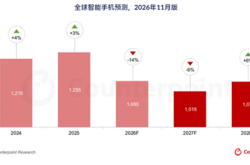
Take the smartphone business first: global smartphone shipments fell about 20% year-over-year, the largest single-quarter decline on record. Meanwhile, memory prices in Q3 this year had risen two- to threefold compared with the start of the year, severely squeezing manufacturers' margins.
Caught between these "two mountains," Xiaomi's smartphone business held its ground by adjusting operating strategies. Xiaomi Group President Lu Weibing said at the earnings call that the core measures were to continuously optimize the product mix, proactively cut low-end handset shipments, and maintain channel health.
In Q3 this year, Xiaomi's smartphone revenue grew 8.2% quarter-over-quarter, and gross margin improved 0.6 percentage points quarter-over-quarter, exceeding market expectations. In terms of shipments, Xiaomi has ranked in the global top three for 25 consecutive quarters, and its global market share has risen quarter-over-quarter for three consecutive quarters.
The keyword for IoT and lifestyle consumer products is recovery. Revenue in the quarter was 27.2 billion yuan, with the year-over-year decline narrowing sharply for two consecutive quarters; gross margin reached 21.7%, up 1.6 percentage points quarter-over-quarter, and revenue from key categories such as major appliances, tablets, laptops, and TVs all achieved year-over-year growth. According to Omdia data, Xiaomi ranked second globally and domestically in wearable band devices and TWS earbuds shipments, and fourth globally in tablet shipments.
Turning to the vehicle business, this year's domestic auto market can be called the darkest moment. According to data from the China Automobile Dealers Association, retail sales in the domestic passenger vehicle market fell 24% year-over-year in Q3.
Amid the chill, Xiaomi's pure electric vehicles held the core business while extended-range models contributed incremental growth. In the quarter, Xiaomi delivered a total of 100,975 vehicles. In October this year, Xiaomi's new vehicle deliveries exceeded 50,000 units, a new high for the year, and Xiaomi management is "very confident" about November and December deliveries and expects them to hit new monthly highs, which means Xiaomi's Q4 deliveries will continue to rise.
The days ahead are still not optimistic. Lu Weibing repeatedly used the word "complex" at the earnings call to describe the situation, believing that pressure factors will persist in the coming quarters, but Xiaomi's response capabilities are strengthening, and he is "full of confidence" in controllability.
In the difficult environment, Xiaomi is still far from "turning the game around," but when the industry emerges from the trough, Xiaomi may have the chance to be the first to reach an inflection point.
The Twin Engines of Defense
In addition to flexible responses, the two deeper engines supporting Xiaomi's steady footing in the winter are premiumization and globalization.
A previous CITIC Securities research report noted that over the long cycle, Xiaomi's valuation driver has shifted to brand power, a deeper moat; management also revealed at the earnings call that Xiaomi's overseas expansion strategy is accelerating.
Whether it is the smartphone business that has persisted in premiumization for years, or the vehicle business that set a mid-to-high-end route from its first-generation product, both have revealed their true quality as the industry tide recedes.
The most intuitive manifestation in the smartphone business is the sharp year-over-year increase in ASP of nearly 40%, along with a steady rise in market share in higher price segments. Among this, in the domestic market, Xiaomi's sales share in the 6,000 yuan and above smartphone price segment rose 1.2 percentage points year-over-year. The foldable flagship Xiaomi 18 Fold launched in September, with a starting price of more than 10,000 yuan, achieved first-sale volume growth of more than 310% year-over-year compared with the previous generation large foldable, and together with the Xiaomi 18 series forms a premium product matrix.
In the vehicle business, SU7 and YU7, more than three years and more than one year after launch respectively, still maintain healthy vitality, while the Pengcheng series products are also beginning to take over. According to Dongchedi data, in October, the Pengcheng N70, Xiaomi SU7, and Pengcheng N90 swept the top three in sales among models priced above 200,000 yuan, with the Pengcheng N70 taking the top spot in extended-range vehicles and mid-to-large SUVs, and the Pengcheng N90 taking the top spot in large SUVs regardless of energy type.
To some extent, this also benefits from Xiaomi's restrained and concentrated "hit product methodology." In October, all four of Xiaomi's main models delivered more than 10,000 units, reflecting that the Pengcheng series is not cannibalizing Xiaomi's pure electric products but adding to them.
Lu Weibing believes that the core of maintaining the vitality of vehicle products is the user net promoter score (NPS), which is also the foundation supporting Xiaomi Auto's premiumization. According to JD Power data, Xiaomi Auto's NPS ranks first among mainstream new energy vehicle brands, and China Automobile Dealers Association data also shows that the one-year value retention rates of Xiaomi YU7 and SU7 have ranked first for four consecutive months among major pure electric models and pure electric sedans above 200,000 yuan, respectively.
Compared with the domestic market, where demand is insufficient, overseas markets need to serve as Xiaomi's stabilizer and booster. At present, Xiaomi smartphones and IoT have already taken root globally. Overseas revenue from the "smartphone × AIoT business segment" has reached 49.1%, and the vehicle business's overseas expansion is also fully prepared. Lu Weibing mentioned that in markets where smartphones perform well, Xiaomi's brand awareness has reached 98.9%, and even in Northern Europe it is 60%-70%. In these markets, awareness of Xiaomi Auto has reached an "astonishing" level of more than 40%.
Xiaomi's global smartphone market share has risen quarter-over-quarter for three consecutive quarters, driven by leading shares in important regions, including ranking second in Southeast Asia, Latin America, and the Middle East, and third in Europe and Africa; smartphone shipments rank in the top three in 55 countries and regions globally and in the top five in 67 countries and regions.
In September this year, Xiaomi appeared for the first time as an exhibitor at IFA, also the largest overseas concentrated showcase of its human-car-home full ecosystem, including the Mijia brand's formal large-scale entry into the European market. Lu Weibing said at the earnings call that at the time, multiple car dealers proactively approached Xiaomi to seek cooperation and even spent 100,000 to 200,000 euros of their own money on user research. Xiaomi has now signed with 8 leading German dealers, "the store locations and images are all very good," and it will enter the European market in the second half of 2027.
This is a path that is difficult first and easier later, and it is also a continuation of Xiaomi Auto's premiumization strategy. Entering the most difficult European market first will help Xiaomi Auto drive more smoothly into other overseas regions.
Securing a Position on the New Battlefield
Defending the core business is more about ensuring that Xiaomi does not retreat in the countercurrent, while the offensive in cutting-edge fields such as chips, AI large models, and embodied intelligence is the source of Xiaomi's competitive momentum and greater room for imagination in the next stage, and can also ensure that Xiaomi secures a more forward position in the new battlefield of the AI era.
Xiaomi Group CFO Lin Shiwei said that Xiaomi's investment in AI is "very resolute," and it will invest 16 billion yuan in AI this year.
First, this is about completing and reinforcing the "infrastructure" level. Xiaomi has now assembled the pieces of computing power, models, and OS brain. What AI brings is not only single-point efficiency improvement, but also the growth potential to connect the four segments of smartphones, IoT, vehicles, and robotics.
The three major chips Xuanjie O3, Xuanjie O100, and Xuanjie D100 cover the on-device AI computing power needs of the human-car-home full ecosystem and form Xiaomi's AI computing foundation. The Xiaomi 18 Fold is the first "meeting" of Xuanjie O3, HyperOS 4, and the MiMo large model, and the other two chips will also officially enter commercial use next year.
The MiMo large model has also performed outstandingly since its release, especially in balancing intelligence and cost. According to September's Artificial Analysis composite intelligence index and per-task cost data, the per-task cost of MiMo-V2.6-Pro is only about 1/20 to 1/60 that of overseas models.
Second, although Xiaomi's AI is still in a period of large-scale investment, it has gradually crossed from the laboratory stage to a commercialization rhythm, meaning it is beginning to translate into direct productivity.
Taking the MiMo large model as an example, it has already been integrated as underlying infrastructure into the human-car-home full ecosystem, including deep integration into Super Xiao Ai 2.0, giving it complex task orchestration capabilities across applications and devices; in Xiaomi vehicles, it supports intelligent driving and intelligent cockpits, and gives smart homes further proactive intelligence.
Lei Jun recently mentioned at APEC that the industrial space and imagination of embodied intelligence in the future will exceed that of automobiles. After six years of layout, Xiaomi Robotics has also begun preliminary verification in industrial and home scenarios, for example, first conducting 8-hour long-duration operations in automotive engineering adjustments, while Xiaomi's embodied foundation model has also begun trial operations in Xiaomi Youth Apartments.
The human-car-home full ecosystem has always been Xiaomi's biggest moat. At present, the number of connected devices on the AIoT platform has exceeded 1.2 billion for the first time, and total vehicle deliveries are also approaching one million units. With the empowerment of AI and globalization, this barrier is still thickening and has the opportunity to unleash greater momentum.
The overall environment remains difficult, but the wind direction for Xiaomi is already quietly changing. This is first reflected in the unanimous bullishness of domestic and foreign institutions. CITIC Securities, Bank of America, Daiwa, Citi, and other institutions have given buy ratings, while Barclays and Morgan Stanley have given overweight ratings, with target prices concentrated around HK$33-35, implying about 30% upside from the current share price.
It should be pointed out that this expectation is more based on a turnaround from distress. As Xiaomi's premiumization strategy deepens, the influence of its human-car-home ecosystem extends globally, and its AI foundation gradually takes shape, its true value space will also become prominent—an AI technology company that simultaneously owns the world's largest consumer AIoT platform and the most complete scenario entry points. By then, Xiaomi may once again embark on a new growth cycle.
-
![]()
Rocket Hasn't Flown Yet — So How Is Qianyi Aerospace a Generation Ahead?
-
![]()
NetEase Games' Dilemma Is Not Short Dramas' Fault
-
![]()
AI Is Taking a Heavy Toll on Phones! Counterpoint: Global Smartphone Shipments to Fall for Two Straight Years, Down Another 6% in 2027
-
New AI Stock Trading Trend: Targeting 30 Million Retail Investors, Predicting Trading Behavior 24 Hours in Advance
-
Xiaomi's Quiet Build-Up Amid Industry Headwinds
-
![]()
In the AI Era, Xiaomi's Years of Accumulated Assets Are Beginning to Pay Off
-
Why Are Listed Companies' Financial Reports Starting to Take Douyin E-commerce's Business Logic Seriously?
-
AI Steps on the Gas: A 167-Year-Old Cold Case Finally Hears an Echo