AI Is Taking a Heavy Toll on Phones! Counterpoint: Global Smartphone Shipments to Fall for Two Straight Years, Down Another 6% in 2027
 11/26 2026
 324
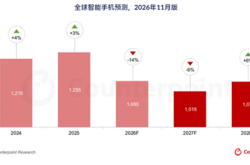
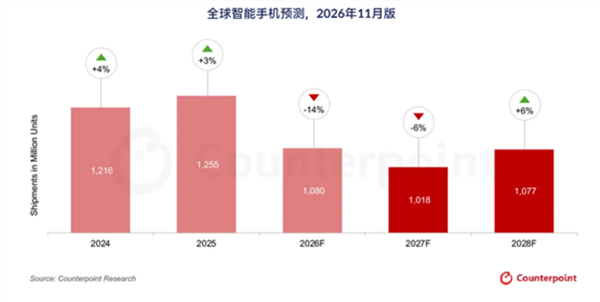
Fast Technology News, November 26: Counterpoint Research's latest smartphone market outlook forecasts that global smartphone shipments will decline 13.9% year-on-year in 2026 and fall a further 6% in 2027.
By 2028, with memory supply conditions improving, prices stabilizing and pent-up replacement demand returning, shipments will rebound 6%. Even so, the 2028 shipment scale will still be about 14% lower than in 2025, and the market is not expected to return to 2025 levels even by 2030.
The firm attributes this downturn mainly to tight mobile memory supply. Suppliers are still prioritizing capacity for AI and server applications, which is constraining DRAM configurations for phones.
In early 2027, LPDDR prices are expected to continue rising. Component costs are being passed through along product portfolios and retail channels more slowly than expected, pushing up phone costs and the floor for retail prices.
Under cost pressure, phone manufacturers are cutting low-memory versions, raising entry-level specifications and prices, and discontinuing products that fail to meet profitability targets.
The market for models below $200 (about 1,334 yuan) is shrinking and concentrating toward the upper end of the price band. Some consumers choose to upgrade, while others postpone replacements, extend the use cycle of old phones or turn to refurbished devices.
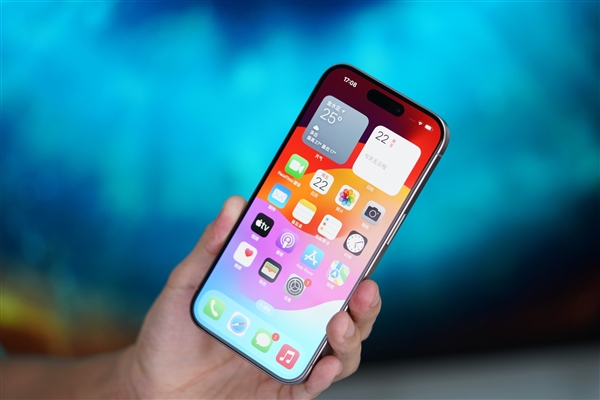
In terms of brand landscape, Counterpoint expects Apple to remain global No. 1 by a slight shipment margin in 2026 and 2027. Apple's shipments are expected to fall 1% in 2026 and 4% in 2027, supported by its high-end positioning, installment financing, ecosystem loyalty and supply chain priority, but growth will be limited by price increases and the exhaustion of the 2025-2026 replacement peak.
Samsung's shipments are expected to fall 1% in 2026 and 3% in 2027, significantly outperforming the market. In-house components, a broad product line and relationships with carriers and retail channels give it more advantages in supply assurance and distribution flexibility, though incremental growth from high-end and foldable phones will be hard pressed to offset weak Galaxy A series sales.
After a sharp contraction in 2026, Chinese manufacturers are expected to remain under pressure in 2027, with their business more concentrated in low-price segments and emerging markets, making them more vulnerable to component supply and price increase shocks. They may subsequently optimize product lines and exit less profitable markets.
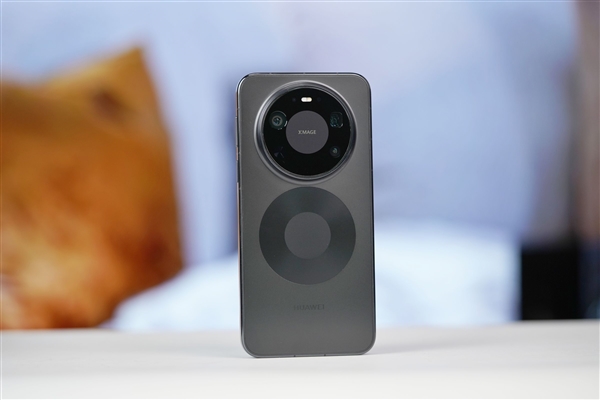
Huawei is the biggest exception in 2026, with shipments expected to grow 12% year-on-year, relying on its domestic market position, domestic component capabilities and HiSilicon progress, but in 2027 it is expected to decline as well due to price increases and supply constraints.
The pace of recovery in 2028 depends on how quickly component costs are passed through to retail prices. If mobile memory allocation improves in the second half of 2027, replacement demand may be released earlier.
vivo, HONOR, the OPPO camp and Xiaomi are expected to grow relatively strongly after Android replacement demand returns, while Apple and Samsung will see milder recoveries due to their relatively stable bases.
-
![]()
Rocket Hasn't Flown Yet — So How Is Qianyi Aerospace a Generation Ahead?
-
![]()
NetEase Games' Dilemma Is Not Short Dramas' Fault
-
![]()
AI Is Taking a Heavy Toll on Phones! Counterpoint: Global Smartphone Shipments to Fall for Two Straight Years, Down Another 6% in 2027
-
New AI Stock Trading Trend: Targeting 30 Million Retail Investors, Predicting Trading Behavior 24 Hours in Advance
-
Xiaomi's Quiet Build-Up Amid Industry Headwinds
-
![]()
In the AI Era, Xiaomi's Years of Accumulated Assets Are Beginning to Pay Off
-
Why Are Listed Companies' Financial Reports Starting to Take Douyin E-commerce's Business Logic Seriously?
-
AI Steps on the Gas: A 167-Year-Old Cold Case Finally Hears an Echo