PC Sales Plunge 20% While AI Servers Triple: Are PC Makers Betting Their Future on Data Centers?
 11/27 2026
 489
Selling computers has become a tougher business than selling data centers—PC giants are collectively "changing careers."
Not long ago, Lenovo announced its financial results for the second quarter of fiscal year 2026/27 (July–September 2026). The data showed that Lenovo's quarterly revenue exceeded 200 billion yuan for the first time, a year-on-year increase of 48%, with adjusted net profit reaching 9.1 billion yuan.
Lenovo's AI devices, AI infrastructure, and AI solution services all grew rapidly. Among them, AI infrastructure business revenue surged 130%, ISG (Infrastructure Solutions Business) revenue reached 76.1 billion yuan, and operating net profit exceeded 7 billion yuan, accounting for approximately 36% of total revenue. Meanwhile, Lenovo jumped to first place in global x86 server shipments and second place in global overall server shipments.
The Lenovo we once knew as a PC giant now seems to have become a company that "sells data centers."
Lenovo is not an isolated case—PC makers are all "selling data centers"
In the PC sector, multiple leading companies are transitioning from "selling PCs" to "selling data centers," including the well-known Dell and ASUS.
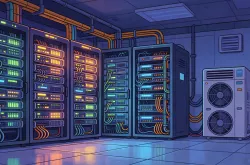
Dell's financial data for the third quarter of fiscal year 2027 (August–October 2026) showed that ISG revenue reached 41.974 billion US dollars, a year-on-year increase of 198%, among which AI-optimized server revenue was 22.031 billion US dollars, a year-on-year increase of 291%. Jeff Clarke, Vice Chairman and Chief Operating Officer of Dell Technologies, said that more than 7,500 customers have deployed Dell AI factories.
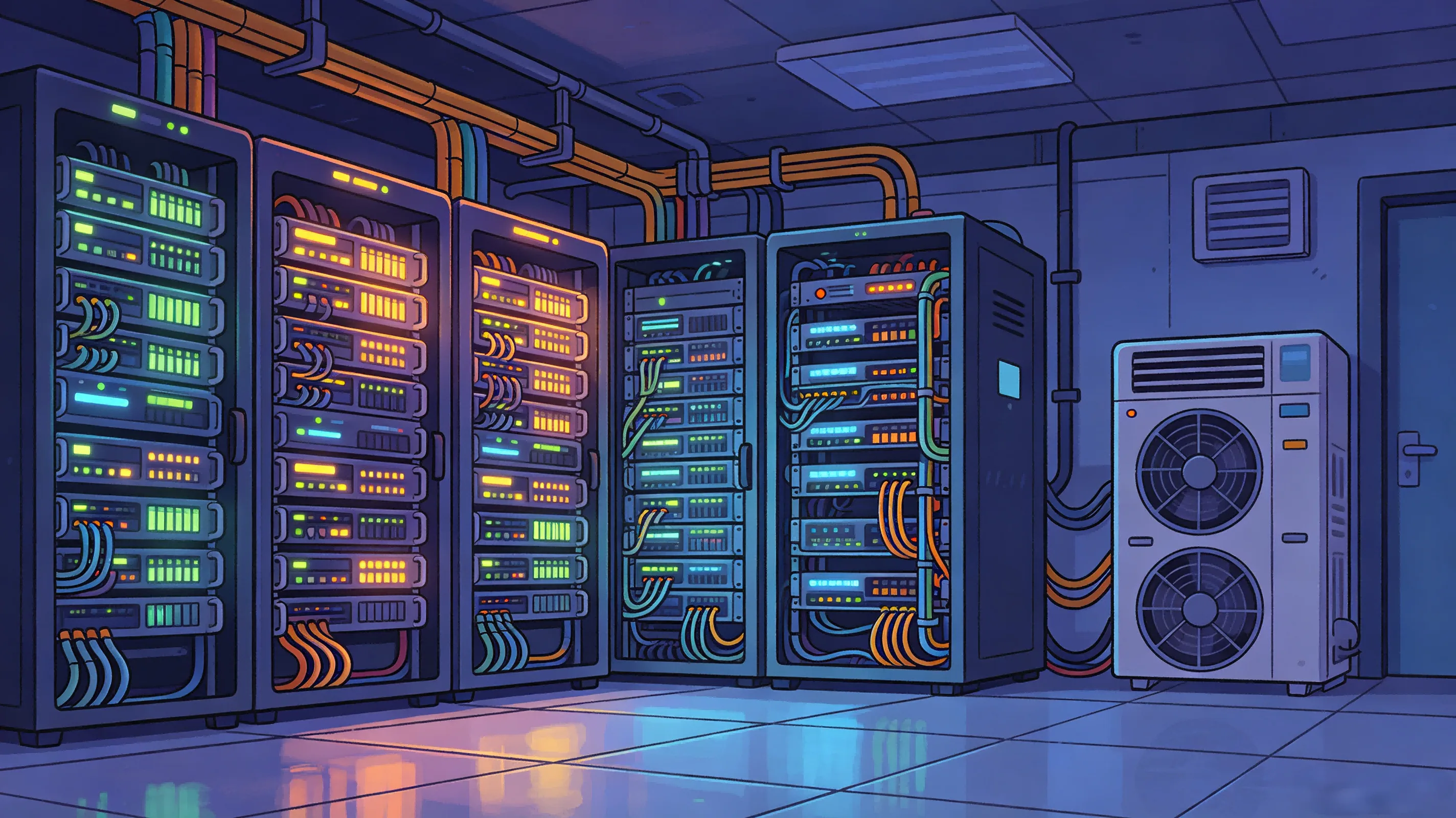
(Image source: generated by Doubao AI)
Due to chip shortages, both Dell and Lenovo have accumulated AI server orders worth hundreds of billions of yuan that remain undelivered.
Hewlett Packard Enterprise, spun off from HP, reported revenue of 14.5 billion US dollars in the fourth quarter of fiscal year 2026 (August–October 2026), a year-on-year increase of 50%, among which cloud and AI business revenue was 11.257 billion US dollars, a year-on-year increase of 68.6%. PC giant ASUS saw server revenue grow by more than 100% year-on-year in the third quarter, among which general-purpose server revenue grew by more than 80% year-on-year.
Among mainstream global PC makers, Apple may be the only company that has not "sold data centers," but last December Apple was reported to be jointly developing server-oriented AI chips with Broadcom, expected to debut in 2027, and the possibility of "selling data centers" in the future cannot be ruled out.
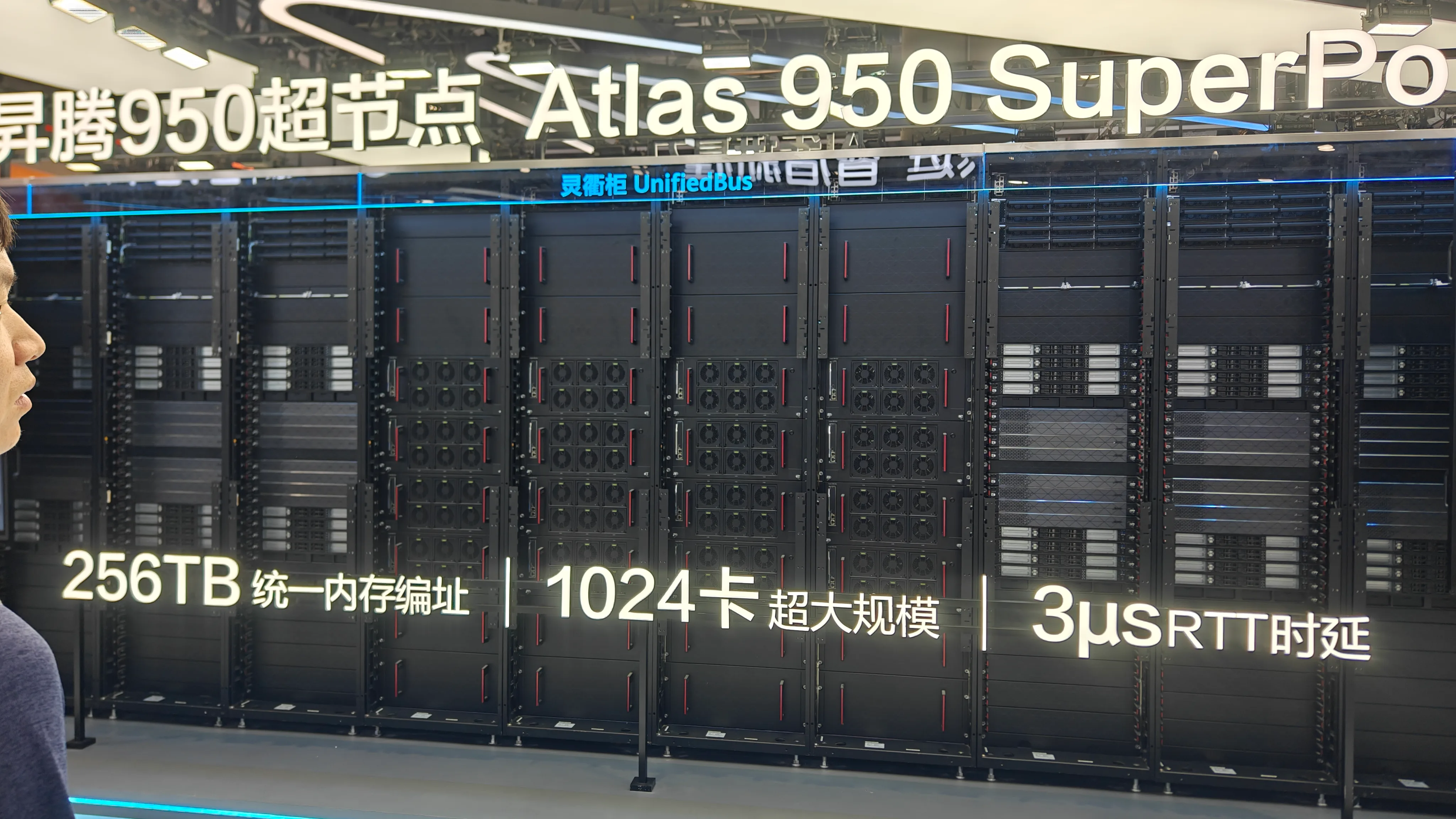
As for another domestic PC giant, Huawei, it is already a leading domestic computing card supplier and cloud service provider. At the China Mobile Network Conference in early November this year, Huawei also exhibited the Ascend 950 super node, supporting multiple business models such as internal AI self-use, computing card leasing, and Token services.
(Image source: photographed and produced by Leitech)
Beyond the importance of AI itself, there are two major reasons for PC makers collectively transforming to "sell data centers." First, AI servers, cabinets, and liquid cooling clusters are highly compatible with the supply chain, complete machine structural design, heat dissipation, complete machine testing, global delivery, and localized services that PC makers have cultivated for decades, making the transformation less difficult; second, the PC industry has fallen into a downturn due to rising memory chip prices, and companies need to develop other businesses.
According to statistics from market research firm Omdia, in the third quarter of 2026, global shipments of desktops, laptops, and workstations totaled 58.1 million units, a year-on-year plunge of 21.2%, with the top five leading brands all seeing collective sales declines. OpenAI CEO Sam Altman even said that the memory in personal computers is idle most of the time and might as well be left to data centers. Before memory prices drop, PC prices will remain high for a long time, and sales will not be optimistic for a long time to come.
Unlike cloud service providers, PC makers mainly provide complete machines + clusters + integrated hardware and software solutions, rather than operating computing power themselves, with equipment belonging to customers. Compared with selling computing power, although this model has slightly lower long-term revenue capability, it avoids the risk of heavy-asset computing power operations and can fully leverage PC makers' advantages in supply chain and complete machine engineering.
However, some PC companies such as Lenovo are also simultaneously developing agents and building Token factories, selling mature AI solutions and computing power. If AI develops steadily, other PC giants may also build their own Token factories in the future, earning more money by selling computing power.
PC giants "sell data centers"—are consumers being ignored?
PC giants have mature complete machine manufacturing, supply chain management, global distribution, and localized operation and maintenance capabilities. Their entry fills the shortcomings in the computing power industry chain in terms of batch integration, engineering implementation, and after-sales operation and maintenance.
Based on the mature solutions of companies such as Lenovo, Huawei, Dell, and Hewlett Packard Enterprise, building data centers has become a business where "money is all you need." Individual users can also build small data centers within their budgets, for personal use or selling computing power.
For the entire AI industry, the entry of PC giants has made computing power solutions move toward standardization, sinking from hyperscale cloud centers to local data centers and edge data centers, promoting the implementation of private AI and local inference. However, the industry bottlenecks of chip shortages and power shortages still exist, and PC makers cannot solve these problems.
What consumers worry about is that as the AI infrastructure business gradually replaces PC products and becomes the main source of revenue for PC makers, the survival environment of PC products will further deteriorate. However, in the view of Leitech (ID: Leitech), PC makers will only treat the AI infrastructure business as a diversified revenue source channel, and will not therefore abandon or squeeze the survival space of PC products.
(Image source: photographed and produced by Leitech)
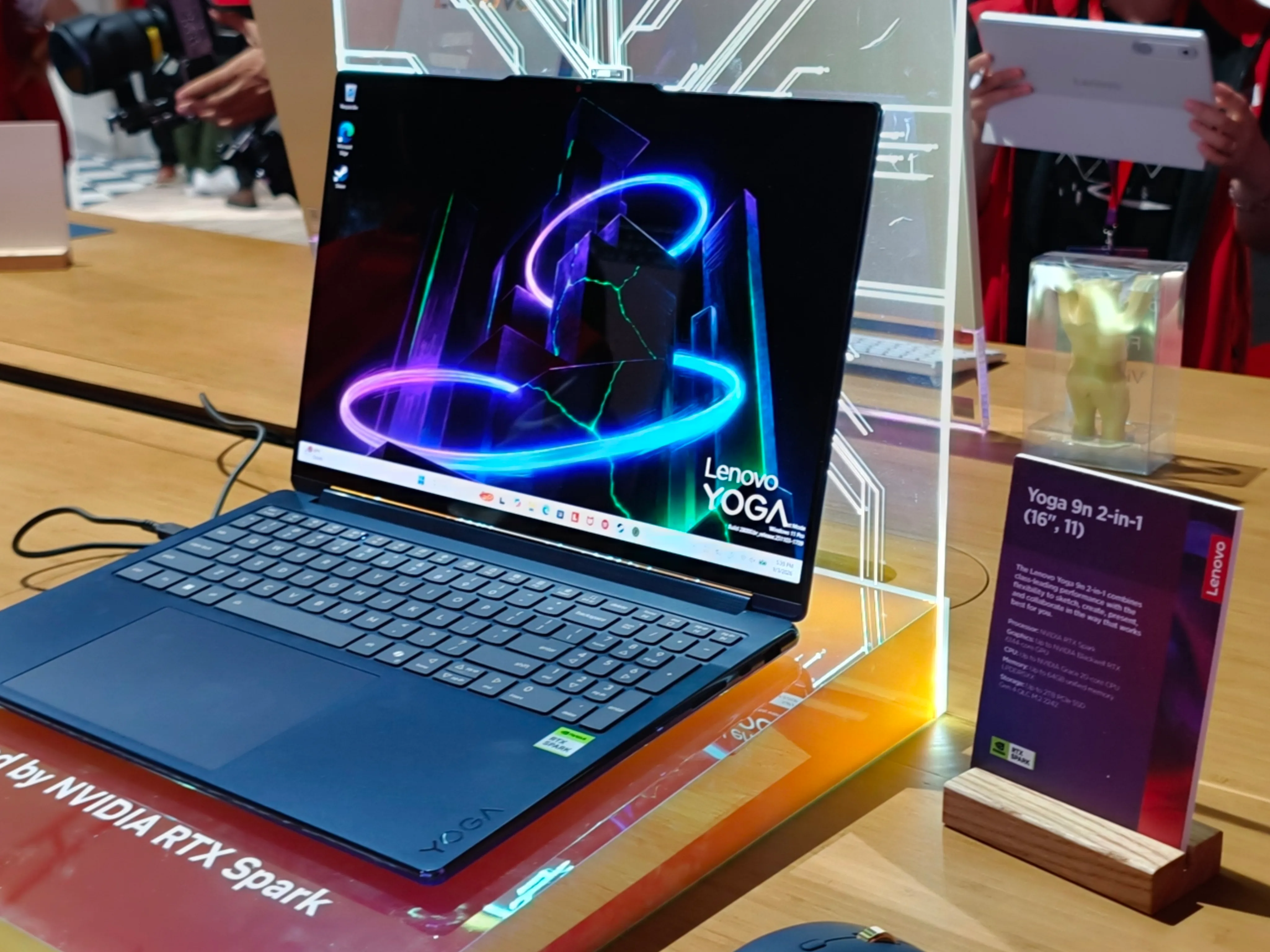
First, the public's demand for AI is not limited to cloud-side AI, but also includes on-device AI and AI agents, and AI PCs remain the best carrier for the latter.
As of November 16, cumulative sales of Lenovo AI PCs had exceeded 7 million units, and in the second quarter, AI PCs accounted for more than 50% of Lenovo's consumer PC sales in China for the first time. In the third quarter, ASUS, supported by AI PC revenue growing by more than 100% year-on-year, achieved PC revenue growth of more than 25% year-on-year against the trend.
Besides the potential of AI PCs, PC makers also need to consider the risks existing in the AI industry. Some time ago, NVIDIA CEO Jensen Huang resigned, causing NVIDIA to evaporate trillions of US dollars in market value; Anthropic, an AI company as famous as OpenAI, saw its stock once fall below its issue price. These fluctuations show that the AI industry is not impregnable, and although the AI infrastructure business has relatively lower risks, it is by no means a sure-profit business.
The customers of the PC industry are massive individual buyers, small and medium-sized enterprises, and commercial channels, with a transaction model of spot goods, cash before delivery, and fast turnover; customers of AI infrastructure mostly come from the B2B segment, and payment cycles, payment terms, and project acceptance standards are far more stringent than consumer PCs, with higher bad debt risk than the PC business.
Initially, in order to sell computing cards to customers, NVIDIA provided billions of US dollars in financial guarantees to AI startups and small cloud service providers, helping them buy chips. NVIDIA also joined with multiple institutions on Wall Street to announce a financing plan worth 500 billion US dollars to help customers raise money to buy chips. Smaller AI companies have clearly fallen into the awkward situation of "being unable to afford the burn."
The soaring revenue of PC makers' AI infrastructure business is built on global investors' high expectations for AI. The fluctuations of NVIDIA and Anthropic mean that the AI industry is not as solid as we imagine. Companies such as Lenovo and Dell have earned more money through the AI infrastructure business, but have also taken on more risks.
AI data centers: the "energy stations" of the new era
At the 2026 Mobile Network Conference, Leitech found that companies such as H3C, Moore Threads, Shenzhou Kuntai, and Alibaba all exhibited Token factory solutions, and AI data centers will become another "energy station" in the AI era.
The collective shift of PC giants to the AI infrastructure track is essentially relying on their own endowments in complete machine manufacturing, supply chains, and global services to seize the era window for the engineering implementation of computing power, completing the identity leap from terminal hardware suppliers to computing power cluster integrators.
However, AI infrastructure is delivered on a B2B project basis, and longer payment cycles and stringent acceptance standards will increase bad debt and collection pressure, with business prospects highly tied to investors' confidence in the AI track. Computing power demand depends on investment and financing enthusiasm; once industry expectations cool, backlog orders and capacity expansion investments may become burdens, far less stable than the traditional PC spot business.
Research firm TrendForce predicts that the NAND flash market will be oversupplied in 2027. Price fluctuations of memory chips are a barometer of the AI industry, and the AI industry may also face computing power oversupply in the future.
Therefore, in the short term, PC makers can appropriately expand capacity based on existing AI server orders, but they must not reduce the weight of the PC business, lest when computing power oversupply occurs, the PC business cannot win back consumers' trust. You should know that during the mining boom, a well-known PC maker specially developed laptops for mining, but as a result lost the trust of ordinary consumers, and after the mining boom ended, that manufacturer's PC business fell into a downturn.
No matter how much money "selling data centers" makes, personal PCs are another lifeline for companies such as Lenovo, Dell, and ASUS.
Source: Leitech
Images in this article are from: 123RF licensed image library Source: Leitech
-
![]()
Too Tough! Xiaomi, Boasting the Highest Gross Margin Among Automakers, Lost Another 3.4 Billion Yuan in Q3—Does Lei Jun Regret It?
-
![]()
Yu Chengdong's Latest Quote Goes Viral: 1% Battery Can Stream Video for 50 Minutes
-
![]()
Memory Price Hikes Hit Android Hard: US Q3 Phone Shipments Fall 9%, Apple's Share Soars to 57%
-
![]()
PC Sales Plunge 20% While AI Servers Triple: Are PC Makers Betting Their Future on Data Centers?
-
![]()
799 Yuan! First Android Wide Bar Experience: Everything Is Lackluster, AI Physical Button Stands Out
-
![]()
Xiaomi's Profit Halved in the First Three Quarters: Has the "Toughest Quarter" Passed?
-
![]()
Wei Jianjun Seeks Solace from Yu Donglai: Can a Supercar Ease Great Wall's "Anxiety"?
-
![]()
Lei Jun's First Visit to Weibo HQ: The Real Agenda Is the Pengcheng N70