Yu Chengdong's Latest Quote Goes Viral: 1% Battery Can Stream Video for 50 Minutes
 11/27 2026
 385
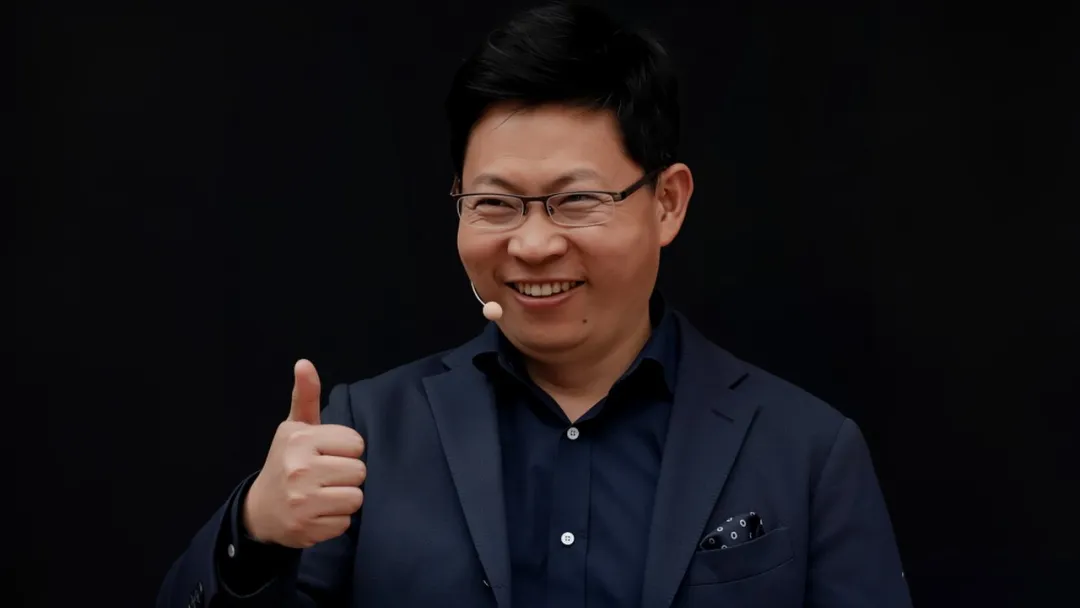 Image source: Weibo
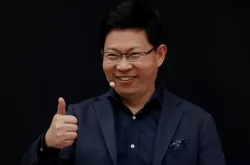
The moment Yu Chengdong opens his mouth, the tech world's gossip mill starts churning right on cue.
At Huawei's All-Scenario New Product Launch on November 24, the claim that "with just 1% battery left, the phone can still stream video for 50 minutes"—alongside the flashy debut of the Super Energy Pump—instantly stunned netizens. Many viewers later remarked: Lao Yu probably got carried away and his script went off the rails again.
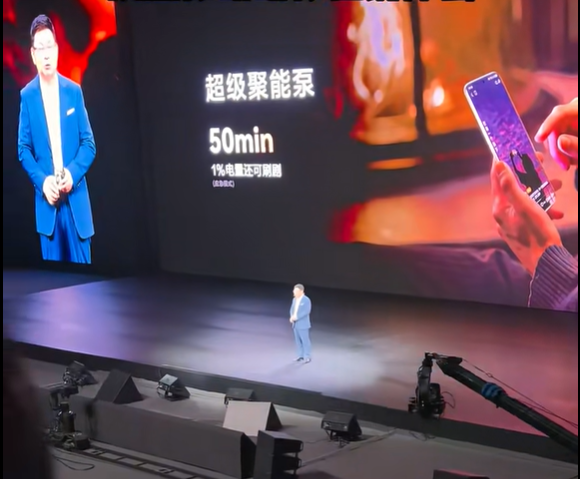 Image source: Weibo
Eager netizens immediately whipped out their calculators: officially, the Mate90 Air can stream video continuously for 23 hours on a full charge. Crunching the numbers, each 1% of battery should normally last only about 14 minutes. If 1% could genuinely stream video for 50 minutes, a full charge would translate to three and a half days of nonstop streaming!
Wow—so the phone never needs a rest and you never need sleep, binge-watching until the end of time. That's not a phone; that's a perpetual binge-watching machine.
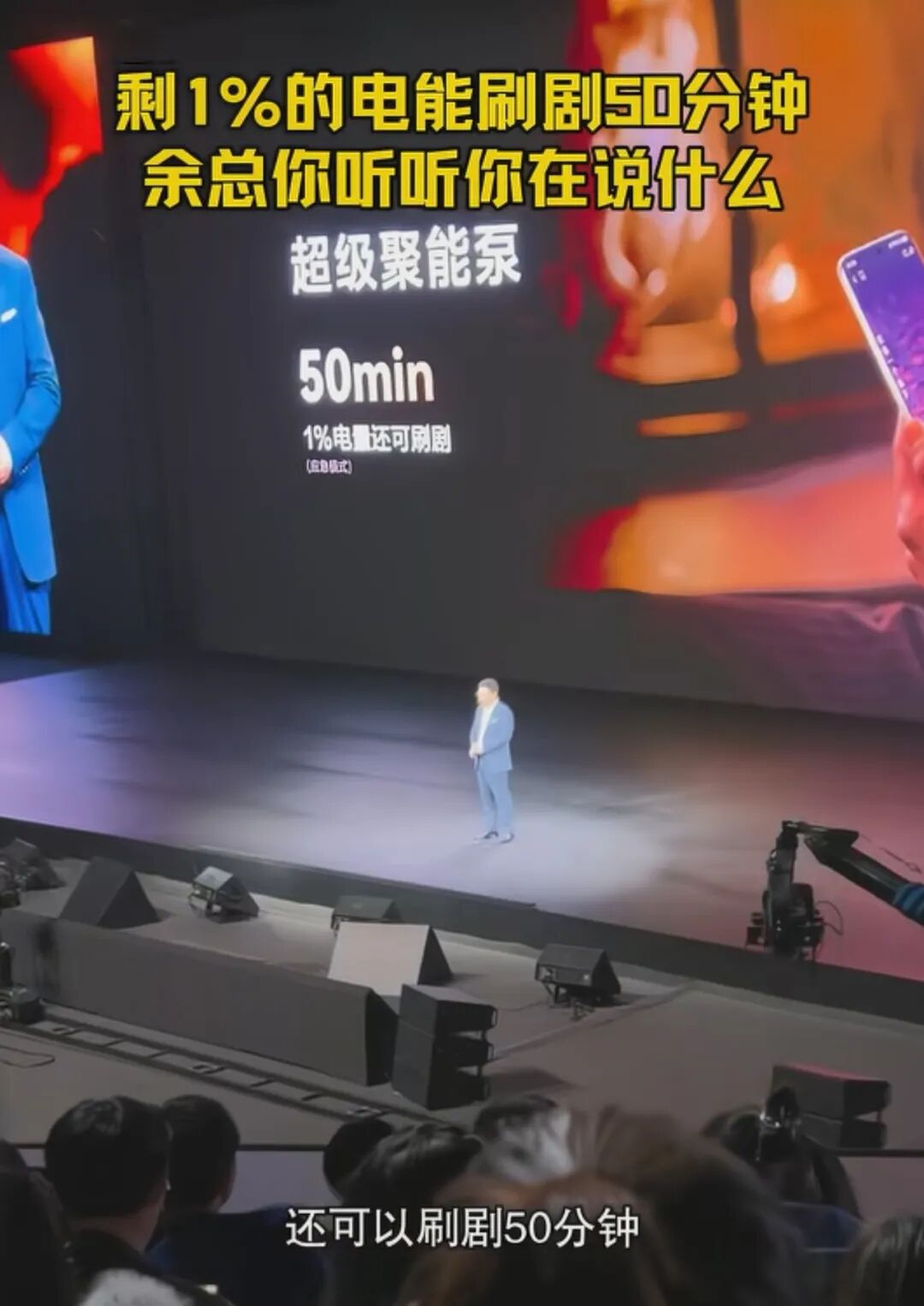
Image source: Weibo
The comment section exploded: for a launch event this big, the script really ought to be vetted carefully—otherwise it's all too easy to give everyone hallucinations. Boss Yu, do you even hear what you're saying?
But hold your laughter—there are quite a few technical nuances here that many people are missing.
1% Battery Streaming for 50 Minutes Isn't Battery Magic—It's an Emergency "Power-Squeezing Trick"
What does the average person do when they see 1% battery? Frantically dim the brightness and hunt for a charger. Stream video? They wouldn't dare even think about it, afraid the screen will go black and disconnect the next second.
Here's the key point: those 50 minutes aren't the battery life during normal use, but rather the extreme power-saving mode triggered by the Super Energy Pump. Two entirely different sets of power consumption rules, two completely different approaches.
Lithium batteries have an inherent safety threshold. When voltage drops to the warning line, the system simply determines it's out of power and shuts down. But inside the battery, there's still a small amount of residual power that's hard to extract. The Super Energy Pump, put plainly, is a "power-squeezing master" combining software and hardware.
A boost circuit paired with HarmonyOS scheduling algorithms carefully releases this bottom-of-the-barrel power; meanwhile, the phone activates power-saving seals, freezing all background apps, underclocking the chip, pressing screen power consumption to the extreme, tightening its belt, and prioritizing basic functions like video streaming, code scanning, and calls.
Back with the Mate50, Huawei already experimented with this emergency mode, positioned very conservatively: 1% battery, focused on calls, code scanning, and displaying health codes—aimed at emergency help. Scanning a code to catch the subway, calling family before losing contact, saving the day at critical moments—but no binge-watching shows.
By the Mate90 Air, the Super Energy Pump has been upgraded, and the emergency package added a "stream video" option.
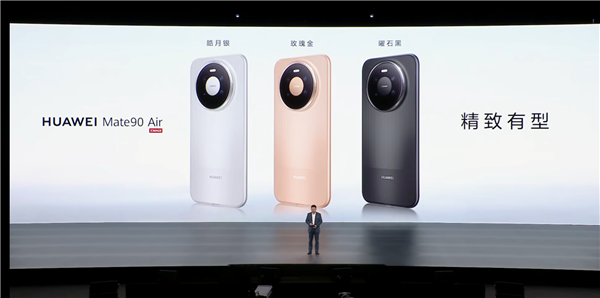 Image source: Weibo
But here's the catch! The 50-minute figure was carefully cultivated in the lab: fixed brightness, rock-solid network, comfortable room temperature, a clean background—all buffs maxed out to achieve it.
In the real world, it's a different story. Winter low temperatures, fluctuating signals, max screen brightness, a bunch of WeChat and Xiaohongshu running in the background—power consumption takes off immediately. Replicating those 50 minutes is as hard as drawing a hidden rare item.
It's not magic—it can't conjure extra power; it's simply a fallback emergency skill. Definitely don't interpret it as "1% equals 5% of normal battery." Once you exit emergency mode, power consumption immediately returns to normal.
Look at the Mate90 Air's solid foundation: a 6.58mm ultra-thin body yet fitting a 6500mAh high-silicon battery, weighing 208g, a 7-inch large screen, Kirin 9020, HarmonyOS 7, and support for 66W fast charging. Thin, large screen, big battery—these are its trump cards. Twenty-three hours of streaming on a full charge is its normal performance level.
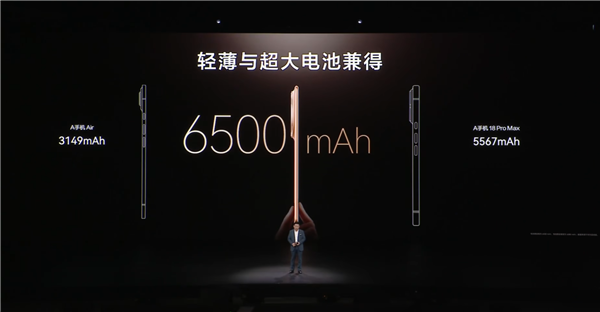 Image source: Weibo
What the Super Energy Pump solves is the battery anxiety of "about to shut down at the final moment." Its correct use isn't to let you slowly binge-watch when only 1% is left, but rather when you're out and about and can't find a power bank, before the screen goes black, you can still scan a transit code, open navigation, or take an important call.
The technology really isn't empty talk—the controversy basically stems from promotional wording. Manufacturers like to throw out the best-looking lab numbers, glossing over those harsh preconditions. Ordinary netizens see at a glance: wow, 1% can stream for 50 minutes! When their own real-world tests fall short of expectations, they instantly feel it's a marketing gimmick—and that's how the conflict arises.
Fellow Tough Guy Mate X8 on the Same Stage: Eight Years of Folding Screen Challenges, Relentlessly Tackling the Crease—Not "Covering It Up" Like Apple
This launch event wasn't just about the battery life gossip—another tough guy, the Mate X8 folding screen, is solid technical prowess.
Huawei has been charging ahead in the folding screen arena for a full 8 years, and the Mate X8 is the eighth-generation contender. The biggest problem tackled over all these years is the unavoidable soul-searching question of folding screens: that crease in the middle.
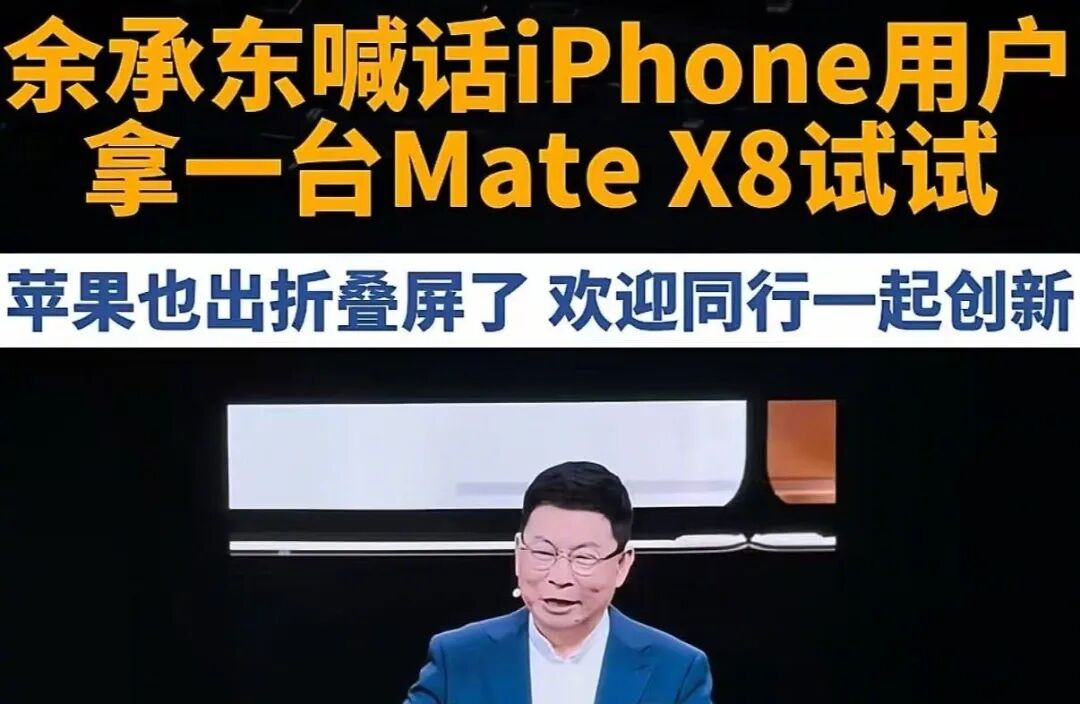 Image source: Weibo
The previous generation Mate X7 had a crease peak-valley height difference of 142 micrometers, and the Mate X8 brought it down to 15 micrometers. New materials plus hinge optimization make the crease so faint that at eye level, your eyes basically can't catch it.
On the other side, Apple held back for 8 years and finally pulled out its first folding screen, starting at 15,999 yuan. Apple's approach is a bit clever: use a nano-texture matte screen to blur the crease with visual effects—out of sight, out of mind.
But this solution has shortcomings. Under strong light the screen looks washed out, and once you remove this matte texture layer, the crease is immediately exposed.
There are plenty of meme comments online: the comparison between the two routes is really interesting. Huawei relentlessly tackles micron-level craftsmanship, facing the crease head-on; Apple focuses on beauty filters, covering the problem with a matte film.
Ultimately, folding screens compete on hard skills built up from a mountain of patents in hinges, materials, and stress control. Eight years and eight generations of iteration—Huawei chose to directly attack the pain point rather than simply gloss over it with a visual solution.
On one side, folding screen hardcore tech steals the show; on the other, the straight-screen phone's emergency battery life triggers memes across the internet. Same launch event, two routes, two styles.
Yu Chengdong's "Big Talk": Addictive Boasting, or a Management Tactic?
Speaking of Yu Chengdong's speaking style, he himself has long laid his cards on the table.
He once said: "Many businesses handed to me were losing badly, teams demoralized, falling apart. I could turn things around quickly. Sometimes the big talk I say is actually a strategy—forcing the team to fight with their backs to the wall, to counterattack from desperate straits."
Image source: Weibo
Many netizens' first reaction: see, he loves to draw big pies and boast again. From a boss's perspective, this is a "high-goal forcing method."
Proclaiming an externally difficult-sounding goal is like planting a flag in front of everyone, applying pressure directly to the internal team, everyone charging toward the same hill.
Of course, this approach carries no small risk. You need resources and a strong-execution team as backup. If the goal ultimately isn't met and the boast can't be backed up, the brand reputation will take a beating from netizens.
Huawei's smart driving business is the best example. Starting in 2019, losing tens of billions consecutively, everyone pessimistic; after reorganizing the team and focusing goals, 2024 revenue soared, finally turning a profit—stubbornly chewing through the toughest bone.
Applied back to this 1%-streaming-for-50-minutes incident, the logic is exactly the same. A simple, memorable slogan with built-in viral appeal easily floods the entire internet; the cost is omitting the preconditions, easily clashing with ordinary people's common sense and attracting a bunch of meme doubts.
The consumer electronics circle has always had this classic contradiction: engineers writing specs wish they could note ten lines of limitations, while marketing wants a catchy slogan that's easy to go viral. The two sides are naturally prone to conflict.
Rational Gossip: No Need to Enshrine, and Don't Completely Dismiss
Let's summarize this gossip.
The Super Energy Pump is a rather interesting upgrade in battery management, utilizing the last bits of leftover battery power, adding an extra layer of emergency assurance—truly useful. But no matter how powerful, it can't break the physical laws of lithium batteries; it's not some battery life black magic.
We ordinary consumers should keep the right gossip mindset: distinguish clearly between [lab extreme showcase] and [daily casual use]—completely different things. No need to go crazy planting grass just because you see "black technology," nor directly label it "pure gimmick."
Rather than obsessing over whether you can reliably watch 50 minutes of video on 1% battery, the real appeal of this technology is that the moment your phone is about to go black, it gives you a little extra buffer time, so you don't go completely off the grid.
In future Yu Chengdong launch events, this kind of topic-generating speech will likely continue appearing. It can be a management tool pushing the team forward, and it's also destined to face netizens repeatedly nitpicking with calculators and hands-on test videos.
Whether the technology is good is decided by hands-on testing; whether the promotion is good is decided by netizens' criticism and applause.
Interactive Topic: Do you think 1% battery streaming 50 minutes of video is a thoughtful emergency feature, or a misleading marketing stunt?
Disclaimer: This article is only a big-tech financial commentary and does not constitute any investment advice. The corporate data and regulatory events mentioned are all from public information, for reference only, subject to official releases. Image source is the internet; if there is a copyright issue, please contact for removal.
-
![]()
Too Tough! Xiaomi, Boasting the Highest Gross Margin Among Automakers, Lost Another 3.4 Billion Yuan in Q3—Does Lei Jun Regret It?
-
![]()
Yu Chengdong's Latest Quote Goes Viral: 1% Battery Can Stream Video for 50 Minutes
-
![]()
Memory Price Hikes Hit Android Hard: US Q3 Phone Shipments Fall 9%, Apple's Share Soars to 57%
-
![]()
PC Sales Plunge 20% While AI Servers Triple: Are PC Makers Betting Their Future on Data Centers?
-
![]()
799 Yuan! First Android Wide Bar Experience: Everything Is Lackluster, AI Physical Button Stands Out
-
![]()
Xiaomi's Profit Halved in the First Three Quarters: Has the "Toughest Quarter" Passed?
-
![]()
Wei Jianjun Seeks Solace from Yu Donglai: Can a Supercar Ease Great Wall's "Anxiety"?
-
![]()
Lei Jun's First Visit to Weibo HQ: The Real Agenda Is the Pengcheng N70