Too Tough! Xiaomi, Boasting the Highest Gross Margin Among Automakers, Lost Another 3.4 Billion Yuan in Q3—Does Lei Jun Regret It?
 11/27 2026
 380
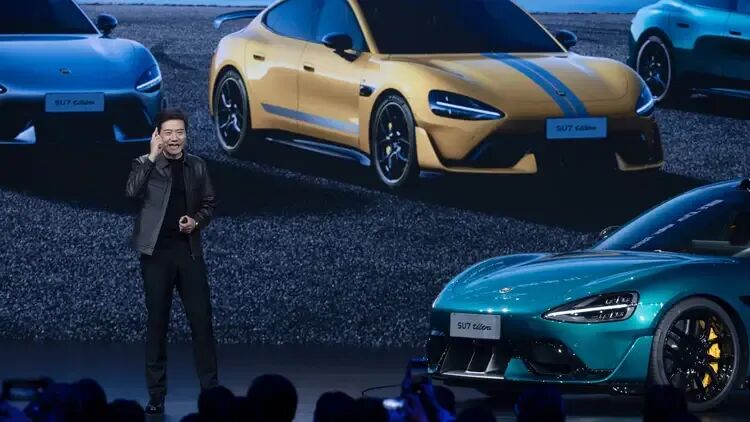
Image source: Weibo
On the evening of November 24, Xiaomi released its Q3 2026 financial report. Revenue topped 100 billion yuan, but profit took a severe dive.
Q3 revenue came in at 107.24 billion yuan, down 5.2% year on year; net profit was 3.876 billion yuan, plunging 68.4% year on year; adjusted net profit was 4.884 billion yuan, down 56.8% year on year. Revenue for the first three quarters totaled 315.303 billion yuan, and net profit was 18.074 billion yuan, down 48.4% year on year. On a 100-billion-yuan scale, profit was nearly halved.
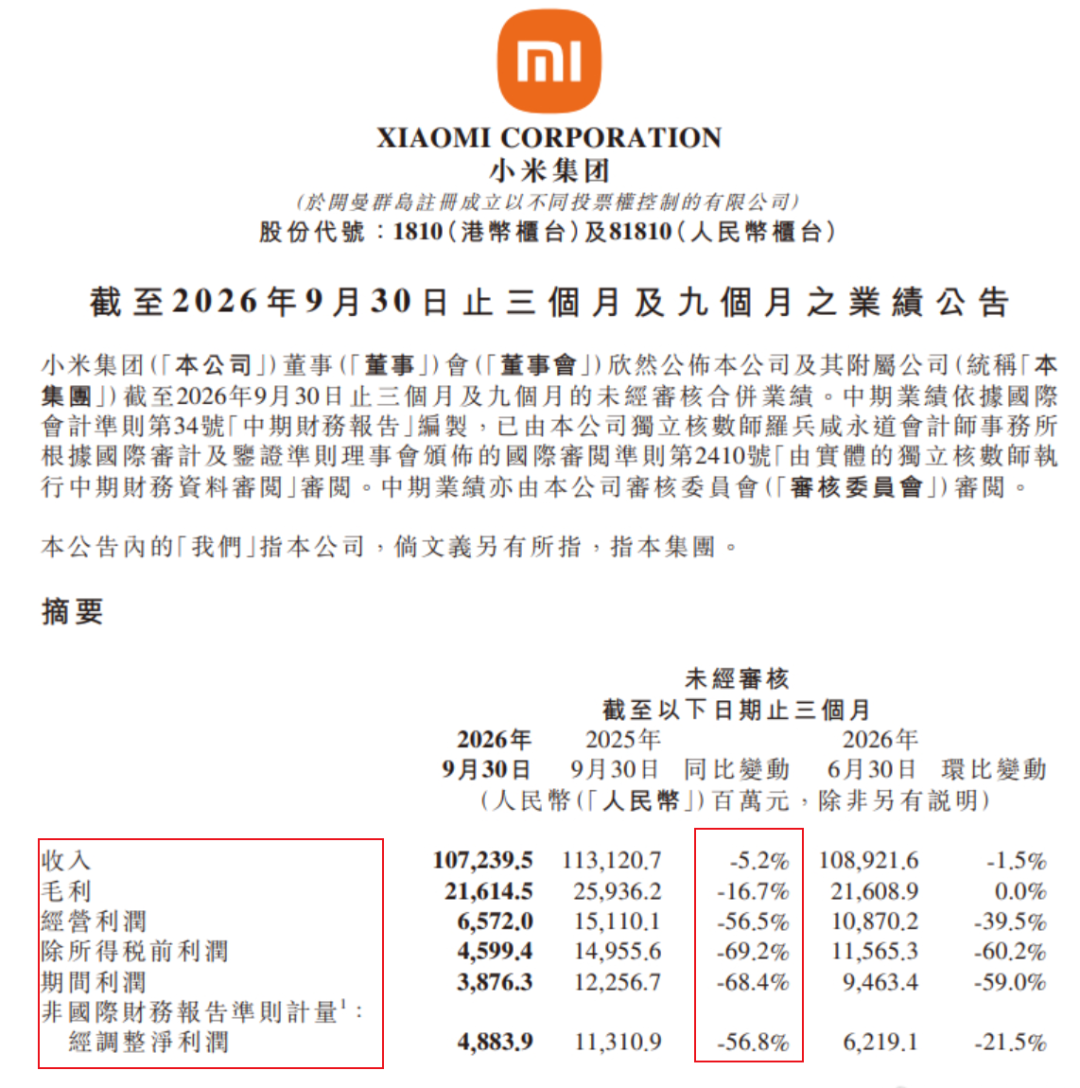 Image source: Xiaomi financial report
At the earnings call, President Lu Weibing made a remark that carried real weight: this was the toughest quarter of his career.
What is even more awkward is the auto flagship. As of press time, XPeng's Q3 auto gross margin stood at 13.1%; Li Auto and NIO's Q2 overall gross margins were 11.0% and 18.5%, respectively, while Xiaomi's was 19.2%, firmly at the top among new forces.
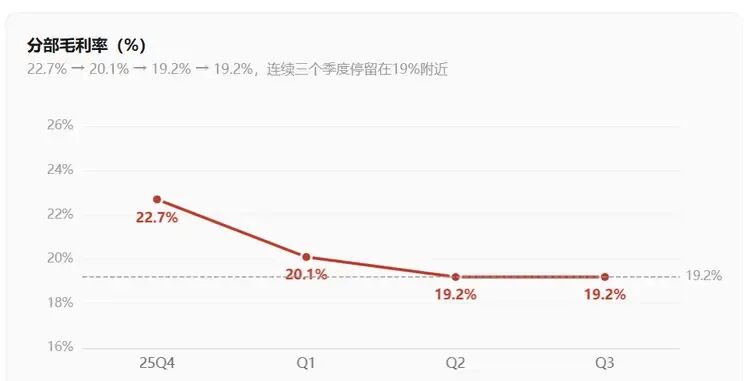
Changes in Xiaomi Auto's gross margin
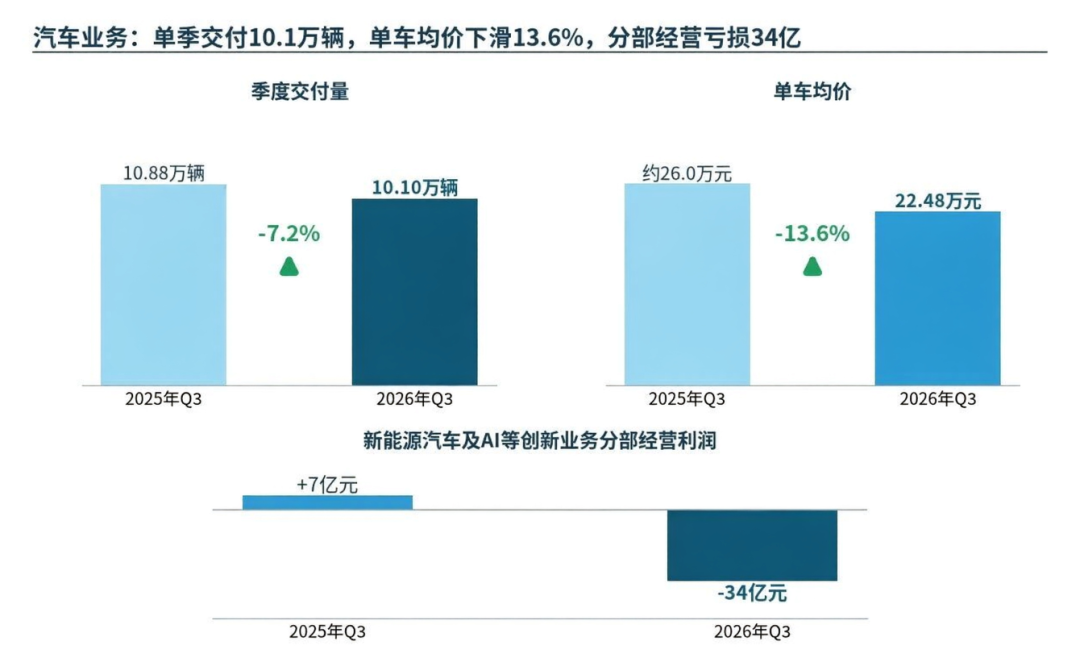
Yet this business, with a top-tier gross margin, posted a quarterly operating loss of 3.4 billion yuan. In the same period last year, it still made a profit of 700 million yuan—a swing of 4.1 billion yuan in one year. The highest gross margin and the highest loss—this is the most glaring point in this quarter's report: either this gross margin cannot hold, or money is being burned elsewhere in ways outsiders cannot see.
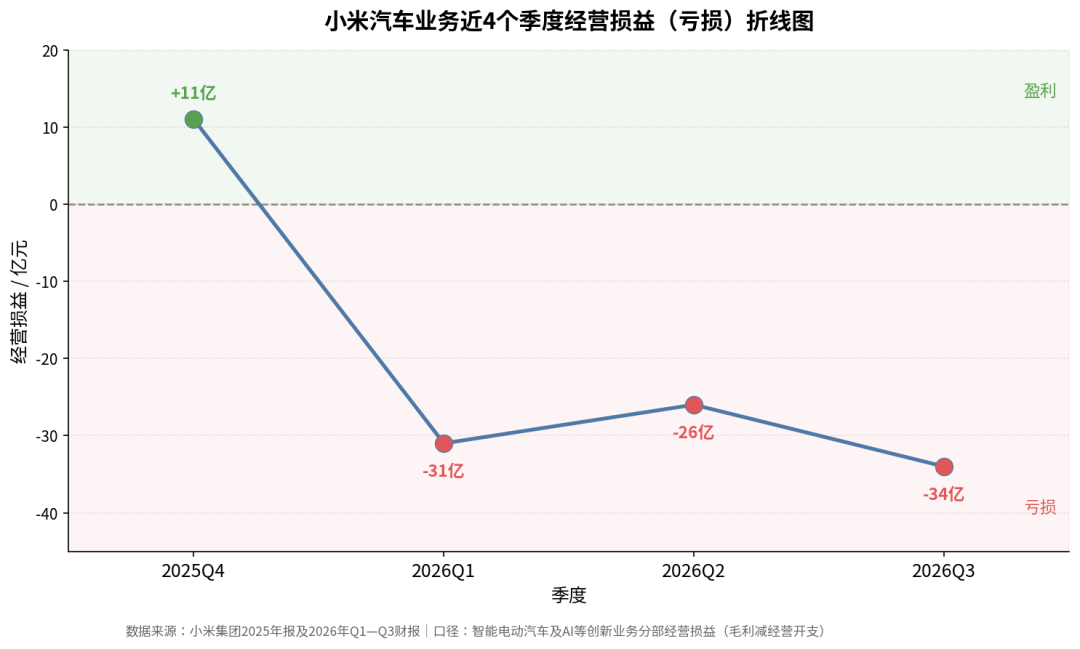
Xiaomi Auto's quarterly operating profit
No. 1 in gross margin, No. 1 in loss—this account does not add up
In Q3, Xiaomi Auto delivered 100,975 vehicles—already impressive for a new automaker. But auto revenue was 22.7 billion yuan, down 19.9% year on year; the average price per vehicle fell from about 260,000 yuan to 224,800 yuan, down 13.6%. Deliveries fell only 7.2%, but revenue fell nearly 20%. The gap lies in the mix: deliveries of the high-margin SU7 Ultra almost dropped to zero.
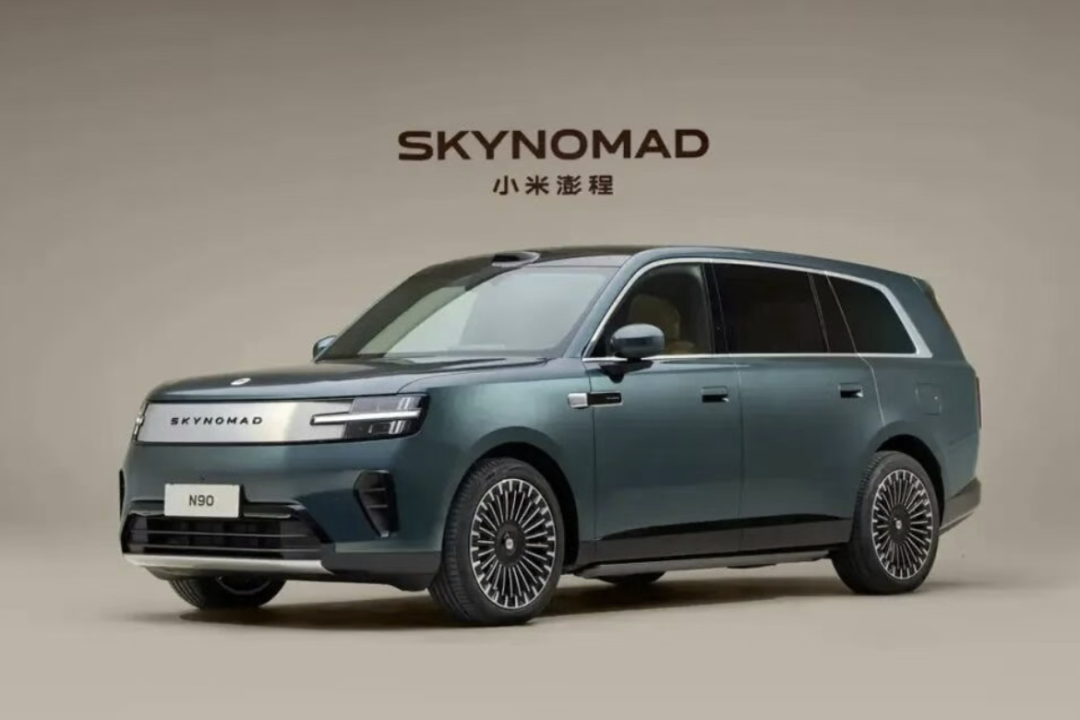 Image source: Weibo
Taking over was the Pengcheng series. Launched in September, it locked in over 10,000 orders in four minutes, and locked orders exceeded 70,000 in its first sales month; deliveries in October surpassed 50,000 units, a new high for the year. The hype is real, but the industry logic is cruel: being able to sell does not equal making steady money.
The price war continues, and lithium carbonate, automotive-grade memory chips, copper, and aluminum have all been rising in turn. The comprehensive cost increase for one smart electric vehicle is generally 6,000 to 14,000 yuan. Coupled with amortization of production lines, channels, and after-sales, the segment's quarterly operating expenses are already nearly 8 billion yuan. Spread over 100,000 deliveries, each vehicle bears nearly 80,000 yuan in costs. For a car with an average price of 225,000 yuan, the remaining space is not hard to calculate.
The gross margin trend is even more painful. The segment's gross margin slid from 25.5% to 19.2%, down 6.3 percentage points. This figure is still competitive among new forces, but others are climbing from the bottom, while Xiaomi is walking down from the mountainside. The same gross margin, in different directions, means a completely different valuation logic.
Delivery targets are also being missed. At the beginning of the year, the target was 550,000 vehicles; in the first three quarters, cumulative deliveries were about 286,000. To reach the target in the remaining two months, it would need an average of 100,000 per month, which is no longer feasible. Extrapolating from the October level, the full-year figure will likely land around 440,000, and the shortfall of 110,000 ultimately becomes idle costs for production lines and channels.
The high-end story no longer works: only 163 SU7 Ultras left
The SU7 Ultra was once Xiaomi's sharpest card. Starting at 529,900 yuan, backed by Nürburgring lap times, with Lei Jun taking the stage in a leather jacket, it locked in over 10,000 orders in three days. At the time, outsiders described Xiaomi as an "exception": production capacity equaled sales, and less than a year and a half after launch, it announced a quarterly profit.
Now? In Q3, terminal insurance registrations totaled about 163 units over three months. In a quarterly volume of 100,000 vehicles, this is a structural zero. The real question is: how much of last year's 700 million yuan profit came from the SU7 Ultra dividend and the supply shortage at the time? If so, the value of "the fastest-profitable new force" must be discounted—making money during the new-car period is not a skill; making money during normal sales is.
An even more contradictory scene follows. In the Ministry of Industry and Information Technology's 414th batch announcement, the new-generation SU7 Ultra completed filing: swan-neck large rear wing, colored carbon fiber kit, expected delivery in Q1 2027. On one hand, the main model is moving down to the 200,000-yuan range to carry sales; on the other, it continues to spend money building a niche performance benchmark. The former needs profit, the latter needs face, and someone always has to pay.
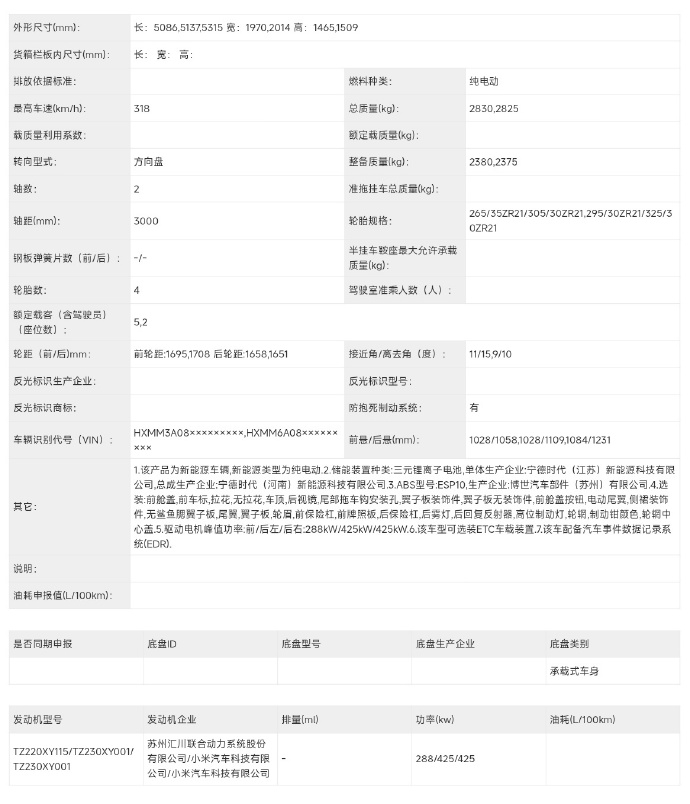
Image source: MIIT website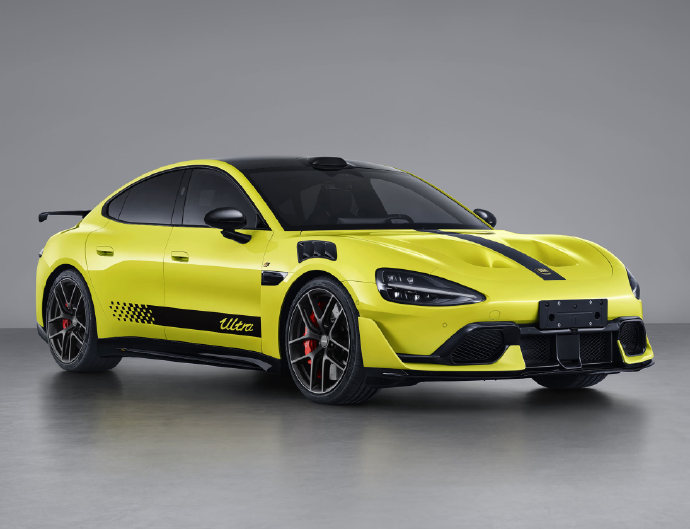
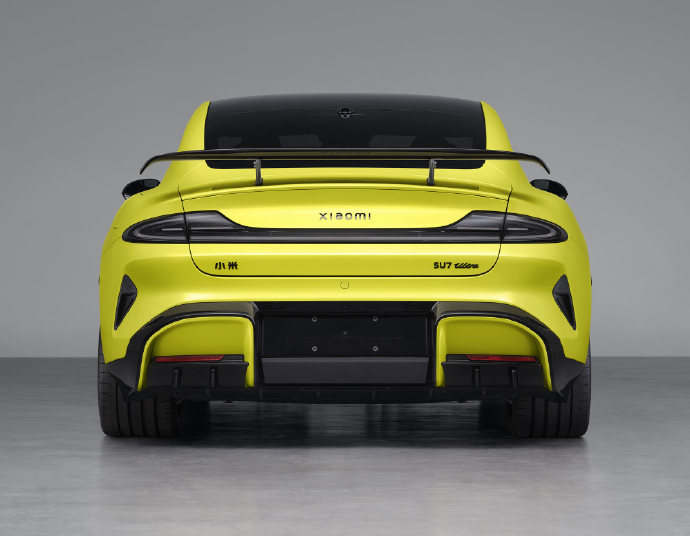 Image source: Weibo
So the question is: with the new-generation SU7 Ultra officially filed, can Xiaomi Auto's gross margin return to the 25.5% peak?
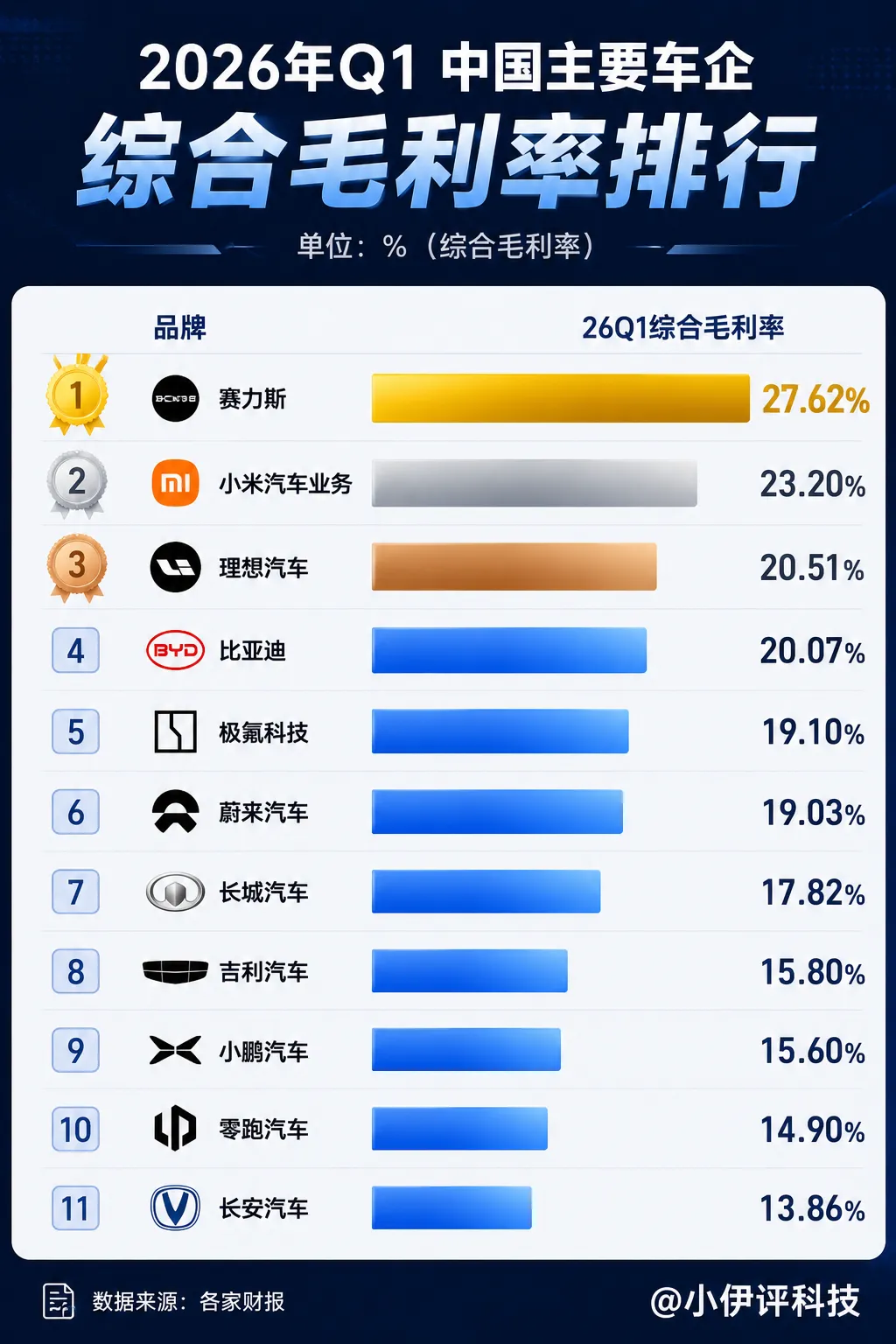 Image source: Xiaoyi Reviews Tech
When the Pengcheng launched, the official prices of the N70 Max and N90 Max were 20,000 and 30,000 yuan lower than the presale prices. This was not someone else starting a price war; Xiaomi cut itself first. Lu Weibing also revealed that after normal sales began, the share of the lower-priced N70 increased. As the share of high-priced cars falls, the average price falls; as the average price falls, gross margin can only be upheld by costs.
Who exactly lost the 3.4 billion? AI is the most expensive ticket
It must be made clear: the 3.4 billion yuan is the loss of the entire "smart electric vehicles and AI and other innovative businesses" segment, not the auto item alone. Lu Weibing explained that this segment consists of autos, AI, and chips combined, and the core reason for the expanded loss is a significant increase in AI investment.
So how much is lost per vehicle on average? Spreading 3.4 billion yuan over 101,000 deliveries, each vehicle sold in the quarter corresponds to a loss of about 33,700 yuan. In the same period last year, the reverse was true: the segment profit was 700 million yuan and deliveries were about 109,000, corresponding to a profit of about 6,400 yuan per vehicle. One positive and one negative, the per-vehicle profit/loss swing is close to 40,000 yuan.
But one thing must be added here: this 33,700 yuan includes investment in AI and chips, and does not equal a loss of 33,700 yuan per vehicle sold. Xiaomi did not disclose the true per-vehicle profit/loss of the auto business, and outsiders cannot calculate it. The number can be calculated, but the scope cannot be filled in for the company.
The explanation makes sense, but it leaves a huge black box: Xiaomi has so far not separately disclosed the operating profit of the auto business. How much of last year's 700 million came from autos, and how much of this year's 3.4 billion was borne by autos, outsiders have no idea. As a result, the discussion has become pure speculation: bulls say "the loss comes from AI investment," while bears say "the more cars sold, the more money lost; AI is just a basket." Both claims can justify themselves because the company has not provided falsifiable data.
Investment is indeed increasing. Q3 R&D investment was 9.2 billion yuan, and the first three quarters totaled 27.4 billion yuan, up 16.5% year on year, with AI-related spending already exceeding 30%. This year's AI investment plan is about 16 billion yuan, and Goldman Sachs expects it may exceed 20 billion yuan in 2027.
But the reality is clear: MiMo's paid API has just started, and revenue cannot even cover a fraction of R&D investment. AI is the ticket to the future, but in the short term it is an out-and-out money-devouring beast. What is more troublesome is Lu Weibing's own judgment: pressure is concentrated in DRAM, supply will not increase substantially until the first half of 2028, and price increases in 2027 remain a high-probability event. In other words: the cost knife will cut again next year.
Trading today's money for tomorrow's time—how long can 150 billion yuan burn
Cash flow has changed face. In Q3, net cash outflow from operating activities was about 23.03 billion yuan, compared with a net inflow of 3.8 billion yuan in the previous quarter.
Breaking it down is even more interesting: inventory at the end of Q3 was 108.3 billion yuan, a quarterly increase of about 25.4 billion yuan. Raw materials surged from about 19 billion yuan to 58.9 billion yuan, an increase of 145.7%, while finished goods instead fell from 44.5 billion yuan to 41.9 billion yuan. This is not products piling up in warehouses, but Xiaomi actively stockpiling materials during a price-increase cycle, using the balance sheet to buy time for the income statement. Lu Weibing said it plainly: the buffer cushion of low-cost memory inventory was basically exhausted by Q3.
Fortunately, ammunition is still sufficient. As of the end of September, cash resources were about 196.9 billion yuan, borrowings were 45.5 billion yuan, and net cash was just over 150 billion yuan. With this year's AI investment at 16 billion yuan and R&D at 27.4 billion yuan, Xiaomi still has at least several years to fight "without regard to short-term returns," which is Lei Jun's confidence to go all in.
But having more money does not mean the problem is solved; cash can buy time, but not a model. Phones have the fallback of internet services: Q3 revenue was 9.5 billion yuan, but it contributed 32.3% of gross profit, and global monthly active users reached a new high of 771.9 million. Autos do not have this path; every bit of profit must be squeezed hard from hardware and after-sales.
Going overseas is another bet. In the second half of 2027, the first stop will be Germany, where a R&D and design center has been set up and memoranda have been signed with eight leading dealers. Xiaomi did not copy domestic direct sales, but chose traditional dealers, meaning giving up a slice of channel profit and also facing tariffs and brand awareness rebuilding. The playbook of selling cars through Lei Jun's personal influence will have to start from zero in Europe.
Looking back at the 1 billion yuan bet with Dong Mingzhu, Lei Jun believed in the internet asset-light model. More than a decade later, he has deeply plunged into manufacturing and must directly face the complex tests of cost, inventory, capacity, and channels. The internet's high efficiency is greatly diluted in the heavy manufacturing track.
Netizens are already arguing fiercely:
"The gross margin can still lead, which shows the car itself is not bad; the 3.4 billion is mainly AI investment."
"If the car is not losing money, why not disclose the auto operating profit separately? Reporting it combined means you can say whatever you want."
"SU7 Ultra went from over 10,000 monthly sales to 163 units—is this high-endization? Once the sentiment is sold out, it's gone."
"Pengcheng cut its own presale price, and the share of high-priced cars fell. This is not strategy; it's trading price for volume."
For Lei Jun, this test is no longer a scale race. The real question is: when hit models are no longer scarce, orders no longer queue, and rivals are all cutting prices, can Xiaomi Auto still steadily turn every car into profit?
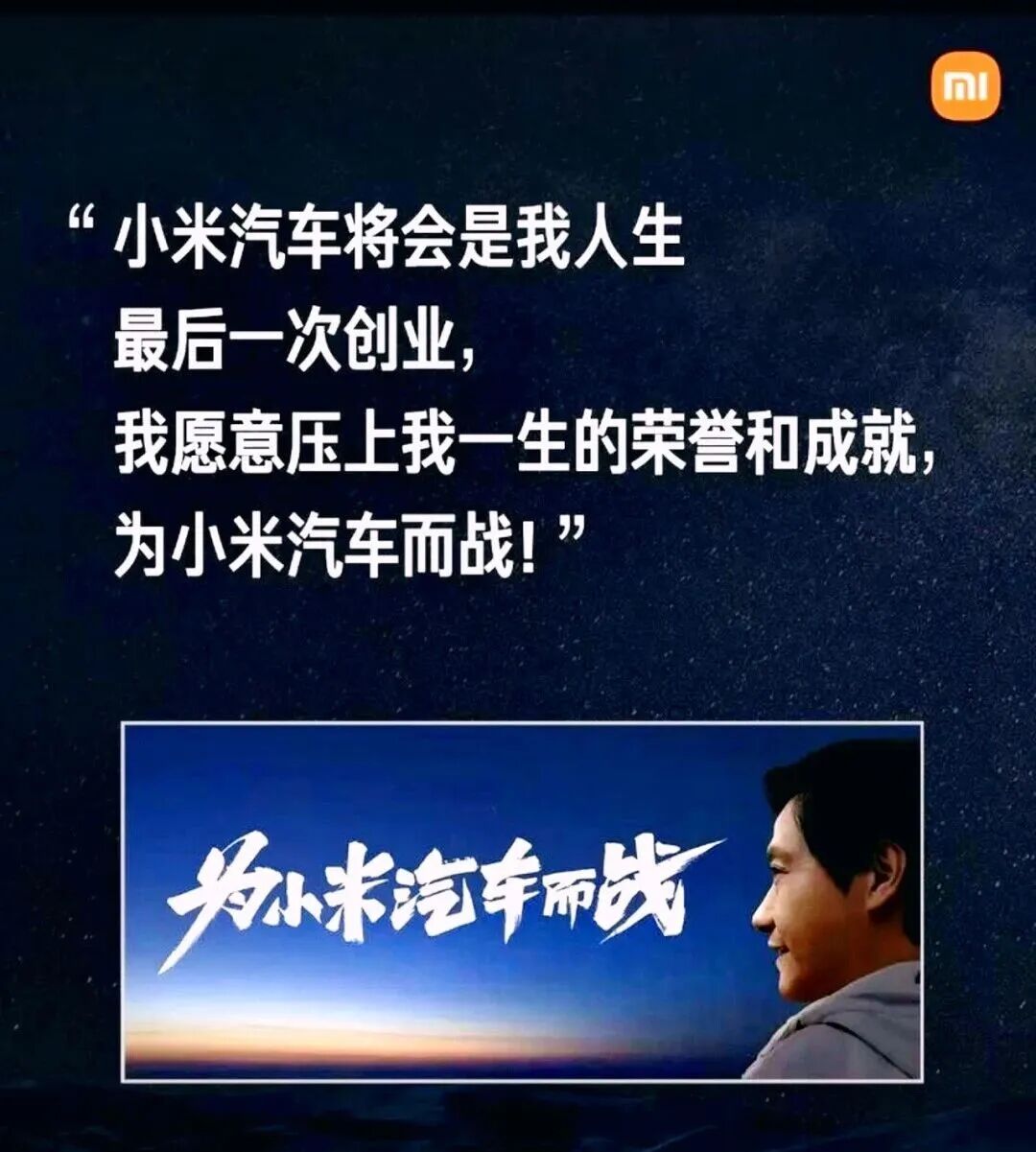 Image source: Weibo
The wave is still there, but the cost of buying a ticket to enter is getting more and more expensive.
Interactive topic: Is Xiaomi's 3.4 billion yuan loss an unavoidable pain of carmaking, or a flaw in its profit model? Do you believe a company that refuses to disclose auto profit separately when it says its "gross margin leads"? Welcome to fire away in the comments section.
Disclaimer: This article is only a financial commentary on major companies and does not constitute any investment advice. The corporate data and regulatory events mentioned are all from public information and are for reference only; the official release shall prevail. Images are from the internet; if there is any copyright issue, please contact us for deletion.
-
![]()
Too Tough! Xiaomi, Boasting the Highest Gross Margin Among Automakers, Lost Another 3.4 Billion Yuan in Q3—Does Lei Jun Regret It?
-
![]()
Yu Chengdong's Latest Quote Goes Viral: 1% Battery Can Stream Video for 50 Minutes
-
![]()
Memory Price Hikes Hit Android Hard: US Q3 Phone Shipments Fall 9%, Apple's Share Soars to 57%
-
![]()
PC Sales Plunge 20% While AI Servers Triple: Are PC Makers Betting Their Future on Data Centers?
-
![]()
799 Yuan! First Android Wide Bar Experience: Everything Is Lackluster, AI Physical Button Stands Out
-
![]()
Xiaomi's Profit Halved in the First Three Quarters: Has the "Toughest Quarter" Passed?
-
![]()
Wei Jianjun Seeks Solace from Yu Donglai: Can a Supercar Ease Great Wall's "Anxiety"?
-
![]()
Lei Jun's First Visit to Weibo HQ: The Real Agenda Is the Pengcheng N70