The World Mocks the Starship’s Explosion, Yet Overlooks Its Silent Revolution
 09/30 2026
 465
465
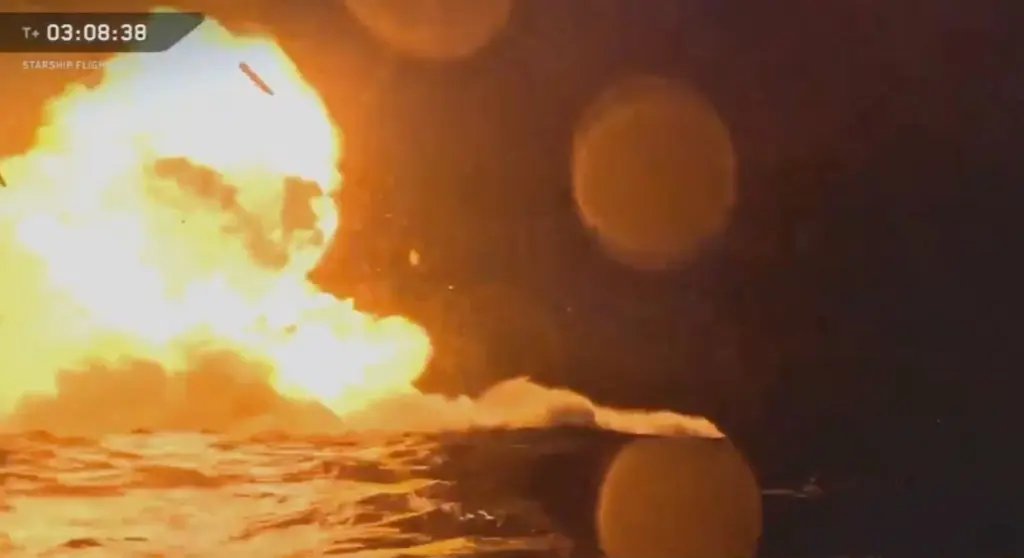
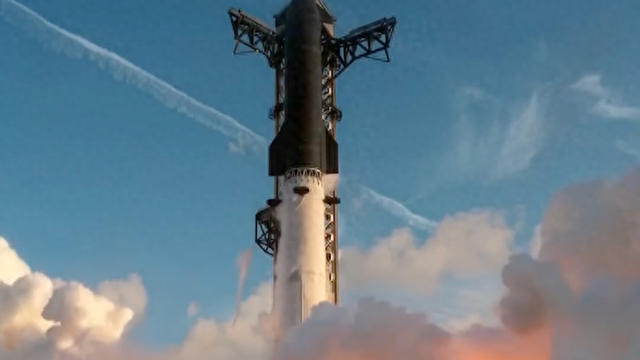
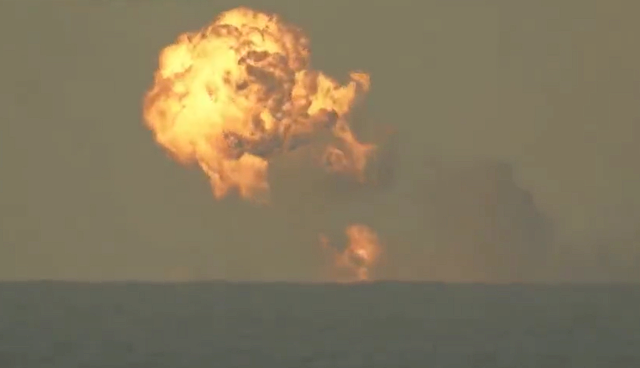
On September 28 (local time), a dazzling fireball illuminated the Pacific sky as the Starship pierced the atmosphere at over 20 times the speed of sound. Its thermal shield endured temperatures surpassing 1,000°C, executed precise attitude adjustments, fired deceleration engines, and splashed down in a predetermined sea area—only to explode moments later. Social media erupted with jeers: “Another fireworks show!” “$15 billion down the drain!” Yet behind the spectacle lies a power shift in spaceflight history that few noticed.
1. The Ship Exploded, Not the Mission
Most critics overlooked a critical fact: this explosion occurred after the mission’s success. Previous Starship failures involved uncontrolled tumbling, engine chain reactions, or mid-air disintegration—failures where basic flight procedures weren’t even completed. This time, the spacecraft achieved every core objective: orbital insertion, deployment of 26 Starlink V3 satellites (confirmed operational by Musk himself), thermal shielding under extreme re-entry conditions, and a controlled splashdown at precise coordinates. The explosion, caused by residual propellant and impact overload in cold water, was a post-mission event. To analogize: if an airplane lands safely but catches fire due to brake design flaws, would we label the entire test a failure? The commercial payload was delivered, and core flight procedures validated—that’s the metric that matters.
The BBC’s critique holds merit: debris recovery failed, potentially costing critical thermal protection and structural data. For a rapidly evolving system, data outweighs hardware. Yet this was a test where “core objectives succeeded despite data recovery challenges.” Reducing it to “it exploded again” misses the point.
2. Orbital Insertion: The Real Game-Changer
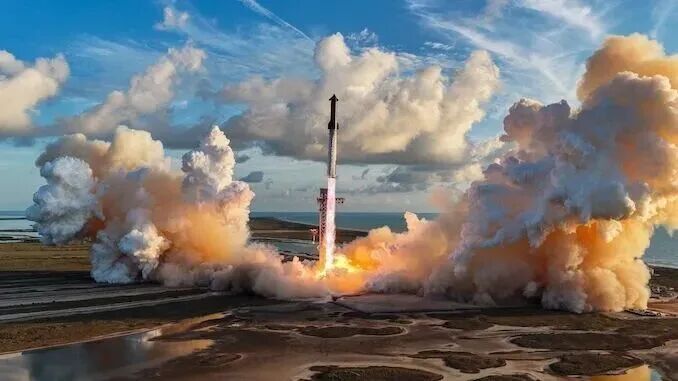
The Starship’s first 13 tests remained suborbital, with trajectories designed to ensure atmospheric re-entry if control was lost, avoiding space debris. The 14th flight shattered that limit, entering low Earth orbit at 275 kilometers and achieving sustained horizontal velocity—a threshold separating “experimental prototypes” from “operational tools.” More critically, it deployed 26 Starlink V3 satellites, marking the first true orbital-class commercial mission. Previous suborbital tests saw satellites re-enter with the spacecraft; this time, they stayed in orbit. The Starship is no longer a “flying prototype” but a “delivery-capable launcher.”
If the 2008 Falcon 1 proved private enterprises could reach orbit, SpaceX now aims to democratize large-scale orbital access through massive, low-cost, reusable rockets.
3. Starship’s Ambition: Logistics, Not Mars (Yet)
While perceived as Musk’s Mars dream, the Starship’s commercial logic is pragmatic. Starlink, SpaceX’s cash cow with 10 million users across 160 countries, faces capacity limits with Falcon 9. The Starship’s 60-satellite payload per launch (each offering 1 Tbps throughput) is critical for scaling from a “10,000-satellite constellation” to a “100,000-satellite ecosystem.” Costs further underscore its disruptive potential: at $100 million per Starship, reusability could slash launch costs from $900–1,010/kg to $115–125/kg—a fraction of the industry’s $10,000/kg benchmark. Industries like space manufacturing and on-orbit servicing, previously confined to PowerPoint slides, now have viable economic models. Space access is shifting from national teams to commercial players.
Musk is clear: Starlink funds the Starship, which in turn validates deep-space capabilities.
4. The Global Space Race Has Begun
The Starship’s implications extend beyond SpaceX. Satellite orbits and frequency bands are finite resources, prompting global powers to “secure frequencies and protect orbits”: China’s Qianfan and Guowang constellations plan 28,000 satellites (400 launched); Amazon acquired Globalstar for $11.57 billion to rival Starlink; Blue Origin’s New Glenn faced setbacks, with analysts predicting SpaceX’s five-year tech lead. China’s commercial space market hit ¥2.83 trillion in 2025, projected to exceed ¥3.5 trillion in 2026. The global space economy, valued at $630 billion in 2023, could reach $1.8 trillion by 2035. This is no corporate deal but a trillion-dollar infrastructure war.
The Starship’s edge lies in solving three bottlenecks: capacity, cost, and launch frequency. Musk aims for 10,000 Starships annually and hourly launches within three years. Even partial success would redefine space logistics.
5. The Real Test Is in the Factory, Not the Sky
The explosion was a setback, but for a system in rapid iteration, success hinges on resilience: can the system fulfill core missions post-anomaly? Can the next flight be cheaper, faster, and more stable? SpaceX operates on a software-like development cycle: parallel rocket production, rapid testing, and modular assembly. The V3 Starship’s assembly time dropped from six months to six weeks, with test flights spaced 63–66 days apart. Traditional rockets iterate over years; SpaceX treats them like code—release, fix, repeat.
While the world fixates on Pacific fireballs, SpaceX’s engineers are already refining designs. The next rocket will fly better.
Epilogue
The Starship is imperfect. It has exploded repeatedly and will likely explode again. But each explosion lowers space access costs and expands industry horizons. The true story isn’t the fireball but the cost curves and industry boundaries it rewrites. When launch costs fall below $100/kg, when annual Starship production hits five figures, when orbit becomes routine, today’s debates over “explosions” will fade. What matters is that someone is turning science fiction into infrastructure—and igniting humanity’s next civilizational leap.
The fireball will dim. But the revolution it sparked is just beginning.
-
![]()
Magic9 Teams Up with ARRI, Honor Takes Center Stage
-
![]()
Naive.AI Secures $400 Million in Funding Within Three Months: Backed by Tencent, Sequoia, IDG, and Matrix Partners, the Tsinghua-Linked LLM Startup Makes Waves
-
![]()
The World Mocks the Starship’s Explosion, Yet Overlooks Its Silent Revolution
-
![]()
Deal Sealed: Strategic Collaboration Between FAW and GAC Unveiled, Paving the Way for a New Era of Central-Local Synergy in China’s Auto Sector
-
Is This the Largest IPO in AI History? Anthropic’s Valuation Could Surpass $2 Trillion
-
DataCanvas Applies for Hong Kong IPO: Revenue Soars Ninefold in Two Years, Third-Party Intelligent Computing Faces Breakthrough Challenges
-
![]()
After Investing 20 Billion Yuan in Battery Swapping, Why Has NIO Entered into a 'Strategic Alliance' with Geely?
-
Hot Topic | ByteDance and JD.com Roll Out World Models, Eyeing a Prime Spot in the Spatial Computing Ecosystem