Magic9 Teams Up with ARRI, Honor Takes Center Stage
 09/30 2026
 516
516
Honor Launches an All-Out Offensive
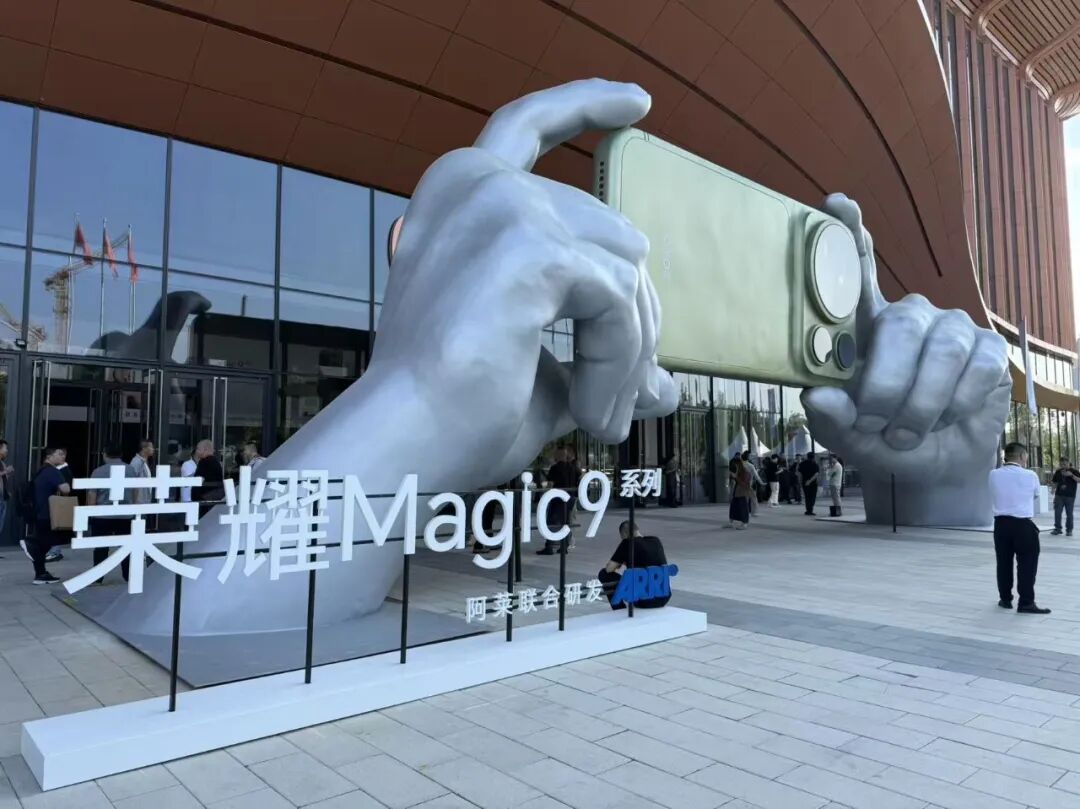
On September 28th, Honor unveiled three cutting-edge models of the Magic9 series in Beijing. Not only did it incorporate ARRI's technology for imaging, introducing cinematic aesthetics and professional production workflows to smartphone photography for the first time, but it also pushed specifications to the limit while maintaining prices at nearly the lowest in its class.
This strategic move has successfully broken through competitors' price barriers and received positive feedback from the market. During an interview, Honor CEO Li Jian was informed that within just half an hour of sales opening, e-commerce platform sales surged by 194% compared to the previous generation's flagship series.
Calculating with a hint of surprise, he chuckled, "Nearly triple?"
In my opinion, Honor has excelled in three key areas this year: cinematic-grade imaging, cost-effectiveness, and AI.
Let's start with imaging. Android flagships continue to form partnerships with renowned camera manufacturers, such as "Xiaomi + Leica," "vivo + Zeiss," and "OPPO + Hasselblad," all vying for superiority in sensor size and pixel count. However, Honor took a different approach by learning color grading techniques from filmmakers. It teamed up with ARRI, a company that supplies cameras to Hollywood, to create a "pocket cinema camera" capable of producing blockbuster-quality content for the average user.
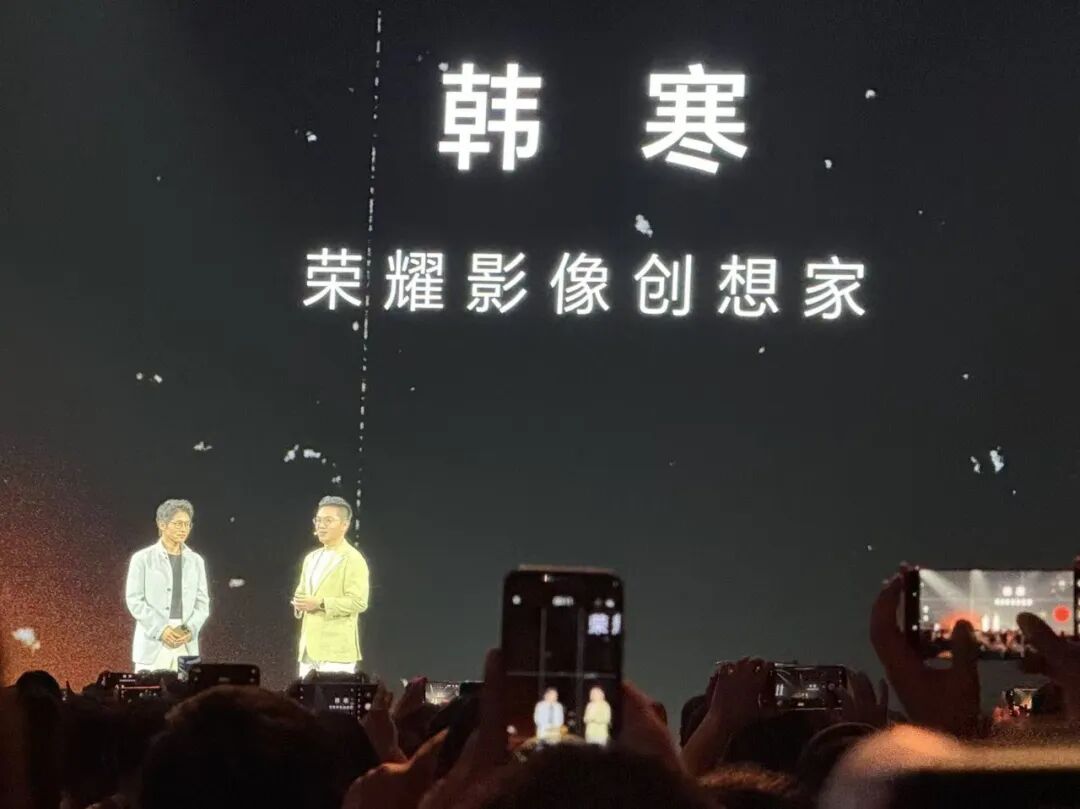 Han Han, Honor's Imaging Visionary. Photo Source: Tang Chen on-site
Honor aims to elevate smartphone imaging to a creative level, setting itself apart from competitors. Han Han, invited as the "Honor Imaging Visionary," reinforces this perception through his directorial expertise.
The Magic 9 Pro Max stands out as the ultimate imaging flagship of the year, designed for seamless post-production with a focus on image quality, color, sound, and professional expandability. The interface is redesigned based on ARRI cinema camera logic, featuring finely tuned parameters, a 2.39:1 ultra-wide aspect ratio for cinematic framing, and Log footage compatible with DaVinci Resolve for familiar editing and color grading workflows.
For audio, it boasts cinema-grade shotgun microphones, packing professional microphones several centimeters long into a millimeter-thin body, with external mounts for teleconverters and cage systems. The triple-lens setup mirrors ARRI's "three-lens turret" design in a triangular arrangement.
The standard model features a compact 6.37-inch screen with the same imaging DNA as the Pro Max, including ARRI's dual 200MP sensors. While most imaging flagships opt for larger screens, the Magic9 is the only device in its class to offer full-fledged imaging capabilities on a 6-inch-class display.
Honor equips it with Android's first square-format front camera, supporting 1:1 square aspect ratio shooting, and introduces a new "vertical grip horizontal shoot" mode, providing flexible framing options for solo and group selfies, as well as post-editing cropping.
Meanwhile, this compact flagship debuts ARRI Cinema Live, featuring a 2.39:1 professional cinema aspect ratio, 3-second high-definition recording with frame-by-frame precision, and 87 ARRI Look presets. Combined with innovative features like Triple Live, it enables ordinary users to achieve cinematic results with a single tap.
Now, let's talk about cost-effectiveness. With Huawei's Mate90 series scheduled for release during National Day, the Magic9 series serves as the grand finale of the flagship launch season. Priced at just 3,999 RMB after subsidies, the Magic9 series undercuts competitors in the mainstream 16G+512G Android flagship segment:
vivo X500 Pro Max: 8,499 RMB
OPPO Find X10 Pro Max: 7,999 RMB
Xiaomi 18 Pro Max: 8,999 RMB
Honor Magic9 Pro Max: 7,499 RMB
Clearly, Honor is sacrificing profit margins to boost sales, and the timing couldn't be better. With memory and chip costs soaring this year, some leading smartphone brands have adopted Apple's strategy: delaying standard model releases and raising prices for Pro series flagships.
The result? Users are more inclined to splurge on the iPhone 18 Pro series, causing a significant sales slump for OV and Xiaomi.
Bloggers revealed that the iPhone 18 Pro series sold nearly 1.3 million units in its first week, a 115% increase year-on-year. Meanwhile, industry blogger "RD Observations" reported that sales of new flagships from vivo, OPPO, and Xiaomi were only 25%-40% of their predecessors, marking a steep 60-70% decline.
In contrast, these leading brands seem to have followed Apple down a rabbit hole—lacking Apple's brand strength but suffering from the same pricing strategy.
Indeed, Honor has long struggled to shake off the "Huawei shadow" and has been perceived as a mere alternative. It has consistently sought to prove its uniqueness.
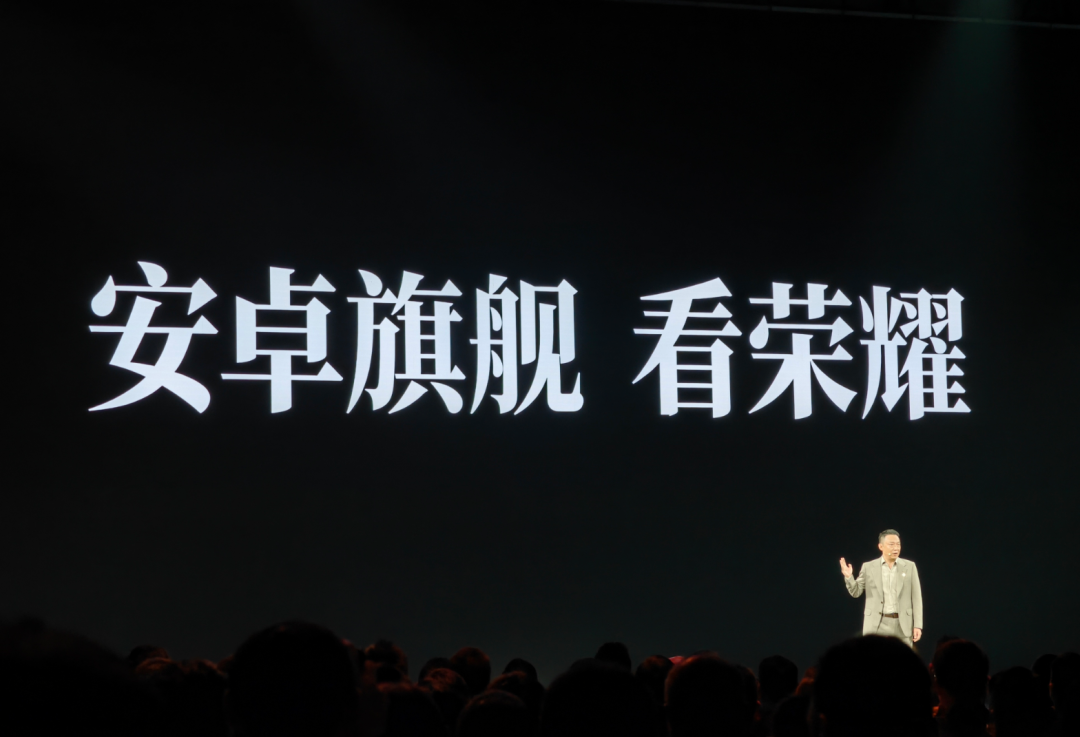 Honor CEO Li Jian. Photo Source: On-site Photography
This year, Li Jian has repeatedly emphasized "Dare to Imagine, Dare to Be Different." As the first flagship series after Honor's rebranding, the Magic9 series is positioned as "Born for Creation."
He refers to the Magic9 as a decade-long masterpiece dedicated to creators of this era. However, I also notice his strategic choices: only the Pro Max features the sixth-generation Snapdragon 8 Super Edition, while the standard and Ultra models settle for the fifth generation.
Given the current surplus of chip performance, this is understandable.
When announcing the Magic9 series prices, Li Jian made a candid remark: "The industry is facing its toughest times yet." But if manufacturers are struggling, aren't users also under pressure? Industry challenges shouldn't simply be passed on to consumers. No matter how much costs rise, the burden shouldn't fall entirely on users.
IDC data shows that starting in March, rising component prices led Android manufacturers to collectively raise prices. Consequently, smartphone sales during the 618 shopping festival dropped nearly 15% year-on-year. In Q2, China's smartphone market shipped 66.01 million units, a 4.3% year-on-year decline.
Honor has learned from past pricing missteps. The Magic8 Pro's starting price rose from 5,699 RMB to 6,299 RMB, but core specs didn't improve proportionally, leading to a nearly 30% drop in annual sales compared to the Magic7.
The 3,999 RMB starting price after subsidies serves as a lesson learned.
Now, let's discuss AI. Honor hasn't had an easy time recently. In Q2, its domestic market share stood at 11.3%, ranking sixth with a 9.5% year-on-year decline. The situation is even tougher in the premium segment (>600 USD), where Honor holds just 1.58% market share, compared to Apple's 34% and Huawei's 16.4%.
Foldables are its only strong sellers in the premium category, while the straight-screen Magic series remains a weak link. Independent analysts note that among the top six manufacturers, Honor's brand identity is the least clear. To stand out, it must break new ground.
Last year, Li Jian pivoted the company toward becoming an AI-driven terminal ecosystem player, pledging $1 billion in investment over five years. The Robot Phone is the first innovation on this path and a key variable in evaluating Honor's valuation.
The crux lies in AI storytelling. Take MagicOS 11, for example. It pioneered something ahead of competitors: the 397B intelligent agent large model, developed in collaboration with Alibaba, which commercially deployed the Agent Harness framework on smartphones for the first time.
Simply put, AI is no longer a button you activate; it can now complete tasks in the background. Consider these practical scenarios:
All models feature a dedicated AI button. YOYO's One-Tap Smart Capture records audio and video clips, generates subtitles and collages, converts videos to Live Photos, and organizes fragmented information like delivery and dining codes.
The industry's first AI call assistant bypasses automated customer service—a boon for anyone who's endured long waits with carriers and banks.
Cross-brand One-Touch Share even works with Apple ecosystems, syncing iPhone calls and enabling AI editing of iPhone photos on Honor devices.
These features integrate seamlessly into daily life, offering a more practical approach than intrusive AI implementations like those seen in Doubao phones. Official data shows YOYO's intelligent agent can automate tasks across 3,000+ scenarios.
Another AI highlight is Honor's collaboration with China Mobile on the Token package: MobileAI Pro Plan, priced at 169 RMB/month, includes 50 million Mobile Tokens payable via phone bills. This marks the first time Tokens have been offered through carrier channels.
This move reveals Honor's AI strategy: while its model capabilities may not be the strongest, it leads the industry in integrating AI and agent functions into its system to enhance user experience.
However, the challenges faced by two generations of Doubao phones serve as a reminder: the path to AI smartphone realization is still in its infancy, and no brand can claim victory yet.
Today, Honor juggles multiple initiatives: Robot Phone, AI terminal ecosystem, and humanoid robots. With over 1 billion RMB in R&D investment, Honor faces higher revenue pressures and must craft a compelling narrative for the capital markets.
In this light, the Magic9 series represents a proactive battle for Honor, especially as it approaches a critical IPO milestone. Sales volume is the most urgent proof of success.
More importantly, Honor is growing through adversity. This time, instead of rushing to prove whether it's a substitute, it's confidently carving out its position in the industry at its own pace.
This may well be the key to winning this battle.
-
![]()
Magic9 Teams Up with ARRI, Honor Takes Center Stage
-
![]()
Naive.AI Secures $400 Million in Funding Within Three Months: Backed by Tencent, Sequoia, IDG, and Matrix Partners, the Tsinghua-Linked LLM Startup Makes Waves
-
![]()
The World Mocks the Starship’s Explosion, Yet Overlooks Its Silent Revolution
-
![]()
Deal Sealed: Strategic Collaboration Between FAW and GAC Unveiled, Paving the Way for a New Era of Central-Local Synergy in China’s Auto Sector
-
Is This the Largest IPO in AI History? Anthropic’s Valuation Could Surpass $2 Trillion
-
DataCanvas Applies for Hong Kong IPO: Revenue Soars Ninefold in Two Years, Third-Party Intelligent Computing Faces Breakthrough Challenges
-
![]()
After Investing 20 Billion Yuan in Battery Swapping, Why Has NIO Entered into a 'Strategic Alliance' with Geely?
-
Hot Topic | ByteDance and JD.com Roll Out World Models, Eyeing a Prime Spot in the Spatial Computing Ecosystem