From 'Africa's Top Player' to Just One of the Crowd in Africa
 10/22 2026
 545
With rising supply chain costs and intense competition in the global smartphone market, TECNO struggles to captivate the market with compelling narratives. Its performance and market share oscillate between phone replacement cycles and supply chain pricing trends. The challenge for Africa's former top player is navigating the impact on mid-to-low-end segments, with the future potential of AI integration being the critical factor for success.
In the first half of 2026, the average selling price of TECNO smartphones rose to 713.4 yuan, up from 547.5 yuan in the same period last year.
However, sales volume dropped from 44.5 million units to 39.5 million units.
Faced with rising costs in the upstream supply chain, TECNO had two options: maintain market share or protect profits.
The former would require accepting a decline in profits to achieve growth in market share. The latter would involve accepting a decline in sales volume to safeguard performance.
Clearly, TECNO ultimately chose the latter.
Part.
01
Failed Shock Therapy
The smartphone business is inherently low-margin. When upstream supply chain costs rise, manufacturers face pressure, a challenge common across the industry.
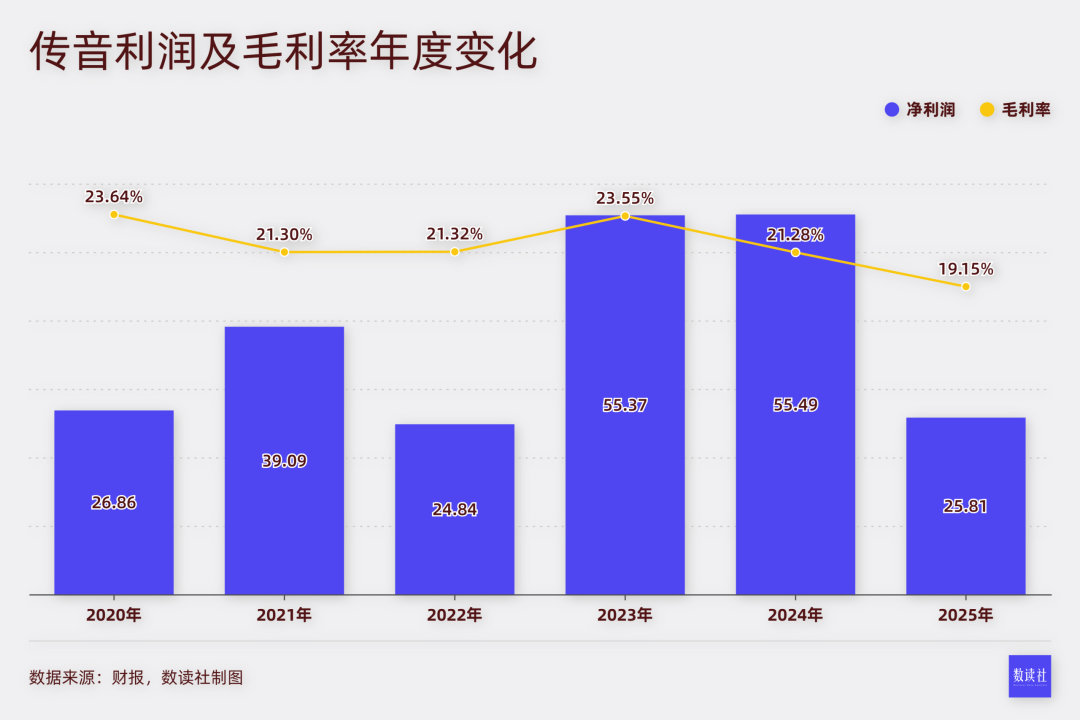
TECNO is no exception. In 2025, its gross margin fell to 18%, causing its profit for the period to drop from 5.6 billion yuan to 2.6 billion yuan, a 53% decline, nearly halving. The direct cause was the rise in supply chain costs.
In 2025, TECNO's upstream memory chip costs rose from 13.2 billion yuan the previous year to 14.5 billion yuan, a 10% increase. SoC costs increased from 8.2 billion yuan to 9 billion yuan, an 11% rise. In the first four months, memory chip costs accounted for 48% of total costs, and with SoC at 16%, these two components made up two-thirds of total costs.
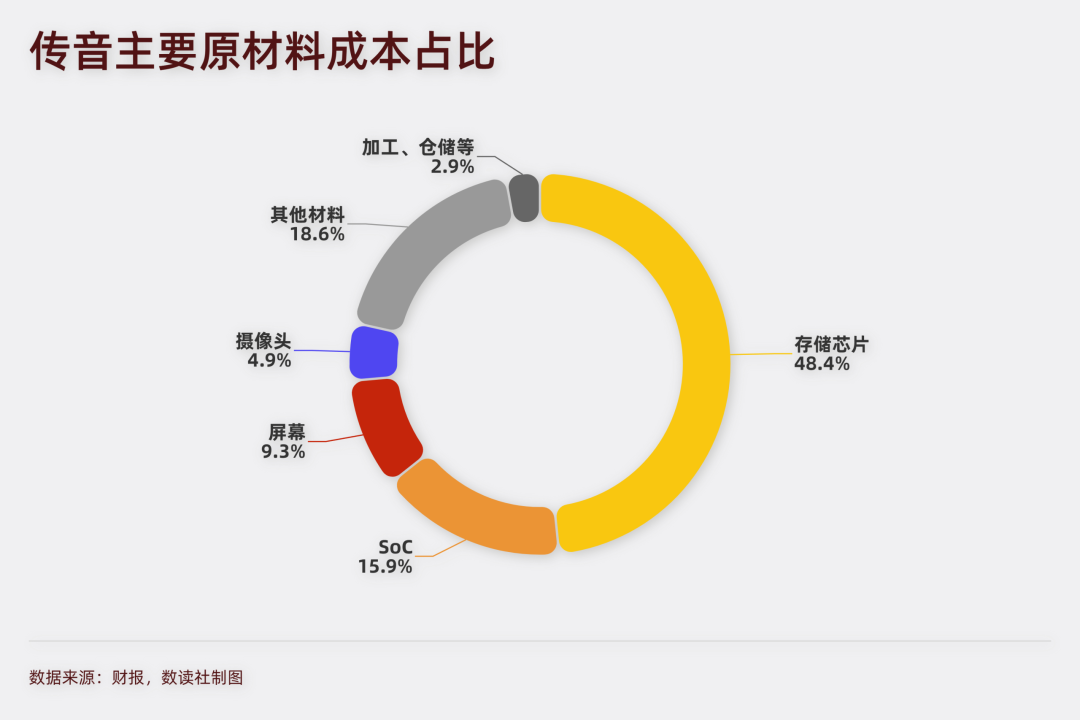
This situation is not unique to TECNO but is an industry-wide phenomenon. In the second quarter of this year, Xiaomi's smartphone business gross margin was only 8.5%, down from 11.5% year-on-year, a 3 percentage point decline.
The supply chain price hikes have hit manufacturers focusing on low-price segments the hardest.
Breaking free from this situation is inevitable, as TECNO has proven that "shock therapy" does not work.
As mentioned in its prospectus, faced with increased memory chip procurement costs in the second half of 2025, TECNO slowed its shipments. The core reason for this decision was that the industry had not yet passed on costs to end consumers, and TECNO chose to wait for industry-wide price adjustments rather than preemptively raise prices.
Without market pricing power, TECNO could only maintain a low-price strategy while competitors held their prices steady. This resulted in declines in both revenue and profit. Revenue fell from 68.7 billion yuan to 65.6 billion yuan, a 4.5% year-on-year drop.
The reason is that sustained upstream supply chain price increases can erode profit margins. Eventually, selling each unit at a loss becomes untenable, forcing manufacturers to reduce shipments to minimize losses. This led to TECNO not gaining market share through low prices but instead experiencing a significant decline in overall sales due to controlled shipments. Sales volume dropped from 201 million units in 2025 to 169 million units, a 16% decrease.
In other words, continuing with low-price competition does not expand market share but instead leads to declines in both revenue and sales volume. Against the backdrop of rising supply chain costs, manufacturers cannot sustain internal competition, making price increases a common market choice.
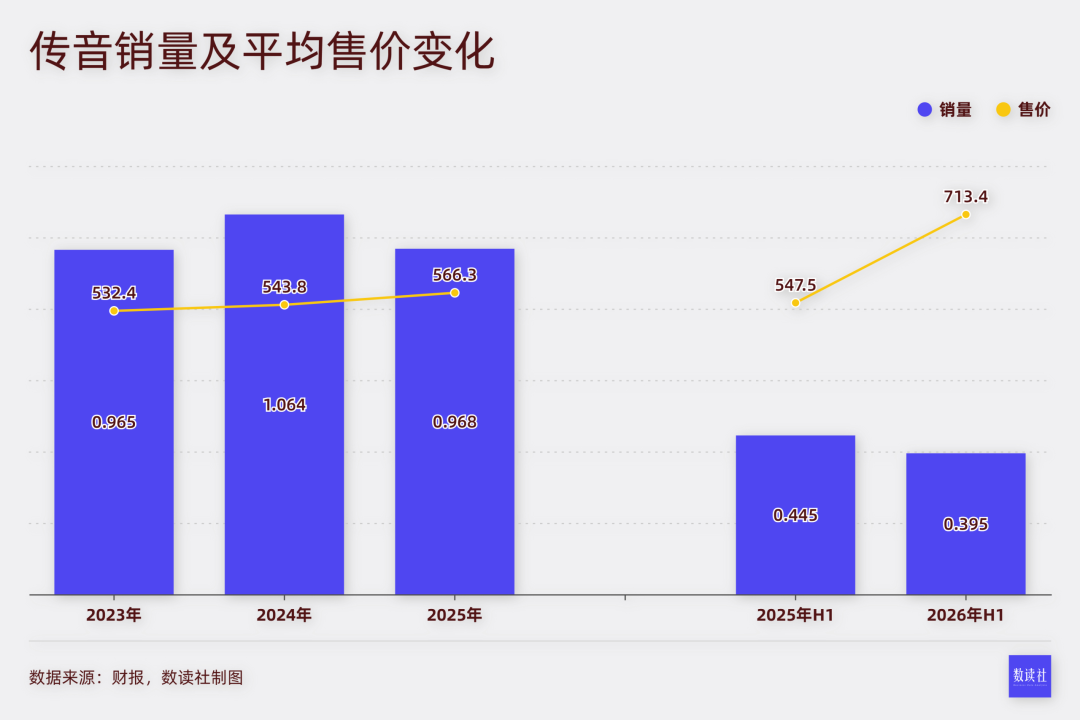
In 2026, TECNO raised its prices, with the average selling price increasing by over 100 yuan. From a performance perspective, compared to the double-digit declines in sales volume and revenue, price increases at least ensured revenue stability. In the first half of the year, TECNO achieved double-digit growth in both revenue and profit, with operating revenue reaching 35.4 billion yuan, a 22% year-on-year increase, and net profit attributable to shareholders rising to 1.77 billion yuan, a substantial 46% year-on-year increase. The price hikes significantly improved gross margins, which reached 22.6% in the first half, up 2.6 percentage points from the same period last year.
The trade-off was evident. According to Omdia data, in 2026, TECNO's market share in Africa stood at 47%, a 4 percentage point decline from the previous year, the largest drop among the top five companies.
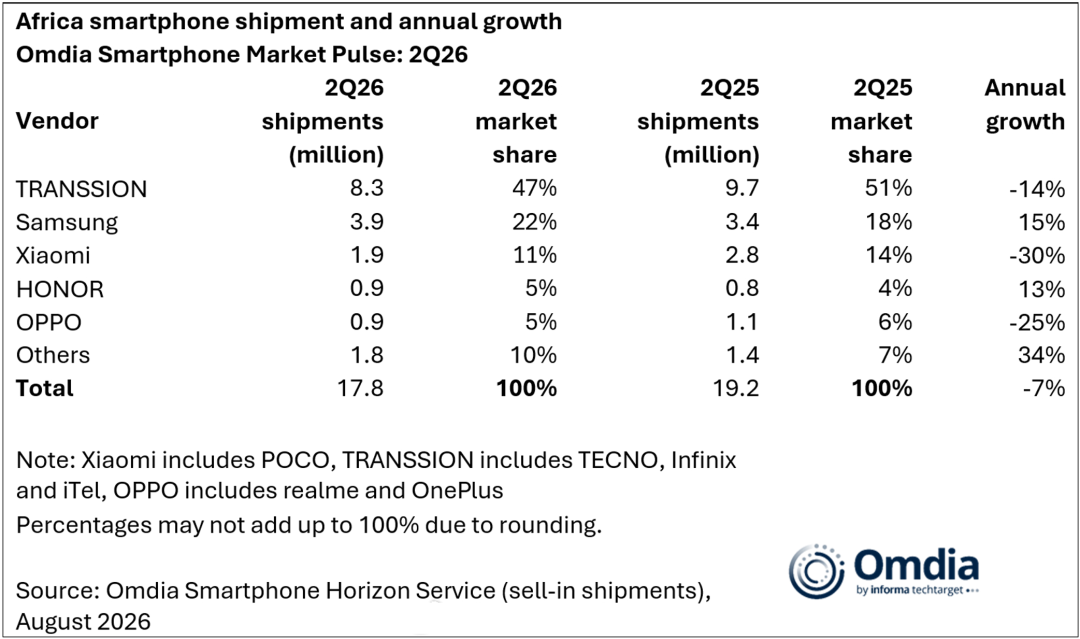
In the current environment, declining sales are a common industry phenomenon. Counterpoint data shows that global smartphone shipments in the third quarter of this year fell by 20% year-on-year, marking the worst third-quarter performance since 2012. Major manufacturers have all experienced sales declines.
However, there are nuanced differences within this broader trend. Manufacturers with a higher proportion of high-end models have been less affected by the downturn, even expanding their market share against the trend. For example, Samsung and Apple saw their global market share increase by 4 percentage points, while Huawei experienced significant growth in the Chinese market.
Manufacturers with a higher proportion of mid-to-low-end models, such as Vivo, OPPO, Xiaomi, and Honor, have been more severely impacted. TECNO, as an even more extreme case, is undoubtedly the manufacturer most affected by this storm, if not the only one.
This is a disadvantage inherent in TECNO's DNA, with no opportunity for short-term change.
Part.
02
The Alluring yet Perilous Emerging Market
In 2015, TECNO was still an emerging force in the African market. In the third quarter of that year, TECNO's sales in the Middle East and Africa grew by 123%, capturing an 8.2% market share (Source: Counterpoint).
Just a year later, TECNO secured a 38% market share in Africa's smartphone market, becoming the continent's sales champion (Source: IDC).
The understated Zhu Zhaojiang wrote a story of mining gold in emerging markets.
Zhu Zhaojiang is a veteran of the mobile phone industry. In 1996, he joined Bird Mobile. After graduating, he gave up a technical role and returned to Ningbo to sell pagers for Bird. While others focused on promoting features, he first asked, "What functions do you need?" At Bird, he became the top salesperson within three years and was promoted to Chief Sales Representative for Northern China. In 1999, when Bird shifted to mobile phones, he voluntarily requested a transfer to the mobile phone division.
At that time, Bird Mobile was a household name, famous for its slogan "The Fighter of Mobile Phones," and it led the domestic mobile phone market in sales for several consecutive years, with 11.75 million units sold and 10.8 billion yuan in revenue in 2003. Zhu eventually became the General Manager of Bird's Mobile Phone Division and Overseas Business Division.
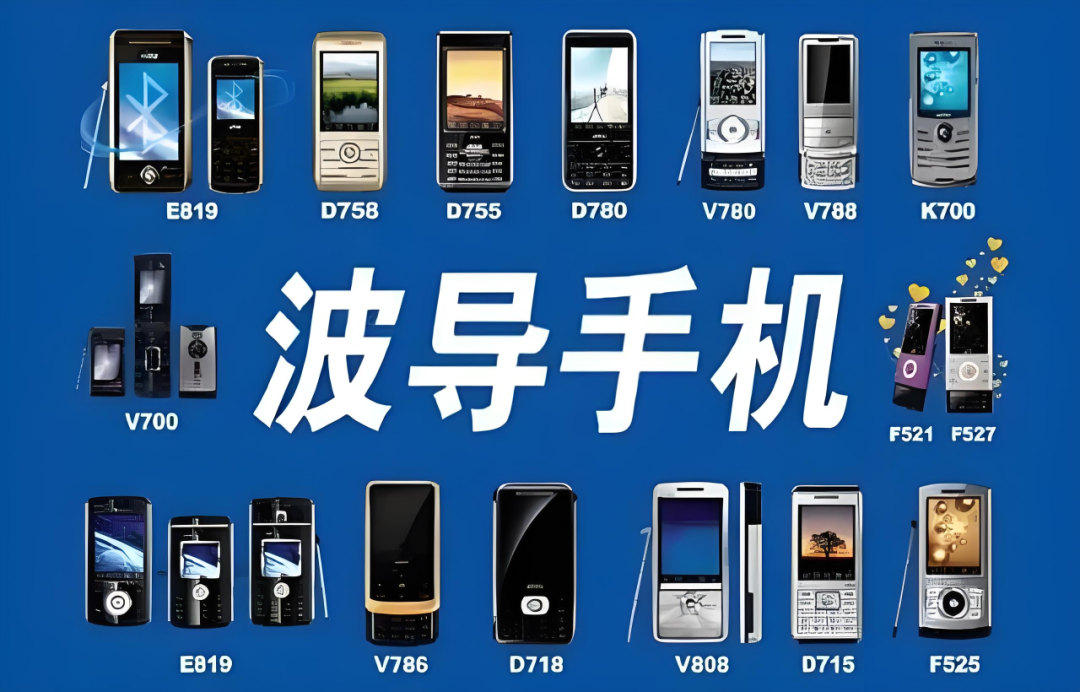
It was during this period that he forged a connection with the African market.
In 2006, with the rise of smartphones, Zhu left Bird and, along with several former colleagues, founded TECNO in Shenzhen's Yuehai Street.
The DNA cultivated during his time at Bird carried over to TECNO. The principle of "What functions do you need?" became the cornerstone of TECNO's product design.
The African market had numerous network operators, and calling rates between different operators were higher than intra-network calls. Users often needed to switch SIM cards to make calls.
During an era dominated by Steve Jobs' minimalist philosophy, where product managers dictated design and consumers ultimately accepted it, TECNO seized a market gap.
In response to the multitude of operators, TECNO introduced dual-SIM dual-standby phones and even quad-SIM phones by 2008, which became wildly popular in Africa. To address frequent power outages and high demand for battery life, TECNO designed phones with dust resistance, long battery life, durability, and sweat resistance. For Africans with darker skin tones, TECNO developed a deep-skin-tone photography algorithm based on eye and teeth positioning.
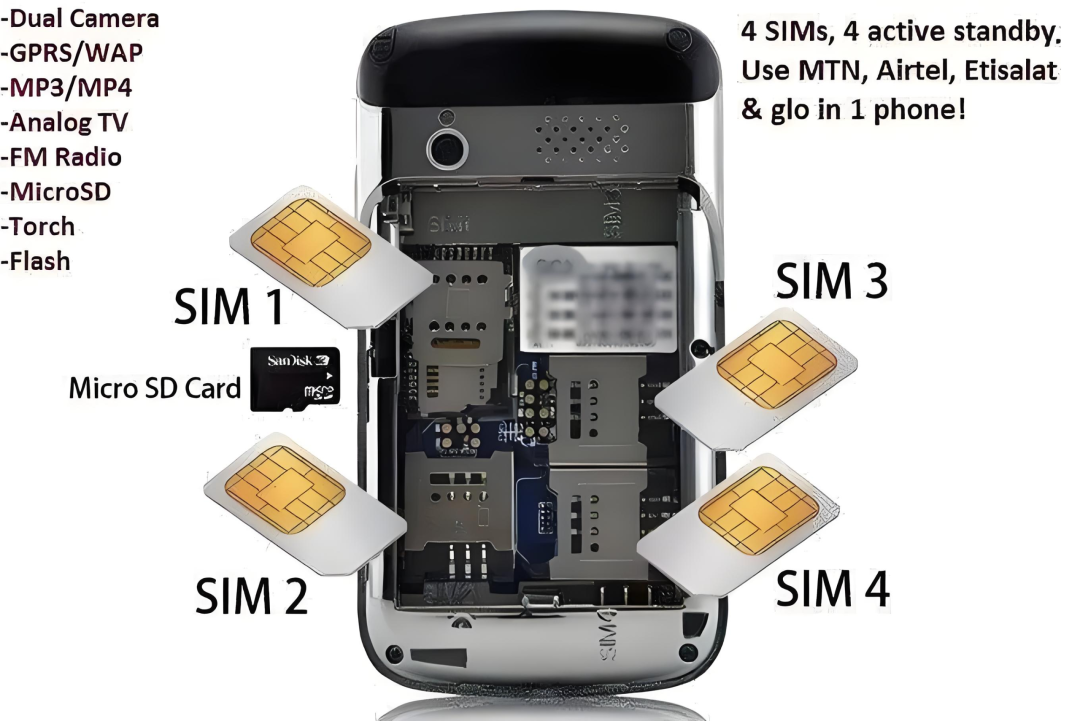
In terms of marketing, TECNO painted wall advertisements in slums and sponsored the Africa Cup of Nations for the long term.
Facing political instability in African countries, TECNO pursued localization, with over 90% of its R&D, procurement, sales, and after-sales teams in Africa consisting of local employees. It established production bases in Ethiopia, Bangladesh, and other locations.
To this day, Africa remains TECNO's stronghold, with market share fluctuating but consistently around 50%.
TECNO replicated its successful African experience in other emerging markets. According to its prospectus, TECNO ranked second in sales in emerging Asia-Pacific markets (including Indonesia, Pakistan, the Philippines, India, and Bangladesh) and the Middle East (including Iraq, Saudi Arabia, Turkey, the UAE, and Jordan).
To this day, TECNO has remained confined to the mid-to-low-end and emerging market segments. While this was the secret to its success, it now holds it back.
Part.
03
Trapped in Cycles
According to its prospectus, TECNO's feature phone business declined by 31% in 2025. In the first half of this year, feature phone revenue dropped to 1.5 billion yuan, a further 10% decline. The decline in feature phones proves that even in less economically developed regions, smartphones have achieved widespread adoption. This means the market has lost its novelty.
The future of the smartphone market hinges on how many units can be sold, when users replace their phones, how efficiently channel inventory turns over, and whether a few percentage points of market share can be captured. Like other major manufacturers, TECNO is largely locked into cycles of phone replacements and supply chain pricing.
If supply chain prices remain stable, the key for TECNO is when the next wave of phone replacements will occur. When supply chain prices are volatile, the question is how TECNO will "survive the winter" and whether it will lose market share in the process.
The current supply chain price hikes represent an adverse cycle for TECNO, requiring it to navigate through difficulties as best as possible.
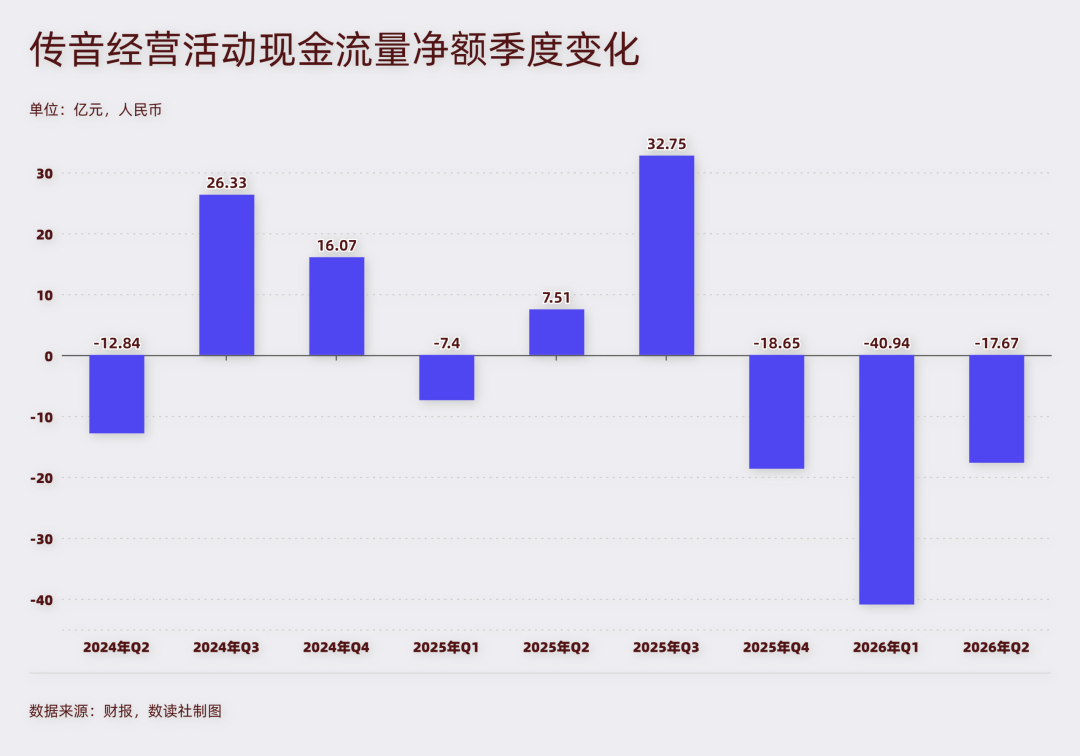
In response, TECNO has taken proactive measures. On one hand, it has actively stockpiled inventory. In the first half of the year, TECNO's net cash outflow from operating activities reached 5.86 billion yuan, a significant reversal from net inflows in the previous year. The core reason was that rising memory prices prompted the company to stockpile inventory, increasing procurement payments. By purchasing in advance, TECNO aimed to mitigate future uncertainties and dilute costs.
On the other hand, TECNO adjusted its product mix. It reduced the launch of entry-level models under its TECNO and Infinix brands, shifting resources toward mid-to-high-end models like the CAMON Slim and Infinix HOT 70. By offering higher average selling prices, TECNO aimed to alleviate gross margin pressures and protect profits and cash flow.
However, even with these efforts, TECNO cannot avoid market erosion during adverse cycles.
In 2025, TECNO's revenue in Central and Eastern Europe fell by 36% year-on-year to 3.56 billion yuan, while Latin American revenue dropped by 24% to 5.25 billion yuan. Middle Eastern revenue declined by 7% to 6.16 billion yuan, emerging and Asia-Pacific markets fell by 4%, and other regions saw a 12% decline. Only the African market experienced growth.
However, competition in Africa, TECNO's stronghold, is intensifying. With global market saturation, emerging markets represent incremental growth opportunities coveted by all manufacturers. In the first quarter of 2026, Honor's smartphone shipments in Africa reached 1.03 million units, a 101% year-on-year increase, capturing a 7% market share and vaulting to fourth place. Since 2024, Xiaomi has accelerated its expansion in Africa, with Lei Jun personally announcing increased investment at the China-Africa Entrepreneurs Conference. Rumors suggest Xiaomi formed a dedicated strategy team to compete with TECNO. Coupled with the presence of OPPO, Vivo, Samsung, and other players, TECNO faces growing competitive pressure in its African stronghold.
In this context, choosing to raise prices and focus on mid-to-high-end models inevitably leads to TECNO ceding some market share. Unlike competitors with stronger foundations in other markets, TECNO cannot rely on mid-to-high-end models to offset losses elsewhere. This is an extremely brutal defensive battle. The throne of "Africa's Top Player" may well be usurped as the market continues to evolve.
Trapped in this cycle, TECNO is also exploring new strategies.
Part.
04
The Temptation of 80% Gross Margins
Like other smartphone manufacturers, TECNO is looking for new growth paths by following in the footsteps of Apple, and even Xiaomi and Huawei.
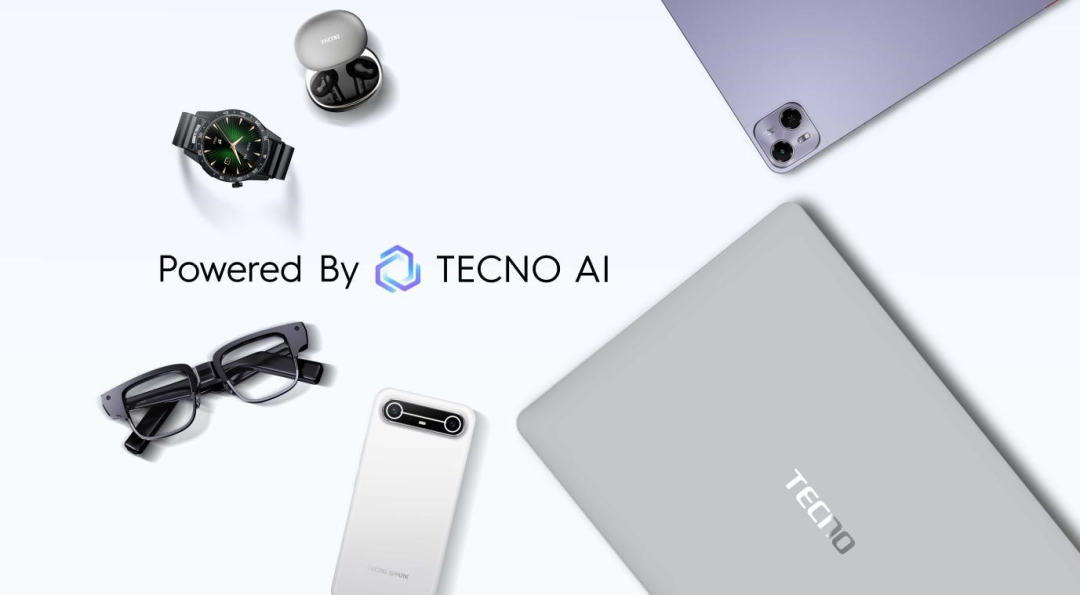
Beyond smartphones, TECNO offers laptops, tablets, smartwatches, wireless earbuds, power banks, and home appliances. Unlike Xiaomi and Huawei, TECNO has not ventured into automotive manufacturing but has introduced electric bikes and tricycles tailored to African markets, along with some energy storage products. However, these businesses generally suffer from low gross margins and limited market opportunities.
Among all its businesses, mobile internet services hold the most promise.
This segment generated only 942 million yuan in revenue in 2025, a 13% year-on-year increase. However, its gross margin was an impressive 80%, standing out amid the low-margin hardware business.
Operationally, this revenue comes from services based on TECNO's OS, with clients including third-party app developers and advertisers. Monetization methods include pre-installations, app distribution, advertising displays, and in-app advertising. Essentially, these approaches do not deviate from the traditional revenue models of smartphone manufacturers.
However, the introduction of AI has brought more possibilities to this business.
Among the uses of funds raised from Transsion's Hong Kong stock listing, AI technology research and development is placed first. There are three main aspects: AI foundational capabilities, AI assistants and AI agents, upgrading Transsion OS, and enhancing imaging capabilities. This is actually centered around mobile internet services. The most ideal model for commercializing AI capabilities is direct charging. However, considering that Transsion, as a hardware manufacturer, mainly provides on-device small models (3 billion parameters) that enable AI to run on low-cost chips, the most feasible approaches are likely to be collaborating with large model platforms, driving traffic to agents, and so on.
This is a crucial part of Transsion's future narrative.
According to the prospectus, as of April this year, the average monthly active users of Transsion OS exceeded 300 million, the average monthly active users of the application distribution platform Palm Store surpassed 200 million, and AHA Games exceeded 140 million. Transsion has also collaborated with internet platforms such as NetEase to develop applications, among which Phoenix has an average monthly active user base of over 150 million.
The key to truly enabling Transsion to break free from cyclical challenges lies in its ability to convert its user base into actual revenue.
With rising supply chain prices and intense competition in the global existing market, Transsion struggles to tell a compelling story to the market. Its performance and market share fluctuate between the phone replacement cycle and the supply chain price cycle. The challenge for the leader in Africa is to address the industry trend of impacts on the mid-to-low-end market, with the key to success being new ideas empowered by AI.
-
The Era of Domestic Mobile Phones Relying on Low-Priced Models for Volume Sales: A Farewell!
-
![]()
From 'Africa's Top Player' to Just One of the Crowd in Africa
-
![]()
Post-85s AI Meteorology Entrepreneur from Changzhou, Jiangsu: Secures Multi-Million Funding
-
![]()
Why Is Light Able to Pass Through Holes Smaller Than Its Wavelength?—Exploring the Extraordinary Optical Transmission of Metasurface Infrared Filters
-
![]()
Film and Television Hurricane Delivers a Rigorous Review of the iPhone Duo! Withstands 10,000 Folds, Yet Falls Short in Software
-
![]()
Is the XPENG MONA L05’s Pre-sale Price 40,000 Yuan Steeper Than Its Rivals’?
-
![]()
Historic Windfall in Layoffs: BMW's Up to €650,000 Compensation Sparks Employee Exodus, Overwhelms System
-
![]()
Has Geely’s Debut Boxy SUV Shaken Up Off-Road Pricing?