Shocking News: Xiaomi Clinches 'Top Spot in Weekly Orders,' Outpacing BYD? Pengcheng Order Figures Unveiled
 09/21 2026
 442
442
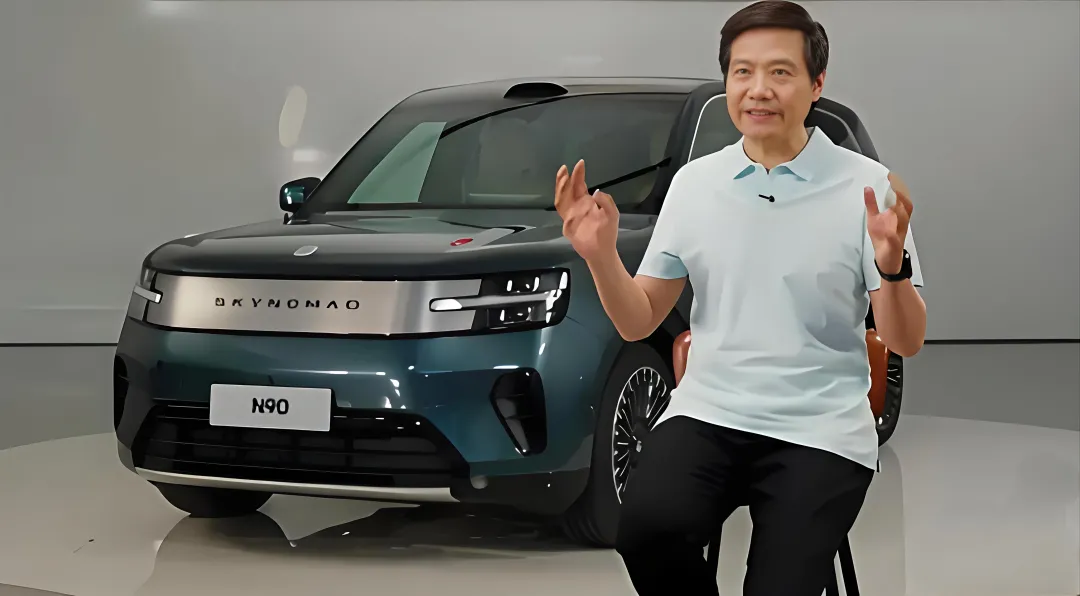
Image Source: Weibo
According to primary research conducted by several industry bloggers, feedback from retail stores, and data cross-verified by Goldman Sachs, a staggering statistic has emerged that is set to shake up the industry:
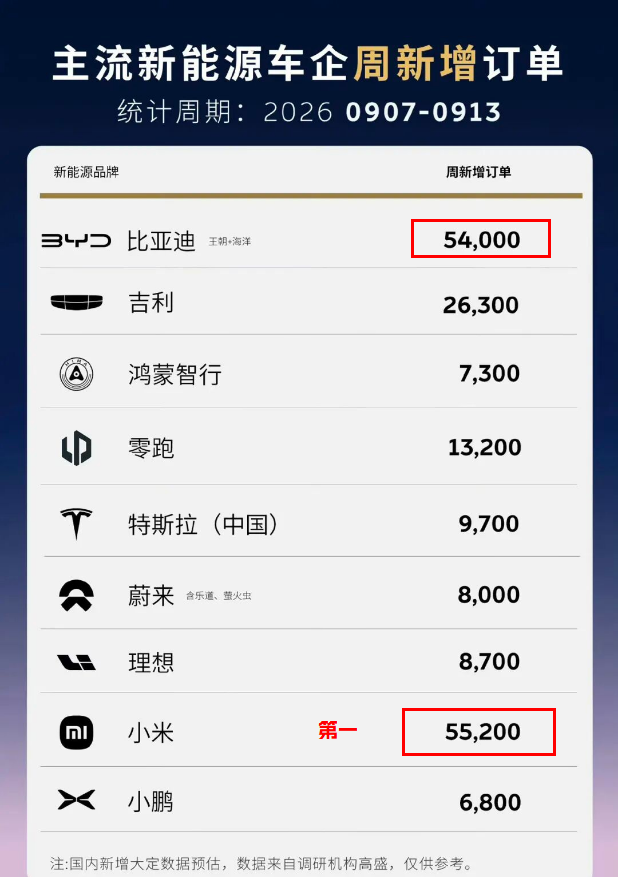 Image Source: Weibo; Data: Goldman Sachs
During Week 37 (September 7–September 13) in the new energy vehicle sector, Xiaomi Automobile secured 55,200 weekly order commitments, compared to BYD's 54,000. Additional data indicates that Xiaomi's new weekly orders soared to 47,750 units, while BYD (comprising the Wangchao and Ocean series) maintained its leading position with 57,000 orders. Nevertheless, Xiaomi Automobile achieved a personal best this week.
Key Point: These statistics are based not on easily cancellable small deposits or delivery figures but on irrevocable orders that reflect genuine purchase intent. The primary driver behind Xiaomi's resurgence is the newly launched Xiaomi Pengcheng N70/N90 series on September 7. Initially, many were skeptical about Xiaomi Automobile, believing its popularity would be fleeting. However, the order performance of the Pengcheng series has directly altered market expectations.
Blockbuster Launch: Pengcheng's First-Week Real Order Commitments Revealed
On the evening of September 7, Xiaomi unveiled four new Pengcheng models: N70 Pro (209,900 RMB), N70 Max (239,900 RMB), N90 Max (269,900 RMB), and N90 Max Explorer Edition (299,900 RMB). These models target the 200,000–300,000 RMB high-end family SUV segment, completing a crucial piece of Xiaomi Automobile's product matrix.
The new models generated immense excitement, with official announcements of over 10,000 order commitments within just four minutes of launch. Xiaomi's stocking strategy was evident—they prepared a substantial number of vehicles ready for immediate delivery. On September 12, the first batch of deliveries commenced in multiple cities nationwide, allowing customers to pick up their vehicles immediately upon launch and avoiding the long waiting times typically associated with new car releases.
Although Xiaomi has not yet released complete first-week order commitment data for the Pengcheng series, primary research data from the automotive community has begun to paint a clearer picture of true sales.
According to the weekly store report released by @Car Fans, Pengcheng has 499 stores nationwide, with each store securing 80–100 new weekly order commitments. This suggests that the overall first-week order commitments likely ranged between 40,000 and 50,000 units.
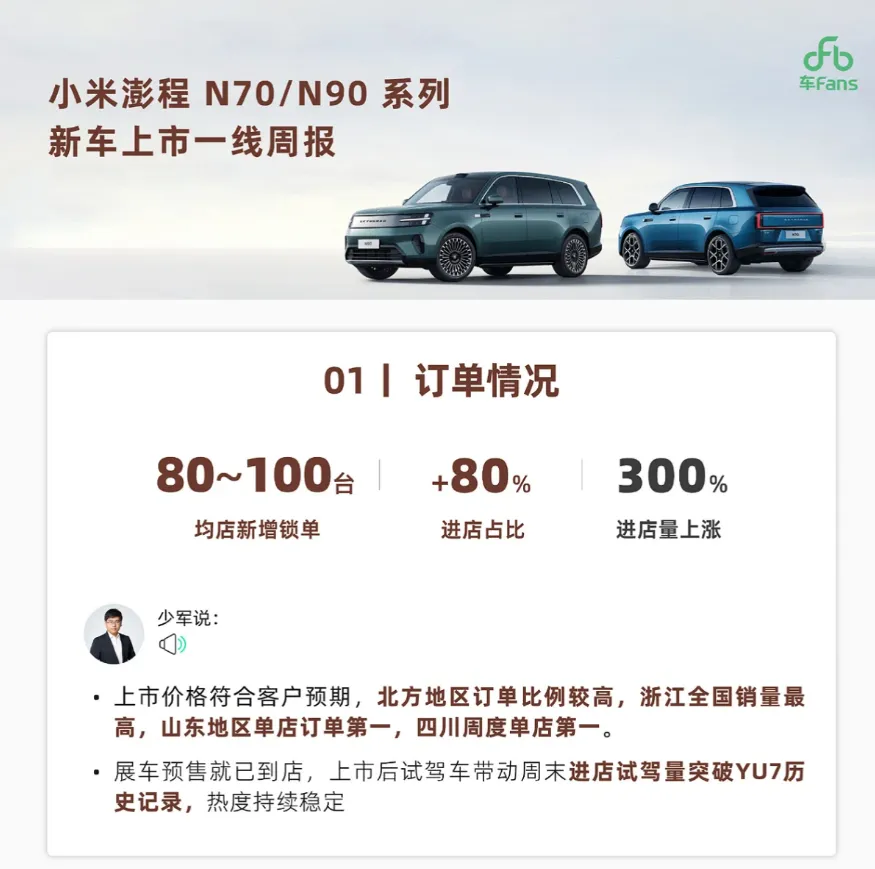
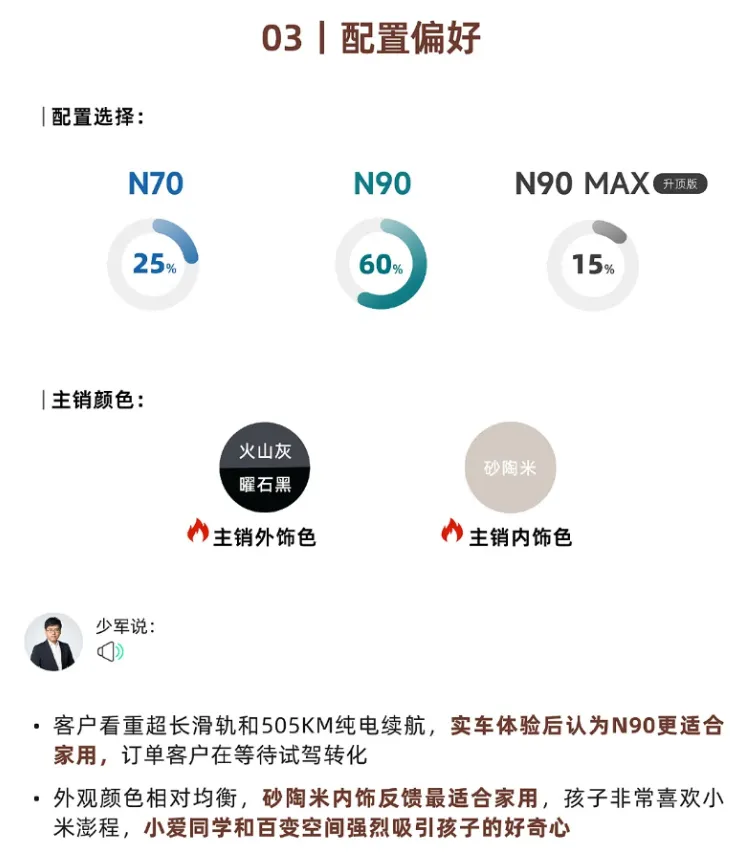
Image Source: Car FANS
The order structure is particularly noteworthy, fully reflecting the value of these orders: N70 series orders accounted for 25%, N90 regular versions 60%, and N90 Explorer Edition 15%. This means that over 75% of orders had an average vehicle price exceeding 270,000 RMB, indicating a strategy focused on high-end models rather than low-price volume sales, with a significant number of users willing to pay for premium versions.
Another set of weekly statistics from @New Energy Exploration Record corroborates the store data: Xiaomi Automobile secured a total of 47,750 orders in Week 37, a 635% surge from the previous week, with the Pengcheng series contributing approximately 40,000 units and the remaining orders coming from the SU7/YU7 models.
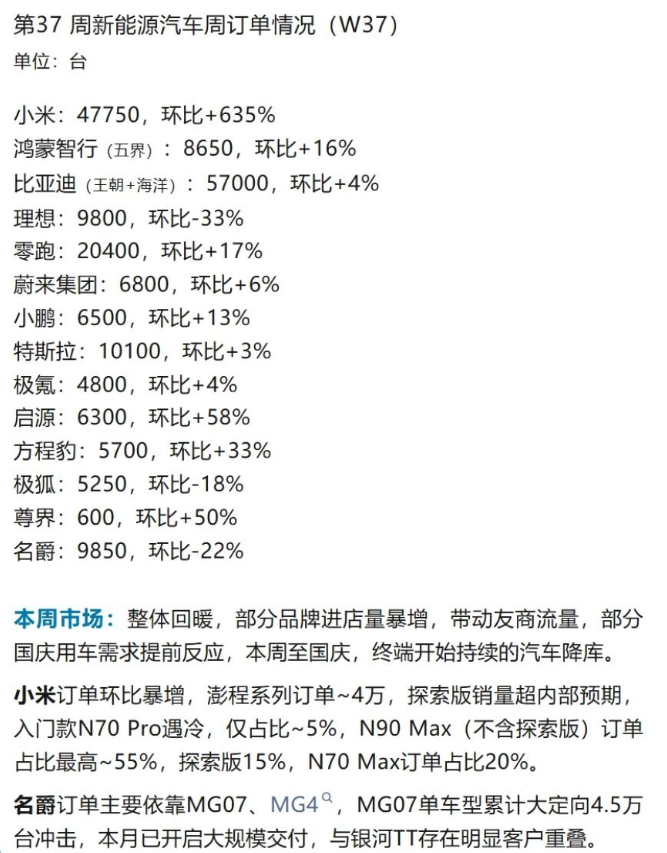 Image Source: Weibo
Breakdown of model order proportions: N90 Max (excluding Explorer Edition) accounted for 55%, N70 Max 20%, N90 Max Explorer Edition 15%, and the entry-level N70 Pro just 5%. It is clear that when choosing Pengcheng models, consumers prioritize high-end versions, confirming the success of Xiaomi Automobile's high-end strategy.
A Different Approach from SU7: Pengcheng's Long-Tail Effect Begins to Unfold
Xiaomi's SU7 and YU7 models target young consumers, leading to quick purchasing decisions and short-term explosive popularity. However, Pengcheng is positioned as a family SUV, targeting households that make car purchase decisions through careful comparison and family test drives. This results in a longer decision-making process and order releases not concentrated in the first launch week, giving it strong long-tail potential.
Industry influencer Sun Shaojun's terminal research shows that after Pengcheng's launch, test drive volumes at Xiaomi stores nationwide reached an all-time high, even surpassing the previously popular YU7. Currently, test drive vehicles are in short supply, with widespread waiting lines for test drives. Despite many potential customers not yet having test-driven the vehicles, securing over 40,000 order commitments in the first week already exceeds expectations.
Even more surprisingly, orders did not quickly decline after the initial surge in interest. From Monday to Wednesday of Week 38, Pengcheng secured nearly 10,000 new order commitments. With weekend customer traffic, second-week orders are expected to exceed 25,000 units.

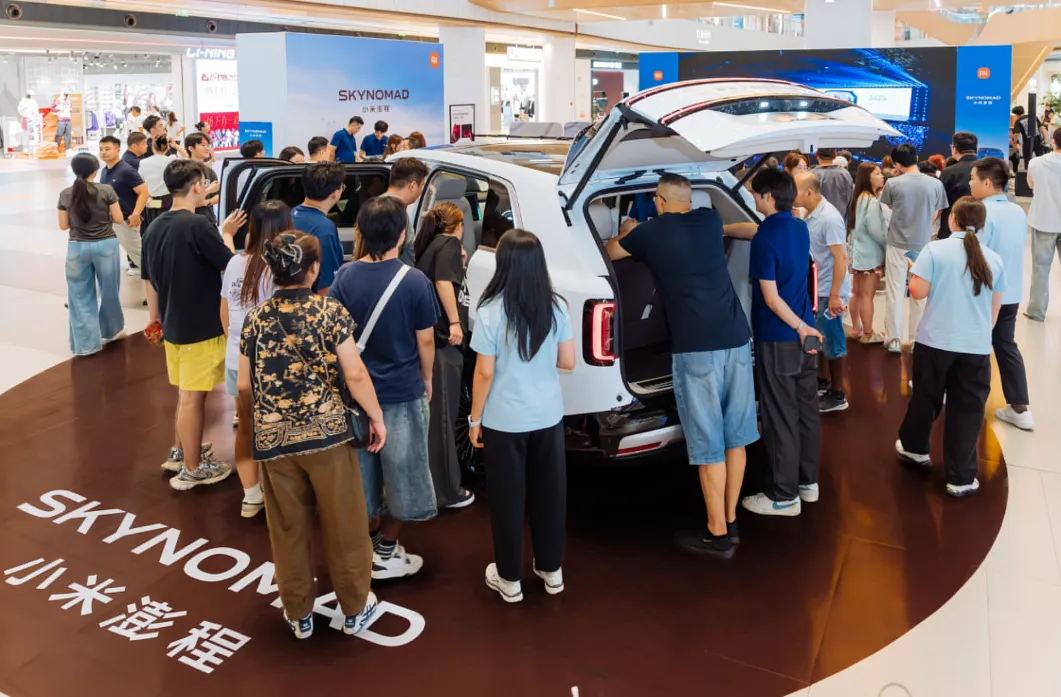
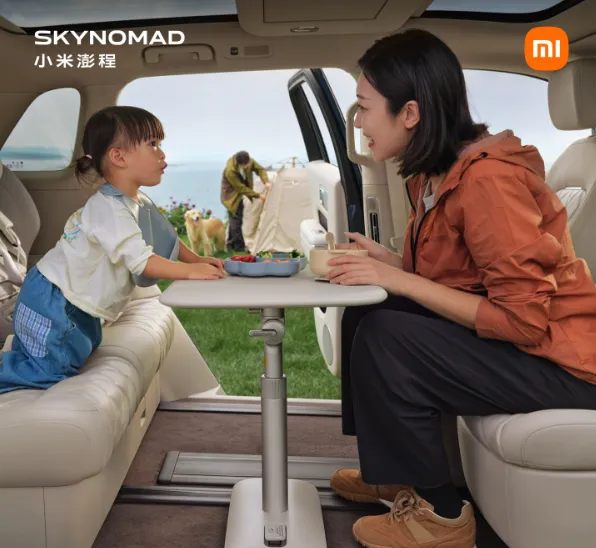 Image Source: Xiaomi Pengcheng Weibo
The initial sales period for Pengcheng lasts until October 7. Conservatively estimating, even if weekly orders halve sequentially, total order commitments during the initial sales period could still exceed 100,000 units. If combined with the peak in car purchases during National Day, total initial sales order commitments could potentially reach 120,000 units.
Long-term sales expectations remain equally optimistic, with Pengcheng's subsequent steady-state weekly orders expected to maintain around 15,000 units. Combined with the stable monthly orders of 30,000+ units from the SU7/YU7 models, Xiaomi Automobile's monthly new orders could stabilize at 50,000–60,000 units. This volume is sufficient to secure a solid third place in China's domestic new energy vehicle market, significantly outpacing second-tier new energy brands.
At this pace, Pengcheng's new orders in September could exceed 80,000 units. Combined with the SU7/YU7 models, Xiaomi's total new brand orders in September could surpass 100,000 units, a claim that is well-founded. As orders continue to convert into deliveries, Xiaomi is expected to steadily reach a monthly delivery volume of 50,000–60,000 units.
Five Major Foreign Investment Banks Recommend Buying: Xiaomi's Stock Price is Significantly Undervalued
The unexpectedly strong order performance of Pengcheng has made the capital market the first to sense a turning point. Previously, intense competition in the new energy vehicle industry, coupled with fluctuating sales rhythms, put long-term pressure on Xiaomi's Hong Kong-listed shares. However, with Pengcheng's hot sales, five major foreign investment banks—Morgan Stanley, Goldman Sachs, Citigroup, Merrill Lynch, and Bernstein—have collectively turned bullish, all giving buy ratings and simultaneously raising target prices.
Morgan Stanley: 33 HKD
Goldman Sachs: 39 HKD
Citigroup: 34 HKD
Merrill Lynch: 40 HKD
Bernstein: 43 HKD
On September 16, Xiaomi's Hong Kong-listed shares closed at 26.2 HKD. Based on the lowest target price of 33 HKD, the potential upside is 28%; at the highest target price of 43 HKD, the upside reaches as high as 66%.
From a fundamental perspective, Goldman Sachs provides earnings forecasts: Xiaomi's net profit is expected to reach 30.2 billion RMB in 2026 and 39.9 billion RMB in 2027. Compared to its current market capitalization of approximately 680 billion HKD, the 2026 price-to-earnings (PE) ratio is just 19 times, and the 2027 PE ratio drops to as low as 14 times, indicating an undervalued stock.
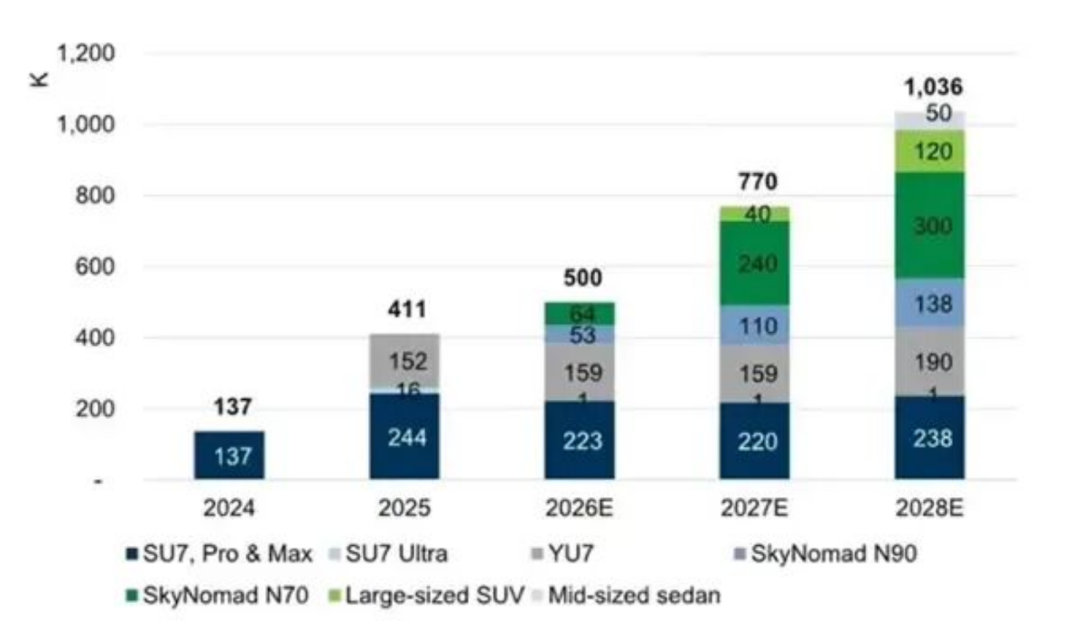
Goldman Sachs Predicts: Xiaomi Automobile's Deliveries to Exceed 1 Million Units by 2028
Many investors are concerned about Xiaomi's annual car sales target of 550,000 units. Data shows that from January to August, Xiaomi Automobile delivered a cumulative total of 246,500 units, leaving 300,000 units to be delivered in the remaining four months, averaging 75,000 units per month—a challenging task. The market generally expects full-year sales to likely fall within the 450,000–470,000 unit range, achieving about 85% of the target.
Although the annual target is unlikely to be met, this does not indicate weakening fundamentals. With Pengcheng's delivery ramp-up, Xiaomi's monthly deliveries of 50,000 units will become the norm, with some months even reaching 60,000+, strengthening the certainty of performance growth.
Not Just Selling Cars: Xiaomi's True Ambitions Lie in Physical AI and Overseas Markets
Many believe that the domestic new energy vehicle sector is already a zero-sum game, with Xiaomi merely joining the fray to compete on sales volume. This perspective underestimates Xiaomi's strategic ambitions.
For Xiaomi, automobiles are never the endpoint but rather the most crucial hardware carrier for implementing physical AI and embodied intelligence. Xiaomi is one of the few companies globally with a complete ecosystem encompassing smartphones, vehicles, and homes. Its technological layout—including the MiMO large model, Xuanjie self-developed chips, and humanoid robots—is entirely built around the era of physical AI.
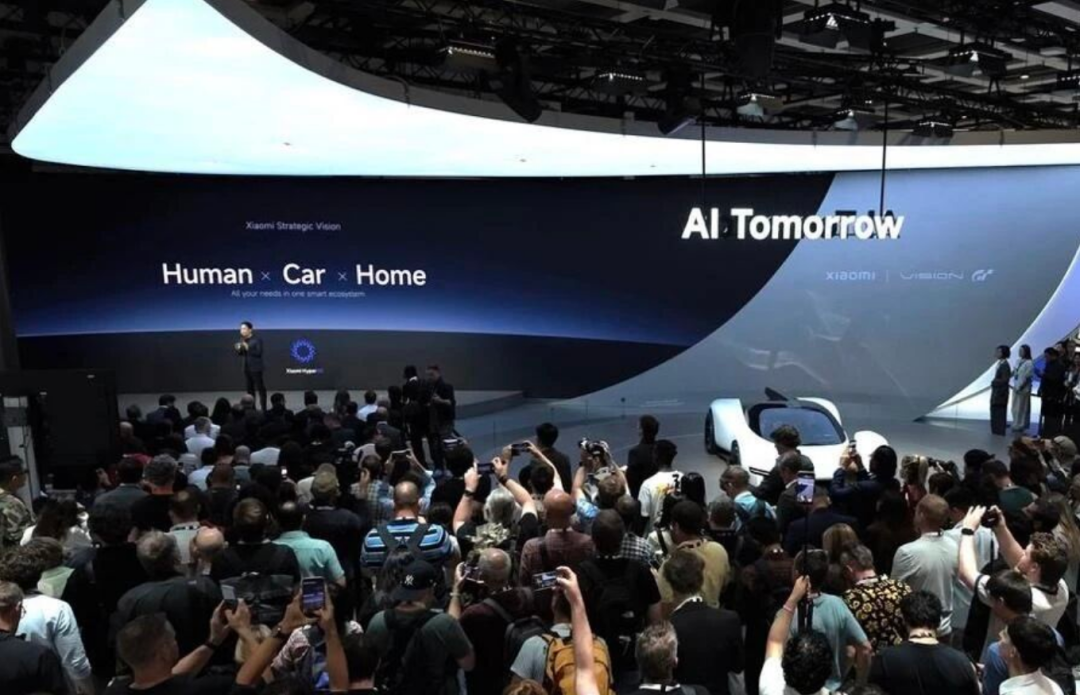
Xiaomi at Berlin IFA Exhibition. Image Source: Weibo
Simply put, the larger the scale of car sales, the more scenarios there are for iterating intelligent driving algorithms, AI large models, and chips. Focusing on boosting car sales at this stage is essentially about accumulating massive amounts of terminal data to pave the way for the subsequent implementation of the AI ecosystem. The market has not yet assigned a valuation to Xiaomi's AI business, meaning there is significant potential for valuation reassessment once the AI business delivers results.
Overseas markets represent Xiaomi Automobile's second growth engine. At the Berlin IFA Exhibition on September 3, Lu Weibing announced that Xiaomi Automobile would enter the European market in the second half of 2027, starting with Germany, and has already signed cooperation memoranda with eight leading German dealers to establish a local sales network.
Currently, Xiaomi Automobile is generating significant buzz in the European market, with overseas media evaluating that Xiaomi's electric vehicles represent a significant advancement over local traditional fuel vehicles. Although entering overseas markets will face tariff pressures, referencing BYD's overseas market expansion experience, Xiaomi still has opportunities to establish a foothold in Europe by leveraging its intelligence and product strength.
In the long run, relying on a complete model matrix of SU7, YU7, N70, and N90, combined with a human-vehicle-home ecosystem and AI large models, Xiaomi Automobile's overseas expansion will not merely involve selling hardware but exporting an entire intelligent ecosystem.
Final Thoughts
From being questioned when venturing into car manufacturing to achieving fame with the SU7 and now securing the high-end family market with Pengcheng, even surpassing BYD in weekly orders at one point, Xiaomi Automobile has forcefully broken into the top tier of China's domestic new energy vehicle market in just over a year.
Xiaomi has avoided engaging in low-price price wars, instead maintaining an average vehicle price above 200,000 RMB. With a long-term steady monthly sales volume of 50,000–60,000 units, it has already reached a level comparable to BBA's peak performance in the Chinese market. As the model matrix continues to expand, the future imagination space is even greater.
In the short term, the continuous release of Pengcheng orders and delivery ramp-up will drive Xiaomi's performance recovery, with its Hong Kong-listed stock valuation expected to see a rebound. In the long term, the implementation of the AI ecosystem combined with the opening of overseas markets will enable Xiaomi to break free from the zero-sum competition among traditional automakers and enter a new growth cycle.
Xiaomi, which has been underestimated by the market, has reached a turning point.
Disclaimer: This article is solely a commentary by Dachang Finance and does not constitute any investment advice. The enterprise data and regulatory events mentioned herein are derived from publicly available information and are for reference only, with the official releases prevailing. Image sources are from the internet; if there are any copyright issues, please contact us for removal.
-
![]()
Shocking News: Xiaomi Clinches 'Top Spot in Weekly Orders,' Outpacing BYD? Pengcheng Order Figures Unveiled
-
![]()
China’s Space Sector Hits Stride in September: 7 Launches and 50+ Satellites Deployed in 20 Days
-
![]()
Why Does the Intelligent Driving Sector Strive for Larger Cloud Models While Shrinking On-Board Models?
-
![]()
Is It Really Over? Huawei Pledges Ongoing Support for AITO! New MPVs, Sedans, and More on the Horizon
-
Is There Genuine ‘Overcapacity’ in China’s New Energy Vehicle Sector? A Closer Look at Three Misunderstood Aspects
-
![]()
ZTE’s New Doubao Phone: Playing It Safe in the AI Race
-
ZTE’s New Doubao Phone: A More Cautious Approach
-
![]()
Samsung, Spurred by Apple, Steps Up Its Game, with LY Technology Reaping the Greatest Benefits