Reassessment of Three Key Values: Seres Presses Ahead, the Market Holds the Key
 09/21 2026
 527
527
Works by Qiaofu
People, Vehicles, Rivers, and Lakes (The Automotive World)
Together, Witnessing the Ascendancy of China's Automotive Industry
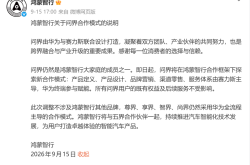
On September 15th, Seres assumed full control over the five pivotal aspects of AITO's operations: product definition, design, brand marketing, channel retail, and service system. Huawei Consumer Business Group transitioned from 'leading the entire process' to a role of 'participation and empowerment'.
Seres has launched its initiative, and there's no looking back.
The reassessment of three major values has commenced, and the market is already yielding responses.
The first reassessment stems from the capital market.
On the announcement day, Seres' A-shares closed 5.09% lower, while its Hong Kong shares ended 6.12% down.
On September 30, 2025, Seres' stock price peaked at 173 yuan. However, by September 15, 2026, it had closed 5.09% lower, with its market capitalization dwindling to 79.1 billion yuan, marking a more than 70% decline from its zenith.
This leads us to a pivotal question: Is Huawei a liability or a catalyst for Seres?
Without Huawei, AITO would not exist. From the HarmonyOS cockpit, Qiankun Intelligent Driving, Huawei stores, to Huawei's endorsement—AITO achieved 1 million units in 46 months, with the M9's average transaction price surpassing 610,000 yuan, encroaching upon BBA's market share. This exemplifies the growth-driving aspect.
Yet, the figures speak volumes. For each vehicle sold by Seres, it pays Huawei a 2% technology licensing fee and an 8% channel service fee based on the vehicle's selling price, totaling around 10%. With AITO's average transaction price hovering around 390,000 yuan, approximately 39,000 yuan per vehicle goes to Huawei. Over four years, cumulative payments exceeded 111.3 billion yuan, accounting for 29% of the revenue during the same period, while its net profit after deducting non-recurring items stood at only 1.482 billion yuan. For every vehicle sold, Huawei reaps nearly 40,000 yuan, while Seres earns a mere fraction of that.
Under the new model, the basis for the 8% channel fee vanishes, potentially freeing up about 3.5 billion yuan in annual cost savings. However, the capital market remained unimpressed. The reason is straightforward: The saved channel fees were the price for Huawei's channel prowess. The traffic, brand premium, and sales conversion capabilities of Huawei stores cannot be replicated by Seres' self-built channels. Costs are saved, but what about sales?
Huawei serves as both a growth catalyst for Seres and the primary reason it has struggled to become self-reliant. Now that the support has been withdrawn, how the market will unfold in the later stages warrants continuous observation.
The second reassessment arises from the consumer market.
The core question is: Do consumers purchase AITO because of Huawei or Seres?
In recent years, selling cars in Huawei stores was AITO's most distinctive channel advantage. When consumers entered a Huawei store, they not only saw a car but also felt a sense of belonging to the entire HarmonyOS ecosystem and the security of the Huawei brand.
After the Huawei factor diminishes, who will be deterred?
Those 'loyal Huawei fans' will be the first to be impacted. They bought AITO because they trusted Huawei. When the HUAWEI branding is no longer prominent, this group is likely to drift away. The remaining users may appear stable, but competitors will not remain idle. Qiankun Intelligent Driving and the HarmonyOS cockpit will still be featured in AITO, but they will also be available in an increasing number of models from Avatr, Shenlan, Voyah, and others. When 'Huawei Inside' is no longer exclusive, how much of AITO's differentiated advantage remains?
The third reassessment comes from the supply chain.
The core question is: Will the quality of the supply chain deteriorate after Huawei steps back from its leading role?
It is widely acknowledged that Huawei imposes extremely stringent requirements on its suppliers. Under the Smart Selection vehicle model, the supplier selection rights rested with Huawei. Now, with the responsibility reverting to Seres, the market naturally inquires: Can Seres manage this supply chain?
Under the Smart Selection vehicle model, the supplier selection rights were held by Huawei, with Seres primarily responsible for manufacturing and delivery.
Seres is not starting from scratch. Its Tier 1 suppliers have been streamlined from 300 to 100, including 20 world-class suppliers.
However, there exists a capability gap between 'co-building' and 'independent management.' Previously, quality control was rigorously enforced by Huawei. Now, Seres must independently manage suppliers and control costs. What Huawei left behind is a set of standards, not a team. Whether these standards can be effectively implemented depends on Seres itself.
The triple reassessments converge on the same question.
The capital market examines whether Huawei is a liability or a catalyst—the market has spoken, and the initial reaction has been a decline. The consumer market scrutinizes who consumers are truly buying for—after the Huawei label fades, how long can AITO's brand premium endure? The supply chain ponders whether Seres can uphold and implement Huawei's quality control standards.
Opinions diverge on the answers to these three questions.
Seres has reclaimed product definition rights, channel leadership, and supplier selection rights from Huawei. However, reclaiming them is one thing; utilizing them effectively is another. Previously, with Huawei taking the lead, Seres could remain in the background and build cars. Now, with Huawei stepping back to an empowering role, Seres must confront the market, consumers, and the supply chain independently.
The market will provide the answer. But perhaps the answer is already evident.
-
![]()
Evergrande Auto, a Company Without Car Production, Posts 500,000 Yuan Gross Profit in Six Months
-
![]()
Facing Fierce Competition, Pricing Emerges as the Top Challenge for the Brand-New Hongqi H7
-
![]()
For Seres, Enduring Short-Term Pain Is Preferable to Long-Term Misery
-
Why Is Assessing Xiaomi's Business in India Increasingly Challenging?
-
Copper Prices Plunge: Unraveling the Logic Behind AI-Driven Metals
-
Reassessment of Three Key Values: Seres Presses Ahead, the Market Holds the Key
-
![]()
AITO Strikes Out on Its Own: China’s Auto Industry Steps into the Post-Huawei Era
-
![]()
7 Sets of Data Unveiling 70 Years of China's Auto Industry | Cover Story: Striving for 70 Years (Part XIII)