T-Chain Choices Amid Auto Industry Intensification: From Car Manufacturing to Optimus Robots—Not a Dimensionality Reduction Strike
 09/22 2026
 372
372
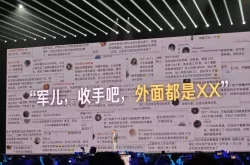
In 2026, China's auto industry witnessed many unprecedented signals. After three years of price wars without a clear winner, three landmark events emerged: Xiaomi's public opinion backlash, merger rumors between FAW and GAC, and Huawei's retreat behind AITO. Most commentators view these as purely automotive industry events.
However, Xiaozhi wants to shift perspective today: the ripples from these three events will ultimately reach a group of companies seemingly unrelated to automobiles but deeply interconnected—especially those 'T-chain overlapping manufacturers' straddling both Tesla's automotive supply chain and Optimus robot supply chain.
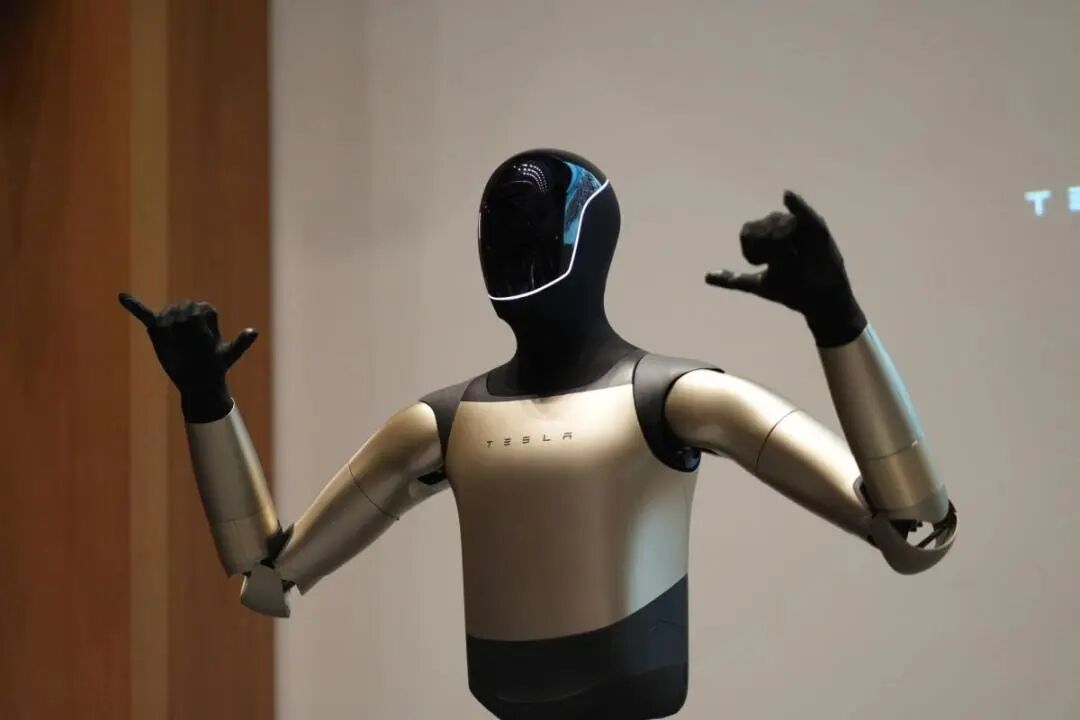
For them, does automotive intensification bring opportunities, reversals, or crises? This article calculates the answer.
Three Signals: Where Does the Auto Industry Stand? Signal 1: Xiaomi's Public Opinion Backlash—The Marginal Turning Point of Traffic-Driven Strategies
From late last year to the first half of this year, Xiaomi's automotive public opinion environment took a sharp turn. From the traffic myth of the SU7 series to trust crises triggered by accidents, then to marketing rhetoric backfiring, Xiaomi underwent a textbook-level 'high-traffic, high-risk' stress test.
For the auto industry itself, this event signifies: in a capital-intensive, safety-sensitive, long-decision-cycle industry like automobiles, the marginal returns of traffic-driven strategies are rapidly declining. Smartphones can create hype through product launches, but automobiles cannot—a single car accident inflicts far greater brand damage than exposure gains from a product launch.

For component manufacturers, this signal is more subtle but critical: when 'marketing competition' loses effectiveness, OEM competition retreats to the only remaining battleground—cost. The first cost-cutting move by OEMs always targets suppliers' annual price reductions. The price war hasn't ended; it has merely shifted battlefields from 4S stores and product launches to component procurement negotiations.
Signal 2: FAW-GAC Merger—Capacity Clearance During Consolidation Phase
The merger integration news between FAW and GAC (as of press time, official announcements await confirmation from authoritative sources; please refer to SASAC and both parties' disclosures) would represent the largest restructuring in China's automotive SOE landscape in a decade if realized.
Its background needs little elaboration: overcapacity, bleeding price wars, and massive investments in new energy transformation. The merger's essence is consolidation of existing assets—the industry shifting from 'expansion in growth markets' to 'survival in mature markets.'
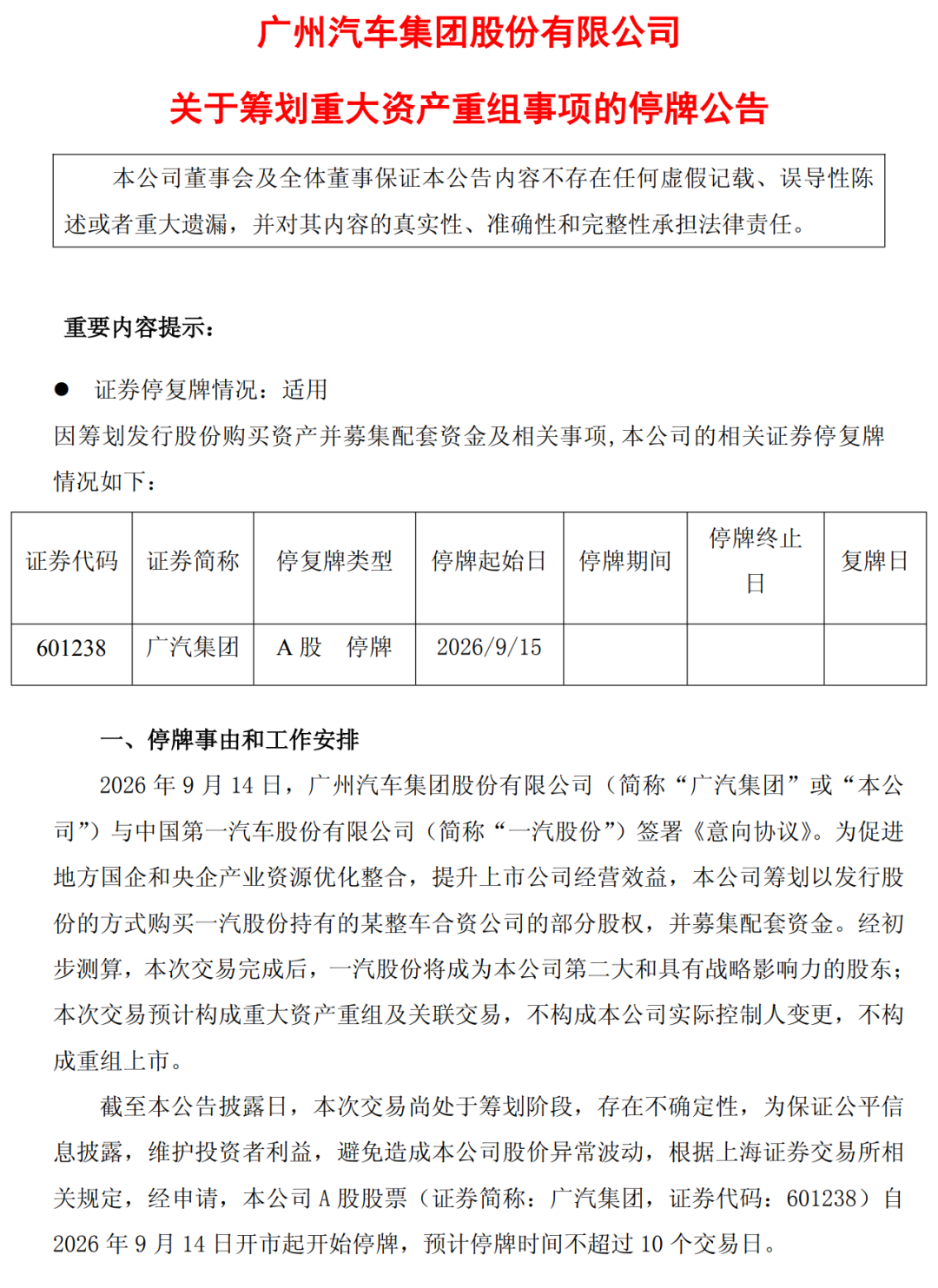
A commonly overlooked implication: OEM mergers mean supplier list consolidation. The two groups previously maintained separate component systems, but post-merger, supplier centralization becomes inevitable—retaining only the lowest-cost, most deeply tied one or two suppliers for each component. For excluded manufacturers, orders drop to zero; for selected ones, bargaining power further declines as customers become fewer but larger.
This exemplifies automotive intensification's harshest reality: it compresses not only profits but also the 'customer count' itself.
Signal 3: AITO and Huawei—Redefining Supplier Logic
Huawei's transfer of the AITO brand to Seres and its retreat behind the scenes (model details subject to both parties' announcements) appears as a trademark issue superficially but in essence (substantively) represents a Periodic Closing (phased conclusion) of the 'soul ownership' debate: automakers regain dominance while Huawei returns to a supplier role—albeit the strongest supplier in history.
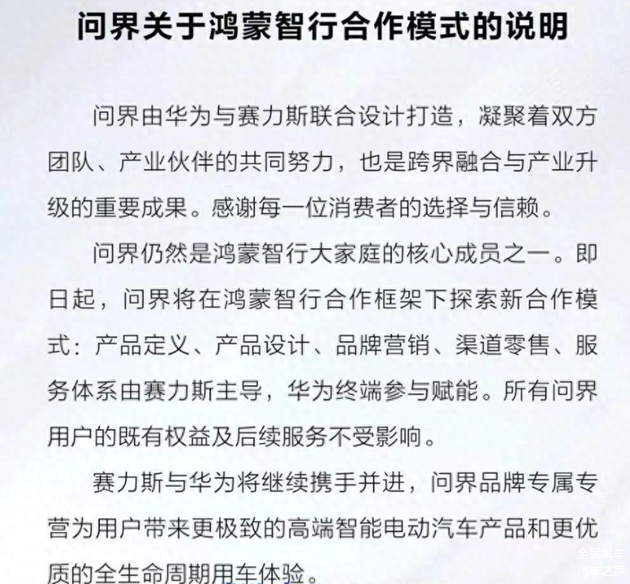
Its industry-wide significance lies in this: if even Huawei, with its technological dominance, cannot secure a primary position as a 'technology partner' in Vehicle brand (OEM brands), other suppliers will face even more marginalized roles. The automotive value chain's power structure is reconfirmed: OEMs are the brain, components are the body—no matter how strong the body, it remains just the body.
Combining these three signals, the conclusion emerges:
Competition retreats to cost wars → Supplier profits face sustained pressure;
Industry enters consolidation phase → Supplier customer counts decline;
OEM power strengthens → Supplier bargaining power hits a clear ceiling.
The automotive supply chain business is transforming from 'growth pains' to 'survival anxiety.' Anxious leading manufacturers are nearly simultaneously looking toward the same door—robotics.
The Transmission Ledger: How Intensification 'Squeezes' Out Robotics Motivations
Why robotics? Why T-chain manufacturers? Let's calculate three accounts.
Account 1: Financial Pressure
Under price wars, OEMs' annual price reduction demands on suppliers typically range from 5%-10%. Reviewing mid-year reports from leading manufacturers like Tuopu Group, Sanhua Intelligent, and Joyson Electronics reveals a common structure: automotive business contributes most revenue but sees continuously thinning margins; robotics business contributes little revenue but shows higher growth and margin potential. See previous mid-year analyses: Tuopu Group Mid-Year Report: Small-Volume Delivery of Robot Actuators—Chain Signals Behind 14 Million Revenue; Sanhua Intelligent Mid-Year Report: Mass Delivery of Robot Actuators—Third Growth Curve Activated; Joyson Electronics Mid-Year Report: Automotive Electronics Leader 'Transferring' Capabilities to Robotics.
The automotive business is sliding from 'profit center' to 'cash flow business'—sustaining production lines and teams but no longer driving growth. Capital market valuation logic is even more direct: automotive business receives manufacturing valuations (15-25x PE), while robotics business receives growth stock valuations (50x+ PE). For the same company, engineers, and production lines, valuation differences reach two to threefold simply due to downstream differences. Shareholders will vote with their feet; management has no choice.
Account 2: Excess Capacity
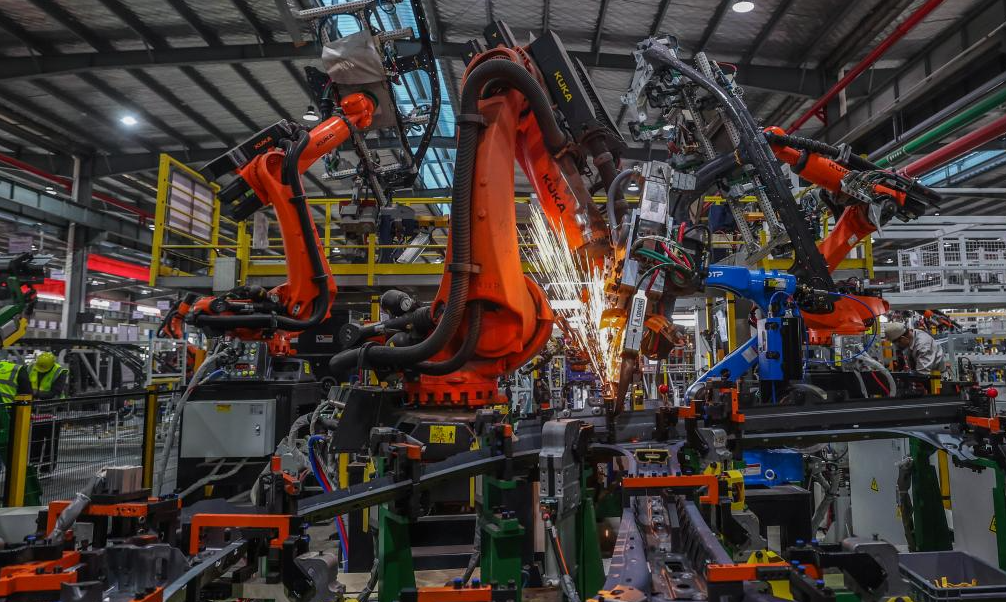
China's automotive component capacity was built for global demand. Intensification has reduced capacity utilization, leaving massive precision manufacturing capabilities—five-axis machining, precision grinding, automated assembly lines, quality systems—operating at 'half-capacity.'
Meanwhile, if Optimus follows Musk's roadmap toward million-unit production, what does it need? Precisely these: large-scale, highly consistent, low-cost precision manufacturing capabilities. Only China's automotive supply chain can deliver this globally, dominating in scale, cost, and responsiveness.
In other words: automotive intensification has prepaid the sunk costs for robotics industry capacity building. This represents a rare temporal dividend in industrial history.
Account 3: Customer Structure
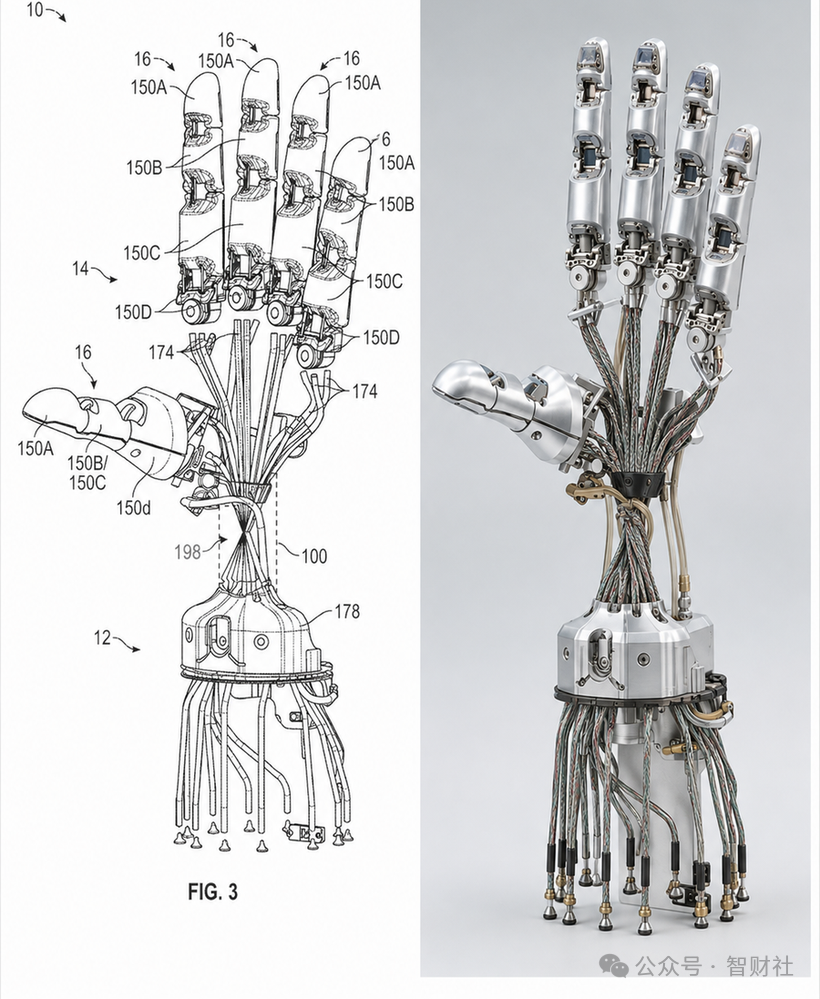
T-chain overlapping manufacturers hold a unique ticket: trusted supplier status for Tesla's automotive business. Actuator assemblies, planetary roller screws, coreless motors, IMUs, harmonic reducers—in Optimus's core BOM, many components share precision manufacturing capabilities with Tesla's automotive supply chain. When selecting robotics suppliers, Tesla naturally prioritizes manufacturers with years of quality-accident-free deliveries to its automotive division.
However, Xiaozhi must pour cold water here—this article's most emphasized counter-consensus view:
The market claims 'automotive supply chains delivering dimensionality reduction strikes against robotics,' but Xiaozhi argues the opposite—dimensionality reduction strikes are a myth; dimensionality reduction traps represent the real risk.
Capability Layer: Why 'Can Build Cars' ≠ 'Can Build Robots'
The automotive supply chain's core competence lies in large-scale, low-cost, high-consistency production; humanoid robots currently demand small-batch, rapid-iteration, customized solutions. These represent nearly opposite organizational capabilities, specifically three major incompatibilities:
Incompatibility 1: Batch Logic
A single part for an automotive model may require millions of units annually, allowing extremely low costs through mold amortization—this forms the automotive supply chain's foundation. However, a robot's current annual demand for a single part may only reach thousands to tens of thousands of units.
Quoting automotive cost models for robotics orders would make prices prohibitively high; retrofitting production lines for robotics orders would reveal insufficient volume to sustain operations. This explains why planetary roller screw prices remain high—not due to inability to manufacture, but because no one wants to rebuild cost structures for 'small orders.' Whoever first figures out how to profit during 'small-batch phases' will deserve Scale stage (scale-up phase) orders.
Incompatibility 2: Iteration Logic
Automotive components, once awarded, remain unchanged for five years, allowing suppliers to confidently expand production. Robot bodies iterate three times annually: Tesla's actuator designs have already undergone multiple iterations, from rotary to linear actuator scheme adjustments that left some early T-chain manufacturers behind.
Manufacturers accustomed to the 18-24 month 'receive drawings → prototype → award → mass production' rhythm must rebuild 3-6 month rapid R&D collaboration capabilities. In robotics, awarding is not the finish line but the starting point for a new iteration cycle.
Incompatibility 3: Value Chain Position
Automotive Tier 1s are 'the defined': Tesla provides drawings; you execute. In robotics, even Tesla is still exploring, as are Figure, Unitree, and Zhipu. Customers need not contract manufacturers but co-development partners—suppliers who can participate in scheme discussions and provide engineering suggestions before drawings are finalized.
Shifting from 'execution per drawings' to 'joint development' requires organizational capability migration, not just equipment purchases. This directly responds to Signal 3: in automobiles, suppliers are accustomed to being the body; in robotics, the most valuable suppliers contribute part of the brain.
Judgment Layer: Three Types of Manufacturers, Three Fates
No blanket conclusions. Xiaozhi categorizes T-chain overlapping manufacturers into three types with separate prognoses:
Type 1: Genuine Transformers—Opportunities
Characteristics: Separate robotics business units established, robotics clients beyond Tesla (Figure, Unitree, Zhipu—at least one partnership secured), self-developed patents in screw/actuator/dexterous hand segments.
They benefit from temporal dividends: automotive intensification has covered their capacity sunk costs, while the robotics industry's undefined state provides window for strategic positioning. By around 2027 when the industry enters scale production, these players will become the 'CATLs' of the new supply chain.
Type 2: Pseudo-T-Chain Players—Crisis
Characteristics: Rely solely on 'Tesla automotive supplier' status for speculative funding, with negligible robotics order proportions.
Every Optimus product launch triggers 'robotics-driven stock rallies' in A-shares. Xiaozhi provides readers with a 'Three Order Questions' litmus test: Has a Designated notification (award notification) been received? Has small-batch delivery occurred? What percentage of revenue comes from robotics? Manufacturers failing these questions see stock gains unrelated to industrial logic—those are speculative games, not trends. These manufacturers face not opportunities but valuation corrections when tides recede.
Type 3: Single-Bound Players—Reversal Risks
Characteristics: Deeply tied to a single automaker for automotive business while betting exclusively on Optimus for robotics.
Automotive intensification just demonstrated the risks of single-customer dependence over a full year: annual price reductions, order cancellations, supplier consolidation. Optimus's history of delays is well-documented, with industry consensus placing scalable production after 2027. Until then, these manufacturers may face 'dual drought periods': automotive business under pressure, robotics business not yet scaled. Their only reversal key: diversify customer bases before the drought ends.
Returning to the Embodied AI Perspective
Over two decades ago, Chinese automotive component manufacturers rose by Undertake global industrial transfer (inheriting global industrial transfer), spending 20 years welding 'Made in China' into every joint venture vehicle. Today, the humanoid robot supply chain may represent history's first race where Chinese manufacturers stand on equal footing with overseas rivals while holding production capacity (capacity) and Engineer (engineer) trump cards.
In this sense, automotive intensification is not robotics' enemy but its maternity ward—price wars extrude (squeeze out) capacity, profit pressures force transformation motivations, and Tesla-validated manufacturing systems serve as midwives for this industry.
But not all newborns emerge healthy. Genuine transformers will receive tickets to the new era; pseudo-T-chain players will merely experience valuation illusions.
Technology determines whether robots can enter the real world; supply chains determine whether robots can become affordable enough for households worldwide—and this precisely represents where the global robotics industry most needs China's automotive supply chain.
Xiaozhi asserts: intensification eliminates weak players in the automotive industry but pushes its strongest survivors to queue at robotics' door.
#TeslaOptimus #EmbodiedAISupplyChain #AutoComponentsTransformation
Note: This article synthesizes public information sources as of September 21, 2026. Industry predictions and profitability judgments involve uncertainties and do not constitute investment advice.
Follow "Zhicaishe" to keep up with the iterations of embodied AI technology and capital trends
-
![]()
Xiaomi SU7 Tops Sales Among "Peer Competitors": Are the "13 Challengers" No Match?
-
![]()
T-Chain Choices Amid Auto Industry Intensification: From Car Manufacturing to Optimus Robots—Not a Dimensionality Reduction Strike
-
![]()
Mysterious New Model Cracks 100+ World-Class Problems in 24 Days! OpenAI Unveils Mathematics and AI Advisory Board
-
![]()
vivo X500 Pro Imaging Professional Review: Strong Telephoto, Powerful Video, Enhancing Imaging Dominance with High Output Rate
-
![]()
Practical Testing of Doubao AI for Work: Multimodal Video Generation Provides Differentiated Advantages for Office Scenarios, Strong in Structured Tasks
-
Why Are Chinese Cybersecurity Stocks Still Falling Despite Zhipu Securing 1 Billion Yuan in Orders?
-
The ‘Korean Bentley’ in Beijing, Shanghai, and Guangzhou Stores: Hanging On by a Thread
-
Corporate Splurge on AI Box