Is Volvo Engaged in a 'High-Stakes Game'?
 09/23 2026
 479
479
Lead
Introduction
Recently, Volvo has been making a series of strategic moves, but the pressing question remains: when will these efforts start to pay off?
After two years of evolution, as we enter 2026, traditional luxury brands have come to the realization that their old strategies are no longer effective in China. A notable characteristic of executive changes in the Chinese regions of brands such as BBA (BMW, Mercedes-Benz, Audi) is that, while traditional business operations persist, they have initiated sweeping adjustments in response to the electric transformation.
Ultimately, the rapid downturn in the market has directly impacted their core interests, and without making changes, it will truly be too late.
This isn't just a challenge for BBA; this year is also pivotal for Volvo as it approaches its centennial anniversary. As changing consumer trends impact Volvo's established practices, reform is not optional but a necessary path to survival.
Since last year, Volvo has experienced more intense growing pains than anticipated. Especially as the entire industry is passively affected by the aggressive rise of Chinese automakers, each performance report highlights Volvo's precarious situation. Maintaining a calm and composed attitude amidst these changes is becoming increasingly challenging.
During this period, affected by external factors such as tariffs, the global market performance of traditional luxury brands has already diverged. Even in the U.S., a market not particularly focused on automotive innovation, their electric products seem to struggle to win over American consumers. The situation is even tougher in China; achieving success within the sphere of influence of Chinese automakers is no easy feat.
Last year, Volvo repeatedly mentioned that, in the electric vehicle market, the impact of delayed EX90 deliveries was hard to mitigate, leading to decreased profitability for the EX90 and, consequently, the ES90 over their lifecycles. This year, regardless, reality will demand that Volvo present new solutions.
In other words, although in its new product planning, the EX60, as the most crucial vehicle in Volvo's transformation, shoulders the sales burden of this new round of Volvo's electrification, regarding future development trends, Volvo must, to completely escape its predicament, not only clarify externally what it cannot and should not do but also 100% determine a strategy that truly aligns with the industry's evolutionary pace.
Facing the road ahead, re-evaluating the importance of the Chinese market is one aspect; on the other hand, standing at the forefront of corporate transformation, should Volvo reconsider its past logic of thinking it is 'the only sober one among the drunk' and adapt to this era of drastic changes and uncertain directions?
01 Can 'People' Overcome All?
Recently, there has been no shortage of news about Volvo. Whether in China or globally, this Nordic company in the midst of transformation is once again undergoing profound changes.
The success or failure of corporate development always hinges on 'people'.
When the industry is thriving, no one thinks an individual within the company can make much difference. The metaphor 'a pig can fly if it stands in the right wind' is what most people come up with. But times have changed; the market is evolving, consumers are changing, and as a link in the chain, which automaker dares to say they will work according to their own whims?
With Yuan Xiaolin's resignation, leadership of Volvo Greater China was handed over to Duan Jianjun, who previously led Beijing Mercedes-Benz to success. Subsequently, when He Kuo replaced Yu Kexin as President of Volvo Car Greater China Sales Company, the purpose was clear.
In China, Volvo needs a thorough reform. The extensive changes in top personnel correspond to the direction of Volvo's future strategy implementation in China.
Currently, internal adjustments at Volvo continue, but from an outsider's perspective, these changes have come at a very opportune time. External recruitment means Volvo can break free from past rigid thinking and, to a certain extent, consider the path forward from a completely new angle.
Over the past year, Volvo has been active in China, from fully launching electrified new vehicles in the Chinese market to introducing new products like the XC70 with a strong Chinese flavor, and even engaging in price wars. All these efforts aim to boost Volvo's sales in China and avoid being forgotten by consumers due to a rapid decline in market share.
However, it is clear that the troubles faced by traditional brands cannot be eliminated through traditional means of change.
Entering 2026, not just for Volvo but for all traditional companies, the role of price wars has not only started to weaken but has also gradually cast a shadow over brand image. While Volkswagen and Toyota are forced to continue following suit out of necessity, for luxury brands, this approach, which treats symptoms rather than root causes, is at best a temporary fix and not suitable for long-term implementation.
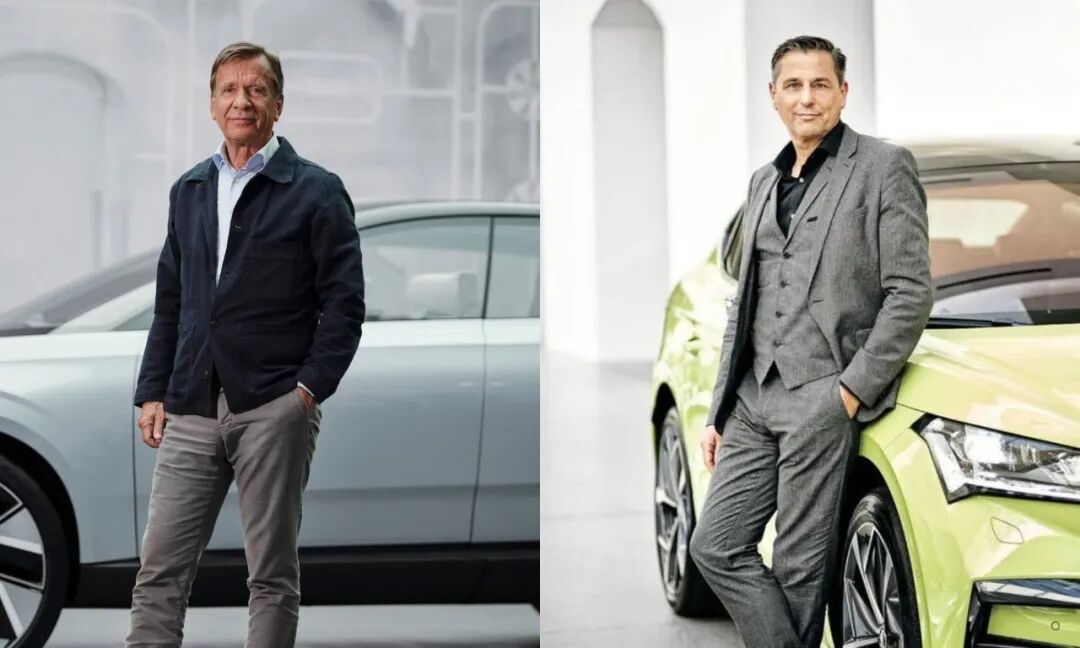
Like the Chinese market, perhaps Volvo has also seen this trend globally. When Volvo decided to select a new successor as its current CEO Hakan Samuelsson approaches retirement, it aimed to inject fresh blood into Volvo and steer it away from its past development framework.
Looking at the new CEO's background, Klaus Zellmer, who succeeded Hakan Samuelsson, previously led Skoda to set profit records and rise to second place in European market sales. Essentially, this signals to the outside world that despite the different backgrounds and target markets of Skoda and Volvo, this difference may be suitable for the current Volvo, which is under attack from all sides.
Yes, for Volvo, this CEO change is already the third since 2022. Ultimately, Volvo's current market performance and electric transformation are far from excellent, and this external recruitment can be seen as an emergency measure. Moreover, if the new generation of products fails to support sales for an extended period, the CEO change will only be the first step in reform.
Volvo in 2026 will certainly not be the same as the Volvo that was once at the mercy of the Ford system, but harsh realities still exist.
All the adjustments Volvo has made during this period, besides injecting fresh blood into the company, are most importantly aimed at truly propelling the company onto a fast track of development from the source, keeping pace with the development rhythm of the new era, rather than drifting with the tide and changing for the sake of change.
02 China Doesn't Want 'Patchwork' Renewal
Previously, at the 2026 strategy announcement, Volvo announced its plan to maintain strong cash flow while achieving an EBIT margin of over 8%. In terms of production capacity, it will focus from the original seven factories to five, with Ghent and Chengdu factories used for contract manufacturing. By 2030, it will launch 13 new models to revitalize its current product matrix.
Not only that, Volvo decided to focus the research, development, production, and sales of six of these models in China, using Geely's EEA architecture to create a clear distinction from Volvo's global models. The intention is also to enable Volvo to survive and thrive in its own way in this fiercely competitive Chinese market.
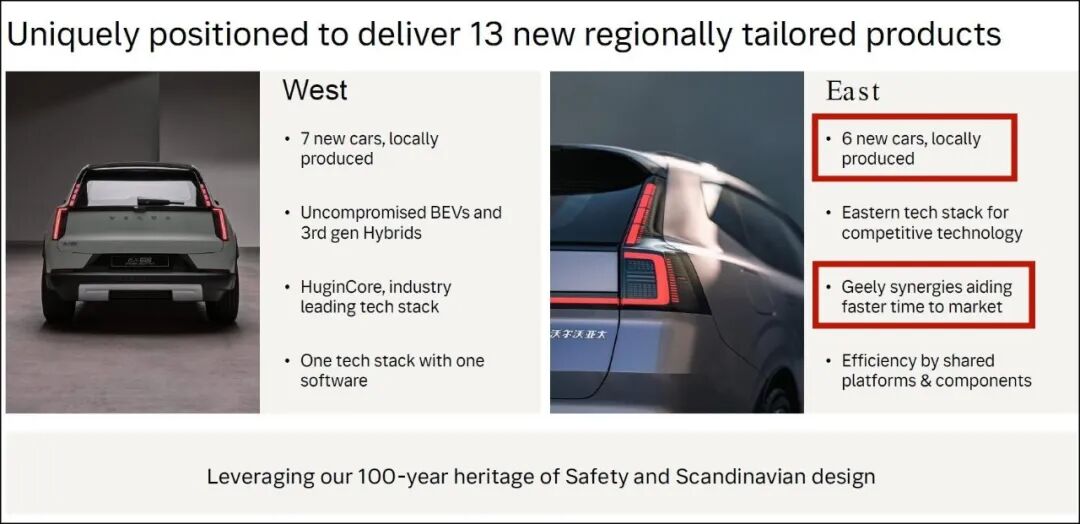
Yet, in the past three months, Volvo's global sales have been less than 150,000 units, down 7.4% year-on-year. Weakness in the Chinese and U.S. markets has been the main reason. The announcement of the new strategy aims to change this situation.
However, regardless of the determination presented in the PPT, we remain concerned that Volvo's inherently self-centered nature makes it difficult to adapt to the drastic changes in the external environment.
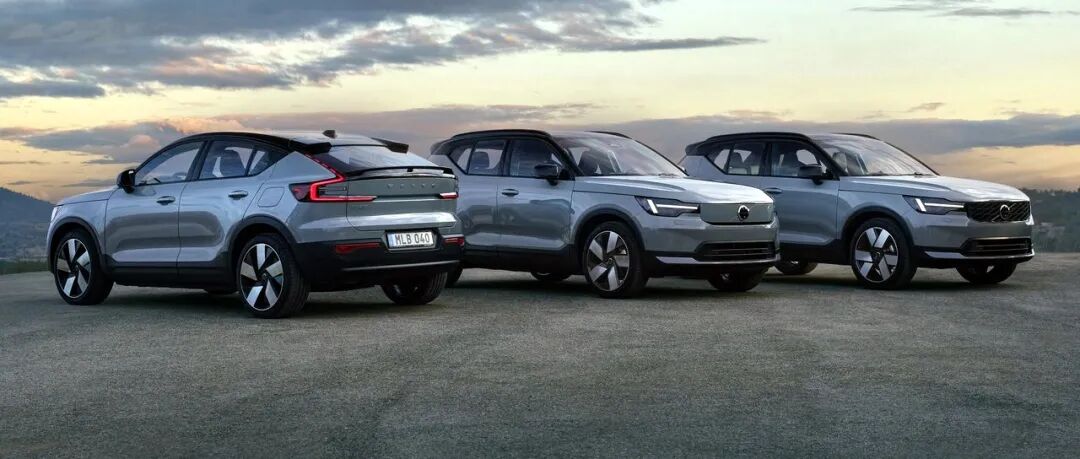
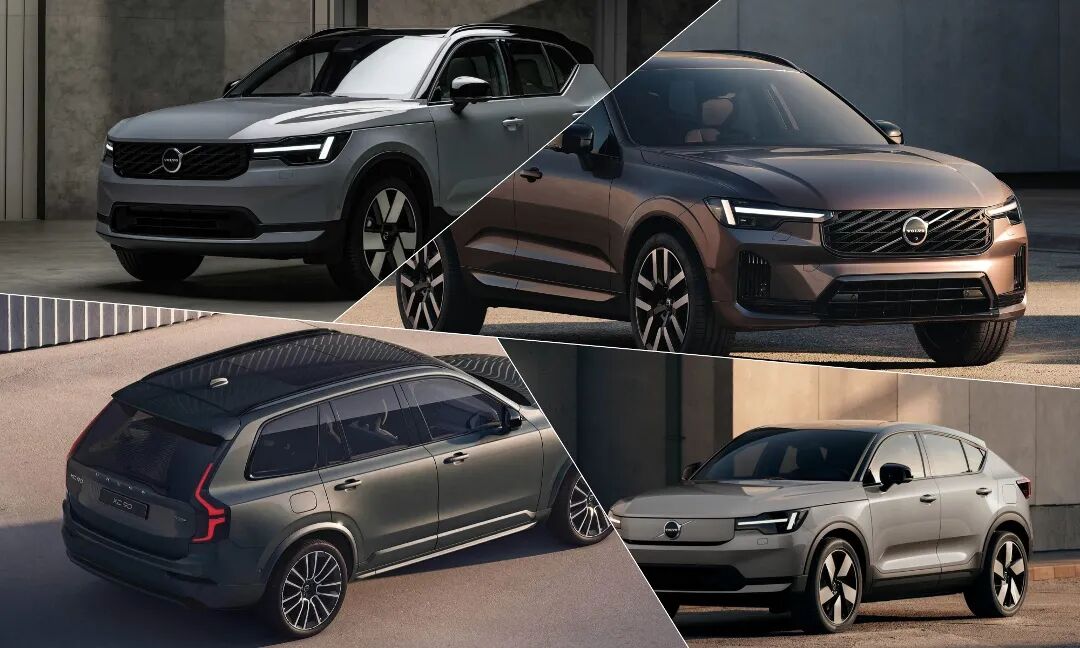
Just as everyone is saying that Volvo's existing products are too old, Volvo recently officially released the new Volvo XC40, EC40, XC60, and Volvo XC90. Whether it's the adjustments in appearance or the introduction of long-range plug-in hybrid versions, these can be seen as Volvo's latest understanding of product renewal.
However, those familiar with Volvo know well that the XC40 is a small SUV launched in 2019, while the XC60 and XC90 were launched in 2017 and 2015, respectively. In other words, fundamentally, no matter how many times the products have been facelifted, they have not undergone a complete generational change.
Starting with the EX90, including the subsequent EX30, ES90, and EX60, in recent years, Volvo has indeed introduced corresponding electric models in parallel with its fuel-powered vehicle products, showing strong forward-thinking awareness across the industry.
However, precisely in the two largest markets, China and the U.S., due to rapidly changing consumer habits regarding fuel-powered and pure electric vehicles, the gap between new and old models remains a significant headache for Volvo.
Volvo may believe that creating new energy vehicles with nearly a century of brand heritage aligns with its development rhythm. Since the SPA platform enabled Volvo to escape the predicament of the Ford era, there is no reason why new models from the SPA2 and SPA3 platforms cannot attract Volvo's potential users.
But the facts prove otherwise; this approach has fallen short of expectations.
Especially in China, 2025 is a rare year of significant product launches for Volvo in the past decade, with almost all its models receiving facelifts and its product lineup expanding the most. Nevertheless, Chinese users have long been educated by new forces and have changed their views on traditional luxury brands. Compared to experience and emotional value, maintaining a 'facade' is the least important factor when choosing a new car.
Leveraging Chinese technology, from the EM90 to the EX30 and then to the XC70, Volvo is gradually learning and understanding how luxury brands survive in China. The launch of the XC70, in particular, fills a niche market segment that the XC60 cannot reach, priced between 250,000 and 350,000 yuan.
However, Volvo must understand that even though every Chinese automaker detests frequent product updates, consumer inertia has made it impossible to reverse this trend. Every three months, every six months, the market will force Volvo to introduce new products. Otherwise, the terminal market's reaction will immediately be reflected in sales.
Over the next three years, we expect Volvo to independently develop six new models for the Chinese market. This is true, but again, our only fear is that Volvo will stubbornly insist on expressing its brand attributes in product definition, neglecting consumer demands that seem down-to-earth.
To deeply engage in China, one must let go of stubbornness.
This is the deepest warning this era has given to BBA, and it applies equally to Volvo. The decision not to rashly introduce the EX60 like the EX90 and ES90 was correct, but the fact that the XC70 cannot stand alone is also true.
Before Chinese users are entirely swayed by Chinese brands, within Volvo's product lineup, the Chinese market needs to see more truly innovative works like BMW's new iX3, new models willing to undergo comprehensive adaptive adjustments for Chinese consumers.
Editor-in-Chief: Cao Jiadong Editor: He Zengrong

THE END
-
![]()
JAC Motors Hits Price Ceiling, Leverages Huawei to Step into the 'Post-Seres' Era
-
AI Sparks a New Era of Efficiency Revolution
-
![]()
'Token Loans' See Intensive Rollout, Banks' Credit Anchors Quietly Shift
-
![]()
Is Seres Parting Ways with Huawei? Seres Chairman Rarely Responds! Yet, Other Sectors Are Also Forging Their Own Paths
-
![]()
Misconceptions and Misjudgments Surrounding Huawei
-
![]()
Zuckerberg of ALL IN AI Can Finally Breathe a Sigh of Relief
-
![]()
China’s Automotive Aftermarket Embraces New Policies to Unlock Growth Potential
-
![]()
"Xiaomi in the Auto Circle" Declares War on Xiaomi Auto: Are Double-Decker Vehicles the Next Battleground?