From 'Honda China' to 'China Honda': CR-V Continues to Lead as the 'Pioneering Test Ground'
 09/24 2026
 413
413
Introduction
Dongfeng Honda has embarked on a transformative journey.
"China stands as a pivotal market for our transformation, and Honda is committed to deepening its roots here," stated a Honda China executive.
"We've embraced the principles of 'China-Centric Technology, Cost-Efficiency, and Agility' and are driving R&D system reforms with these at the forefront."
At Honda's media briefing, Igarashi Masayuki, the head of Honda China, and Ito Yusuke, the executive deputy general manager, exuded confidence and determination, signaling a clear and unwavering commitment.
Honda openly acknowledged its shortcomings, such as "delayed intelligence integration, inadequate price competitiveness, and sluggish decision-making processes." Subsequently, it unveiled a comprehensive strategy encompassing R&D, production, product definition, and brand revitalization. The Chinese team is being empowered with accelerated decision-making authority in product definition and R&D.
By 2027, the first electric vehicle fully developed by the Chinese team will hit the market. By 2028, all new Honda vehicles launched in China will boast a local sourcing rate exceeding 99% for components.
Honda's dedication to deepening its China presence is unquestionable. Yet, the Chinese market has witnessed numerous declarations; what truly counts is execution.
Fortunately, Dongfeng Honda is already making significant strides. Prior to the September media briefing, at the Beijing Auto Show earlier this year, Dongfeng Honda had already begun implementing the 'China-Centric Technology, Cost-Efficiency, and Agility' approach. It was the first joint venture to echo this strategy and the vanguard in translating the 'China Solution' from slogans into action.
01 Dongfeng Honda: Already on the Move
In the first half of 2026, Dongfeng Honda's retail sales surpassed 124,000 vehicles, with 19,094 units sold across all models in June, marking three consecutive months of month-on-month growth. The cumulative user base approached 9 million. During the same period, Dongfeng Honda topped J.D. Power's China Customer Experience Index (PXI) for car purchases in the "Mainstream Brand Traditional Energy" category with a score of 818, earning recognition for its service excellence.
These accomplishments hold significant weight in 2026, a year marked by collective pressure on joint ventures.
Instead of resorting to the short-sighted tactic of "sacrificing price for volume," Dongfeng Honda has adhered to its long-standing philosophy: exchanging value for trust and prioritizing long-term growth.
However, it's undeniable that the rapid evolution of the Chinese market has diverged from Honda's existing narrative and operational mindset. Despite numerous adjustments, Honda has experienced setbacks in China.
"Today, China is not only the world's largest automotive market in terms of production and sales but is also driving the industry towards a comprehensive transformation towards new energy and intelligence. With robust innovation vitality, a vast talent pool, and an efficient industrial chain, product and technology iteration speeds are accelerating, and market competition is intensifying."
The existing narrative can no longer keep pace with this market. It's imperative to view the domestic market through a fresh lens and adapt to Chinese consumers with entirely new strategies.
Dongfeng Honda's transformation began even before this power shift.
Around this time last year, Cao Dongjie returned to Dongfeng Honda as executive deputy general manager. Within six months, at the Dongfeng Honda dealer conference in January, he championed Change (reform) with the core tenet of "facing reality and breaking free from conventional thinking," striving for changes in management systems, marketing models, and beyond. He introduced the GTM project management system, transitioning operations from "experience-driven" to "system-driven"; simultaneously, he defined the "4+2" product matrix, pursuing a balanced approach between traditional fuel and new energy vehicles. At the Beijing Auto Show, the strategy of "parallel advancement of fuel and electric vehicles, with equal intelligence for both" was further solidified: traditional fuel vehicles maintained their traditional strengths in power, chassis, and quality control, while new energy vehicles collaborated with leading tech firms like Huawei to co-create intelligent solutions.
In contrast to Honda China's media exchange meeting's three pillars of "China-Centric Technology, Cost-Efficiency, and Agility," Dongfeng Honda has been the earliest and most resolute implementer.
From the localization and restructuring of R&D, production, and sales systems to the pioneering implementation of China's intelligent supply chain, and then to the 2027 launch of new energy products based on localized development, the strategic布局 (layout) has already entered the execution phase.
In the latter half of 2026, flagship models like the CR-V and Inspire will undergo refreshed upgrades, with the traditional fuel base and transformation rhythm progressing in tandem without conflict.
Indeed, the entire industry is undergoing sweeping reforms amid the seismic shifts in the Chinese auto market. Industry giants like Volkswagen and Toyota have all made the China solution pivotal to their future survival. However, Dongfeng Honda's approach goes a step further: for its nearly 9 million users, its significance lies not in "disruption" and "redefinition" but in the certainty of long-term commitment.
02 CR-V: A Beacon of Dongfeng Honda's Long-Term Vision
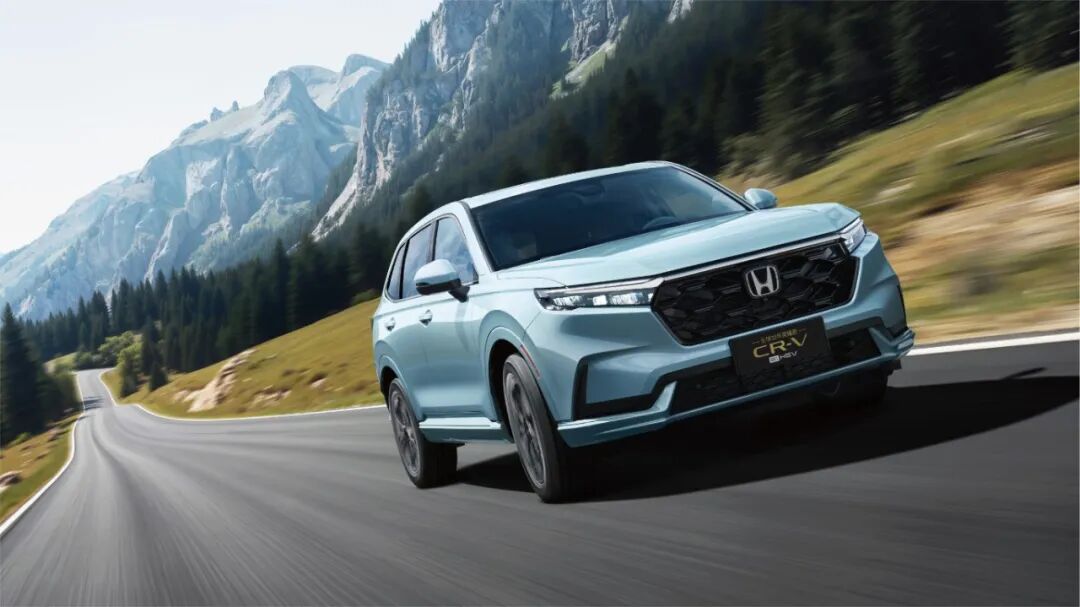
The CR-V is more than just a best-selling vehicle; it embodies Dongfeng Honda's technological DNA and serves as the "pioneering test ground" for every strategic pivot of "Technological Honda" in the Chinese market.
Born in 1995, with six generations of evolution, global cumulative sales exceeding 15 million units, and domestic joint venture sales surpassing 3.2 million units. Since its joint introduction by Dongfeng Honda in 2004, the CR-V has pioneered the domestic urban SUV segment, with each subsequent generation accurately anticipating changes in Chinese user demands:
The second generation introduced i-VTEC and REALTIME four-wheel drive, the fourth generation defined power with the "Earth Dreams" engine, the fifth generation led in deploying "one model, three powertrains," and the sixth generation complemented the technological experience with a "fuel + hybrid" dual matrix and Honda SENSING 360+ and Honda CONNECT 4.0.
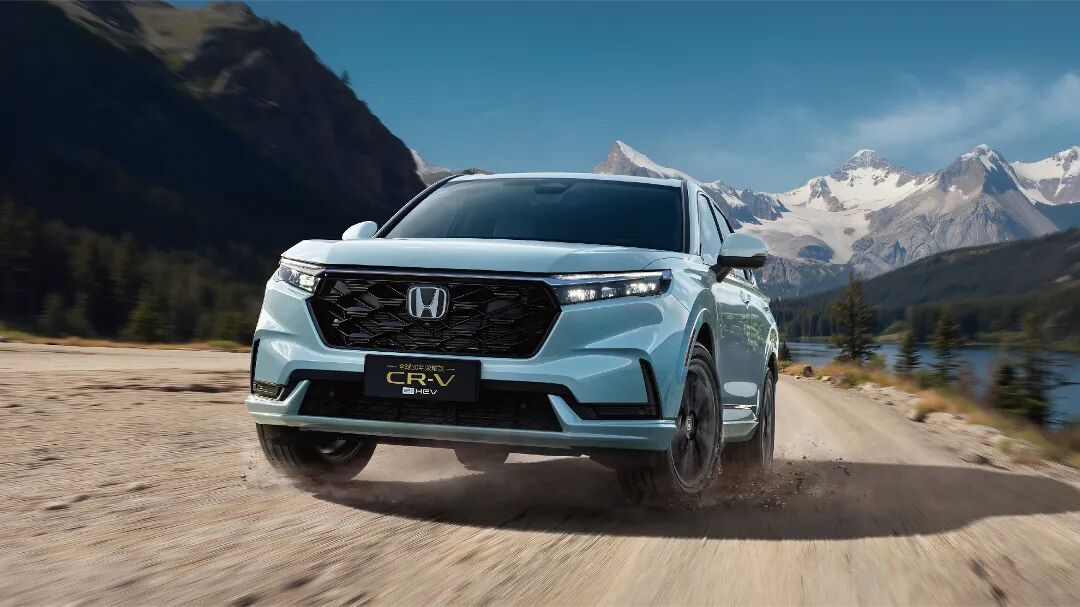
Each technological evolution of the CR-V represents a strategic implementation of "Technological Honda" in the Chinese market.
When Honda prioritized "China-Centric Technology, Cost-Efficiency, and Agility" and partnered with Chinese intelligent supply chains like Huawei, the CR-V once again became the "pioneering test ground."
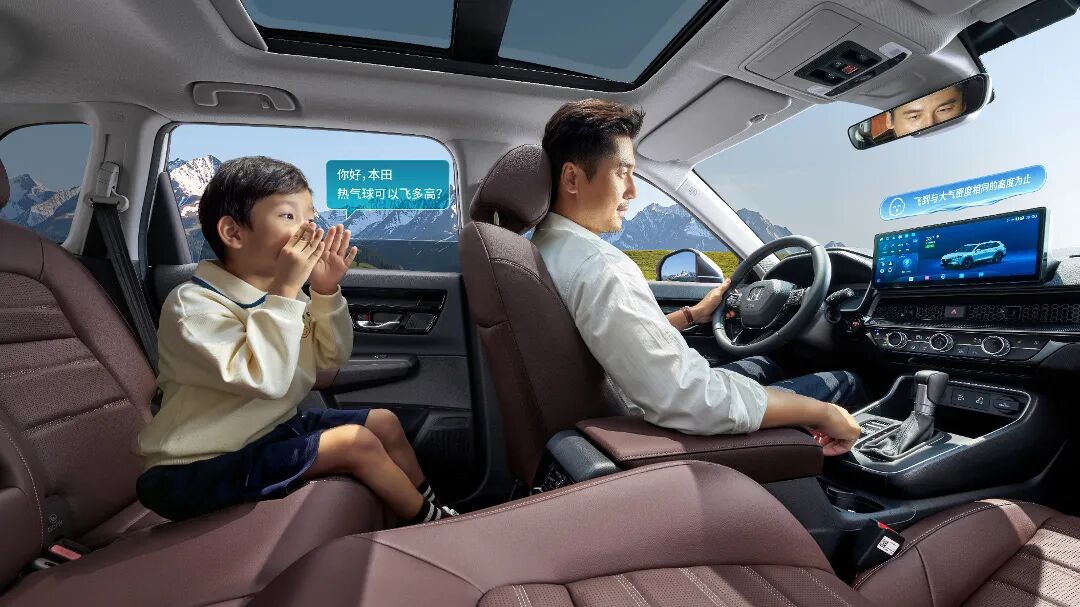
As the first vehicle series in Honda's global product lineup to integrate Huawei's technology, the CR-V, with the fusion of Huawei Cloud's in-vehicle system and Honda CONNECT 4.0, shatters the stereotype of "fuel vehicles lacking intelligence" by offering "equal intelligence for fuel and electric vehicles." Facing competition from model renewals and new energy vehicle encroachment, it defends its market position with a dual powertrain matrix and expands its reach with intelligent upgrades, continuously redefining the "optimal all-around family vehicle" in the 130,000-yuan family SUV market.
In the first half of 2026, retail sales of the CR-V exceeded 70,000 units, consistently surpassing 10,000 monthly sales and leading its segment. Amidst the new energy craze, it remains a steadfast choice.
In today's environment, trust and peace of mind are paramount for users. Over more than two decades, nearly 9 million users have chosen Dongfeng Honda, with 3.2 million opting for the CR-V, likely due to its reliability. It's the ultimate answer to the user's primary concern: "no major issues in ten years of driving," providing reassurance in terms of residual value and the flexibility to use both gas stations and charging stations.
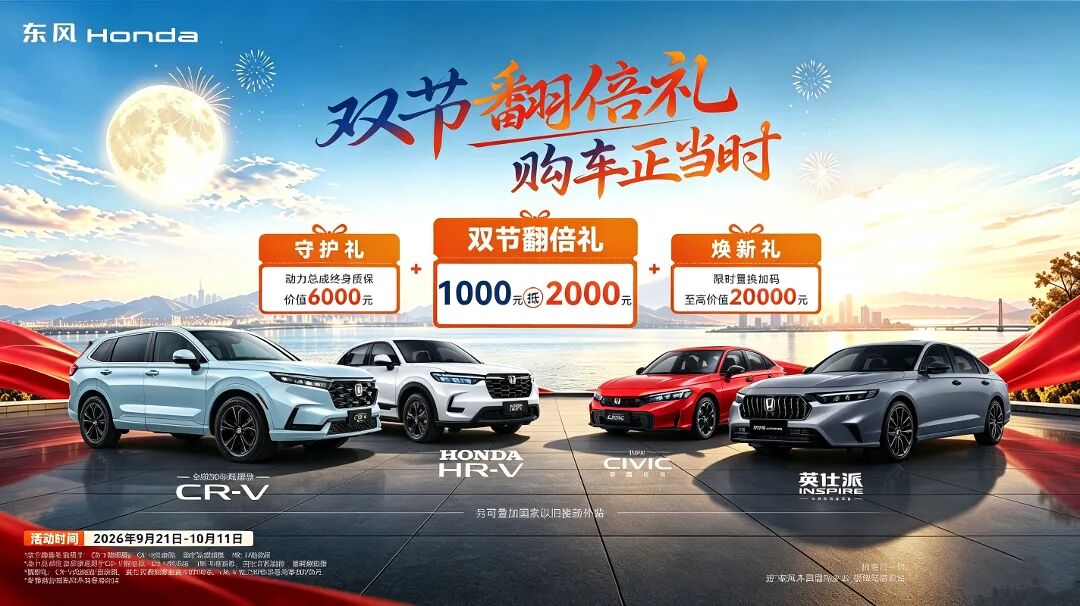
With the upcoming Mid-Autumn Festival and National Day holidays, Dongfeng Honda's limited-time car purchase policies perfectly cater to this wave of demand. From September 21 to October 11, exclusive limited-time benefits include a lifetime powertrain warranty worth 6,000 yuan; enhanced trade-in privileges of up to 20,000 yuan; a double holiday bonus of 1,000 yuan offsetting 2,000 yuan; and these can be combined with national trade-in subsidies.
From 'Honda China' to 'China Honda,' Dongfeng Honda is leading the charge. With 31 years, six generations of evolution, over 15 million global users, and over 3.2 million domestic users, the CR-V not only witnesses the lifecycle of a single vehicle but also the entire journey of a joint venture brand entering the Chinese market and thriving alongside it. Its very existence is the most tangible testament to Dongfeng Honda's long-term vision.
Editor: Cao Jiadong Editor: He Zhengrong

THE END
-
![]()
Wan Gang and Zhu Huarong: How to Transform, Upgrade, and Achieve Resilient Growth Amid Declining Sales
-
![]()
New Technologies Are Swiftly Integrated into Vehicles, Spawning a Cluster of Electrical Issues in Car Bodies
-
![]()
Luxury Car Market Sees Sharp Decline: Porsche Prices Plummet by 300,000 Yuan?
-
Yaopi Glass's Revenue Stagnates in the First Half of the Year, Net Profit After Non-Recurring Gains and Losses Drops More Than 70%: Effectiveness of Technological Transformation Remains to Be Verified
-
![]()
Why Does Hungary's New Energy Industry Policy 'Waver Between Two Paths?'
-
![]()
Why Is Chery Reshuffling Its Executives Now—For Globalization or Luxury Ambitions?
-
Retail Industry Evolution: From Instant to AI-Driven Retail
-
![]()
Leapmotor's Dual 'Time Advantages': Technological Leadership, Capital Support