Leapmotor's Dual 'Time Advantages': Technological Leadership, Capital Support
 09/24 2026
 480
480
Author | Hengxin
Source | Bowang Finance
Recently, Leapmotor made two significant moves on the same day, moves that the market has been closely analyzing.
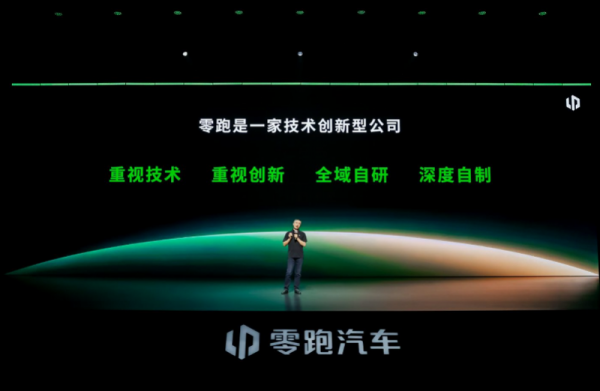
On one hand, at the '2026 Leapmotor Technology Day,' the MM-i multi-mode hybrid electric drive system was unveiled. Chairman Zhu Jiangming confirmed that the relevant production lines are already operational, and Leapmotor is in the process of applying for domestic fuel vehicle production qualifications.
On the other hand, Leapmotor announced that it had received the 'Approval for the Registration of the Private Placement of Shares by Zhejiang Leapmotor Technology Co., Ltd. to Specific Investors' (CSRC Permit [2026] No. 2434) from the China Securities Regulatory Commission (CSRC) on September 10. This RMB 6.744 billion private placement has cleared a crucial regulatory hurdle.
When these two pieces of news are considered together, the narrative quickly simplifies to 'building fuel vehicles without qualifications.'
However, a closer examination of policy frameworks, technological roadmaps, and financial statements reveals that these are actually two distinct considerations: one pertains to capacity access under institutional rules, and the other to the utilization and cost of funds.
Together, they represent Leapmotor's most authentic current situation—it is not 'shifting to fuel vehicles' but rather pre-paying an entry cost for the plug-in hybrid market segment while using equity financing to safeguard its R&D timeline.
01 Why Are Plug-In Hybrids Classified as 'Fuel Vehicles': Rules Precede Products and Public Opinion
Let's first address the classification issue.
Plug-in hybrid electric vehicles (PHEVs) are recognized as new energy vehicles in China and are eligible for green license plates under traffic management policies. However, the ability to build factories to produce them falls under a separate set of capacity access rules.
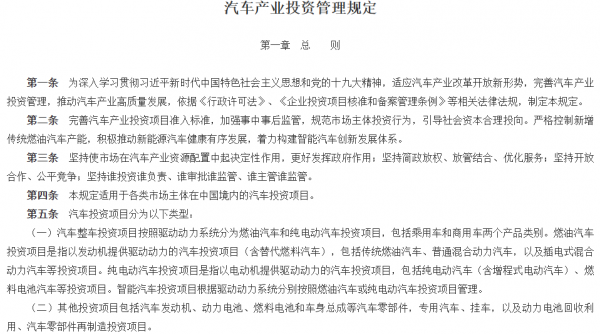
Article 5 of the current 'Automobile Industry Investment Management Regulations' (National Development and Reform Commission Order No. 22, effective January 10, 2019) categorizes vehicle investment projects into two types based on drive power: fuel vehicles and pure electric vehicles. Projects involving 'engine-driven powertrains,' including traditional fuel vehicles, conventional hybrids, and plug-in hybrids, are all classified as fuel vehicle investment projects. Pure electric vehicle investment projects encompass battery electric vehicles (BEVs, including extended-range models) and fuel cell vehicles.
This classification defines Leapmotor's reality. Leapmotor was included in the Ministry of Industry and Information Technology's list of complete vehicle manufacturers in April 2021, obtaining qualifications for pure electric passenger vehicles (including extended-range models) but not for plug-in hybrids.
Early models like the S01 and T03 were initially manufactured by Hangzhou Changjiang Automobile through contract manufacturing. After Changjiang's parent company went bankrupt in 2020, Leapmotor acquired a 100% stake in Fujian Xinfuda for approximately RMB 510 million and achieved self-production only after establishing complete stamping, welding, painting, assembly, and three-electric (battery, motor, controller) production lines in Jinhua.
In essence, the company has already encountered a similar structural hurdle a decade ago, and now the same threshold has reappeared in a different form.
Classifying plug-in hybrids as fuel vehicles in policy terms does not mean they are no longer new energy products, nor does it imply that Leapmotor is transitioning to pure fuel vehicles.
Zhu Jiangming repeatedly emphasized during the event that 'plug-in hybrid technology is actually quite suitable for the domestic market.' Leapmotor's relevant officials confirmed that the MM-i will first be deployed in overseas models through Leapmotor International, a joint venture unaffected by domestic qualifications. Domestic qualifications are currently under application.
The headline 'building fuel vehicles without qualifications' conflates three distinct issues: investment project categories, product attributes, and commercial intentions.
What truly warrants discussion is timing.
The plug-in hybrid route was not a spur-of-the-moment decision for Leapmotor: since the mass production of its first extended-range model in 2022, the company has launched seven extended-range models. Zhu Jiangming estimates the global lifecycle of direct-drive plug-in hybrids at 5 to 10 years, with persistent demand in regions lacking charging infrastructure.
From a market perspective, Dataforce data shows that Chinese-brand plug-in hybrids sold approximately 208,000 units in Europe in the first half of 2026, capturing a 28.3% market share—doubling year-on-year. In June alone, their share rose to 34%. This represents a rapidly growing export product segment, and the EU's current anti-subsidy tariffs on pure electric vehicles do not yet cover plug-in hybrids, creating a window of opportunity that incentivizes early deployment.
The risks lie here as well.
The 2019 policy explicitly states 'strict control over new traditional fuel vehicle capacity.' While plug-in hybrids are encouraged under Article 8, project filings must still meet conditions such as capacity utilization and R&D investment, making new fuel vehicle capacity significantly harder to obtain than pure electric capacity.
Leapmotor's domestic market advancement timeline thus depends not on technological maturity but on approval results—a timeline it cannot unilaterally accelerate.
02 The RMB 6.744 Billion Private Placement: Capital Is Not the Scarcest Resource, Time Is
Now, let's examine the capital side.
This private placement consists of two transactions: On December 28, 2025, FAW Equity Investment (Tianjin) Co., Ltd. ('FAW Equity') subscribed to 74.8322 million domestic shares at RMB 50.03 per share, contributing approximately RMB 3.744 billion. On January 6, 2026, Jinyi High-Tech subscribed to approximately 59.964 million shares at the same price, contributing about RMB 3 billion.
In total, approximately 135 million shares were issued, raising approximately RMB 6.744 billion. After issuance, the new shares will account for approximately 8.66% of the enlarged total share capital.
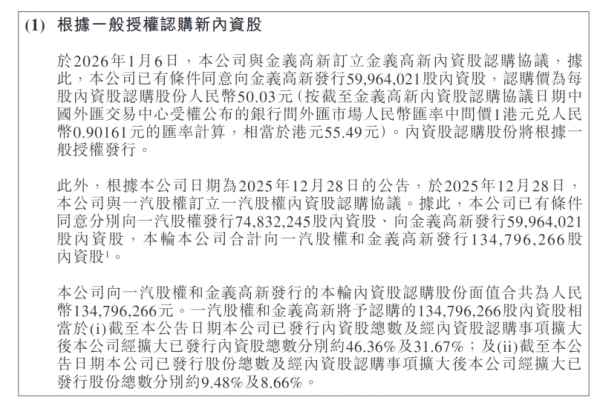
Approximately RMB 4.721 billion will be allocated to R&D, while about RMB 2.023 billion will supplement working capital and general corporate purposes.
These figures gain meaning when viewed in the context of the balance sheet.
As of June 30, 2026, Leapmotor held RMB 38.59 billion in cash and cash equivalents, restricted cash, financial assets measured at fair value through profit or loss, and bank time deposits. Net cash from operating activities reached RMB 2.17 billion, with free cash flow at RMB 140 million. Over the first eight months, Leapmotor delivered 561,000 vehicles, up approximately 70% year-on-year, completing about 56% of its annual target of 1 million units.
On the surface, the company does not appear desperately in need of equity financing.
However, gross margin pressures are evident. Revenue in the first half reached RMB 38.11 billion, up 57.2% year-on-year, with net profit at RMB 210 million—its third consecutive half-year of profitability. Meanwhile, gross margin stood at 11.7%, down 2.4 percentage points year-on-year (9.4% in Q1, rebounding to 12.6% in Q2).
Leapmotor CFO Li Tengfei lowered the annual net profit target from approximately RMB 5 billion at the beginning of the year to around RMB 3 billion during earnings calls. R&D expenses reached RMB 2.32 billion, up 22.8% year-on-year, while selling expenses hit RMB 1.99 billion, up 41.1% year-on-year.
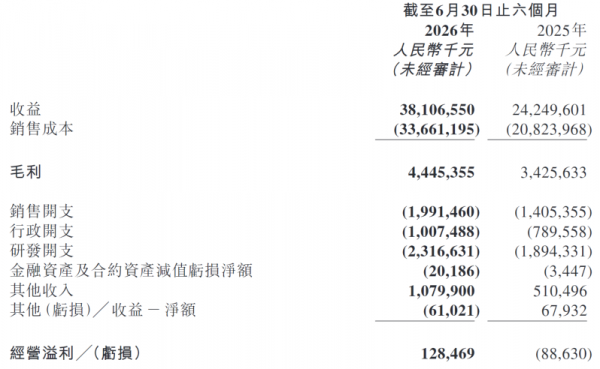
Viewed holistically: sales are rising, per-unit profits are thinning, and R&D and channel spending are accelerating. Free cash flow declined from RMB 860 million year-on-year to RMB 140 million, primarily due to RMB 2.03 billion in capital expenditures for inventory stockpiling and production line deployment.
In other words, the RMB 6.744 billion serves not as 'emergency relief' but as a buffer to isolate the R&D timeline and capacity ramp-up for new products slated for intensive 2027 launches from operating cash flow, using equity capital as a cushion.
03 From Unidirectional Investment to Bidirectional Collaboration: The Industrial Chain Calculus Beyond RMB 6.7 Billion
On September 17, the day after the CSRC approval, China FAW Group and Leapmotor signed an agreement in Huzhou, Zhejiang.
FAW's wholly-owned subsidiary Qixin Power signed an investment letter of intent with Leapmotor, which plans to participate as a strategic investor in Qixin's Series A financing. The two sides will collaborate strategically and share resources in hybrid engines, electric drive systems, range extenders, and other powertrain products.
On the same day, China Automotive New Energy signed a technical cooperation agreement with Leapmotor to jointly tackle challenges in solid-state batteries, lithium-rich manganese-based materials, sodium-ion batteries, and ultra-fast-charging lithium iron phosphate batteries while promoting standardized battery cells.
This represents the most overlooked aspect of the event: the capital relationship has shifted from 'FAW investing in Leapmotor' to bidirectional collaboration, with the first strategic focus precisely on hybrid powertrains.
Qixin Power's hybrid engines already supply Leapmotor's global models, with the first jointly developed model slated for mass production soon. Combined with Leapmotor's MM-i plan—deployment in 2027 products, with the first A0-class model launching overseas in the first half of next year—a clear connection emerges: the technical source of plug-in hybrid engines, the pathway to resolving qualification issues, and overseas market timing all point to synergy with the FAW ecosystem.
This also explains why the notion of 'building fuel vehicles' does not apply to Leapmotor. The company lacks a complete vehicle product lineup for traditional fuel vehicles, corresponding brand investments, or channel deployments. The other two core outcomes of Technology Day—the LEAP5.0 vehicle architecture and CTC3.0 integrated high-low-voltage battery—are purely electric architecture iterations.
For Leapmotor, plug-in hybrids represent a product portfolio completion and a structural opportunity in overseas markets, not a strategic pivot.
However, structural challenges remain.
Leapmotor targets 100,000 to 150,000 overseas sales in 2026, with actual estimates reaching 200,000 units. The 2027 target is 350,000 to 400,000 units, with a planned production capacity structure of 40% domestic production and 60% overseas production.

Overseas capacity relies on Stellantis and local factories (the B10 project is set to launch via CKD assembly in Zaragoza, Spain, in Q4 2026), bypassing domestic qualification restrictions. However, if domestic plug-in hybrid models require mass production, the approval timeline for new fuel vehicle qualifications becomes an uncontrollable variable.
Should these two timelines misalign, the window-of-opportunity advantage from overseas prioritization could be partially offset by delays in domestic market entry.
Meanwhile, the capital value of the private placement depends on its ability to genuinely translate into technological barriers.
The RMB 4.721 billion allocated to R&D corresponds to the concentrated launch of second-brand new category products, the LEAP5.0 architecture, and three core technologies in 2027.
If the launch timeline proceeds smoothly, this funding will significantly mitigate Leapmotor's R&D and capacity risks. However, if terminal price competition continues to compress margins and model launches encounter qualification or approval delays, the dilution from the additional 8.66% in shares will become a pure equity cost.
04 Conclusion: A Simultaneous Prepayment of 'Institutional Costs' and 'Capital Costs'
Combining these two moves, Leapmotor's current actions can be summarized as a simultaneous prepayment: using equity to secure certainty in R&D and expansion while using time to await capacity access under policy frameworks.
Thus, the headline 'building fuel vehicles without qualifications' wins in dissemination but loses in explanatory power.
Leapmotor is not building fuel vehicles—it is constructing a product system covering BEV, extended-range, and plug-in hybrid routes while maintaining balance sheet flexibility amid policy, cost, and overseas timing considerations.
Whether this flexibility suffices will not be found in announcements but in the approval progress and model launch timelines over the next twelve months.
-
![]()
Why Does Hungary's New Energy Industry Policy 'Waver Between Two Paths?'
-
![]()
Why Is Chery Reshuffling Its Executives Now—For Globalization or Luxury Ambitions?
-
Retail Industry Evolution: From Instant to AI-Driven Retail
-
![]()
Leapmotor's Dual 'Time Advantages': Technological Leadership, Capital Support
-
![]()
Muse is On Fire: Is This Meta's Real Turning Point or Just a False Climax?
-
![]()
Does Audi Headquarters Disown AUDI? Unveiling the Real Story
-
![]()
From 'Honda China' to 'China Honda': CR-V Continues to Lead as the 'Pioneering Test Ground'
-
![]()
The Arrival of the 'New King of Boxy Cars': Trumpchi Emko 7 Marks a Crucial Leap Forward for the Brand