Extreme Stock Surge! GAC Group and FAW Group's Bold Move Outshines Merger
 09/30 2026
 546
546
Author: Auto Observer
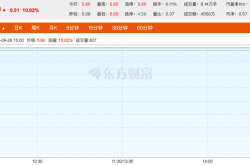
After a two-week suspension to gear up for this monumental restructuring, GAC Group resumed trading on September 29 with a meteoric rise to its daily limit. The stock held strong throughout the day, with trading volumes kept in check, signaling robust investor appetite for shares. This clear market trend served as a resounding vote of confidence in a transformation unparalleled in China's automotive sector in two decades.
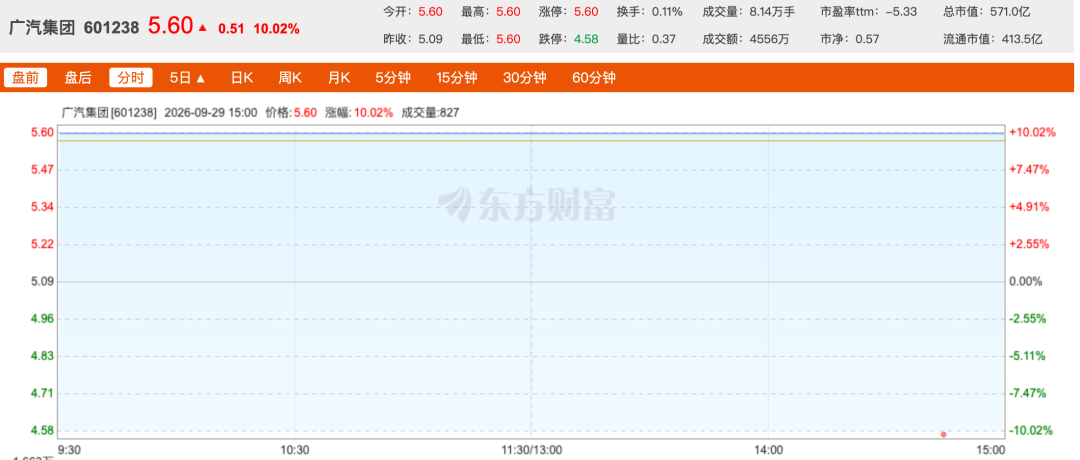
While many focus on the superficial benefits of 'GAC acquiring a stake in FAW Toyota,' they miss the crux of this surge: this is no ordinary asset acquisition. It's a top-tier capital maneuver involving a cashless merger, deep integration of central and local state-owned assets, and no dilution of control. It also stands out as the most valuable solution amid fierce competition among joint ventures and the rapid shift towards new energy.
01
The primary catalyst for this market frenzy was GAC's release of 16 announcements on the evening of September 28, unveiling a major restructuring plan: issuing shares at 5.75 yuan each to acquire a 50% stake in FAW Toyota from FAW Group, while raising matching funds from no more than 35 specific investors.
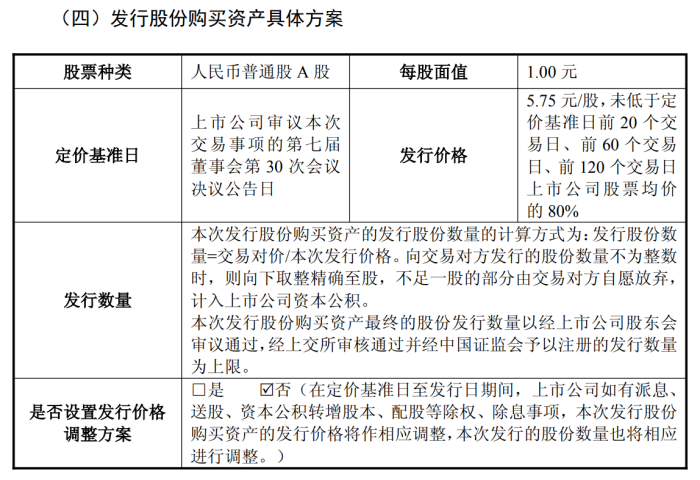
The standout feature of this deal is its cashless nature. By acquiring high-quality assets through a share swap, GAC sidesteps significant capital outlay pressures while precisely addressing profitability gaps.
GAC taps into top-tier industry resources without surrendering its strategic initiative. This new integration model for state-owned automakers is unprecedented in China's automotive landscape and underpins the capital market's willingness to pay a premium: securing a stable profit base at minimal cost and unlocking exclusive synergy dividends from both North and South Toyota.
What kind of asset is FAW Toyota? Its net profits were 4.717 billion yuan in 2024, 4.234 billion yuan in 2025, and 1.009 billion yuan in the first half of 2026. Despite a significant profit decline this year, it remains a 'lean but resilient camel' on an annualized basis.
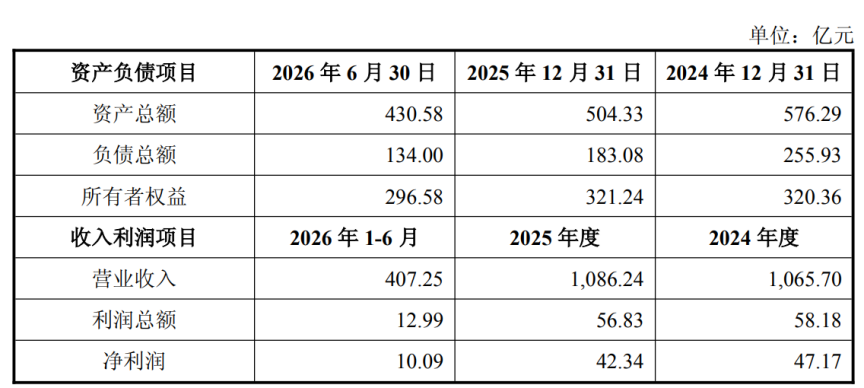
After GAC acquires a 50% stake, the annual investment income derived from it will flow directly into the profit statement.
At a stage where GAC's independent division is still 'investing heavily for the future,' the significance of this stable profit stream needs no further elaboration from Auto Observer.
02
The second layer of excitement stems from the cessation of 'internal friction' between North and South Toyota, which truly galvanizes investors.
As is widely known, Toyota's operations in China have been split into North and South: FAW Toyota in the north and GAC Toyota in the south. The two joint ventures operate independently under their respective Chinese shareholders, with separate procurement, distribution, and R&D, leading to significant redundancies.
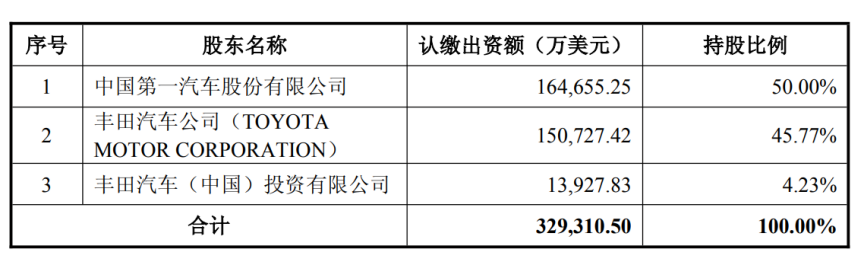
Now, with GAC acquiring the 50% stake in FAW Toyota, it instantly becomes the co-controller of both Toyota joint ventures in North and South China.
Where lies the potential? According to the China Association of Automobile Manufacturers, North and South Toyota combined accounted for roughly 17% of joint venture passenger vehicle sales in 2025, ranking among the top joint venture brands.
Once integrated, coordinated R&D, centralized supply chain procurement, capacity allocation, and channel sharing could theoretically yield substantial cost savings.
Translated into per-vehicle terms, Auto Observer roughly estimates that FAW Toyota's annual net profit of over 4 billion yuan, spread across its annual sales of hundreds of thousands of vehicles, places it among the leaders in per-vehicle net profit within the joint venture阵营 (group/array).
If the two joint ventures share a single supply chain and R&D system, the cost savings per vehicle would represent another significant hidden profit. Scale effects are highly prized in the automotive industry.
Looking ahead, the potential extends to intelligent driving and cockpit technologies, the two most capital-intensive areas in the new energy era. Previously, each joint venture depleted resources independently, but now they may collaborate. For GAC, this means accessing Toyota's scale dividends at minimal cost.
03
The third layer of potential, often overlooked, is strategic positioning.
This represents a novel path for China's automotive state-owned asset integration: preserving control, avoiding backdoor listings, and using equity ties to facilitate the flow of high-quality assets.
Technologically, as previously mentioned, GAC can deeply absorb Toyota's core expertise in hybrid technology, vehicle manufacturing, and stringent quality control, feeding back into its independent new energy and intelligent transformation, addressing technological gaps, and accelerating the upgrade of its independent vehicle product lineup.
In terms of scale, the integration of North and South Toyota will form the largest, most optimized supply chain, and most complete channel system among domestic joint ventures, significantly reducing production costs through scale effects, strengthening industry influence, and building core barriers to navigate market cycles.
At the resource level, the involvement of central enterprise FAW as a significant shareholder brings GAC more industrial resources, policy dividends, and integration opportunities, fully unlocking long-term growth potential.
If successful, it will set a benchmark, representing a comprehensive restructuring of GAC's valuation system.
Overall, GAC's stock surge reflects the market's triple valuation of high-quality asset integration, state-owned asset reform implementation, and fundamental marginal improvements.
However, this is a long-term value play. After the initial emotional premium fades, the market will ultimately assess whether synergies materialize, performance recovers, and independent transformation accelerates.
All charts and figures not attributed to specific sources in this article are publicly disclosed through various channels. We hereby acknowledge and express our gratitude. The views expressed herein are for reference only and do not constitute investment advice.
This article is original content from Leverage Auto Observer and is prohibited from reproduction without authorization. For reproduction requests, please obtain authorization and clearly indicate the source and author at the beginning of the article. Thank you!
-
![]()
The RSI Craze Hits Embodied AI: Ideals, Realities, and an Unreachable Endpoint
-
![]()
Queen of Chips Teams Up with AI Godmother to Take on Nvidia's Huang
-
![]()
Changsha Offers a 'New Solution' to China's Robot Industry
-
![]()
Extreme Stock Surge! GAC Group and FAW Group's Bold Move Outshines Merger
-
New Retail: A Brand-New Launch
-
![]()
Li Xiang Seeks to Replicate Xiaomi’s ‘Open Ecosystem’ Model, While CATL Aims to Be the ‘Huawei’ of the Battery Sector
-
![]()
AITO Unveils New Model: Pre-Sales Launch on September 30 with Native L3 Autonomous Architecture
-
![]()
Starting at 118,800 Yuan! Lynk & Co Unveils New Car Model: Official Release Set for September 28