JAC Motors Owes DCD Auto a Debt of Gratitude for Pushing It to the Limit
 10/09 2026
 373
373
The First Lesson for a Luxury Car Priced at a Million Yuan: Embracing Criticism
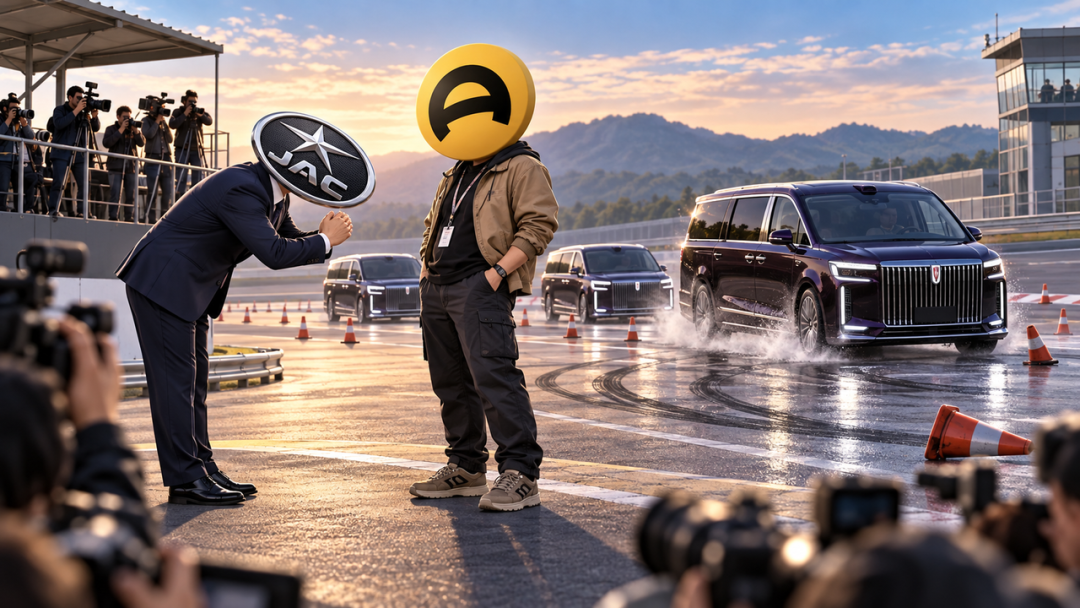
Right after the National Day holiday, JAC Motors found itself abruptly halted by DCD Auto's revelations.
On October 8th, DCD Auto unveiled a video showcasing an emergency braking test on the Zunjie V800. In the footage, three Zunjie V800 vehicles successively experienced brake pedal bracket fractures, instantly thrusting this newly launched luxury car, priced at a million yuan, into the limelight.
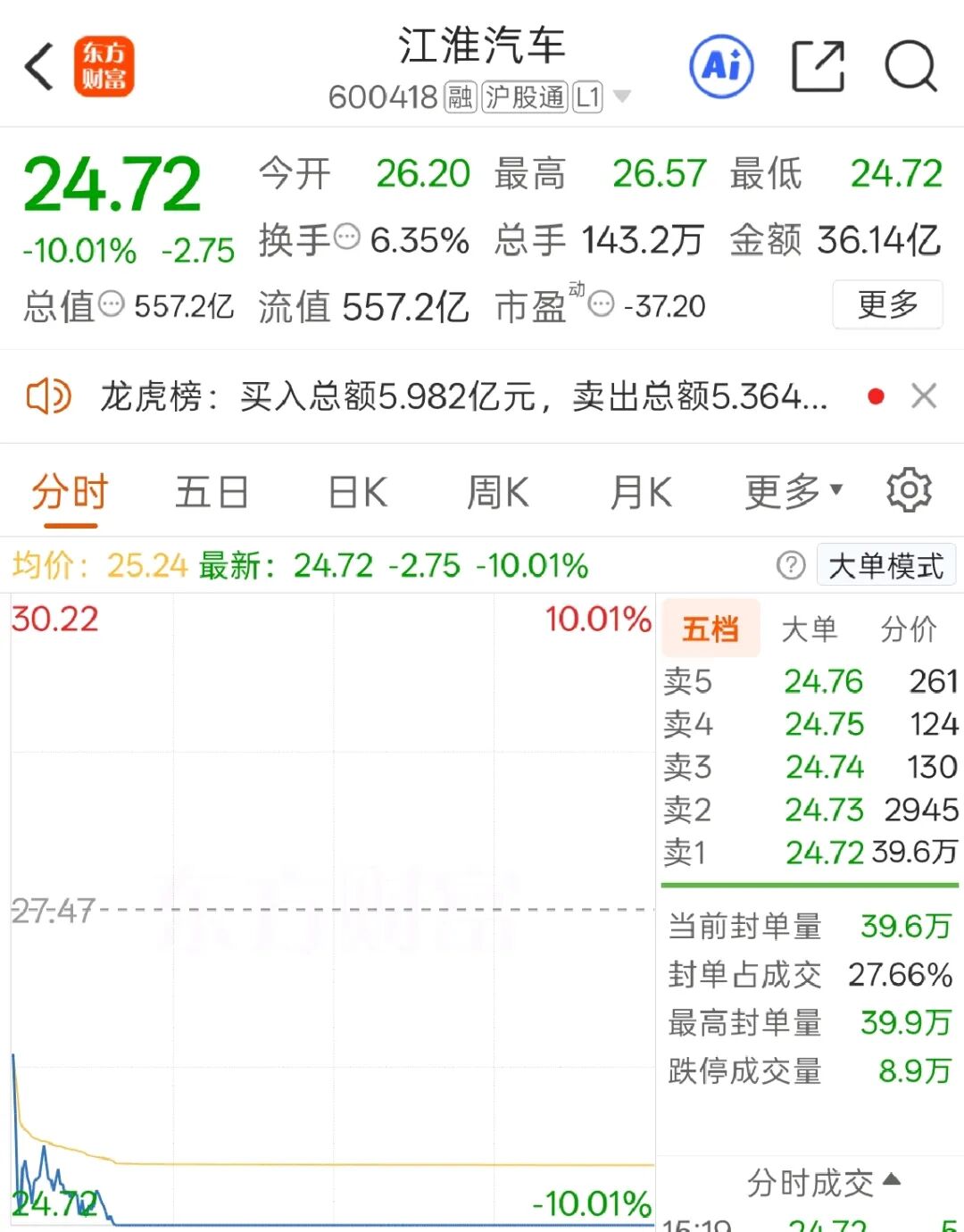
The capital markets responded swiftly. On the same day, JAC Motors' stock price plummeted to its limit down at the opening bell, closing at 24.72 yuan, with a market capitalization of approximately 55.7 billion yuan.
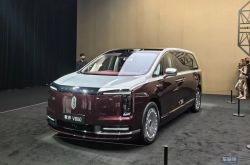
The situation was somewhat dramatic. After all, the V800, the second Zunjie model co-developed by JAC and Huawei, had only just hit the market in August of this year, with prices ranging from 766,000 to 1.016 million yuan. Full-version deliveries commenced only at the end of September.
Before the new car could even establish a foothold in the market, it first became notorious due to a braking issue.
However, JAC Motors doesn't necessarily need to feel disheartened. From another perspective, DCD Auto, which pushed the car to its limits, might actually be someone JAC should be grateful to.
01 One Brake Test Raises a 100-Meter Question Mark
The test conducted by DCD Auto on the Zunjie V800 was straightforward—almost deceptively simple.
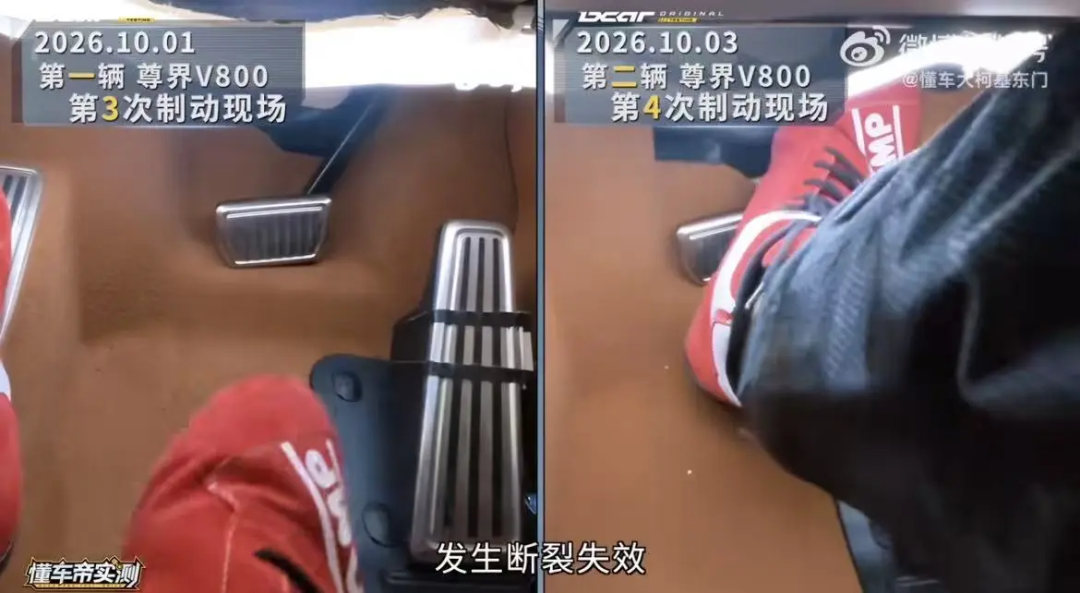
According to the test video released by DCD Auto, on October 1st, the Zunjie V800 underwent continuous emergency braking tests from 100 km/h to a standstill in a closed venue. During the test, the brake pedal bracket of the first vehicle suddenly fractured during the third full-force brake, causing the pedal to sink and the vehicle to lose normal braking capability.
Initially, the testers likely did not anticipate such a severe issue and assumed it was a one-off occurrence. So, they proceeded to purchase a second Zunjie V800.
On October 3rd, the second Zunjie V800 underwent the same test. The braking distances for the first three attempts were 39.56 meters, 36.3 meters, and 37.32 meters, respectively, indicating normal performance. However, during the fourth attempt, the brake pedal bracket fractured again, and the vehicle finally came to a halt after 151.79 meters.
To rule out any accidental malfunctions, DCD Auto purchased a third brand-new Zunjie V800 and even transported it directly from the 4S store to the test site on a flatbed truck. The result? This new car, having traveled only about 3 kilometers, experienced the same issue during its second full-force brake.
To uphold its "integrity," DCD Auto specially installed pedal force sensors and filming equipment this time. The data revealed that the vehicle came to a stop from 100 km/h in just 38.44 meters with a maximum pedal force of 1596N. However, during the second brake, the pedal bracket fractured at around 1612N.
But what deserves more attention than the pedal fracture is what transpired after the vehicle lost normal braking capability.
The testers knew that holding down the P gear could activate emergency braking and did so promptly. Nevertheless, the vehicle still came to a stop after 140 meters, about 100 meters more than under normal circumstances. Keep in mind, this was a pre-planned test in a closed venue, and the driver was aware of the vehicle's emergency braking function.
If a similar situation occurred on a real road, would the driver think to hold down the P gear immediately when faced with a suddenly non-functional brake pedal? Would there be enough distance ahead to stop?
Of course, another perspective soon emerged.
Some netizens noticed an instantaneous reading of 4589N on DCD Auto's test equipment, which translates to roughly 468 kilograms-force.
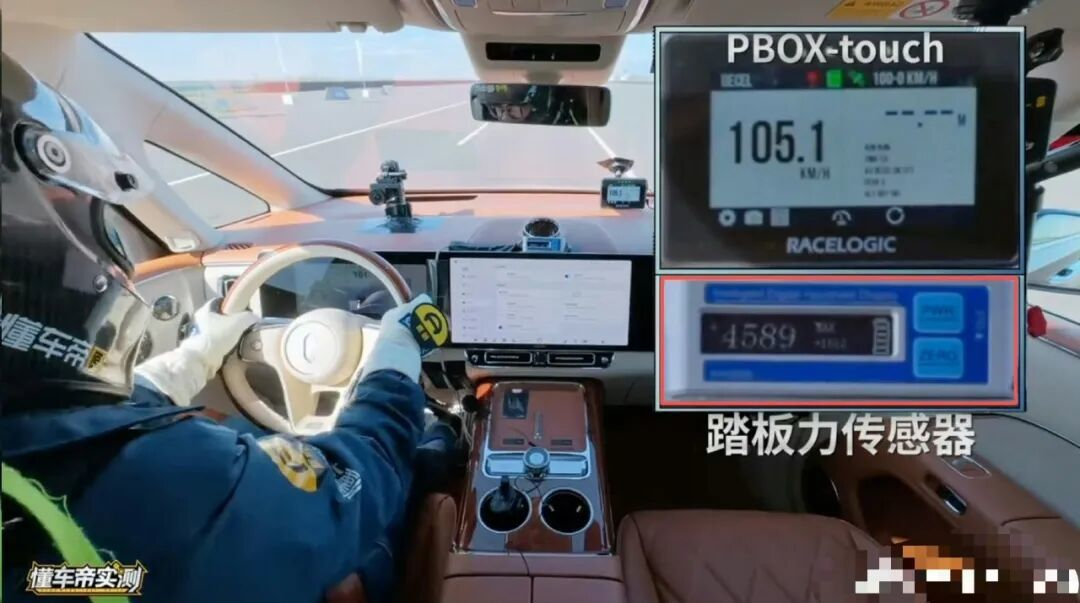
Some questioned whether the testers had applied a pedal force far exceeding normal driving scenarios, leading to the pedal bracket fracture. However, others pointed out that 4589N was not the maximum pedal force recorded by the instrument; the video showed a maximum of 1612N. The abnormal instantaneous reading might be related to the impact during the bracket fracture or instrument display issues.
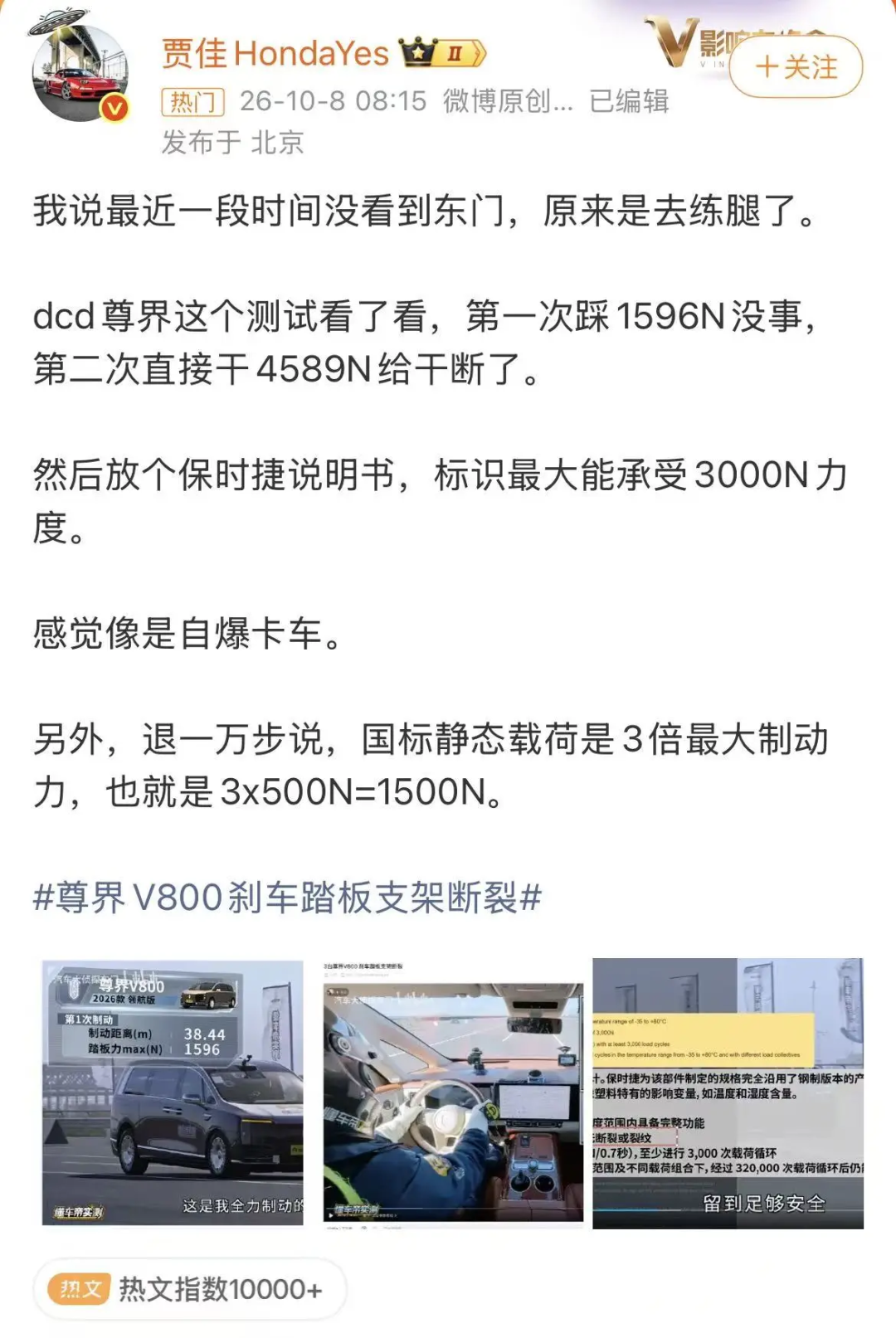
Meanwhile, DCD Auto also disassembled the pedal assembly and suggested that factors such as the support structure near the bracket pivot, reinforcing ribs, and weld lines might have affected structural strength. The testing party also presented comparative results showing other vehicle models completing multiple full-force brakes without pedal bracket fractures.
However, these analyses remain judgments from the testing party. Whether there are design or manufacturing defects and whether the test conditions were reasonable still require further verification.
The real questions that need answering in this controversy are twofold: First, are DCD Auto's testing methods and pedal force data credible? Second, under normal use and foreseeable emergency braking scenarios, can the Zunjie V800's pedal bracket provide sufficient safety redundancy?
After all, consumers may not care about the exact pedal force a car can withstand, but they will certainly care whether this luxury car can stop when they need to brake.
02 Limit Down is Tuition; Failure to Brake is Priceless
Although DCD Auto's test put JAC Motors' stock price in an embarrassing position, in our view, regardless of the final investigation results, JAC Motors should thank DCD Auto.
Consider the first scenario: If DCD Auto's test is valid and the Zunjie V800 does have design or manufacturing defects, JAC should not only thank DCD Auto but also consider itself fortunate that the issue was discovered early.
After all, the Zunjie V800 was only officially launched in August this year, and full-version deliveries commenced only at the end of September. The market has not yet seen a significant number of these vehicles in circulation. If there is indeed a safety hazard with the brake pedal bracket, discovering it now gives JAC the opportunity to investigate relevant production batches, revise designs or manufacturing processes, and take recall measures if necessary.
However, if such an issue had not been discovered in advance but instead surfaced during an emergency braking incident while a future owner was driving at high speed, the consequences would likely be far more severe than a single limit down.
Especially for Zunjie, a newly established luxury brand priced at a million yuan, consumers are willing to spend nearly a million yuan on a Zunjie partly because of Huawei's intelligent technologies and the product experience brought by luxury configurations. However, all these have one common prerequisite: the vehicle must be sufficiently safe and reliable.
A luxury car can do without refrigerators, TVs, and sofas, but it cannot leave consumers worrying about whether the pedal under their foot will suddenly fracture when they need to brake urgently.
For JAC, discovering a design or manufacturing issue with a component may only require rectification costs. However, if this leads to a major safety accident, what will be lost is consumer safety and the trust that the entire Zunjie brand has worked hard to establish.
The automotive industry has no shortage of similar lessons.
In 2009, a Lexus ES350 in California lost control at high speed due to its accelerator pedal getting stuck under a floor mat, resulting in the deaths of four occupants. This incident thrust Toyota into the spotlight and uncovered years of controversy over accelerator pedal safety.
As investigations deepened, Toyota was found not only to have issues with floor mats interfering with the accelerator but also to have accelerator pedals in some models that were prone to sticking. From 2009 to 2010, Toyota recalled nearly 8 million vehicles worldwide. Subsequently, the U.S. Department of Justice discovered that Toyota had been aware of some safety hazards but had not fully disclosed them to regulators and consumers. In 2014, Toyota ultimately paid a $1.2 billion fine for related concealment and misleading behavior.
From a safety issue triggered by a pedal to the recall of millions of vehicles, followed by hefty fines and damage to brand reputation, Toyota paid a heavy price for its handling of the situation.
Of course, the current situation with the Zunjie V800 is nowhere near comparable to Toyota's case back then. However, Toyota's precedent at least demonstrates that the worst thing an automotive company can do is treat an exposed safety risk as a mere public relations crisis.
If the issue is ultimately confirmed, DCD Auto has at least given JAC the opportunity to identify and address risks before more severe consequences occur. Compared to potential future safety accidents and the resulting brand trust crisis, a single limit down may already be the cheapest tuition JAC could pay.
Of course, there is also another possibility: DCD Auto's testing methods are indeed problematic, and the Zunjie V800 does not have related safety hazards under normal use and foreseeable emergency braking conditions.
In that case, JAC doesn't necessarily need to view this incident solely as bad news.
As of now, DCD Auto has already brought significant market exposure to the Zunjie V800. Compared to normal new product promotions, this controversy surrounding the brake pedal has prompted many consumers who previously paid no attention to Zunjie to learn about this nearly million-yuan domestic MPV for the first time.
Of course, negative attention does not equate to brand equity. If JAC fails to explain the anomalies observed during the test, higher attention will only lead to more doubts about product quality among consumers.
Conversely, if JAC can present complete technical documentation, invite independent third parties to conduct retests, and use public, verifiable experimental results to prove that the product meets safety requirements while explaining why the same fault occurred in all three test vehicles, then this negative publicity could potentially transform into a positive demonstration of brand credibility.
After all, spending money on advertisements to claim a car is safe a thousand times over may not be as convincing as proving oneself through a test that withstands scrutiny after being questioned.
This point is especially crucial for JAC. Over the past few years, JAC has leveraged its collaboration with Huawei to become a significant player in China's luxury car market. However, the journey from being a mainstream automaker to a truly recognized luxury automaker is still a long one.
Huawei's brand influence can encourage consumers to visit Zunjie showrooms, but to persuade them to spend nearly a million yuan and continue choosing the brand in the future, JAC ultimately needs to demonstrate its own manufacturing capabilities and quality reputation.
These qualities cannot be replaced by Huawei's brand halo, nor can they be proven through a single product launch event.
Instead of obsessing over how unflattering DCD Auto's test makes JAC look, JAC should promptly investigate the issues that arose during the test. If defects indeed exist, they should be rectified promptly. If the testing methods are problematic, evidence should be presented to explain the situation openly and justifiably.
Regardless of the final outcome, JAC has the opportunity to gain something far more valuable than short-term market capitalization from this controversy.
After all, DCD Auto can only test JAC Motors to its limit down, but if a luxury car truly fails to brake on the road, the price JAC would have to pay would likely far exceed a single limit down.
- END -
-
![]()
Zunjie V800 Rolls Out Free Upgrades Following Three Brake Pedal Malfunctions
-
![]()
FAW Toyota to Maintain Operations; FAW, GAC, and Toyota Forge New Partnership
-
![]()
Automotive Consumption Policy: Transitioning from Short-Term Boosts to Long-Term Ecosystem Development
-
![]()
QianWen N1 Pro and Wigain Flow Enhance Eye Perception, AI Glasses Complete Personal Context Entry
-
![]()
The Integration of North and South Toyota: A New Model for Chinese and Foreign Automakers
-
![]()
Why Does Mass Production Spell Doom? The Price Dilemma of Micro-Optical Engines from a Supply Chain Perspective
-
![]()
A Leap in Dimensionality Reduction: Why Both Meta and EssilorLuxottica Are Venturing into Hearing Aid Glasses
-
Reevaluating the Value of a Hundred-Billion-Dollar Track Through the Lens of Utopai Studios, the World's Largest Independent AI Film and Television Company