QianWen N1 Pro and Wigain Flow Enhance Eye Perception, AI Glasses Complete Personal Context Entry
 10/09 2026
 380
380
Your Gaze: The New Data for AI Glasses
By VR Tuoluo, Wickey
Eye data is becoming another vital source for AI glasses to understand users.
On September 22, the new generation of QianWen AI glasses, the N1 series, debuted at the 2026 Yunqi Conference. The N1 Pro features high-precision eye tracking, using gaze information for visual question answering, object recognition, and iris payment. A few days later, Qiuguo plans to release the Wigain Flow full-color AI glasses, which also incorporate eye perception capabilities, with an iris camera positioned on the nose bridge for identity verification and touchless payments.
Meanwhile, solutions for low-power eye perception are on the rise. In June, Inseye released the Tiny solution, with low power consumption (<10mW), 100Hz operation, and Always-on functionality as its main selling points. In August, ZEISS Ventures led a €2.2 million funding round for SeeTrue Technologies, accelerating the commercialization of its low-power, compact eye-tracking solution. Tobii and Prophesee continue to advance event-based eye-tracking technology, aiming to further reduce data volume and power consumption in smart glasses.
As AI glasses move toward everyday wear and continuous perception, eye data is increasingly involved in understanding user intent, identity authentication, and personal context construction. How to make eye perception lighter and more power-efficient, as well as how to use and protect this data after collection, are becoming new technical challenges for AI glasses.
01
Gaze and Identity: Why Eye Perception Matters in AI Glasses
Eye tracking has been widely used in past XR devices for scenarios such as foveated rendering, gaze-based interaction, and digital human expressions. In AI glasses, the applications of eye perception are extending further.
Functionally, eye perception can be broadly divided into two categories. One relates to behavior and intent, such as gaze direction, fixation points, and eye posture, which help determine what the user is looking at and focusing on. The other relates to identity, such as biometric recognition through iris patterns.
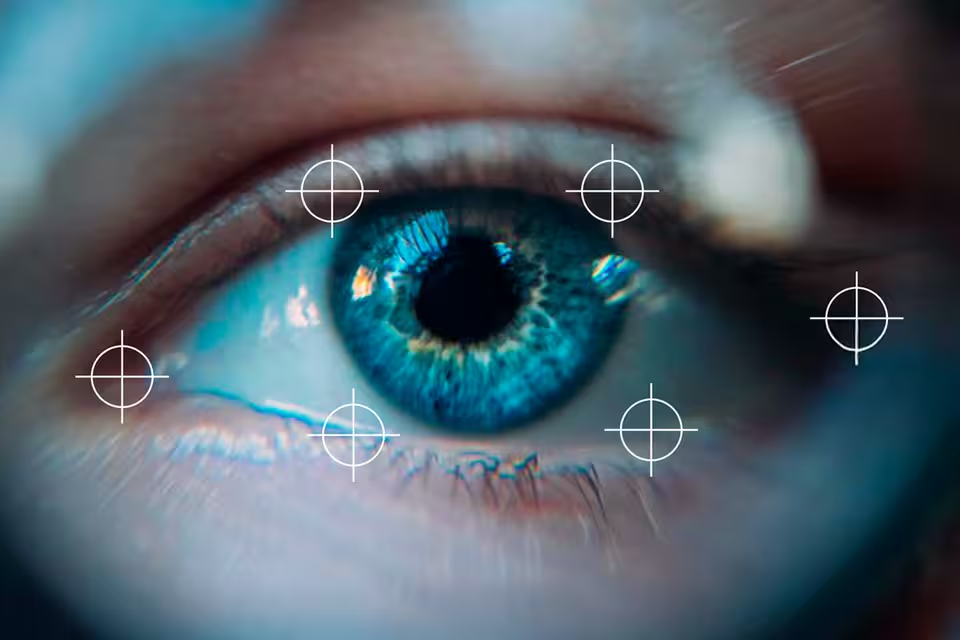
Currently, eye perception is relatively mature in VR/MR headsets, primarily used for display optimization and interaction. Foveated rendering only renders high quality in the user's gaze area to reduce GPU load. For interaction, devices like Vision Pro already use eye tracking for interface selection, target positioning, and gesture-based clicks.
As AI enters XR devices, hardware requirements for environmental understanding and intelligent interaction have increased. Cameras and microphones can capture visual and voice data, while eye-tracking data further supplements the user's focus and attention, aiding AI in understanding the current context and user intent.
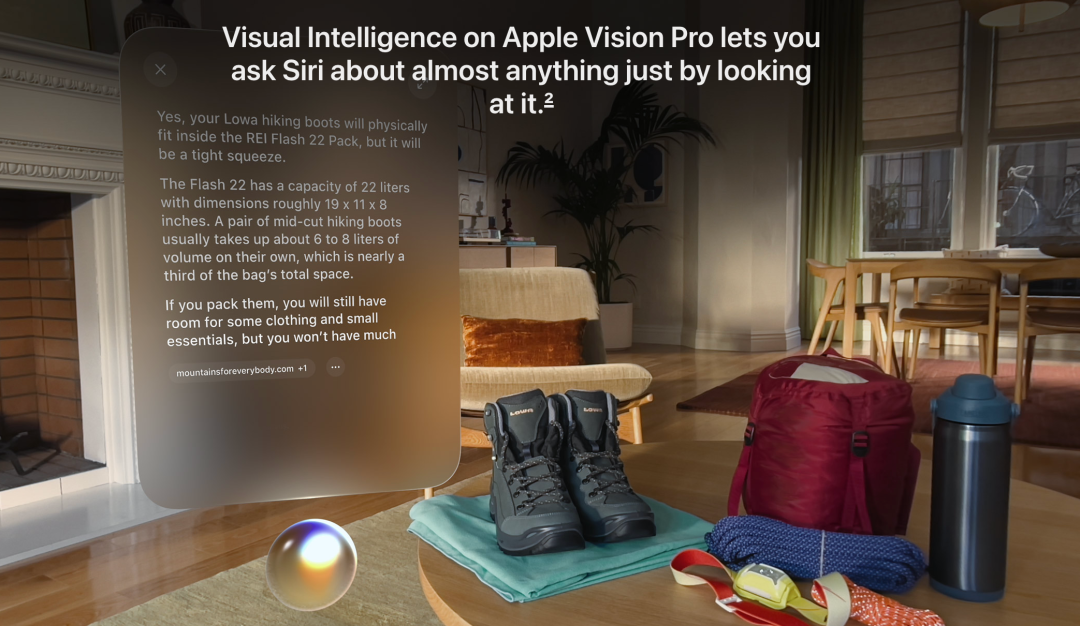
On VR/MR headsets, eye tracking has long been a mature interaction method. With the addition of Visual Intelligence in visionOS 27, Vision Pro users can now look directly at real-world objects or window content and ask Siri questions, with gaze information contributing to AI's judgment of the current content.
In AI glasses, which are designed for everyday wear, cameras, microphones, and sensors continuously capture environmental and interaction data, accumulating more continuous first-person data. The QianWen N1 Pro, unveiled at the Yunqi Conference in September, features a compact eye-tracking module that can determine the user's focus based on gaze, enabling “gaze as pointer” interaction. In payment scenarios, gaze can locate QR codes or payment targets, while iris recognition verifies identity, reducing the need for additional operations like voice confirmation.
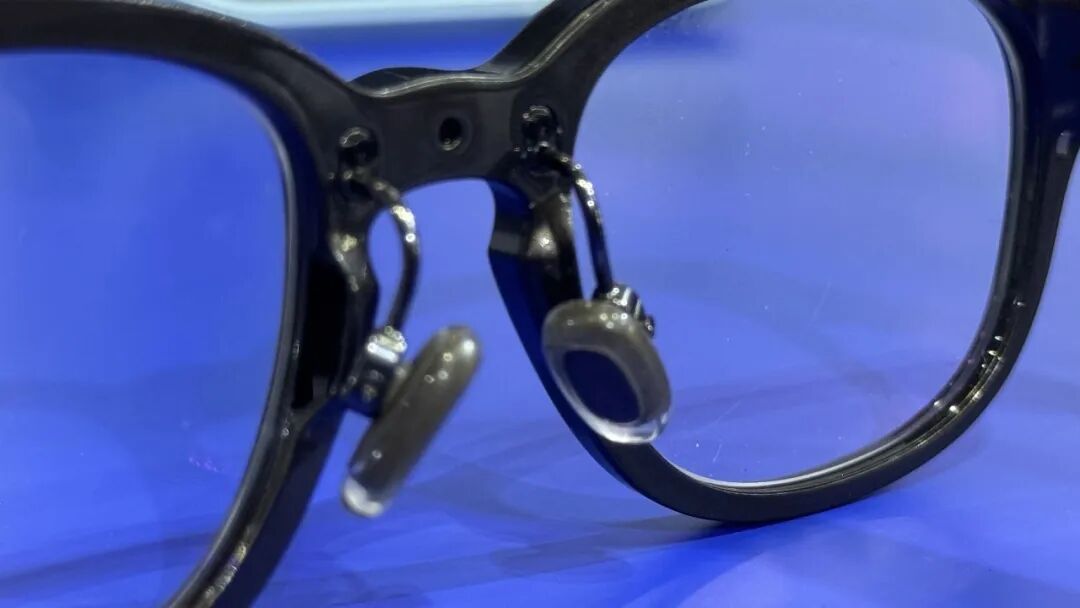
Iris recognition is already used in smartphones and security systems, and XR devices, being naturally close to the eyes, are well-suited for related sensors. Vision Pro uses Optic ID for iris unlocking and authentication, and the QianWen N1 Pro supports iris-based identity verification. The recently unveiled Wigain Flow also includes similar functionality for identity verification and payments.
It is evident that VR/MR headsets are primarily used in specific scenarios for limited durations, while AI glasses are designed for daily, long-term wear. If gaze and iris information are continuously involved in environmental understanding, interaction, and identity authentication, eye perception must shift from on-demand to Always-on operation, imposing higher demands on power consumption, size, and hardware integration.
02
Eye Perception Goes Always-on, Hardware Gets Streamlined
For eye perception to become a permanent feature of AI glasses, issues like power consumption and size must be addressed.
The mainstream PCCR solution tracks pupil and corneal reflections using near-infrared LEDs and in-eye cameras, validated in VR/MR devices like Vision Pro and PS VR2. However, for lightweight AI glasses, size and power consumption remain major constraints, prompting manufacturers to further compress the system through sensor, data collection, and computational architecture optimizations.
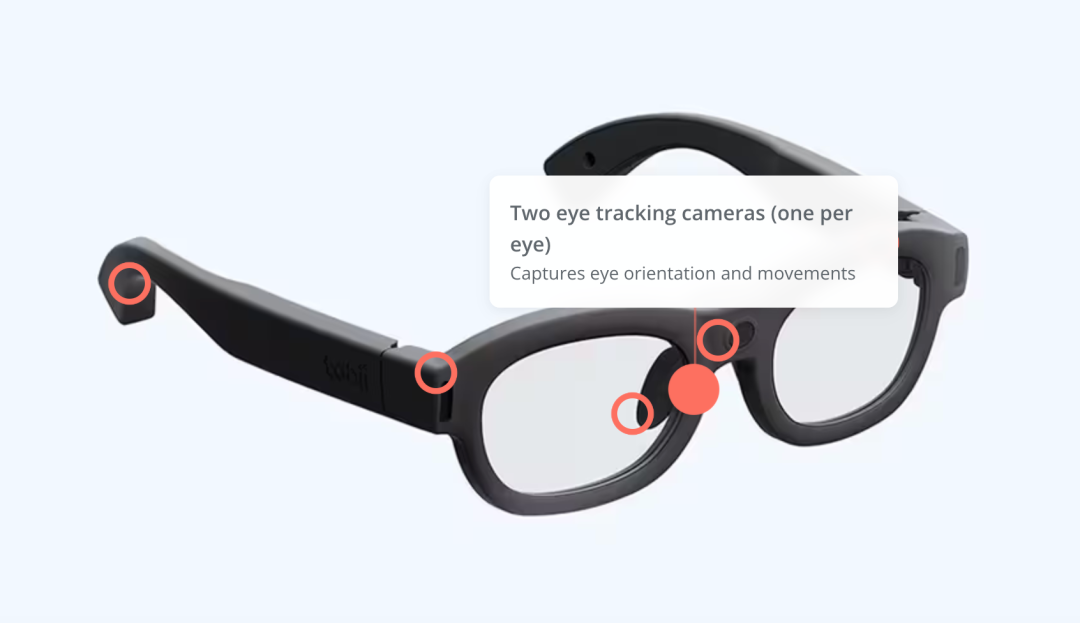
Among eye-tracking vendors, Tobii's new solution for smart glasses reduces hardware to one camera and one LED per eye, compatible with low-power machine learning processors via ONNX models. 7invensun's “Xiaoqi” AI glasses prototype uses miniature infrared sensors to further minimize the eye-tracking module's footprint in the frame.
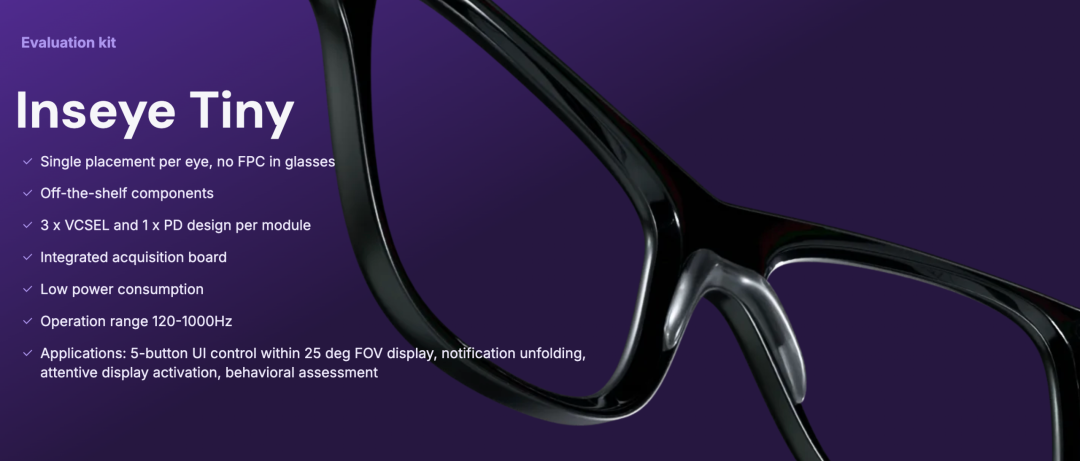
Some solutions directly alter traditional PCCR data collection. Inseye Tiny eliminates the in-eye camera, using photosensitive devices to detect reflections from the eyeball and sclera. The company claims it operates at 100Hz with power consumption below 10mW. By avoiding continuous capture of complete eye images, the module size, data volume, and power consumption are further reduced.
Beyond hardware, another approach is to reduce the data the eye-tracking system continuously processes. Traditional cameras output full images at fixed frame rates, generating redundant information even when there is no significant eye movement. Event cameras, however, only output data when pixel brightness changes, capturing rapid eye movements like saccades and microsaccades while reducing redundant data.
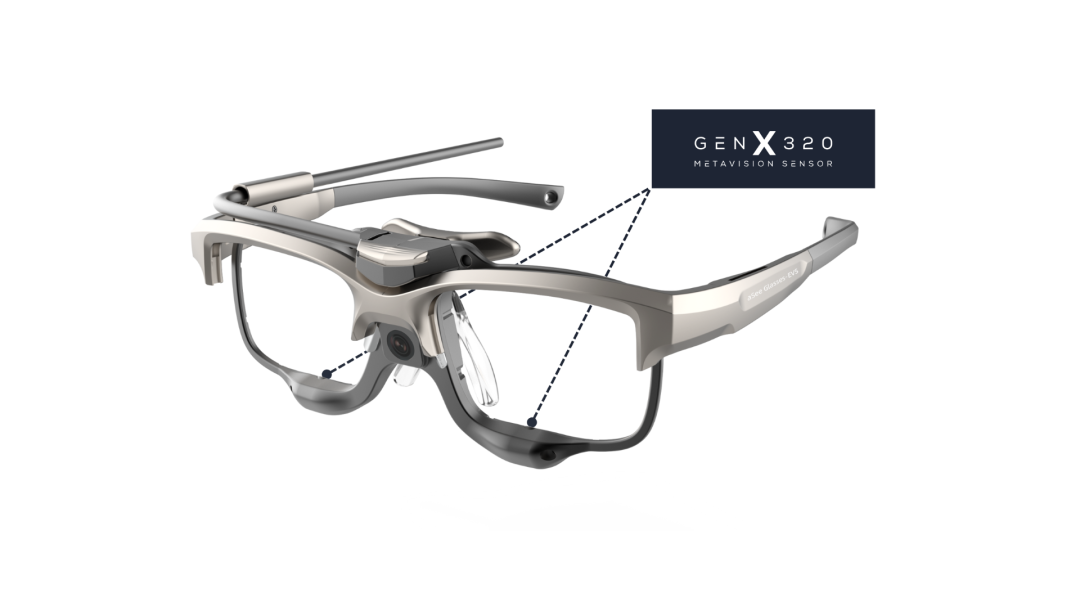
Prophesee's GenX320 is already used in 7invensun's aSee Glasses-EVS research eye-tracking device, with sampling rates up to 1000Hz. Tobii also partnered with Prophesee in 2025 to explore low-power event-based eye-tracking solutions for AR/VR and smart glasses.
With reduced power consumption and data volume at the collection end, computation must also become more power-efficient. If eye-tracking algorithms continuously rely on the main SoC or high-performance NPU, Always-on operation will still consume significant device resources. Therefore, manufacturers are assigning continuous perception tasks to low-power processing units.
During CES 2026, Ganzin showcased the AURORA IIE eye-tracking solution, which uses a custom EPU2 ASIC for eye-tracking data processing, supporting up to 120Hz with power consumption about one-fourth of general-purpose NPU solutions. At the AI glasses chip level, chips like the BES6100 from BesTech divide tasks into low-power and high-performance domains, with the low-power domain handling environmental sensing and pose tracking continuously, while calling on the NPU and GPU for higher computational demands.
For AI glasses, eye tracking must balance accuracy, sampling rate, power consumption, size, and local computational efficiency. Only with further cost reductions can eye perception truly achieve Always-on operation.
03
After Eye Data Collection: Usage and Governance
With eye perception operating Always-on, continuous gaze and iris data raise long-term application, data processing, and privacy protection concerns.
Continuous gaze data can reveal what users repeatedly focus on, their reading order, and behavioral patterns, supplementing AI's understanding of long-term preferences and personal context. Iris data, being a stable biometric, is useful for secure scenarios like identity verification, account binding, and payments.
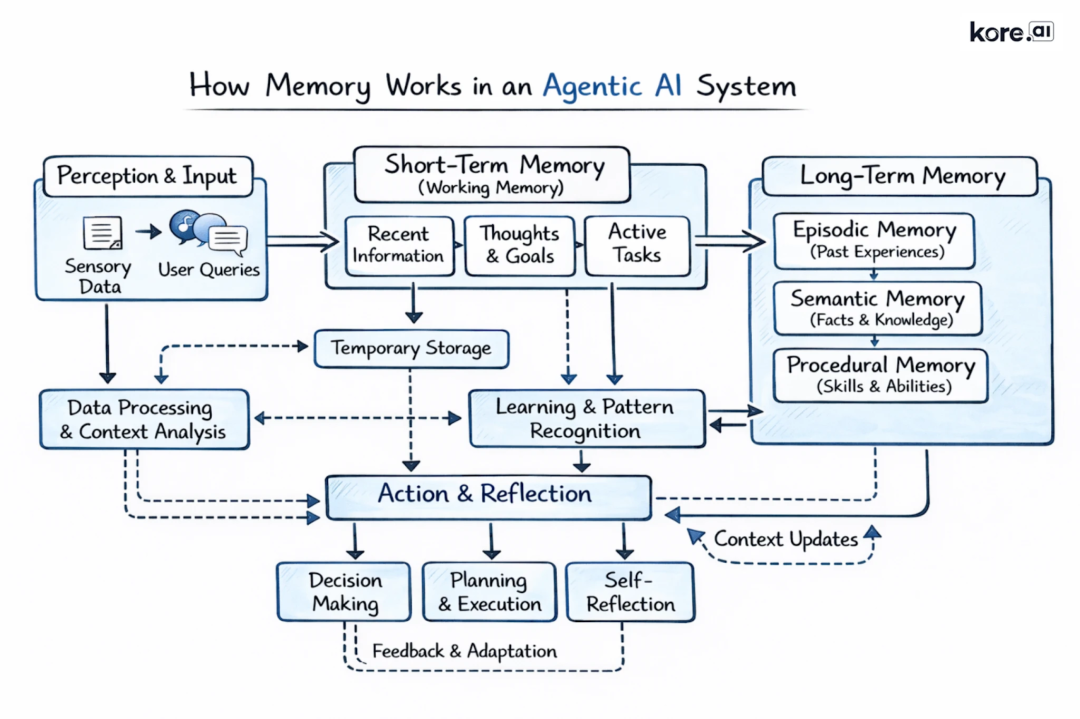
Currently, more AI hardware is emphasizing long-term memory and personal context capabilities, with continuous eye-tracking data serving as one input type. Inseye positions Tiny as a “Behavioral Co-Processor,” identifying behavioral patterns like reading, saccades, focus, and task switching, and analyzing attention changes across time and scenarios. For AI glasses, such continuous data may further contribute to user behavior and preference modeling.
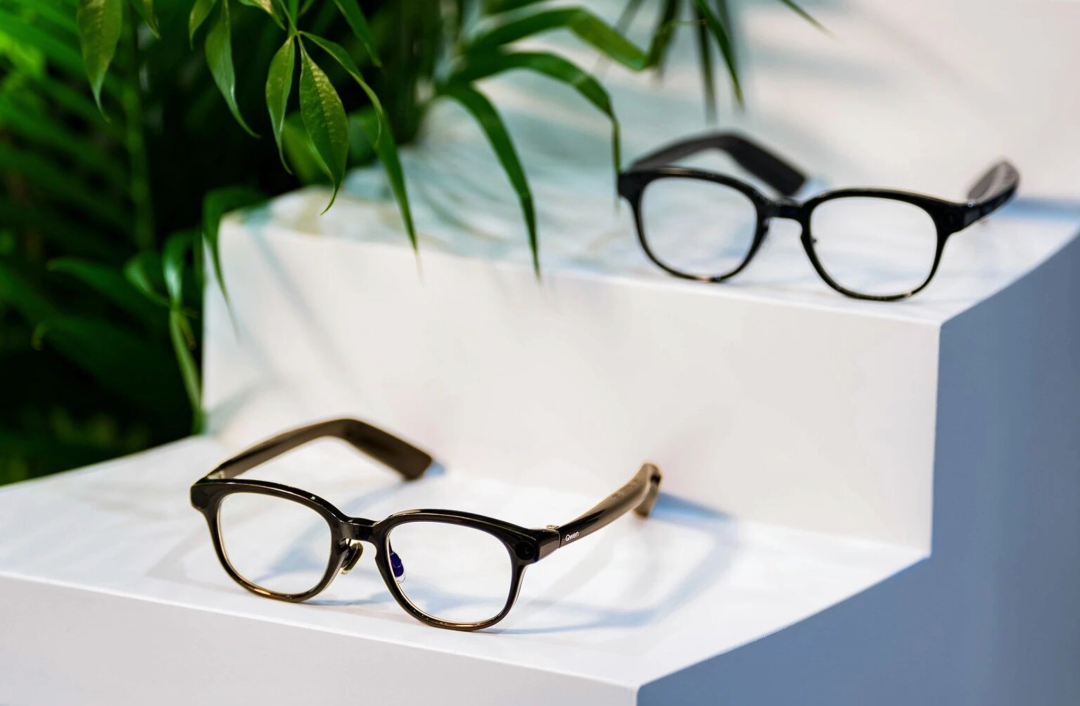
According to public information, the QianWen N1 series features continuous environmental sensing and eye-tracking capabilities. The N1 series uses a low-power visual perception chip to monitor surrounding scenes continuously, offering features like AI-inspired art collections, active recording, and reminders. The N1 Pro adds eye tracking to identify the user's current focus based on gaze and uses iris recognition for identity verification. QianWen also suggests that eye tracking, environmental sensing, and long-term personal memory can be further integrated, making the user's focus objects part of the Personal Agent's understanding of individual context.
However, the more continuous eye data becomes, the more pronounced privacy issues are. Gaze trajectories can reveal not only what users have seen but also, over time, their interests, reading habits, and behavioral patterns. Iris data, being a stable biometric that cannot be reset like a password, offers limited recourse if compromised. In September 2026, an XR study involving 206 users found that even when raw gaze data is converted into more abstract eye-movement features, models can still partially re-identify users, indicating that eye-tracking data itself contains potential identity information.
For AI glasses worn continuously, this issue is amplified. Eye-tracking data rarely exists in isolation but is often recorded alongside first-person video, voice, location, and timing information. When these data are linked long-term, the system can reconstruct more complete user behavior. Therefore, integrating eye data into AI systems does not mean raw information must be stored indefinitely or directly shared with models and third-party applications.
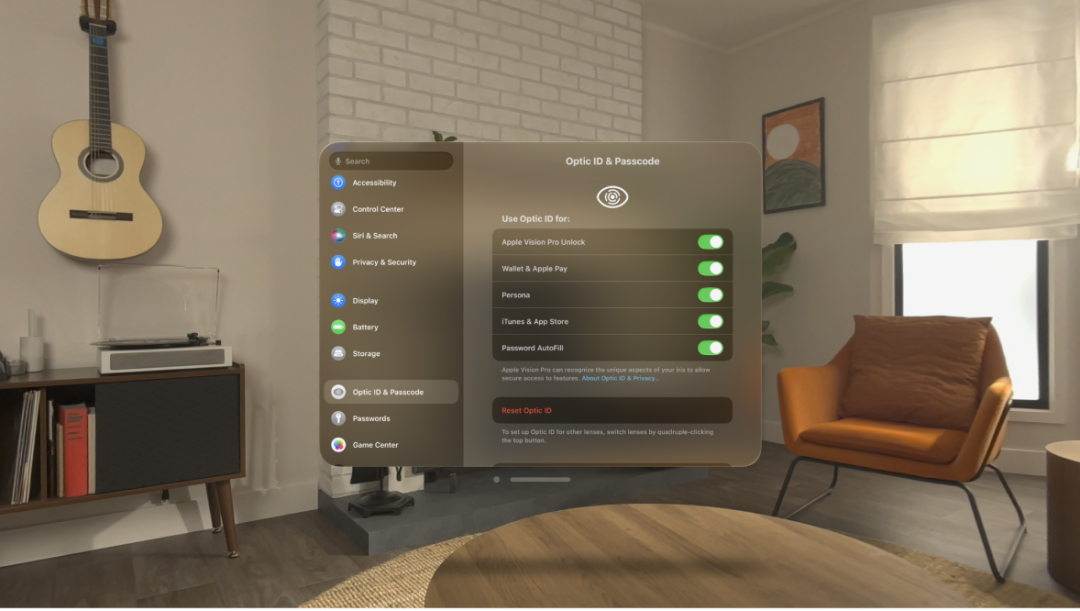
Apple Vision Pro offers a relatively clear approach: eye-tracking judgments are primarily handled at the system level, with ordinary apps unable to access complete user gaze trajectories. Optic ID converts iris information into mathematical representations stored in the Secure Enclave, with third-party apps only receiving authentication success/failure results.
This approach may also suit AI glasses: processing eye data locally on the device, providing only essential information like focus objects and identity verification results to upper-layer AI, and further restricting raw data retention time and access permissions. As eye perception moves toward Always-on, data minimization, local processing, and permission isolation may become as fundamental as power consumption and accuracy for AI glasses.
04
Conclusion
Gaze reveals what users are focusing on, while iris recognition confirms the user's identity. Combined with cameras, microphones, and environmental sensors, AI gains a more complete understanding of personal context.
However, for this capability to truly integrate into all-day wearable devices, accuracy is only part of the equation. Power consumption, size, continuous computational power, and how eye data is processed and protected all directly impact long-term viability. Especially as gaze and iris data continuously feed into AI systems, the importance of data boundaries and permission management rises concurrently.
If these issues are gradually resolved, eye perception is likely to become a crucial foundational capability for AI glasses in the next phase. Devices will not only know what users see but also understand what they are focusing on, who is using the device, and which information is worth retaining continuously. The eyes will become a key data entry point for AI to understand users.
-
![]()
Despite 800V and 6C Capabilities, Why Do We Still Face 5-6 Hour Charging Queues?
-
![]()
McLaren’s Market Plummet: From 310 to a Mere 9 Annual Sales!
-
![]()
High-Speed NOA Collision: Blaming the Driver When Only a Sudden 0.2-Second Hard Brake Could Avert Disaster!
-
![]()
AI Transforms the Tech Industry: Software's Glory Fades as Hardware Starts Profiting from Scarcity
-
![]()
FCC’s US Ban to Drive Internationalization of Chinese Technical Certification
-
![]()
Zunjie V800 Rolls Out Free Upgrades Following Three Brake Pedal Malfunctions
-
![]()
FAW Toyota to Maintain Operations; FAW, GAC, and Toyota Forge New Partnership
-
![]()
Automotive Consumption Policy: Transitioning from Short-Term Boosts to Long-Term Ecosystem Development