Automotive Consumption Policy: Transitioning from Short-Term Boosts to Long-Term Ecosystem Development
 10/09 2026
 376
376
China's automotive market has grown to encompass 370 million vehicles. Policy priorities are now shifting from "quantity control" to "service enhancement," marking a strategic evolution from short-term incentives to the establishment of a sustainable automotive ecosystem.
Commodity consumption is pivotal in driving overall consumption and enhancing people's well-being. It plays a crucial role in fostering a robust domestic market, cultivating new drivers of high-quality productivity, and fulfilling the people's aspirations for a better life. Recently, to spur the expansion and upgrade of commodity consumption, the Ministry of Commerce, the National Development and Reform Commission, the Ministry of Industry and Information Technology, the Ministry of Finance, the Ministry of Agriculture and Rural Affairs, the Ministry of Culture and Tourism, and the State Administration for Market Regulation jointly issued the Implementation Opinions on Promoting the Expansion and Upgrading of Commodity Consumption (hereinafter referred to as the "Implementation Opinions"). This document advocates for strengthening brand leadership, standard enhancements, and the adoption of cutting-edge technologies. It focuses on boosting the consumption of major durable goods, steadily elevating the consumption of daily necessities, supporting the consumption of specialty goods, nurturing the growth of upgraded commodity consumption, and driving the expansion and upgrade of commodity consumption to provide robust support for stimulating consumption, expanding domestic demand, and building a strong domestic market.
Among these initiatives, automotive consumption is identified as the foremost component of durable goods consumption. Industry experts note that the Implementation Opinions go beyond the short-term objective of merely "selling cars." Instead, they encompass the entire automotive consumption lifecycle, including "optimal usage, full enjoyment, seamless transfer, and responsible recycling," thereby achieving a strategic upgrade from short-term stimulus to long-term ecosystem development.
Diminishing Incremental Dividends Necessitate Deep Cultivation of Existing Stock
In recent years, commerce authorities at all levels have diligently implemented the decisions and strategies of the Party Central Committee and the State Council. They have actively collaborated with relevant departments to deeply implement special actions to boost consumption, solidly promote the replacement of old consumer goods with new ones, build the "Shopping in China" brand, and focus on stabilizing and expanding commodity consumption, achieving positive outcomes.
"By 2025, China's total retail sales of consumer goods are projected to exceed RMB 50 trillion, with passenger car retail sales reaching 23.744 million units. Retail sales of home appliances and communication equipment by enterprises above a certain size are both expected to surpass RMB 1 trillion, showcasing the continued emergence of advantages in China's super-large market," stated an official from the Ministry of Commerce's Consumption Promotion Department. The outline of the "15th Five-Year Plan" clearly proposes to promote the expansion and upgrade of commodity consumption, strengthen brand leadership, standard enhancements, and the adoption of new technologies, stabilize the consumption of major durable goods, promote the replacement of consumer goods, and meet multi-tiered consumer demands. To implement the decisions and strategies of the Party Central Committee and the State Council, clarify the work thinking and specific measures for promoting commodity consumption during the "15th Five-Year Plan" period, and drive the steady expansion and structural optimization of commodity consumption, the Ministry of Commerce, in collaboration with relevant departments, conducted classified research on commodity consumption, held expert and enterprise symposiums, conducted field research in multiple locations, drafted the Implementation Opinions, and recently issued the document.
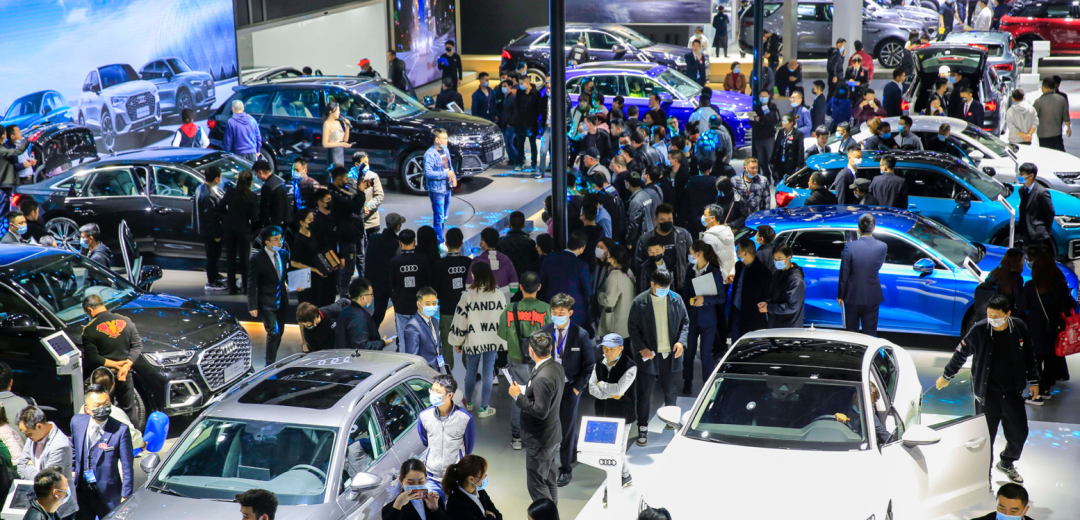
As the foremost initiative to promote durable goods consumption, the Implementation Opinions call for deepening pilot reforms in automotive circulation and consumption, accelerating the removal of unreasonable restrictive measures in the automotive sector, innovating automotive usage management models, and expanding automotive consumption across the entire supply chain. Specifically, the document mentions promoting the optimization of automotive purchase restrictions in relevant regions to better meet residents' car-buying needs. Meanwhile, the Implementation Opinions explicitly support the development of automotive modification, maintenance, racing, and RV camping. They also propose establishing a certification and management system for traditional classic vehicles, promoting mutual recognition of unified invoices for used car sales, implementing a three-year action plan for small passenger car leasing, improving the vehicle scrapping and recycling system, supplementing new energy replenishment facilities along highways and at transportation hubs, and upgrading the quality of highway service areas, covering the entire chain from sales and registration to maintenance, insurance, and scrapping.
For years, China's automotive market has consistently ranked first globally in terms of vehicle ownership. However, it is undeniable that the growth rate of new car sales is transitioning from rapid expansion to steady, slight increases. Multiple institutions predict that domestic automotive sales will grow by approximately 1% to 2% in 2026. As the dividends of "incremental expansion" diminish, "deep cultivation of existing stock" becomes an inevitable choice. In the past few years, China's automotive consumption policies have employed various short-term stimulus measures, such as purchase subsidies and trade-in programs, which were indeed effective at specific stages. However, with the continuously expanding base of vehicle ownership and new car sales gradually entering a plateau phase, continuing to focus policy efforts solely on the "purchase" link will result in diminishing marginal returns. Objectively speaking, the true future growth potential of China's automotive market lies in the "usage" link.
Only by promoting the expansion of incremental markets while facilitating the structural upgrading of existing stock can the goals set forth in the Implementation Opinions be better achieved: by 2030, total retail sales of consumer goods will reach approximately RMB 60 trillion, fostering the formation of RMB 10 trillion-level markets for green, intelligent, and health-related consumption, driving sustained growth and expansion. Retail sales in trillion-level categories such as automobiles, home appliances, communication equipment, and textiles and garments will continue to grow, maintaining a globally leading market scale.
Fostering the Growth of the Aftermarket
As automotive consumption policies shift from "purchase management" to "usage management," the "aftermarket" is no longer merely an adjunct to new car sales but has become a core field for driving consumption expansion and upgrading. Following the issuance of the Notice on Several Measures for Fostering and Expanding Automotive Aftermarket Consumption by nine departments, including the Ministry of Commerce, in June this year, the Implementation Opinions once again deploy strategies for China's automotive aftermarket, continuously improving and promoting the maturity of the automotive aftermarket ecosystem from dimensions such as cultivating consumption culture, establishing and improving management systems, and optimizing circulation systems.
The Implementation Opinions state that efforts should be made to foster and expand the automotive aftermarket, support the development of automotive modification, maintenance, racing, and RV camping, establish a certification and management system for traditional classic vehicles, improve interdepartmental information-sharing mechanisms, and establish an information interaction system covering the entire automotive lifecycle, including sales, registration, maintenance, insurance, and scrapping. Additionally, the document proposes improving the management system for used car circulation, promoting mutual recognition of unified invoices for used car sales, and implementing graded and classified management for used car business entities.
Notably, previously, domestic laws and regulations regarding the compliant road use, mandatory scrapping, and de-registration of classic vehicles were lacking. However, in recent years, the classic car market has begun to receive attention. In June this year, the Notice on Several Measures for Fostering and Expanding Automotive Aftermarket Consumption, jointly issued by nine departments, including the Ministry of Commerce, the Ministry of Industry and Information Technology, the Ministry of Public Security, and the Ministry of Transport, innovatively established official certification standards for classic vehicles, defining age and condition thresholds. Certified classic vehicles will no longer be subject to the mandatory scrapping and stringent emissions inspection rules that apply to ordinary private cars. At the same time, policies have relaxed their road use permissions, allowing them to be displayed and paraded in designated areas and time slots, and supporting the import, export, and collection trade of classic vehicles in free trade zones. Combined with the Implementation Opinions, a series of policies are expected to directly invigorate multiple new industrial chains, including classic car trading and auctions, professional restoration, parts replication, and appraisal and evaluation, thereby truly achieving "expansion" and "upgrading."
On the other hand, the "entire lifecycle information interaction system" mentioned in the Implementation Opinions covers sales, registration, maintenance, insurance, and scrapping, meaning that every transfer of a vehicle from production to dismantling will be traceable. Analysts believe that once automotive lifecycle data is interconnected, issues such as valuation and risk control for used cars, leasing, insurance, and scrapping are expected to be alleviated. For a long time, the "scattered, disorganized, and low-quality" phenomenon in China's automotive aftermarket has been lacking precisely this "comprehensive record."
Dong Chao, Director of the Institute of Circulation and Consumption at the Chinese Academy of International Trade and Economic Cooperation, Ministry of Commerce, stated to the media that deepening the shift in automotive consumption from purchase management to usage management means that supply in usage-related areas, such as battery swapping facilities, parking resources, maintenance outlets, campsites, and racetracks, is being placed on a more important footing. This is fully evidenced by the Implementation Opinions' greater emphasis on areas such as automotive leasing, scrapping and recycling, energy replenishment infrastructure, and parking lots.
The Implementation Opinions require: "Implementing a three-year action plan for promoting the high-quality development of small passenger car leasing to enhance the quality and efficiency of leasing services." In fact, automotive leasing has never been an isolated niche industry but rather a bridge connecting "ownership" and "experience" in the overall automotive usage ecosystem. Through high-quality leasing services, carless users can still deeply participate in automotive consumption, which is an important outlet for releasing suppressed consumption potential among residents in purchase-restricted cities, business travelers, and those with temporary vehicle needs.
Improving the Consumption and Usage Environment
The outline of the "15th Five-Year Plan" clearly states the need to "deepen the shift in automotive consumption from purchase management to usage management." With 370 million vehicles in circulation in China, policy priorities are shifting from "controlling quantity" to "improving services." In reality, seemingly dispersed and trivial "usage-end" issues, such as "whether there is a place to park, whether energy replenishment is smooth, and how to gracefully retire old vehicles," precisely determine whether the automotive consumption market can continue to expand.

"Improving the vehicle scrapping and recycling system and strengthening the qualification certification management of scrapping and recycling dismantling enterprises." The brief statement in the Implementation Opinions recognizes the need for an important "outlet"—scrapping and recycling—to unclog the automotive consumption cycle. Industry insiders point out that if a vehicle cannot be smoothly scrapped, it not only occupies household quotas and parking spaces but also directly suppresses the willingness to replace it with a new car, as consumers may feel that disposing of the old vehicle is too troublesome and prefer to keep driving it for a few more years. The Implementation Opinions address both "improving the system" and "strengthening qualification certification management," aiming to enhance the convenience and attractiveness of formal recycling channels while reducing the survival space for gray-market operations, thereby facilitating smoother upgrades in the existing stock market.
On the flip side, supporting facilities are pivotal for the stable and sustained development of the automotive consumer market. The Implementation Opinions clearly state: "Efforts should be made to enhance the construction of energy replenishment infrastructure for new energy vehicles along highways and at transportation hubs, promoting balanced coverage and ensuring a proper match between supply and demand for public charging stations, urban parking lots, and other facilities." The terms "balanced coverage" and "supply-demand matching" precisely target the current pain points in the industry. Although the number of charging stations has surged in recent years, structural contradictions remain pronounced, and utilization rates have fallen short of expectations. In response, the Implementation Opinions signal a significant shift: the construction of energy replenishment infrastructure must transition into a phase of "meticulous development," leveraging "balanced coverage" to address spatial equity and "supply-demand matching" to ensure precise alignment in both time and space. Implementing these two principles will substantially alleviate the primary concern that has hindered new energy vehicles from transitioning from "urban commuting" to "long-distance travel."
Meanwhile, the Implementation Opinions explicitly call for "upgrading the quality of highway service areas, improving charging facilities, renovating public restrooms for the elderly, and undertaking other initiatives to create a number of high-standard automotive rest stops and consumption hubs along transportation routes." Unlike in the past, "high-standard automotive rest stops" and "consumption hubs" signify a redefinition of service areas as multifunctional consumption spaces that integrate energy replenishment, rest, dining, shopping, and cultural tourism. More importantly, the target audience for these service areas has expanded from "vehicles" to "people" and from "drivers" to "all occupants." When service areas offer the comfort and consumption options that encourage entire families to stay for more than half an hour, transportation routes will cease to be mere passageways and will instead become links that connect consumption demands along the journey.
As 370 million vehicles take to the roads, consumption growth will no longer stem from selling a few additional cars but from enabling every vehicle and owner to travel with greater peace of mind, comfort, and quality. The policy shift has already commenced, but the reconstruction of the industrial ecosystem will not occur overnight—everything will be validated through concrete implementation. The greater悬念 (which can be translated as "uncertainty" or "intrigue" in this context, but kept as "suspense" for stylistic consistency) lies in whether, as consumers' vehicle usage experiences evolve from "making do" to "being particular," and as the entire lifecycle of every vehicle becomes transparent and traceable, the revaluation of China's automotive aftermarket will yield far more commercial opportunities than anticipated. The answer will emerge through market practice over the next three, five, or even longer years.
Note: This article was first published in the "Hot Topics" column of the October 2026 issue of Auto Review magazine. Please stay tuned.

Image: Sourced from the Internet
Article: Auto Review
Layout: Auto Review
-
![]()
Despite 800V and 6C Capabilities, Why Do We Still Face 5-6 Hour Charging Queues?
-
![]()
McLaren’s Market Plummet: From 310 to a Mere 9 Annual Sales!
-
![]()
High-Speed NOA Collision: Blaming the Driver When Only a Sudden 0.2-Second Hard Brake Could Avert Disaster!
-
![]()
AI Transforms the Tech Industry: Software's Glory Fades as Hardware Starts Profiting from Scarcity
-
![]()
FCC’s US Ban to Drive Internationalization of Chinese Technical Certification
-
![]()
Zunjie V800 Rolls Out Free Upgrades Following Three Brake Pedal Malfunctions
-
![]()
FAW Toyota to Maintain Operations; FAW, GAC, and Toyota Forge New Partnership
-
![]()
Automotive Consumption Policy: Transitioning from Short-Term Boosts to Long-Term Ecosystem Development