Final Verdict: 'Golden September' Falters, 'Silver October' Loses Luster as Domestic Auto Market Remains Under Pressure
 10/14 2026
 471
471
This Monday, the China Association of Automobile Manufacturers (CAAM) unveiled the statistics on domestic automobile production and sales for September and the first nine months of this year (note that the sales figures are wholesale numbers).
According to the released statistics, in the first three quarters of this year, there was a slight decline in automobile production and sales. The overall market exhibited a trend of "cooling down domestically while heating up internationally." The domestic auto market continued to be under pressure, with no significant signs of improvement yet. Despite a complex and challenging external environment, exports maintained robust growth, surpassing one million units for four consecutive months. Additionally, the domestic market share of new energy vehicle (NEV) sales increased steadily.
The CAAM anticipates that the auto industry will maintain stable operations in the fourth quarter. Exports are expected to continue growing, with the annual total likely exceeding 10 million units. Policies promoting trade-ins, along with local and enterprise-led consumption-boosting activities, are expected to mitigate the decline in domestic market sales. 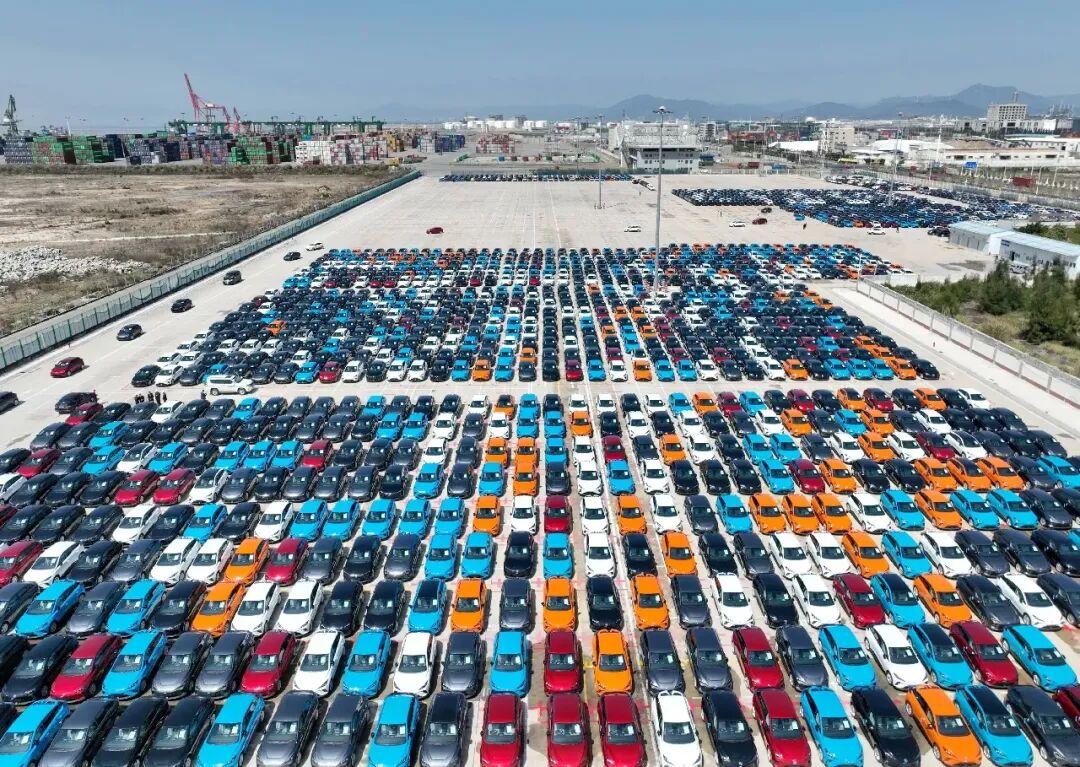
Some analysts argue that due to economic sluggishness and poor expectations, consumer confidence in purchasing vehicles remains low. Moreover, policy incentives in previous years have prematurely stimulated vehicle demand, making it likely that domestic auto sales will experience negative growth in 2026—a phenomenon not witnessed in many years.
Based on CAAM statistics, domestic automobile production and sales in the third quarter of this year displayed the following six notable characteristics:
1. Overall Market Declines Slightly, Exhibiting a "Cooling Down Domestically, Heating Up Internationally" Pattern.
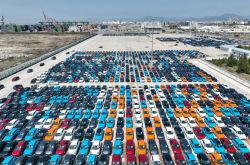
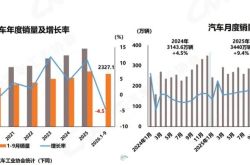
Statistics indicate that from January to September, automobile production and sales reached 23.246 million and 23.271 million units, respectively, both showing a 4.5% year-on-year decline. The domestic market weakened significantly, with domestic sales reaching 15.066 million units, down 22.4% year-on-year. Conversely, automobile exports surged, with cumulative exports reaching 8.205 million units, up 65.8% year-on-year. Exports emerged as the core growth engine, offsetting some of the domestic demand contraction.
2. New Energy Vehicles Achieve Growth Against the Trend, with Penetration Rate Exceeding 50% and the Gap Between Fuel and Electric Vehicles Widening.
Statistics reveal that in the first three quarters, NEV production and sales reached 12.483 million and 12.472 million units, respectively, up 11% and 11.1% year-on-year. The NEV penetration rate reached 53.6%. Fuel vehicle sales continued to decline, with domestic fuel vehicle sales dropping 33.6% year-on-year and market share continuously being squeezed. 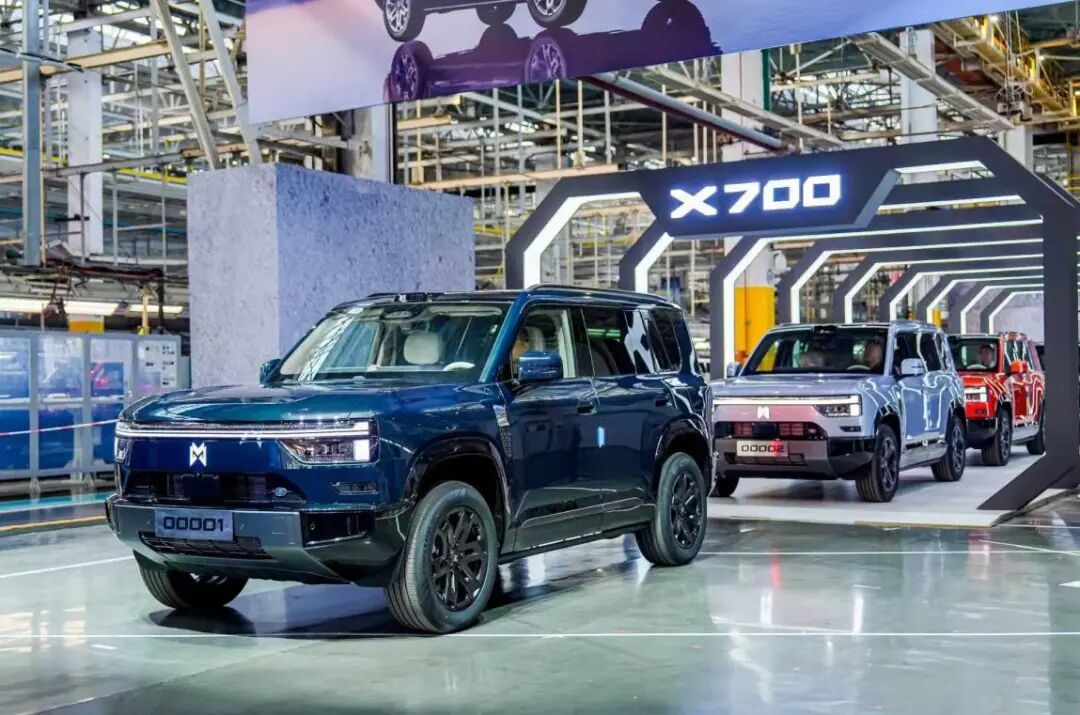
3. Export Structures Upgrade, with New Energy Vehicles Becoming the Main Force in Overseas Markets.
From January to September this year, NEV exports reached 4.006 million units, surging 130% year-on-year. NEV exports accounted for nearly half of total vehicle exports. In September alone, NEV exports reached 571,000 units, up 160% year-on-year. Chinese auto exports are no longer primarily reliant on fuel vehicles, with NEVs leading overseas sales.
4. Passenger Vehicles and Commercial Vehicles Show Divergent Trends.
From January to September, passenger vehicle production and sales reached 19.966 million and 19.96 million units, respectively, down 6% and 6.1% year-on-year, becoming the main source of domestic market weakness. In contrast, commercial vehicles maintained positive growth, with production and sales reaching 3.279 million and 3.311 million units, up 6.1% and 6.2% year-on-year, respectively. Demand for heavy trucks and logistics vehicles remained relatively stable, contrasting with the sluggishness of passenger vehicles. 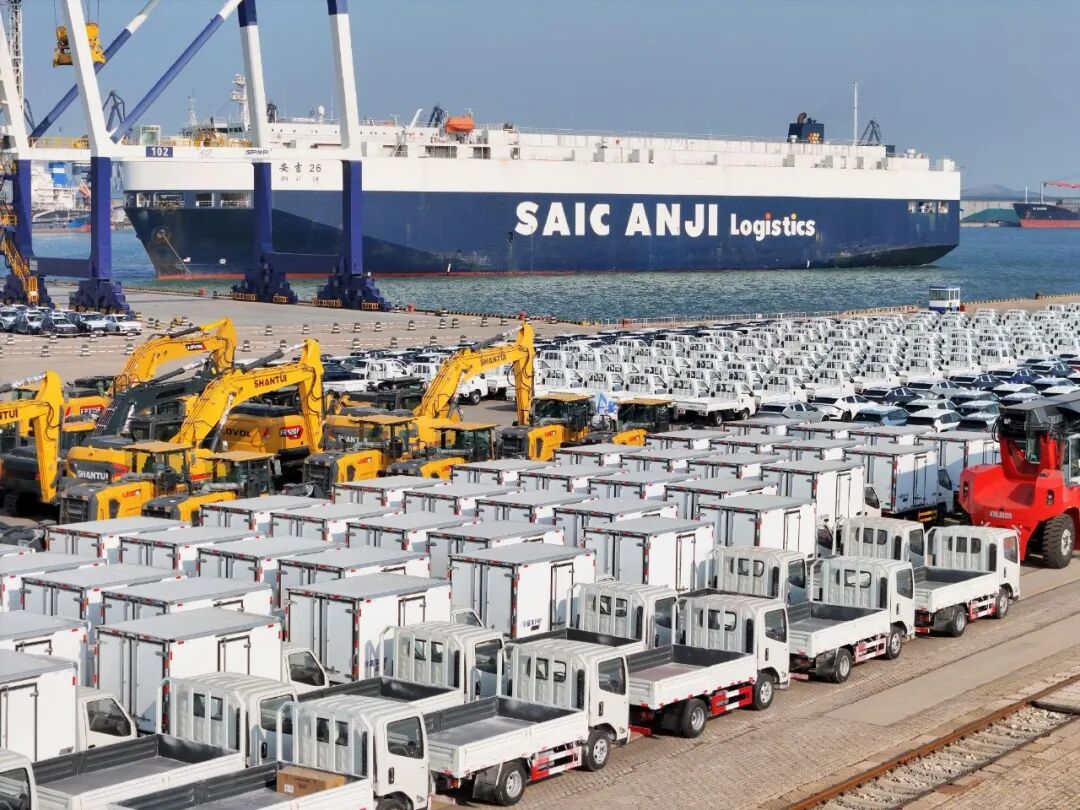
5. The Auto Market Shows Month-on-Month Recovery in September, but the "Golden September" Peak Season Effect Fails to Materialize.
In September this year, automobile production and sales recovered significantly compared to August, with sales ring growth of 9%, but still declined 8.4% year-on-year. Despite a large number of new models launched before the holiday, domestic market sales failed to turn positive year-on-year. Consumer hesitation remained strong, weakening the traditional peak season pattern of "Golden September and Silver October" and indicating that the domestic auto market has entered a period of profound adjustment.
6. Structural Competition in the Market Intensifies.
The domestic passenger vehicle market is embroiled in relentless price wars, with joint venture brands' market share continuously shrinking. Chinese domestic brands are leveraging NEV models to seize market share. The auto industry is accelerating capacity integration, with strategic cooperation between FAW and GAC signaling industrial restructuring. The Chinese auto industry is entering a phase of survival of the fittest.
(End)
(Some images in this article are sourced from the internet)
-
![]()
Why Does Jingneng Look Abroad for Chips After Installing 300,000 Modules in Vehicles?
-
![]()
Hello World: Key Highlights of Hello's Revolutionary Generative Driving World Model
-
![]()
Final Verdict: 'Golden September' Falters, 'Silver October' Loses Luster as Domestic Auto Market Remains Under Pressure
-
6G on the Brink of Commercialization: The Interplay of Policy, Technology, and Market Forces
-
![]()
Valuation Soars to $50 Billion: Is Moonshot AI Paving the Way for a Hong Kong IPO?
-
![]()
A pure electric range of 1,008 kilometers: BYD's Da Han officially hits the market, priced between RMB 235,900 and RMB 275,900
-
![]()
Vehicle Exports Set to Top 10 Million Units, CAAM: Auto Market 'Cooling Down Domestically, Heating Up Internationally'
-
![]()
25+ Chinese Brands Make Their Debut at the Paris Auto Show! China's Automobile Industry Embarks on a Systematic Global Expansion, Shifting the Offensive and Defensive Dynamics Between Chinese and Euro