China and the EU Both Achieve Success! Will the Export Volume of New Energy Vehicles to Europe Rise or Fall?
 10/20 2026
 333
The negotiations between China and the European Union concerning hybrid models have reached a conclusion. The EU asserts that over the next four years, China's exports of hybrid and plug-in hybrid vehicles to the EU will decrease by more than half compared to previous estimates, impacting millions of vehicles.
On the same day, China's official statement was: Both sides have agreed on an upward adjustment starting from 2025 to ensure export opportunities and steady growth for Chinese companies.
One side mentions a halving, while the other talks about growth. At first glance, it seems they are talking at cross-purposes.
The EU's reference to a 'halving' pertains to its earlier projection of explosive growth; China's 'upward' adjustment is in comparison to the 302,000 units already achieved in 2025.
Different reference points lead to different conclusions. Both perspectives are valid.
This is the nuance of diplomatic language—where both parties can claim victory.
1
Why the EU is Targeting Hybrid Vehicles
In October 2024, the EU imposed anti-subsidy tariffs on Chinese-made pure electric vehicles for a period of five years. The base tariff rate is set at 10%, with additional differentiated rates: BYD at 17.0%, Geely at 18.8%, SAIC at 35.3%, other cooperating companies at 20.7%, and certain models facing a combined rate of up to 45.3%.
Despite the imposition of tariffs, the outcome did not unfold as expected.
Chinese companies responded by adjusting their product mix, shifting towards plug-in and hybrid models that were not subject to the same tariff constraints.
In early 2025, industry statistics revealed that China's plug-in hybrid exports to Europe surged by 892% year-on-year.
As of September of the same year, the focus had shifted to volume. EU imports of plug-in hybrids increased by 86%, with prices dropping by 20%, and over half of these imports originated from China. By 2025, China's share of EU plug-in hybrid imports by value had reached 30%.
Customs data further highlights the trend: In 2025, China's plug-in hybrid exports to Europe grew by 155% year-on-year, compared to just a 12% increase for pure electric vehicles.
According to the European Automobile Manufacturers Association, pure electric vehicles accounted for 15.4% of new car registrations in Europe in 2024, a slight decrease from 15.7% the previous year.
In the same year, the average price of pure electric vehicles in the eurozone was around €62,700, while hybrids averaged €42,200—a significant €20,000 difference.
Chinese electric vehicles, on average, were priced around €25,000 in Europe, a price point with virtually no equivalent in European brands' product lineups.
Xingkong Jun views this as a strategic move. Imposing tariffs requires a lengthy year-long investigation and carries the risk of retaliation; setting quotas, on the other hand, allows for immediate negotiations and can be presented as a mutually beneficial arrangement.
2
How the Figure of 300,000 Units Came About
The most concrete aspect of the agreement is its grounding in facts.
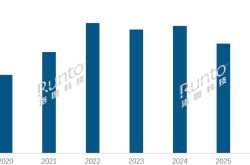
What are these facts? According to data from the EU statistical office, EU imports of hybrid vehicles from China were 107,000 units in 2024 and surged to 302,000 units in 2025, marking an 183.9% increase in just one year.
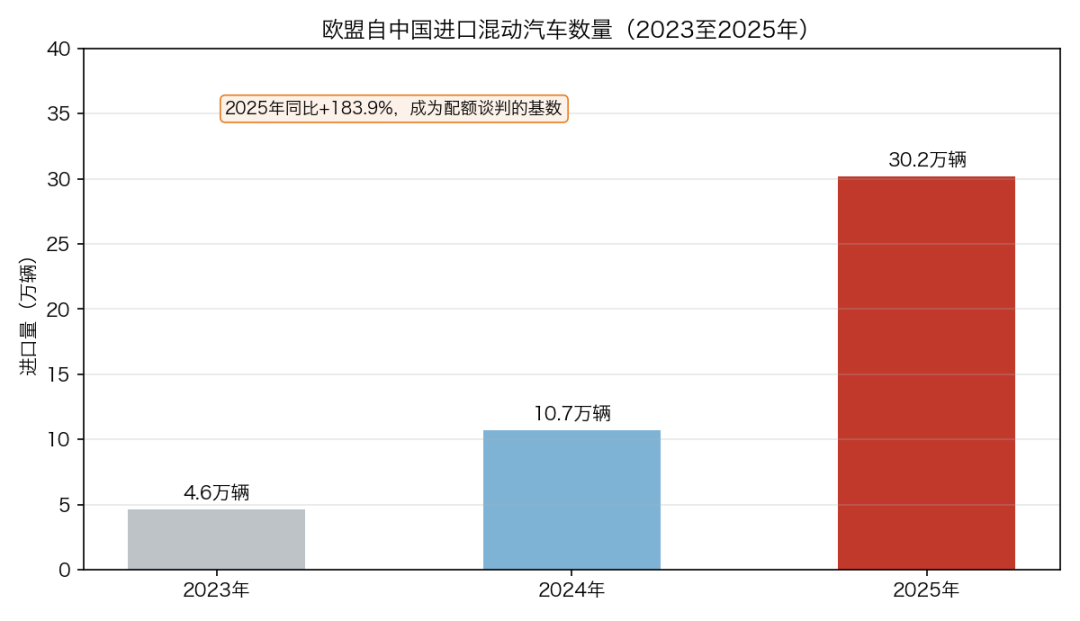
Data Source: ifind
Ultimately, both sides reached an upward adjustment based on the 302,000 units recorded in 2025.
Under WTO safeguard measures, annual quotas typically consider the average of the three most representative recent years, excluding years with abnormal surges. Using the period from 2022 to 2024, China's quota would be around 70,000 units; even including the surge year of 2025, the average for 2023-2025 would be around 150,000 units.
This time, however, the base was set at 302,000 units, with fixed annual increases. The quota scale is thus two to four times larger than what would be calculated conventionally.

A simple projection using this base: If exports grow by around 10% annually, there would be roughly 1.4 million units of export space over four years. (Note: The 10% increase is merely a projection for this article; the EU's disclosed plan is for 350,000-400,000 units in the first year, with 6% annual growth.) Following the EU's original projection curve, the first year would see over 600,000 units, potentially reaching 4 million or more over four years.
This is what Šefčovič meant by 'more than halving' and 'millions of vehicles.'
At an average price of €25,000 per vehicle, the lost incremental business amounts to tens of billions of euros. This money hasn't vanished; it has simply shifted from Chinese exporters' fleets to the production lines of Chinese automakers' European factories.
This is the cleverness of the quota system: It doesn't ban business outright; it just dictates the entry point.
Two other principles are equally crucial.
One is non-discrimination. The EU has committed that any measures on hybrid vehicles will apply uniformly to all import sources, ensuring that China's quota is not lower than that of any other import source.
The other is compliance. All measures must adhere to WTO rules, and China reserves the right to seek dispute resolution and trade compensation.
According to legal experts involved in the consultations, the EU's initial proposal was for China to voluntarily restrict exports, which China rejected on the grounds that WTO rules explicitly prohibit voluntary export restraints. The EU then proposed a quota control scheme specifically targeting Chinese hybrids, which China again opposed, insisting on the principle of non-discrimination.
3
Three Half-Year Reports
Chery's export data for the first half of the year: The group exported 943,800 vehicles, up 71.5% year-on-year, setting a record for over 900,000 Chinese automotive exports in a half-year period. On average, a Chery-made vehicle rolls off the production line for global markets every 16 seconds.
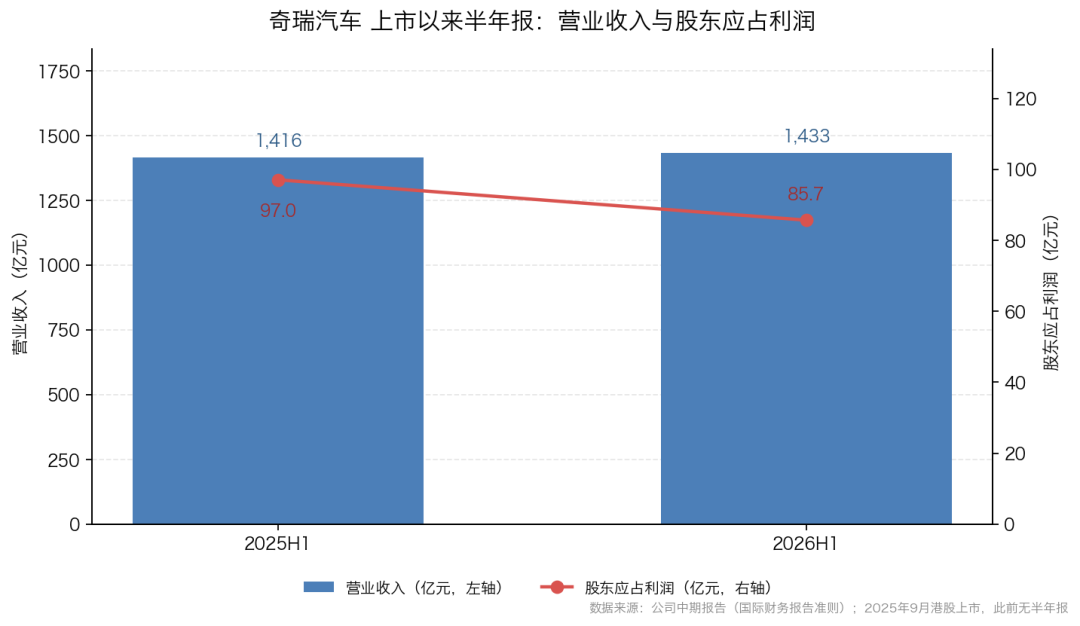
Data Source: ifind
European sales more than doubled in the first half, ranking second among all brands in the UK market.
Firstly, Europe is just one part of Chery's export map. In 2025, Chery exported 1.2944 million vehicles, ranking first among Chinese passenger car brands for 23 consecutive years, with a presence in 16 European countries. Its markets are sufficiently diversified that quota constraints in any single market will not significantly impact it.
Secondly, Chery has already moved its factories overseas. It formed a joint venture with Spain's Ebro Group to restart the former Nissan Barcelona plant, expected to launch production in late 2026 to early 2027, and is in talks with Nissan about contract manufacturing at its Sunderland plant in the UK.
Under the quota system, locally produced vehicles are not counted as imports and do not occupy quotas.
Now, considering its revenue structure: New energy revenue was ¥59.284 billion, up 63.8%, accounting for 41.4% of total revenue, an increase of nearly 16 percentage points year-on-year. R&D investment in the first half was ¥6.672 billion, up 28.3%, outpacing revenue growth.
For a company that relies heavily on exports, investing such a high proportion in R&D indicates that it does not intend to rely solely on price to compete in Europe.
Chery's gross margin also supports this strategy. The overall gross margin was 16.1% in the first half, up 3.1 percentage points; passenger car gross margin rose from 12.4% to 15.6%; new energy gross margin was 12.8%, up 7.6 percentage points year-on-year.
Quotas may compress export volumes, but they won't compress per-unit profits. For a company with a net profit margin of 6.3%, selling fewer units isn't the worst outcome—selling cheap is.
BYD finds itself in a different situation.
Its first-half revenue fell by 7.13%, and net profit by 20.54%. This isn't solely a European issue; it's due to domestic price wars and exchange rate losses.
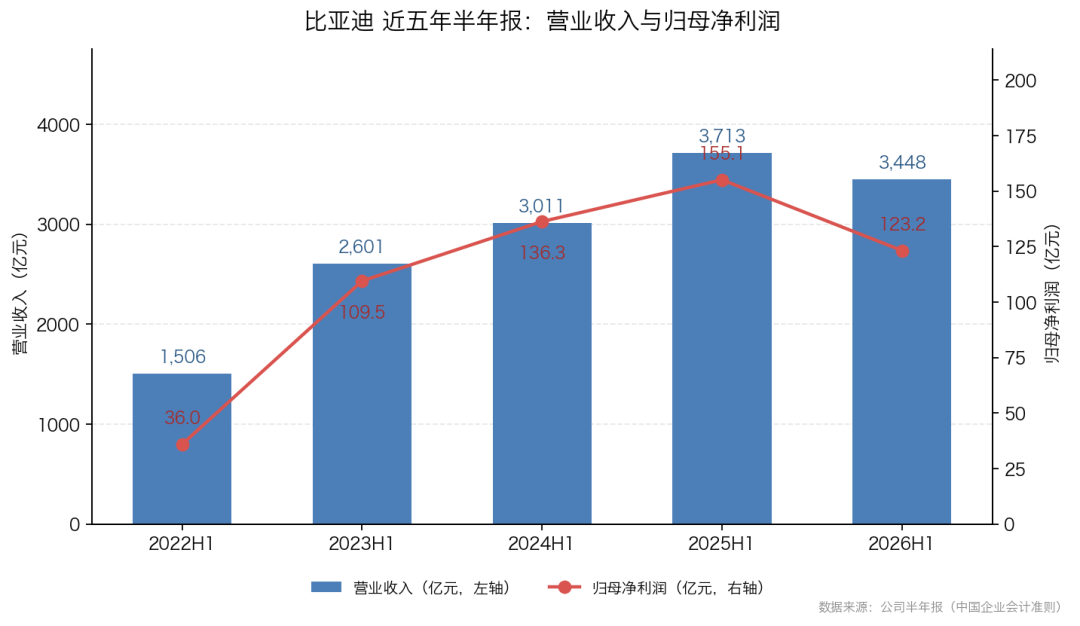
Data Source: ifind
Profits are shrinking, cash flow is rising, and gross margins are recovering. These three data points lead to the same conclusion: BYD is voluntarily abandoning some low-quality sales.
In Europe, BYD is an emerging player. First-half overseas sales were 790,000 units, up 68%, covering over 120 countries and regions, and it ranked first in new energy vehicle brand sales in the UK, Brazil, and Thailand.
However, it faces a 17.0% anti-subsidy tariff in Europe, lower than SAIC's 35.3% but still a cost.
So, BYD's real actions aren't at the negotiating table—they're in its factories. Executive Vice President Li Ke said at the Paris Motor Show that the Hungary plant plans to start mass production in the fourth quarter of this year, with plans for second and third factories in Europe, with France already on the candidate list.
Xingkong Jun's assessment is that BYD isn't a major player in hybrids. Its first-half high-end brand sales were 228,000 units, up 61%, with the Tengshi model averaging ¥360,000 and the Yangwang brand becoming the fastest luxury brand to reach 10,000 units at the million-yuan price point. Its upward trajectory doesn't rely on low-price volume.
SAIC is the most uncomfortable of the three.
Its pure electric tariff is 35.3%, the highest in the industry. It has shifted most aggressively to hybrids and needs this channel the most.
First-half overseas sales were 735,000 units, up 48.7%, its brightest spot. However, group net profit fell by 14.38%; excluding exchange losses and impairments, core net profit was ¥7.87 billion, up 72%.
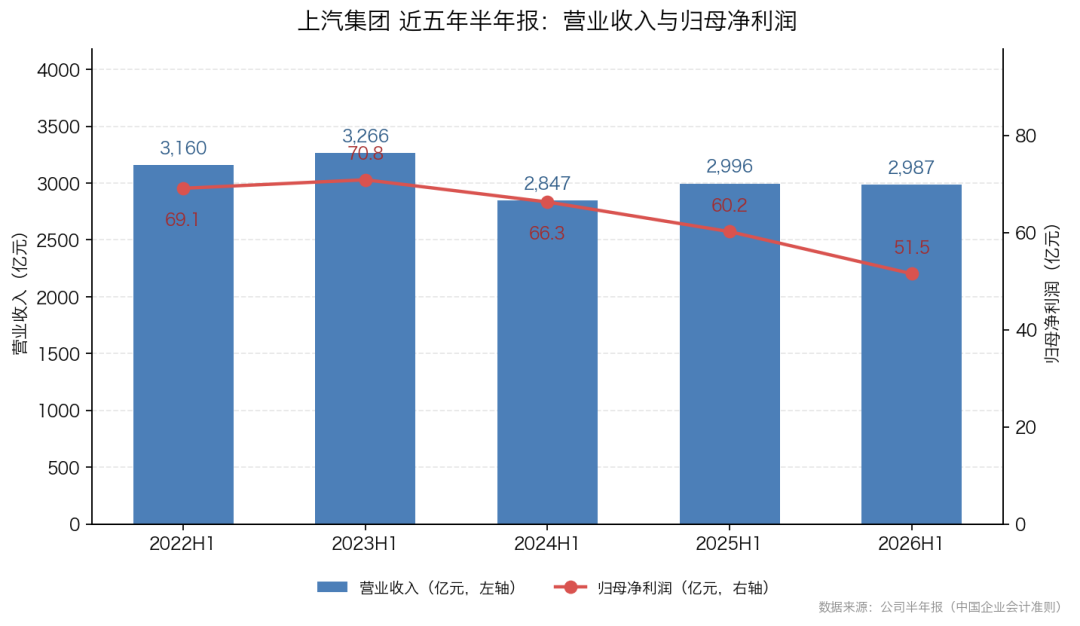
Data Source: ifind
The gap between these two figures lies in exchange rates. Financial expenses swung from -¥1.783 billion last year to +¥2.746 billion, a difference of ¥4.5 billion.
In other words, SAIC is making money selling cars—even more than before—but exchange rates are taking a significant toll.
The MG brand's significance in Europe needs no explanation. A century-old British brand acquired by SAIC, with design studios in London and production moved to China, this combination is far more acceptable to European consumers than a new brand.
The real issue is timing. SAIC MG's self-built plant in Spain, with a first-phase investment of €200 million and planned annual capacity of 120,000 units, isn't expected to launch until 2028.
2028 is too late.
The quota system starts in 2027. SAIC must rely on imports to sustain its European sales and channels during this window while using its domestic cost advantage to hold on until the factory is built. These two-plus years will be its toughest phase.
Fortunately, its fundamentals remain solid. First-half wholesale vehicle sales were 2.045 million units, the only Chinese automaker to break 2 million; self-owned brands were 1.469 million units, accounting for 71.8%, up from 63.5% a year ago; new energy vehicles were 796,000 units, up 23.1%.
The MG4 family has sold over 10,000 units monthly overseas, making it one of the most visible Chinese cars on European streets. Whether this brand can weather the quota cycle will directly determine the success of SAIC's European strategy.
4
Beyond Quotas
The EU has a second set of tools at its disposal. The Industrial Accelerator Act proposed in March would impose strict reviews on projects with global capacity shares exceeding 40% and investments over €100 million, require electric vehicles participating in EU public procurement to be assembled in the EU, and mandate at least 70% local content for non-battery components.
These rules don't explicitly name China, but in strategic sectors like batteries and electric vehicles, Chinese companies account for over 40% of global capacity.
Companies must meet at least four of six conditions to be approved, with a hard requirement of at least 50% local employees.
In short, the EU doesn't just want to buy fewer Chinese cars—it wants to relocate Chinese car production lines to its doorstep.
Quotas manage import volumes; local content rules manage production locations. The former is temporary, the latter long-term.
So, what Chinese automakers are doing in Europe this year is essentially a capacity relocation.
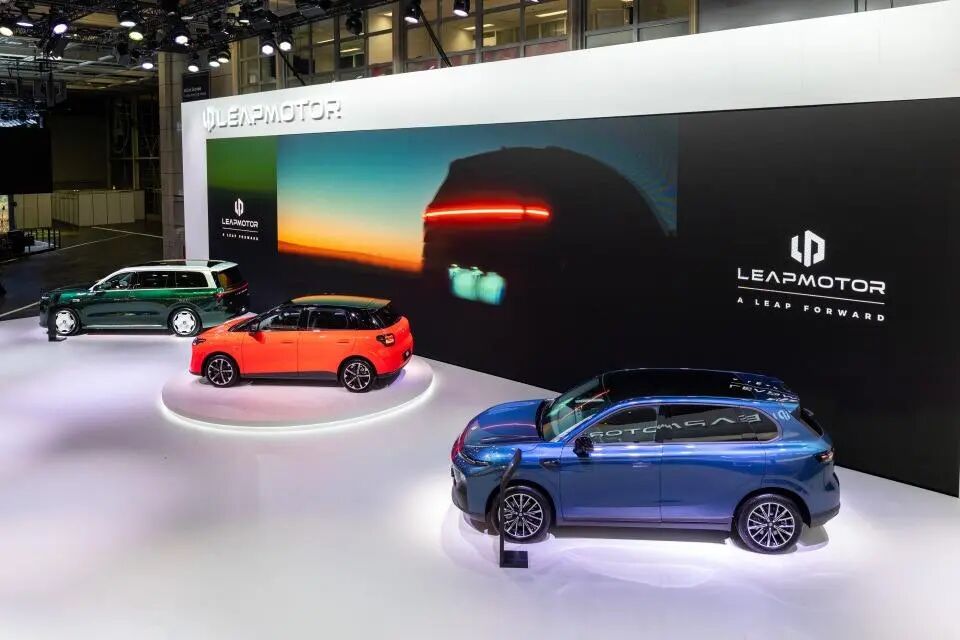
BYD in Hungary, Chery in Spain, Leapmotor using Stellantis' Zaragoza plant to start B10 production in October, Geely planning to acquire a 34% stake in Ford's Valencia plant, SAIC building its own plant in Spain.
Laying out these plans on a timeline: Leapmotor in October, BYD in Q4, Chery in early 2026, SAIC in 2028.

-
![]()
Can Leapmotor Truly ‘Lead the Charge’? The Cost-Quality Trade-off Behind Export Profits
-
AI-Driven Short Dramas: A Formidable Competitor to the Gaming Industry?
-
Automotive Industry Undergoes Profound Transformation
-
![]()
Observation | XGIMI and OBE Enter the AI Glasses Track, Extending the Battlefield of Projector Manufacturers from Living Rooms to Faces
-
![]()
September Compact Car Sales Review: Traditional Fuel-Powered Models Remain Dominant
-
![]()
In the First Three Quarters, 8.2 Million Vehicles Sold: Overseas Markets Emerge as a Competitive Frontier for Chinese Automakers
-
![]()
China and the EU Both Achieve Success! Will the Export Volume of New Energy Vehicles to Europe Rise or Fall?
-
![]()
After a Year of Restructuring, WM Motor Encounters Fresh Hurdles in Production Restart