In the First Three Quarters, 8.2 Million Vehicles Sold: Overseas Markets Emerge as a Competitive Frontier for Chinese Automakers
 10/20 2026
 383
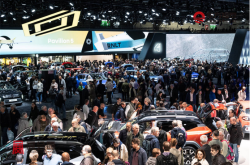
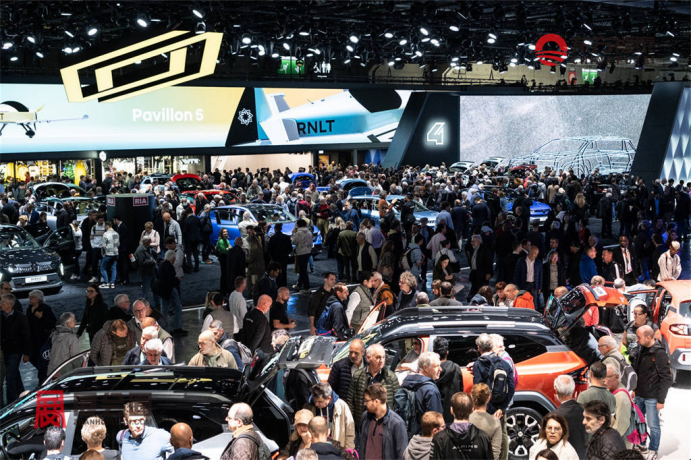
Have you been keeping an eye on the ongoing 2026 Paris Motor Show? This year's event is brimming with highlights, particularly with the notable presence of Chinese automotive brands, which have garnered significant attention.
Statistics reveal that a total of 16 Chinese automakers, representing 25 distinct brands, participated in this year's Paris Motor Show. In contrast, the combined number of local brands from France and Germany was only 17. Such a substantial presence of Chinese brands on European soil would have been inconceivable just a few years ago.
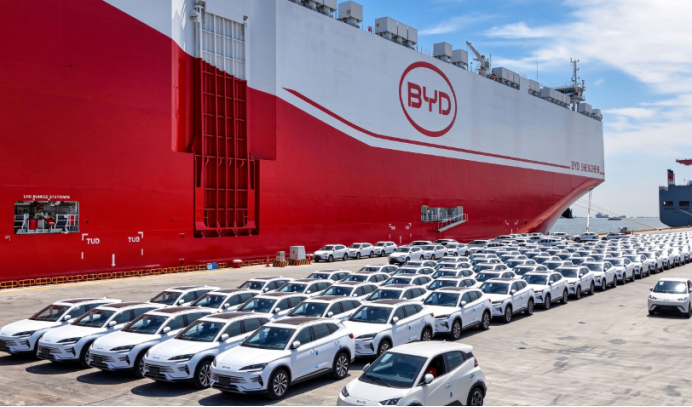
The reason behind the eye-catching performance of Chinese automakers at the Paris Motor Show lies in the increasingly robust momentum of Chinese automobile exports in recent years. The export performance in the first three quarters serves as compelling evidence: data from the China Association of Automobile Manufacturers indicates that from January to September, China exported 8.205 million complete vehicles, marking a year-on-year increase of 65.8%. Among these, new energy vehicle exports reached 4.006 million units, a year-on-year surge of 127.9%, demonstrating even stronger growth.
As Chinese automobile exports continue to soar, individual automakers are also witnessing remarkable growth in overseas sales. In the first three quarters, Chery Group exported 1.5512 million vehicles, a year-on-year increase of 65.6%, surpassing its total exports for the entire previous year. BYD's overseas sales reached 1.3378 million vehicles, a year-on-year increase of approximately 90%. Geely Auto exported 798,000 vehicles, a year-on-year increase of 169%. Simultaneously, automakers have also excelled in meeting their overseas sales targets. Both BYD and Geely have achieved nearly 90% of their targets, while Leapmotor and XPENG have even completed their full-year overseas sales targets ahead of schedule.
It is evident that the significance of overseas markets in the overall sales of Chinese automakers has risen considerably. In the past, automakers ventured overseas primarily to seek new growth opportunities. Today, for some automakers, overseas sales have become a cornerstone of their total sales.
In fact, automakers are shifting their focus overseas for pragmatic reasons. The domestic automotive market is already saturated with competitors, characterized by intense price wars and a constant influx of new models. For automakers with annual sales in the millions, relying solely on the domestic market is clearly insufficient to sustain growth.
Looking abroad, markets in Southeast Asia, Latin America, and the Middle East still exhibit significant demand for vehicle purchases. Meanwhile, the electric transformation of the European market presents new opportunities. Naturally, these regions have become new battlegrounds for automakers seeking growth.
More importantly, after years of accumulation, Chinese automobiles have developed their own advantages in new energy technology, cost control, and product competitiveness. From power batteries and plug-in hybrid technology to smart cockpits and assisted driving, Chinese brands now possess the strength to compete with overseas rivals. Ultimately, the increasingly fierce domestic competition is propelling automakers to expand overseas, while their enhanced capabilities give them the confidence to compete in international markets.
As overseas business continues to expand, the strategies of Chinese automakers going abroad have also evolved. In the past, automakers primarily manufactured vehicles domestically and then exported them for sale overseas. Today, automakers are no longer content with mere exports but are accelerating the construction of overseas factories or collaborating with local companies for production. For instance, BYD's Hungarian factory plans to commence mass production in the fourth quarter. Geely and Ford have established a joint venture in Spain to manufacture vehicles using Ford's existing factory. Additionally, Leapmotor is advancing its Spanish factory, planning to start production in the third quarter. Chery is building a new factory in Turkey, and Changan is collaborating with Brazil's CAOA Group to create an overseas production base.
From exporting complete vehicles to local production, Chinese automobiles going abroad are no longer just about selling cars but are truly moving towards global operations.
However, as more and more Chinese automakers turn their attention overseas, the fierce competition in the domestic market is also beginning to spill over into international markets. When automakers like BYD and Chery rush overseas, their former domestic rivals are now encountering each other again in markets such as Europe and Southeast Asia. Moreover, Chinese automakers face not only domestic competitors but also formidable opponents like Volkswagen, Toyota, and Renault.
Even more challenging is the rising tide of trade barriers from various countries. In October this year, China and the EU reached a consensus on the export of Chinese hybrid vehicles to Europe, with the EU's restrictive measures potentially shifting from tariff increases to quantity restrictions. Brazil raised the tariff on imported complete electric vehicles to 35% starting in July. Mexico also increased the import tariff on Chinese vehicles from 20% to 50% at the beginning of the year. These continuous changes in trade policies undoubtedly pose significant challenges for Chinese automakers going abroad.
However, in the long run, these challenges must be overcome if Chinese automakers truly want to penetrate overseas mainstream markets.
From the strong presence of Chinese brands at the Paris Motor Show to the consistently high export sales in the first three quarters, it is clear that overseas sales now account for a significant portion of many Chinese automakers' total sales. However, as Chinese brands sell more and more overseas, competition is also intensifying, and overseas markets are no longer easy places to capture growth.
Going forward, automakers will not only have to compete with local brands for market share but also face competition from domestic peers and challenges from trade barriers. How to defend the markets they have already opened up and truly establish a foothold locally will be a tough battle for Chinese automakers in the future.
(Image sourced from the internet, removed if infringing)
-
![]()
Can Leapmotor Truly ‘Lead the Charge’? The Cost-Quality Trade-off Behind Export Profits
-
AI-Driven Short Dramas: A Formidable Competitor to the Gaming Industry?
-
Automotive Industry Undergoes Profound Transformation
-
![]()
Observation | XGIMI and OBE Enter the AI Glasses Track, Extending the Battlefield of Projector Manufacturers from Living Rooms to Faces
-
![]()
September Compact Car Sales Review: Traditional Fuel-Powered Models Remain Dominant
-
![]()
In the First Three Quarters, 8.2 Million Vehicles Sold: Overseas Markets Emerge as a Competitive Frontier for Chinese Automakers
-
![]()
China and the EU Both Achieve Success! Will the Export Volume of New Energy Vehicles to Europe Rise or Fall?
-
![]()
After a Year of Restructuring, WM Motor Encounters Fresh Hurdles in Production Restart