What's Next? The HarmonyOS Ecosystem Accelerates Its Expansion, While Luxeed and Aito Move Away from Huawei ADS Overseas
 10/26 2026
 456
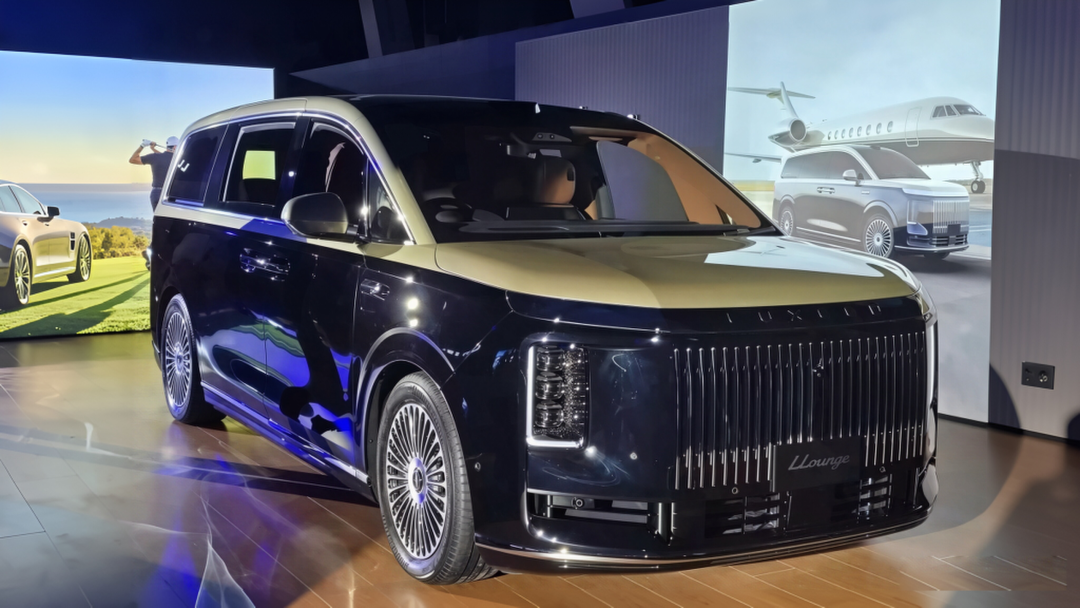 Image Source: Weibo
Recently, two significant announcements have stirred up the automotive industry, leaving many with mixed feelings.
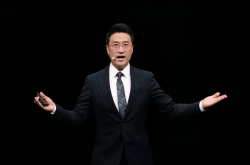
First, Aito confirmed that its overseas models will no longer feature Huawei ADS. Shortly after, Xu Xiaodong, CEO of Luxeed International, clarified at Chery's International User Summit in Wuhu—in front of numerous international media outlets—that the overseas version of Luxeed will have no connection with Huawei, neither in hardware nor software.
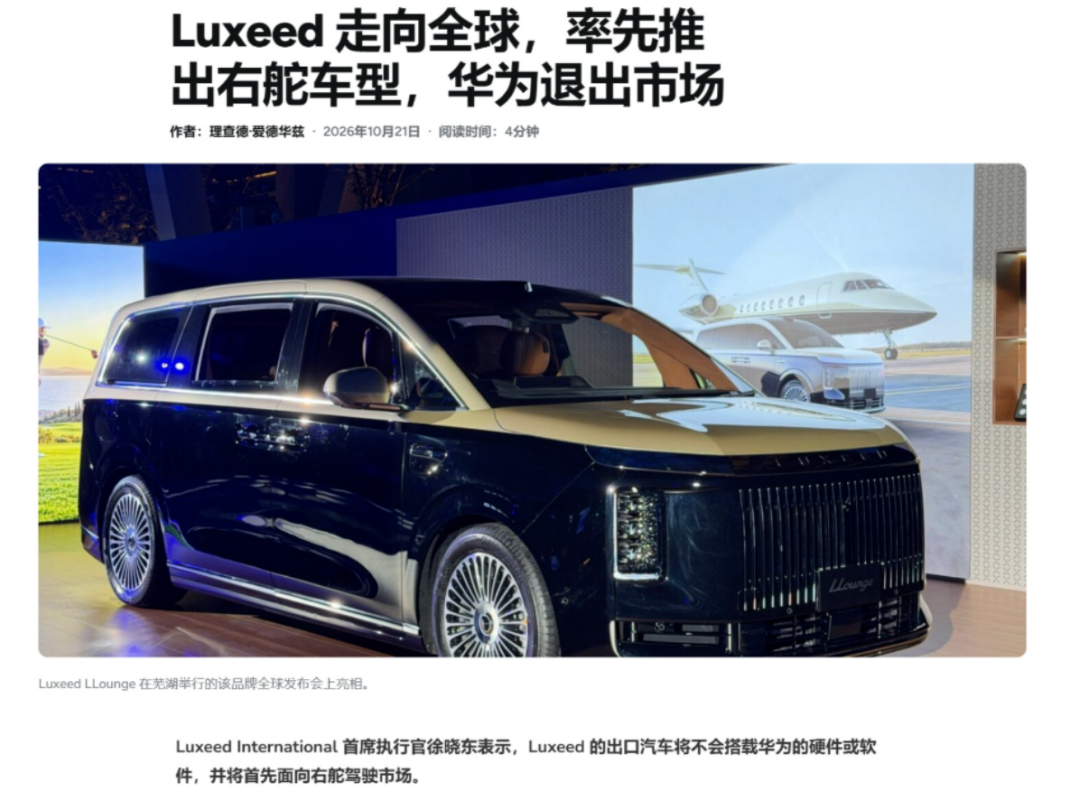 Image Source: Weibo
Upon hearing this news, many wondered: Have Chery and Huawei parted ways?
The answer is no.
Essentially, this is a case of one car, two strategies—a clear separation between domestic and overseas markets. The Luxeed V9 and Luxeed RX sold in China will remain unchanged, retaining Qiankun ADS 5.0, the HarmonyOS cockpit, Huawei's full suite of sensing hardware, OTA upgrades, and Harmony Intelligent Travel stores. Domestic buyers have nothing to worry about.
Only export models specifically designed for overseas markets will completely remove Huawei's entire system.
01 Luxeed's Overseas Expansion: Same Exterior, Completely Different Interior
Luxeed's overseas expansion project, codenamed "Blue Ocean," has finalized the names of its two main models.
The popular Luxeed V9 in China will be renamed LLounge overseas, while the Luxeed RX will be called Stormax. Both will fall under the LUXEED English brand. The route planning is steady, prioritizing right-hand drive markets: Thailand in early 2027, Australia in mid-year, gradually expanding to the Middle East and Southeast Asia, with Europe to be considered later.
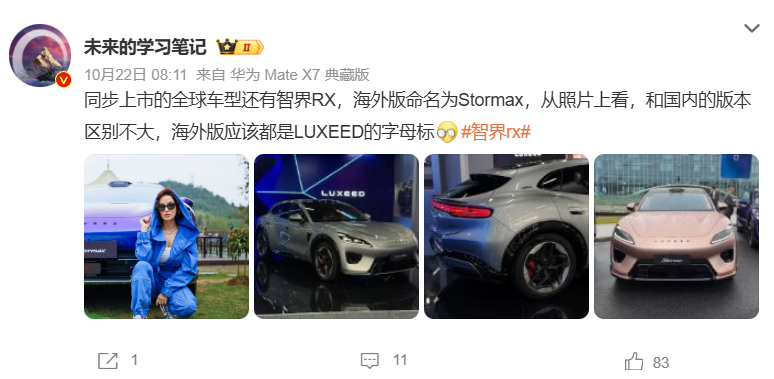
Image Source: Weibo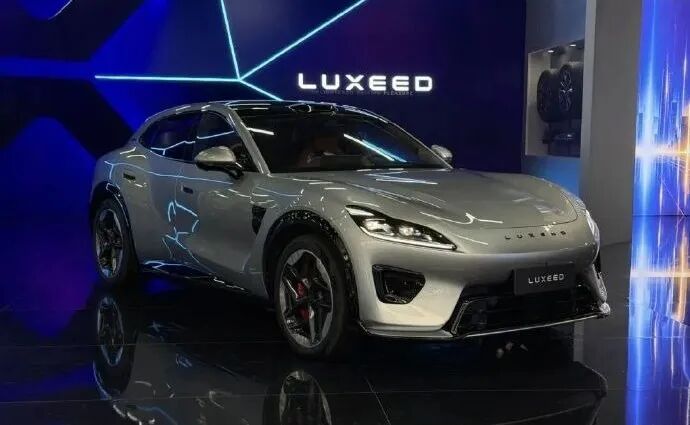
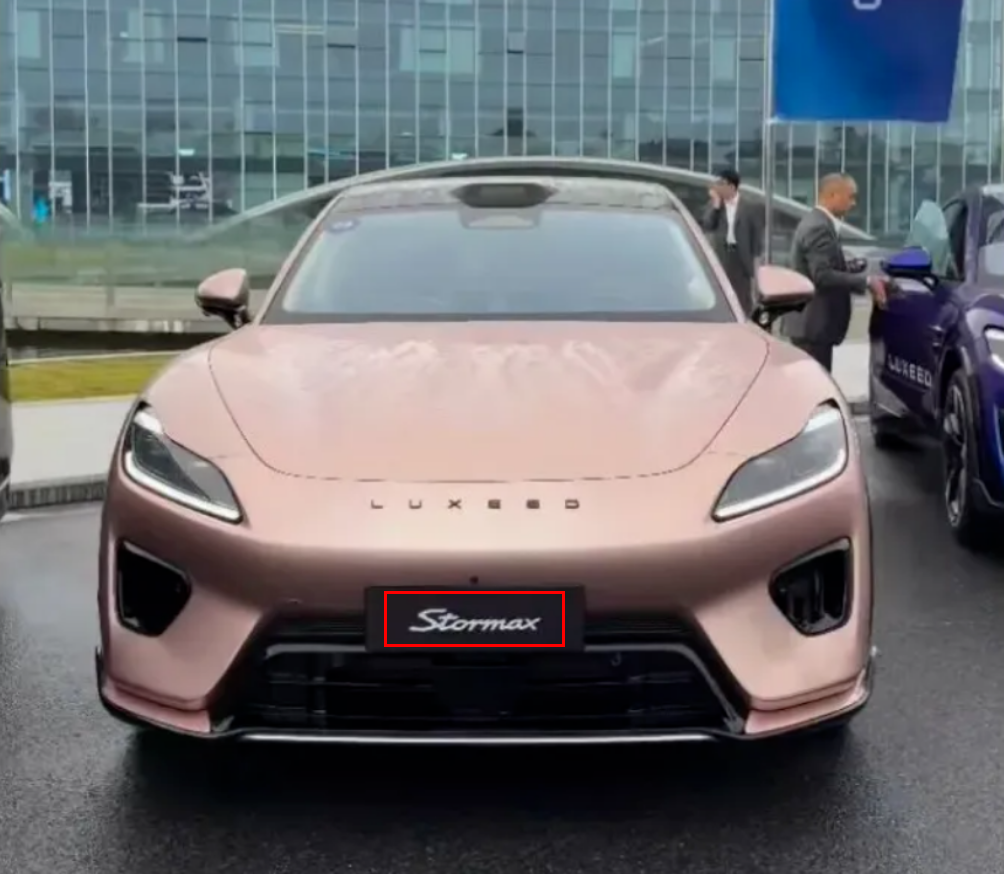 Image Source: Weibo
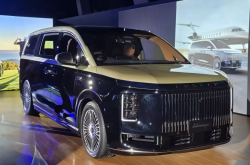
The domestic Luxeed V9 needs no introduction. It's a star player in the MPV segment above 400,000 yuan, priced between 389,800 and 519,800 yuan. On October 21, the 30,000th unit rolled off the production line, holding the top spot in high-end MPV sales for a considerable time. It's also the first MPV to feature 896-line LiDAR, competing against the Tengshi D9 and Toyota Alphard.
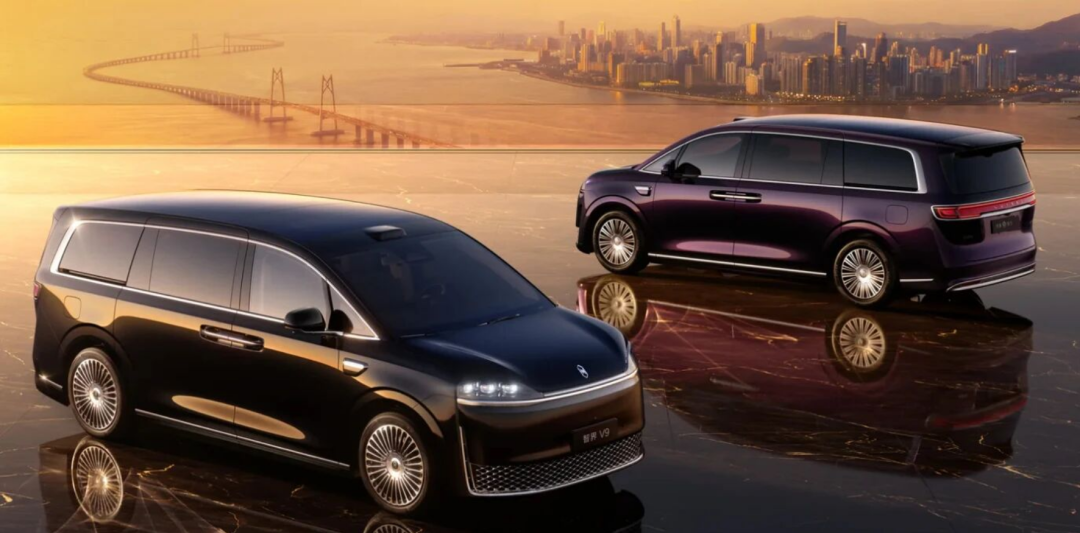
However, when this car crosses the ocean, its core intelligent features will undergo a complete overhaul.
In terms of intelligent driving, Huawei Qiankun ADS will be replaced with Chery's own Falcon Intelligent Driving. The LiDAR position remains, but the algorithm, computing power, and sensing logic are all replaced with Chery's system.
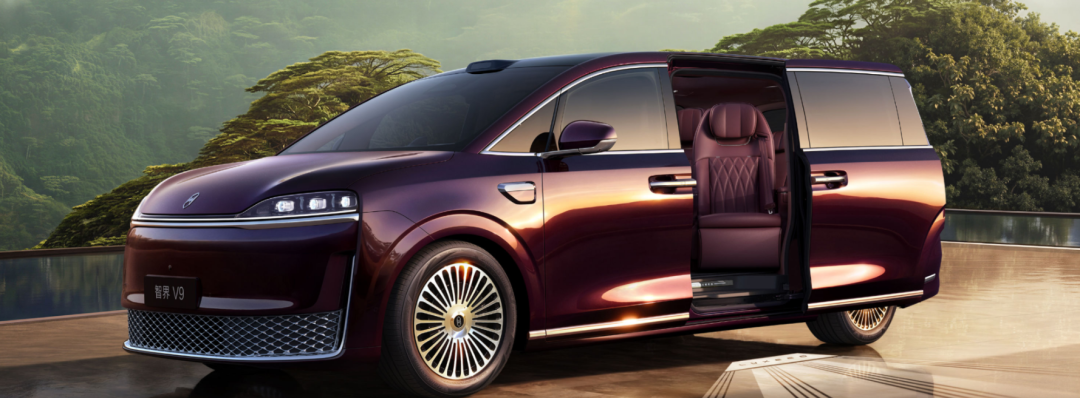
For the cockpit, the familiar HarmonyOS cockpit is gone, replaced with Chery's Lingxi Intelligent Cockpit. The iconic triple-screen setup in the domestic version is changed to a floating center console + instrument cluster + HUD. The entire vehicle's electronic and electrical architecture is fully led by Chery.
The body, chassis, interior, and space remain unchanged—equivalent to wearing the same outfit but with a completely different brain inside.
02 Same "De-Huawei" Approach, but Aito and Luxeed Have Vastly Different Foundations
While both Aito and Luxeed choose not to include Huawei ADS in their overseas models, their strategies are vastly different. Simply put, the two automakers have vastly different resources.
 Image Source: Weibo
Aito relies on Seres and depends heavily on Huawei for vehicle definition and intelligence, lacking a mature, ready-to-deploy intelligent driving and cockpit solution of its own. It also lacks established overseas channels. Therefore, Aito opts for a hassle-free and stable approach by directly purchasing a complete solution from Bosch. The advantage is maturity and fast certification; the drawback is that core intelligent driving technology remains in foreign hands.
Luxeed, on the other hand, directly adopts Chery's self-developed Falcon + Lingxi combination.
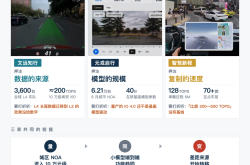
This is the confidence behind Xu Xiaodong's straightforward announcement. This setup is not a hastily assembled sample. According to Chery's data, 130,000 vehicles equipped with Falcon Intelligent Driving are already on the road. During the nine-day Spring Festival travel rush last year, the intelligent driving mileage reached 12.86 million kilometers. The Lingxi cockpit is also a mature solution already in mass production in China, requiring mainly language adjustments and regulatory adaptations for overseas markets, without starting from scratch.
The channel gap is even more significant.
Chery has been China's export champion for 23 consecutive years, selling 1.344 million vehicles in 2025, with a presence in over 130 countries. The Middle East, Southeast Asia, and Australia—the main markets Luxeed plans to target—have been cultivated by Chery for over a decade, with existing dealerships, after-sales service, and localization teams readily available.
One relies on last-minute outsourcing, while the other leverages the group's existing technology and channels, creating a significant gap in fault tolerance from the start.
03 Not About Automakers Going Solo, But an Unavoidable Threshold
Many netizens simplify it as: Chery has gained momentum and wants to profit independently from Huawei.
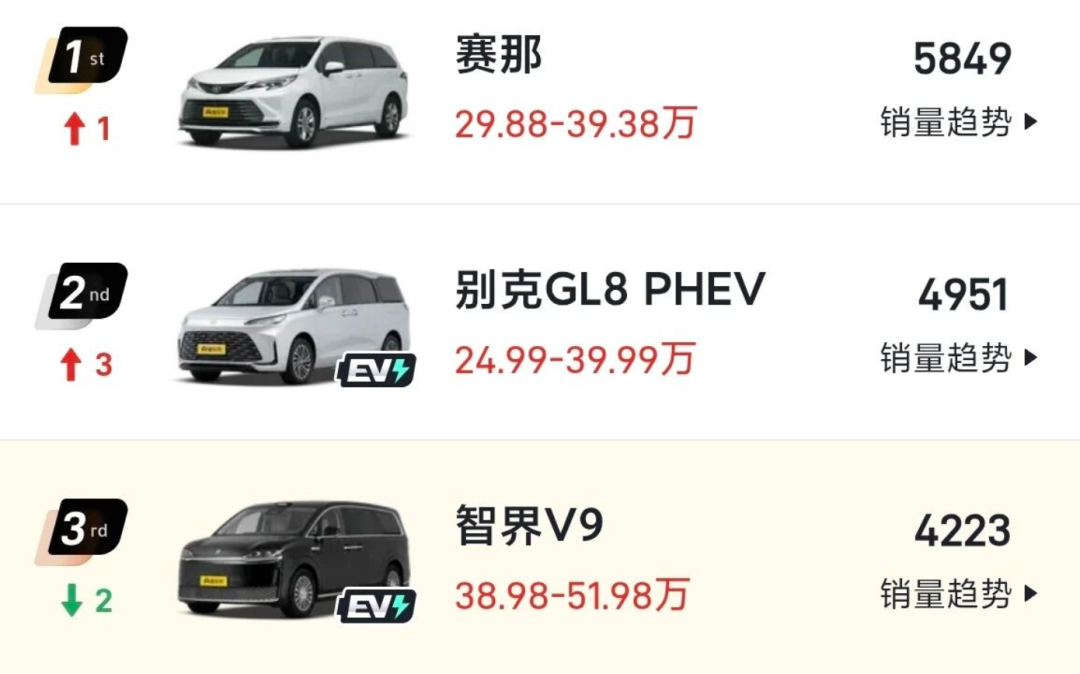 Image Source: Autohome
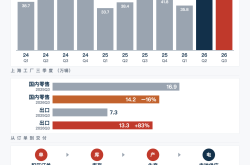
Except for the first month of launch: 1. Retail sales in July were 8,974 units, topping the mid-to-large MPV sales chart. 2. Retail sales in August were 8,312 units, still leading the mid-to-large MPV sales chart. 3. Retail sales in September were 4,223 units, ranking third in the mid-to-large MPV sales chart. Although it ranked third, the overall automotive industry sales declined in September, so this is normal and not due to product issues.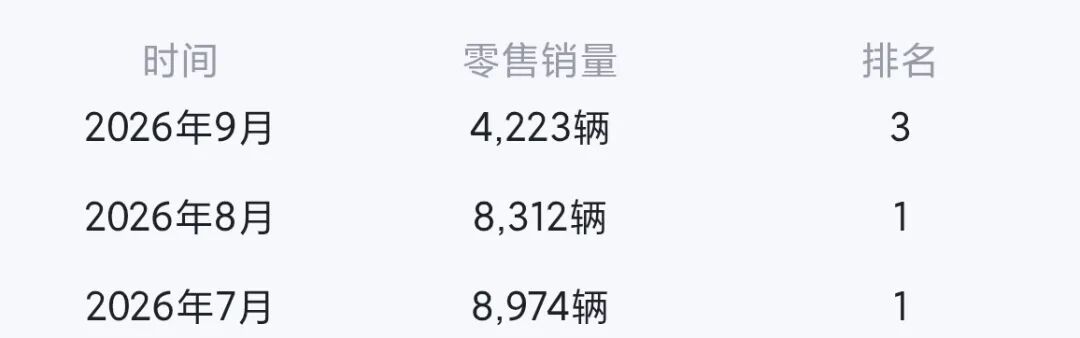
However, looking at the underlying logic, this is an inevitable choice for automakers.
For Huawei Qiankun's advanced intelligent driving to function properly, it relies on high-definition mapping, road condition perception, and massive data transmission to the cloud for training. In regions like Europe, the Americas, and Australia, geographic information and cross-border data transmission are sensitive issues, compounded by geopolitical scrutiny. Obtaining certification for Huawei's entire intelligent driving and cockpit solution for large-scale overseas sales is nearly impossible.
In summary: Huawei can help automakers build an intelligent moat in China, but this setup is difficult to take overseas.
The HarmonyOS ecosystem now faces the same dilemma: intense domestic competition relies on Huawei's intelligent driving and HarmonyOS cockpit to support high-end premiums. To tap into overseas growth markets, they must remove Huawei's system to gain market entry.
Luxeed's public announcement follows in Aito's footsteps, formalizing this dual-track approach for domestic and overseas markets. If Enjoya, Maestro, and Speedium were to expand overseas, they would likely adopt the same strategy: self-developed if capable, or third-party suppliers if not.
04 The Biggest Question: Can Luxeed Still Compete Without Huawei's Halo?
The Luxeed V9's domestic success is well-known, with many buyers attracted to Qiankun ADS's intelligent driving experience, HarmonyOS ecosystem, and Harmony Intelligent Travel's brand endorsement. Intelligence is its biggest selling point in the high-end MPV market.
However, overseas, this key selling point is removed.
Chery's Falcon Intelligent Driving and Lingxi cockpit have primarily been used in affordable family cars priced around 100,000 yuan, focusing on adequacy and cost-effectiveness. Now, they are placed in a 500,000 yuan flagship MPV, catering to discerning overseas business clients and multi-child families—a significant challenge. High-end MPVs compete not just on seats and space but also on the smoothness of intelligent driving, whether it interferes with steering, and the stability of the infotainment system, directly determining the car's "luxury" quotient. Whether Falcon can match Qiankun's smoothness is the biggest unknown for LLounge.
Moreover, overseas markets are far from untapped. In Thailand, the Tengshi D9 and Zeekr 009 are already competing fiercely with the Alphard; in Australia, Tengshi has a head start in store layout. Luxeed is a latecomer, competing against established luxury MPV brands like Toyota and other early-moving domestic new energy brands.
Internally, Chery's own Exlantix and Exeed are also expanding overseas in the high-end segment, requiring Luxeed to differentiate itself from sibling brands.
Another practical issue: The Luxeed brand was built with joint resources from Chery and Huawei. Domestic consumers naturally view it through a Huawei lens, but overseas users will encounter LUXEED as a pure Chery intelligent solution, requiring a complete rebranding. How to transfer the quality control and vehicle development experience honed during the Huawei collaboration overseas is a tough challenge for Chery's international team.
In Conclusion
Luxeed's announcement essentially confirms the path for Harmony Intelligent Travel's globalization: Huawei guards the domestic intelligent high ground, while automakers venture globally on their own.
In the domestic market, Qiankun and HarmonyOS remain key differentiators for the HarmonyOS ecosystem, competing in the fiercely contested high-end market. Overseas, Huawei fades into the background, with automakers relying on their own capabilities, either self-developed or outsourced, to compete globally.
It's not about abandonment but a shift in division of labor. Huawei provides technology to help partners build high-end brands; Chery, Seres, and other automakers then take these jointly nurtured brands to the global market to realize their value.
But the question remains: Without Huawei's most prominent label, can Luxeed, relying on chassis, space, vehicle manufacturing, and Chery's self-developed intelligence, still establish itself in the high-end overseas market?
2027 will be the year this major test unfolds.
Do you think the overseas version, without Huawei's features, can replicate Luxeed's domestic popularity?
Disclaimer: This article is for financial commentary by major companies and does not constitute any investment advice. The corporate data and regulatory events mentioned are from public information and are for reference only, subject to official releases. Images are sourced from the internet; if there are copyright issues, please contact for removal.
-
![]()
From Lucent to NVIDIA: When History Echoes
-
![]()
Thermal Effects on Femtosecond Filamentation and Supercontinuum Generation in YAG Crystals: Insights from Ultrafast Nonlinear Optics Study No. 105
-
![]()
The Next Bottleneck for AI May Not Be Chips
-
![]()
What's Next? The HarmonyOS Ecosystem Accelerates Its Expansion, While Luxeed and Aito Move Away from Huawei ADS Overseas
-
![]()
He Gang, Yu Chengdong's 'Trusted Partner,' Promoted to Huawei Director: A Pivotal Phone Call 13 Years Ago Altered His Career Path
-
![]()
Breaking News: Huawei Inks Landmark Deal with Century-Old Audi
-
![]()
Laying Cards on the Table! Tesla Q3 2026: Vehicle Sales Peak, All Funds Poured into AI
-
![]()
What We Can Learn from the 2026 WICV Speeches: Where Are Weride, DeepRoute, and ZhiJia Xincheng Betting on the Next Wave of Intelligent Driving?