Post-2000s Beauty Product Manager Issues Apology; He Xiaopeng Embraces Being Labeled an 'Old Fogey.' Should Car Buyers Purchase MONA to Prove Their Youth?
 10/26 2026
 460
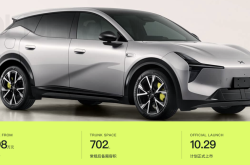
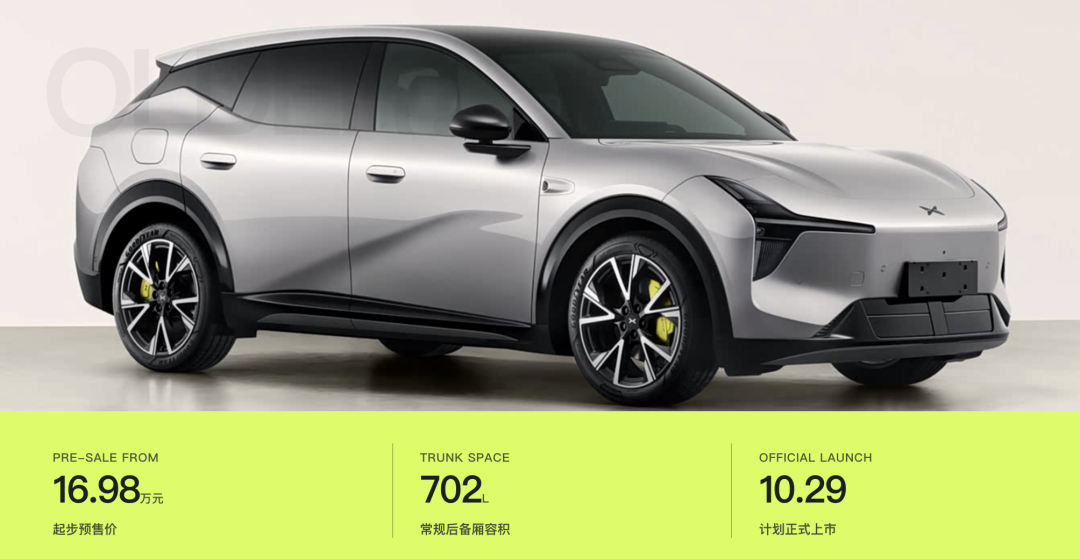
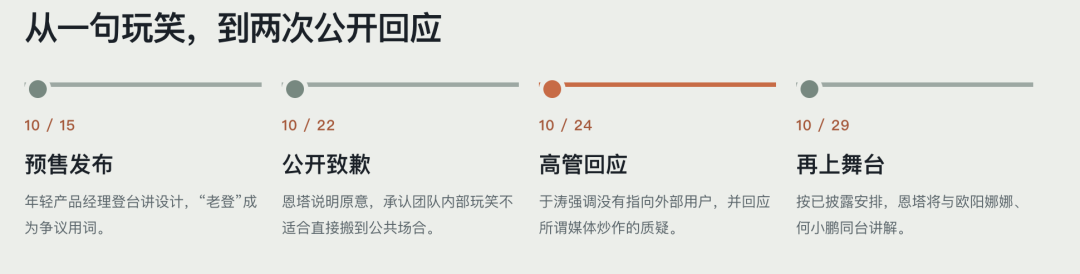
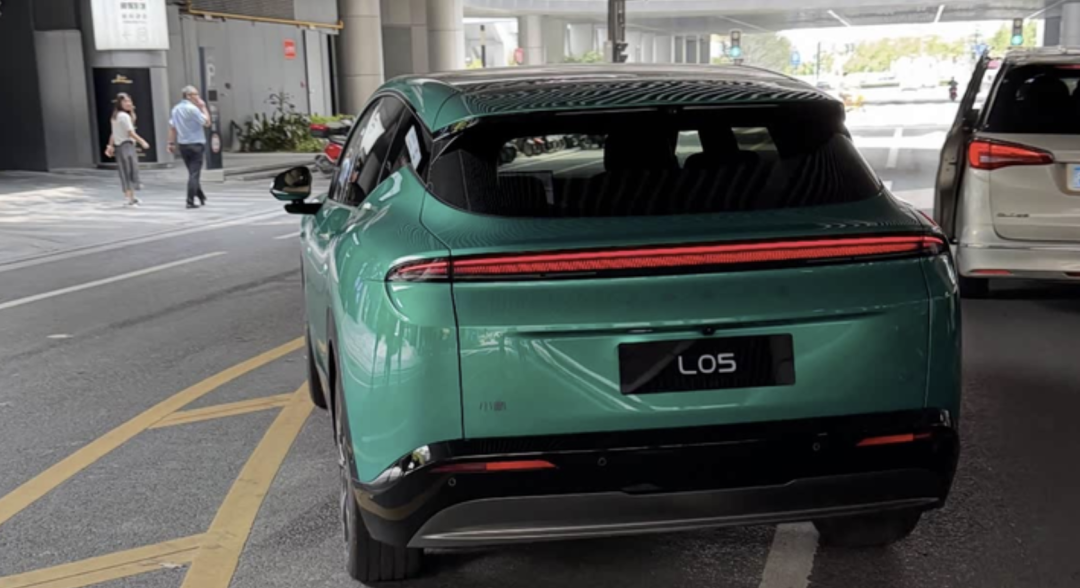
On October 15, the Xiaopeng MONA L05 commenced pre-sales, with prices starting at 169,800 yuan. This spacious five-seater SUV features dual powertrains—pure electric and extended range—along with a generous 702L trunk.
Ultimately, two words dominated the headlines: 'old fogey'.
Enta, the post-2000s product manager, took to the stage to critique traditional car designs, jesting that 'old fogeys fail to grasp what young people desire,' and labeling wood grain and chrome finishes as 'old fogey aesthetics'.
After the video clip circulated, opinions were divided. Some appreciated the human touch it brought to the press conference, while others felt uneasy about an automaker mocking a particular aesthetic and age group.
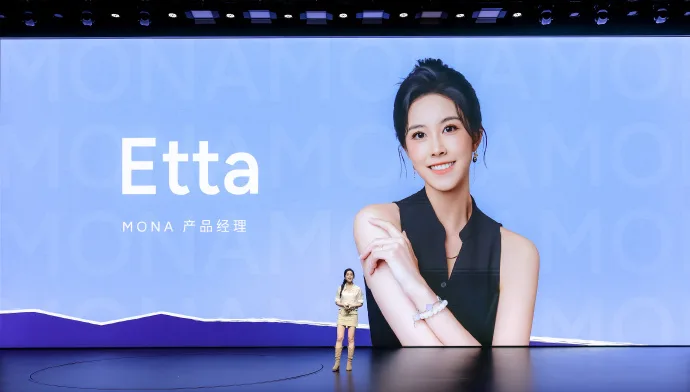
The ensuing six days were more eventful than the new car launch itself. On October 22, Enta released an apology video, acknowledging that she had inadvertently brought an internal team joke into the public domain.
On October 24, Yu Tao, Vice President of Xiaopeng Group, posted a lengthy article clarifying that 'old fogey' was always intended as a jest directed at several internal leaders, including He Xiaopeng, and not at consumers. He further stated, 'Anyone who can provide evidence that Xiaopeng orchestrated media hype will receive a personal reward of 1 million yuan.'
The car officially launched on October 29, with Enta sharing the stage with Ouyang Nana and 'old fogey representative' He Xiaopeng.
How should we interpret this incident? Are the onlookers simply being overly sensitive?
01
The Origin of Her Perspective:
The MONA Strategy
At the October 15 pre-sale press conference, He Xiaopeng, who was attending the Paris Motor Show, actively participated and ceded the entire stage to the young MONA team. The slogan 'reject old fogey aesthetics' was coined by Enta and MONA product leader Yang Guang.

Having young people discuss a car designed for young people was the central theme of the press conference.
Xiaopeng's Vice President Yu Tao pointed out in his October 24 article that the term 'old fogey' referred to four core executives: Chairman He Xiaopeng, President Wang Fengying, MONA product leader Yang Guang, and R&D leader Jiang Wen. 'None of the so-called old fogeys took offense; instead, they repeatedly praised it internally.'

Her product judgment is authentic. The L05 indeed eschews wood grain and chrome, allocating the saved costs to cabin soft materials, two 17.3-inch 3K screens, 20 speakers, and front passenger massage features.
Her confidence is also well-founded. MONA has sold over 350,000 units in two years, with the M03 consistently leading the charts for pure electric sedans in the 100,000-200,000 yuan price range. The team comprises 54% born in the '95s and 39% post-2000s.
'Young people building cars for themselves' is a strategy that has been validated by the market. So, where does the controversy arise this time?
02
What Defines a Youthful Brand?

MONA's strategy has proven highly successful in recent years. On the surface, it involves allowing post-2000s to define the product and then present it to demonstrate that the car is tailored for young people. Having a young team is indeed beneficial.
MONA has evolved from a single car model to a series-like operation, with Xiaopeng aiming to replicate this youthful approach across its entire lineup.
What Do Young Chinese Consumers Want?
We can understand that in the era of pure electric vehicles, branding matters less. What counts is a car that offers ample space, long range, and intelligent features within a reasonable price range.
Sending a peer on stage to guide them on which aesthetic team to align with is a tactic employed by many.
Indeed, MG has also been pursuing a youthful image this year. Judging by the MG04 and MG07 models, if the product is strong, young people will return.
However, framing product understanding issues as age-related endorsement problems and packaging communication missteps as the cost of young people speaking out is problematic.
Wood grain and chrome can be discussed in terms of material quality, craftsmanship, proportion, and restraint. The L05's decision to forgo these elements in favor of screens and massage features is a clear product decision. Explaining it clearly makes for compelling content; labeling it all as 'old fogey aesthetics' is equivalent to declaring that aesthetic judgment requires no argumentation—age is the sole determinant.
This approach is flawed.

Age and aesthetics are not inherently linked.
A 25-year-old might prefer traditional interiors, while a 45-year-old could equally appreciate minimalist cabins. Young people care about suspension and after-sales service, while middle-aged individuals also research advanced driving assistance systems and chips. The cabin of a large five-seater SUV often accommodates multiple generations, and while the buyer may be young, the usage scenarios encompass the entire family.
A car that feels the need to declare certain designs as 'old fogey' to prove its youthfulness has already strayed from discussing how consumers actually use the car on a daily basis.
In an era of declining car sales in China, everyone faces challenges, but the harm caused by controversy is significant.

Summary
Youth is not a persona; it's about understanding. Understand what users want, incorporate it into the product, and then communicate it honestly. Young people should focus on discussing products and trade-offs—no single internet meme is necessary.
A car can exude a distinct youthful vibe, but buyers don't need to prove their youthfulness to own it.
-
![]()
Why Should Car Owners Be Held Accountable When the Self-Parking System Fails?
-
![]()
The Second Half of Intelligent Driving: Automakers Must Prove Safety and Then Get Users to Pay
-
![]()
The ultimate intelligence of a car is to ensure the safety of its occupants.
-
![]()
Post-2000s Beauty Product Manager Issues Apology; He Xiaopeng Embraces Being Labeled an 'Old Fogey.' Should Car Buyers Purchase MONA to Prove Their Youth?
-
![]()
Alibaba Cloud and Volcano Engine Compete in Automotive Cloud Market
-
![]()
“After Testing K3.1 Pro Overnight, It Seems Kimi Is Truly Advancing Towards Embodied AI”, “K3.1 Pro, Speed, Task Execution, Allowance, Embodied AI”
-
![]()
BYD Registers Decline in Six Models, Xiaomi Undergoes Leadership Shuffle! Comprehensive Review of BEV Sales Rankings from January to September
-
![]()
DeepSeek’s Product Department Entrusted to a Quantitative Trader