The ultimate intelligence of a car is to ensure the safety of its occupants.
 10/26 2026
 562
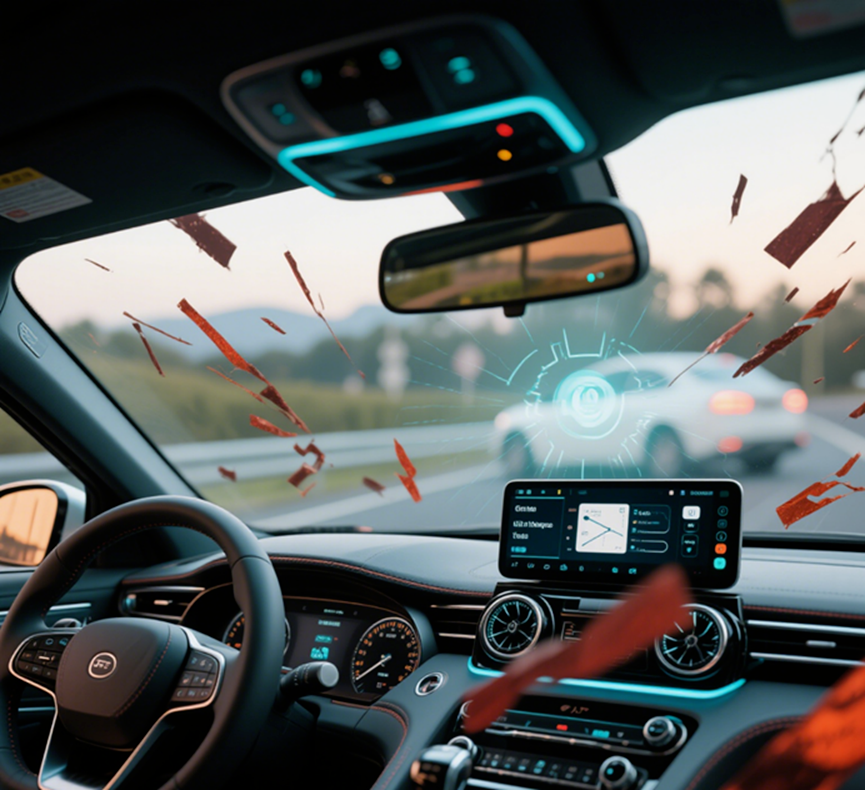

Beyond brand storytelling, intelligent driving narratives must also address consumer concerns.
Image source | Internet (Please contact us for removal if infringement occurs). Partially generated by AI.
If you only looked at the PPTs from this year's most talked-about auto industry launch events, you might easily feel a sense of temporal dislocation.
At a global innovation conference of a traditional automaker, the humanoid robot "Mobo" opened for pre-orders, while automotive-grade chips, vertical domain large models, eVTOLs, and Robotaxis were displayed side by side. The founder stated that the company's future identity would be an "AI-driven global intelligent technology company."
Another new-force automaker's chip subsidiary independently participated in the World Artificial Intelligence Conference, installing automotive-grade 5nm chips into the robot's "brain," explicitly aiming to "transfer vehicle perception, real-time control, functional safety, and other technologies to humanoid robots and unmanned logistics vehicles."
Yet another company expanded its physical AI ecosystem across five directions: humanoid robots, flying cars, Robotaxis, and base models. The next generation of robots is planned for mass production by the end of the year, first in shopping malls, then in factories and households.
If you isolate these scenes, it's hard to tell whether this is an automotive launch event or a tech company's ecosystem roadshow.
The car is still there, but it's no longer the sole protagonist or even the primary focus of the narrative.
Technological spillover from the automotive industry is genuinely flowing into robotics, chips, and energy networks, a natural overflow after reaching a certain stage of industrial accumulation.
However, when the brightest minds, the most capital, and the loudest voices in an industry are all telling stories "beyond the car," a simple question must be re-raised: Where does the car parked outside the user's door fit into this picture?

Is it truly "intelligent driving" or just "assistance"?
The grander the narrative "beyond the car" becomes for automakers, the more focused the stories "inside the car" must be.
And intelligent driving is the story that has been chosen.
Over the past two years, almost every new car launch has revolved around a few keywords: urban NOA, end-to-end, mapless, parking spot to parking spot.
The rhetoric is escalating, parameters are inflating, and AEB braking speeds have surged from 60km/h to 120km/h and 130km/h, as if the higher the number, the closer one is to "autonomous driving."
But their marketing departments know full well that at a stage of high hardware homogenization, intelligent driving is one of the few areas where cognitive differences can still be created.
However, a series of regulatory actions in 2026 has partially lifted the veil.
In October, the Ministry of Industry and Information Technology, the Ministry of Public Security, the Ministry of Ecology and Environment, and the State Administration for Market Regulation convened over 30 automakers, demanding "strict control over intelligent driving-related promotional messaging, prohibiting exaggerated marketing and conceptual hype." They even explicitly criticized behaviors that "blur the boundaries between assisted driving and autonomous driving" and emphasized that "OTA iterations cannot replace upfront Vehicle safety testing (vehicle safety testing)."
Almost simultaneously, a draft national standard for autonomous driving indicator lights clarified that vehicles without L3-level or higher autonomous driving systems are prohibited from installing ADS indicator lights.
That little blue light, once eagerly placed on car fronts by automakers to imply "I'm intelligent," has been legally deemed "misaligned in identity."
Earlier still, word games like "L2.9" and "quasi-L3" were already blocked during product announcement filings.
The regulatory logic is straightforward: If you're selling L2, you can't let users think they're driving L3. But the problem lies here—intelligent driving marketing has excelled in the past few years at creating an L3 psychological expectation within L2's capability boundaries.
Sales pitches say "basically no need to intervene," while manuals state "driver must monitor at all times." Launch events proclaim "far ahead," while user manuals warn "ready to take over anytime."
This misalignment of expectations is itself a hidden safety hazard.
When drivers fully take their hands off the wheel on highways and looking down at one's phone (lower their heads to browse their phones), treating "assistance" as a "safety net," no amount of system computing power can compensate for a human's misjudgment of boundaries.
Intelligent driving is certainly a worthwhile direction. Features like AEB, lane keeping, and blind-spot monitoring have saved many lives in real-world scenarios.
But "worthwhile investment" and "mature technology" are two different things. L2 is still L2, and no matter how good it is, the responsibility ultimately lies with the person behind the wheel.
Packaging an assistance feature as an admission ticket to autonomous driving may bring short-term orders but long-term erodes the most precious asset of the entire category: trust.
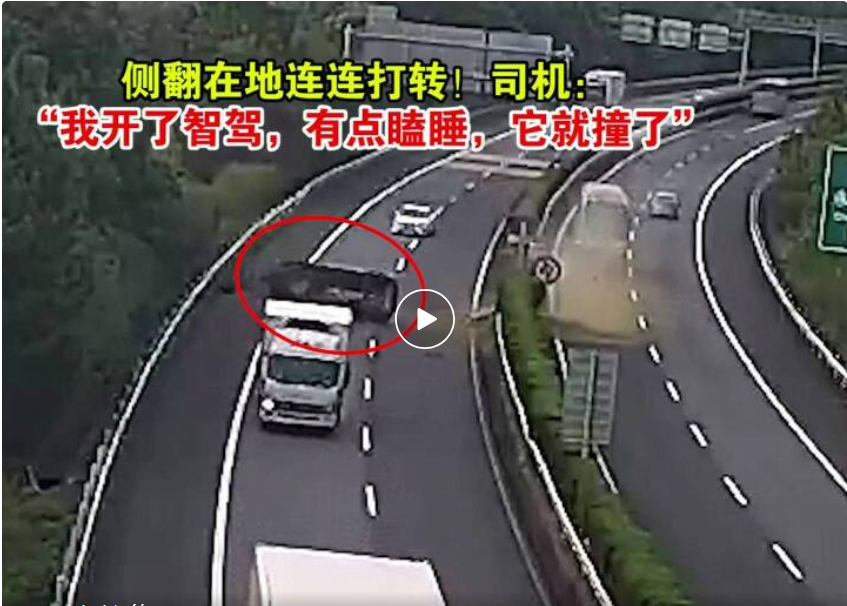

What consumers want is "safety"
Here's a fact often overlooked by the industry: Users' prioritization of "intelligence" and automakers' prioritization of "intelligence" have never aligned.
A 2026 joint survey by J.D. Power and the China Automobile Dealers Association revealed a counterintuitive result. Among purchasing factors, "reliability/durability" ranked first at 78%, while "richness of intelligent cockpit functions" ranked seventh at just 31%.
In other words, only 23% of consumers said they were "willing to pay for autonomous driving," and even fewer were willing to pay for in-car software subscriptions. Over 70% believed "these functional costs are already included in the vehicle price."
Meanwhile, the weight of safety configurations was highly consistent: multiple airbags (91%), body structural strength (85%), AEB (89%), and lane departure warning (82%).
Another telling statistic: 58% of respondents said "too many functions confuse me," and 67% admitted "I use less than 30% of in-car functions," both figures significantly higher than the previous year.
One respondent's quote made it into the report: "I'd rather have a radio that never lags than a smart screen that crashes daily."
These numbers don't indicate "consumer anti-intellectualism" or "consumer ignorance of technology." On the contrary, they show consumers simplifying in their own way: Intelligent driving can be a bonus, but safety is the passing grade.
They don't care if your chip is 5nm or 3nm, or if your large model's parameter count has doubled. They care about whether the door can be opened from the inside after a collision, whether the battery will smoke after being scraped in the chassis, and whether AEB will misfire or fail to activate when it matters most.
The August 2026 mass recall perfectly underscored this concern with ironic emphasis.
The State Administration for Market Regulation issued a recall notice involving over 4.36 million new energy vehicles, with multiple mainstream brands included.
The root cause was highly consistent across most vehicles: The interior emergency mechanical handle was too similar in color to the interior trim, making it hard to identify and operate. In extreme scenarios where severe collisions disabled the low-voltage system, this could prevent occupants from quickly opening the doors to escape.
This wasn't an issue of intelligent driving computing power, lidar line count, or three-electric technology. It was a question of whether a person could reach the door when escaping was most critical.
It's so basic that it hardly merits a PPT slide at a launch event, yet it's the bottom line (bottom line) of "what makes a car a car."
While the industry spends pages discussing "parking spot to parking spot" autonomous driving, the basic escape design of hundreds of thousands of vehicles is being hindered by color coordination and ergonomic details.
This contrast illustrates the issue better than any critique.
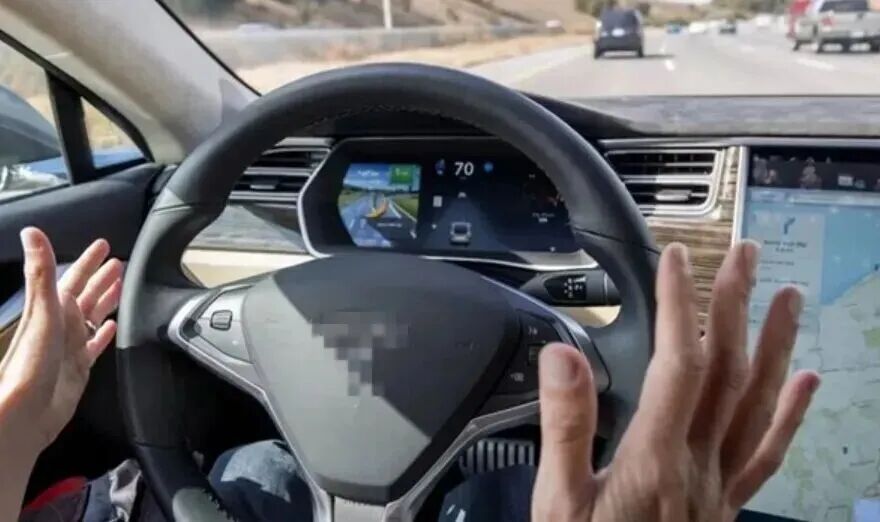

Automakers' attention is being diverted
Is there a problem with automakers making robots, chips, or flying cars?
Individually, it's hard to say. After all, technological reuse is real—automotive-grade chips inherently have higher reliability standards than consumer-grade ones, and migrating vehicle perception and control algorithms to robotics has engineering rationality (rationality). Robot businesses can also raise independent financing and operate with separate accounting, not necessarily eroding the automotive main business's cash flow.
If an automaker can establish a second growth curve in AI and embodied intelligence, it's good for both the industry and capital markets.
But "reasonable" doesn't mean "without cost." Attention is finite, and organizational bandwidth is limited.
When a company's strategic narrative upgrades from "building a great car" to "becoming an AI technology group," the best engineers, core management time, and top budget priorities inevitably shift toward the new story.
Robots can tell valuation stories, chips can emphasize self-sufficiency, and eVTOLs can pitch future mobility—while chassis tuning, sealing processes, and post-collision escape redundancies are neither good for storytelling nor easy to make headlines at launch events. They're naturally disadvantaged in the attention economy.
More subtle changes are happening in marketing. Intelligent driving has proven to be the most effective "cognitive leverage," while safety has been reduced to a slogan.
This creates a strange cycle: Launch events dedicate extensive coverage to intelligent driving's "extreme capabilities" but gloss over safety with a few national standard screenshots. Sales staff demonstrate autoparking and voice control in showrooms but rarely proactively explain where the emergency handle is or how to mechanically open doors after power loss.
This isn't because safety is unimportant—it's just "hard to sell" in marketing terms. But consumers are voting with their wallets: J.D. Power's data is clear—reliability first, high-weight safety configurations, and low willingness to pay for intelligent driving.
This doesn't mean automakers should halt all cross-industry efforts. What truly needs vigilance is the subversion of means over ends: Chips and robots should be outcomes of technological capability spillover, but if they become the rationale for "car-making" itself, the logic is inverted.
An automaker's legitimacy ultimately comes from the machine that carries users and their families daily. The second curve can be beautiful, but it shouldn't become a refuge for the first curve to evade responsibility.

Safety deserves to be "seen" again
Positive changes are also underway. In the 2026 auto market, safety is returning to the center of marketing. Some brands have reinstated "safety as a belief" at the core of their launch events, defining their flagship models with boron steel battery protection and "zero intrusion" cells.
Others directly promise "the manufacturer takes full responsibility for battery fire incidents," covering non-quality issues as well. Still others live-streamed battery pack impact tests during launch events, addressing question (doubts) about "staged testing" with public demonstrations.
The four-department symposium also sent a clear signal: Regulatory focus is shifting from "encouraging innovation" to "balancing innovation and safety." Subsequent quality inspections will cover R&D testing, product safety, and promotional content.
This is the right direction. But safety has a trait: It's too easily performative. A crash test livestream, a liability promise, or a page of boron steel strength data can all become new marketing materials.
True safety capabilities lie in less glamorous areas: whether R&D cycles have been rushed, whether high-altitude/cold/hot testing only collected footage, whether full-lifecycle durability verification has been replaced by simulations, or whether extreme-scenario test coverage is sufficiently "long-tail."
Industry insiders point out that some automakers have compressed the original three-to-five-year vehicle development process into just over a year, overly relying on AI simulations and reducing real-world road testing. This "speed" itself is a source of safety risk.
Thus, renewed emphasis on safety cannot stop at "safety marketing."
Consumers don't need a launch event about safety—they need a car that's safe even without a launch event.
Regulatory inspections, recall systems, independent third-party crash tests, and mandatory national standards carry more weight than any slogan about "safety being the ultimate luxury."
As "beyond-the-car" stories grow grander, the clunky, mundane, and unsexy safety fundamentals "inside the car" are increasingly pushed to the stage's edge.
The ultimate intelligence of a car is enabling its occupants to arrive safely and exit safely.
Launch events can keep talking about robots. But those building cars must remember: Robots are for tomorrow, but doors are for today.
-
![]()
Leapmotor’s Staff Increases by 9,732 in Just Over a Year. Can Zhu Jiangming’s ‘Mini BYD’ Outpace Geely and BYD?
-
![]()
Why Are AI Glasses So Popular, Yet Goertek's Q3 Sales Drop by 2.4 Billion Yuan with Inventory Reaching 22.4 Billion Yuan?
-
![]()
POLYVISION's IPO Review: Persistent Decline in Gross Profit Margin and Weakening Industry Outlook
-
![]()
Audi’s Strategic Split: SAIC-Audi’s Two-Year Plan Leads to Gasoline Vehicle Sales Until 2027 End | Mirror Pro
-
![]()
Racing to Become the "Pioneer Large-Scale Model Stock on the U.S. Stock Exchange": Anthropic Reports Over $80 Billion in Losses Within Half a Year
-
![]()
Wang Teng, Ex-Xiaomi Exec, Proves Prescient Half a Year Ago: Domestic Smartphone and Tablet Product Lines Face Discontinuation Wave
-
![]()
Post-2000s Female Employee Causes Stir at XPENG Launch Event
-
Anthropic Still Needs to Keep 'Sprinting'