Why Should Car Owners Be Held Accountable When the Self-Parking System Fails?
 10/26 2026
 415
Produced by Zhineng Technology
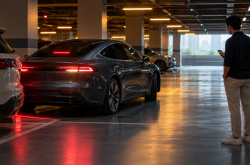
Modern vehicles are highly intelligent, capable of self-identifying parking spaces, steering, and controlling brakes, enabling people to wait outside while the vehicle parks itself. However, in the event of a scratch, after-sales services often remind: This is still an assisted driving feature.
Disputes over self-parking systems extend beyond whether the vehicle can park successfully to encompass issues such as who can intervene to stop the vehicle, how to gather evidence, and who will be liable for compensation. In mid-October, an owner of a new energy vehicle in Jinan utilized the 'off-vehicle parking' feature in an open-air parking lot.
While reversing, the vehicle scraped against a parked car nearby, causing damage to both vehicles. The owner, who was standing outside, watched as the vehicle approached an obstacle but could not stop it in time.
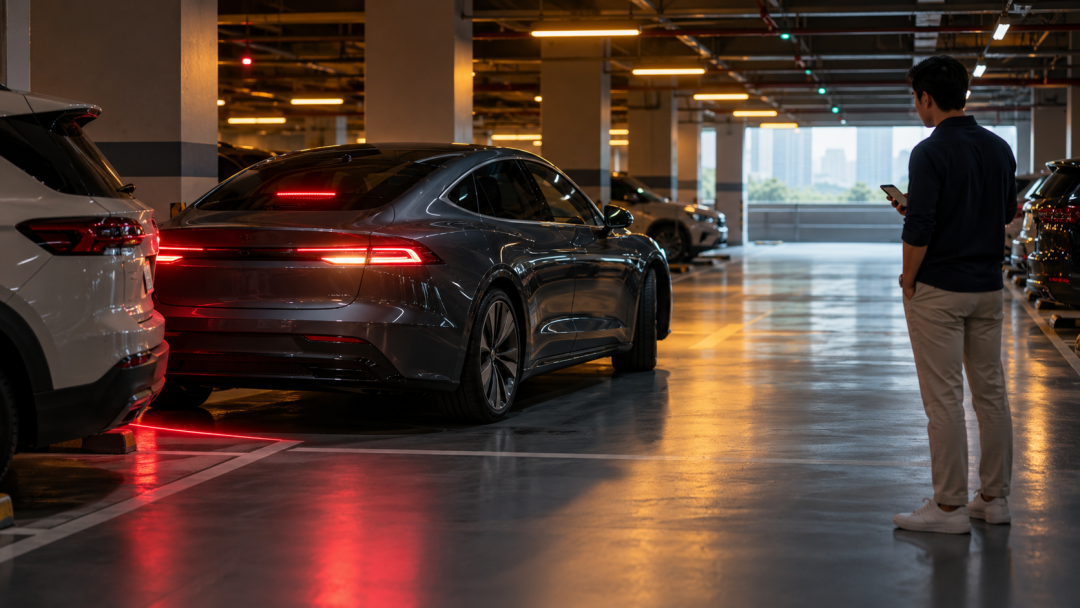
When reversing manually, a single press of the brake pedal can stop the vehicle if the distance is insufficient. Now, standing several meters away, the phone may be the only means of control. In the face of danger, one may not be able to react quickly enough to the vehicle's final few dozen centimeters of movement.
On October 20th of this year, the Ministry of Industry and Information Technology publicly solicited opinions on two mandatory national standards: 'Safety Requirements for Parking Combination Driving Assistance Systems in Intelligent Connected Vehicles' and 'Safety Requirements for Automatic Parking Systems in Intelligent Connected Vehicles.' The automotive industry needs to establish separate safety requirements for parking assistance and higher-level automatic parking systems.
01 If the vehicle can park itself, how can the owner still maintain control?
Parking speeds are low, but the scenarios can be challenging to navigate.
There may be only a few dozen centimeters between two vehicles, surrounded by pillars, ground locks, low curbs, and children may suddenly pass by the rear of the vehicle.
Cameras, ultrasonic radars, and controllers must work in harmony to complete obstacle recognition, distance estimation, and vehicle trajectory planning. A deviation in the last half meter can result in a scratch.
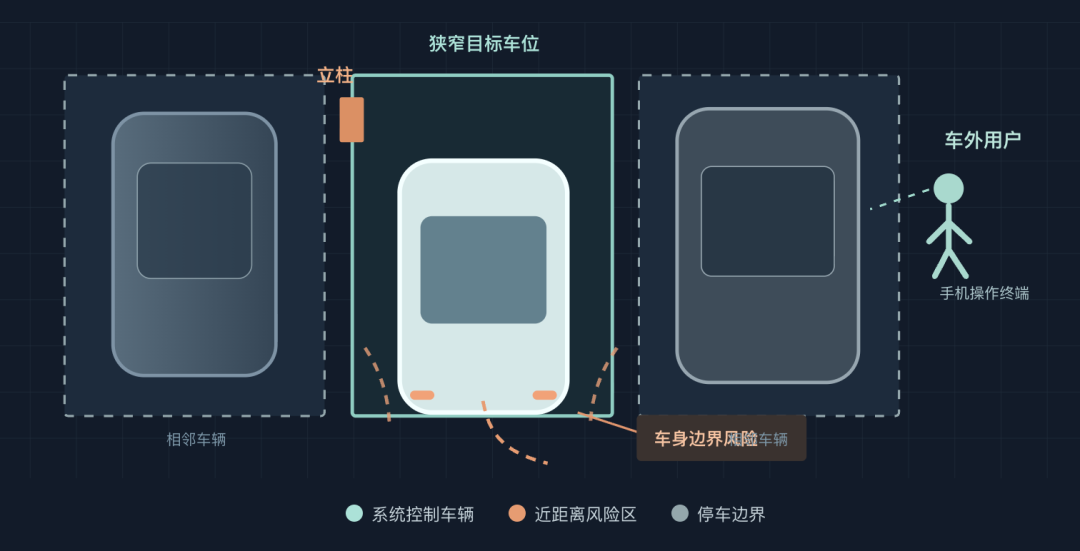
During traditional automatic parking, the driver sits inside the vehicle and can still press the brake pedal if necessary.
Off-vehicle parking moves the person outside the vehicle, depriving the driver of the most direct method of braking. The intervention chain changes from 'seeing danger—pressing the brake' to 'seeing danger—operating the terminal—sending instructions—vehicle receiving and executing.'
Communication delays, phone operations, terminal connections, and system status all become part of the safety chain.

The new draft for soliciting comments proposes requirements for driver monitoring, risk warnings, and close-range remote control for parking combination driving assistance.
Publicly disclosed terms include:
◎ The maximum design operating distance for remote parking is usually no more than 10 meters and can be extended to 15 meters if direct line-of-sight between the terminal and the vehicle is ensured.
◎ The driver needs to continuously operate the terminal. If operation is interrupted, the connection is lost, or the specified distance is exceeded, the vehicle should immediately stop.
Another draft for soliciting comments, aimed at L3 and L4-level automatic parking, requires the system to handle dynamic driving tasks under corresponding operating conditions.
In L3, if the system encounters situations beyond its capabilities, it needs to request human intervention and prepare for risk response. In L4, the system must assume backup response. The relevant draft also proposes requirements for test scenarios involving adults, children, infants, and suddenly appearing obstacles.
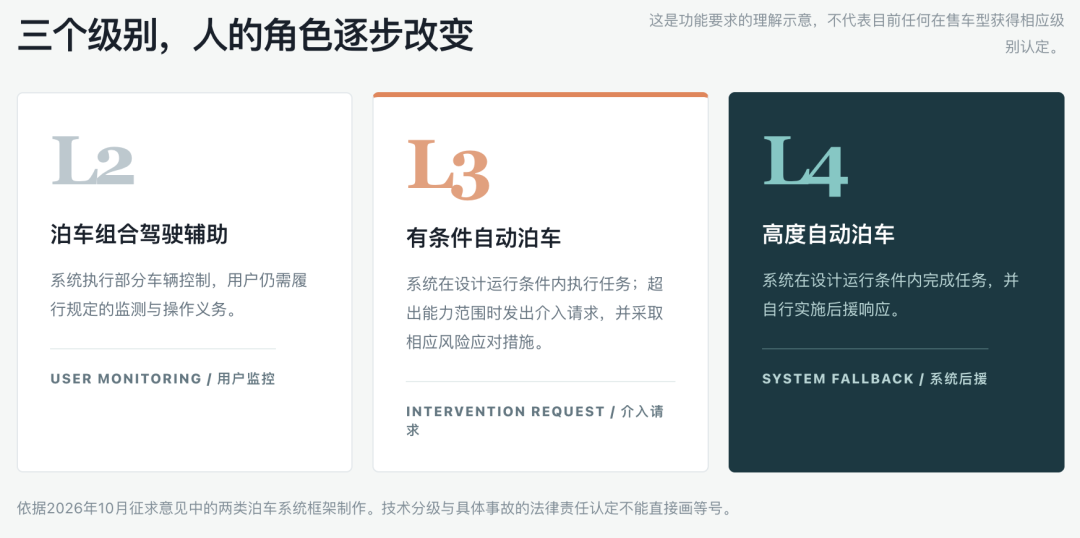
The terms 'off-vehicle parking,' 'remote parking,' and 'valet parking' may sound similar but can have significantly different operational requirements.
◎ Whether the user must continuously monitor after activating the function.
◎ How to immediately stop the vehicle in case of danger.
◎ Whether the system can automatically stop in a safe state if communication is interrupted, perception fails, or the vehicle enters an unexpected area.
If the user is required to be responsible for monitoring, they must have effective intervention capabilities. Otherwise, promoting the feature as allowing passengers to leave the vehicle confidently but then holding them responsible for not taking over in time can easily lead to disputes.
02 After a crash, who determines liability, presents evidence, and compensates?
'L2: Owner responsible, L3: Automaker responsible' requires distinguishing accident liability, product defects, and final compensation.
◎ Accident liability depends on the vehicle's position at the time, whether it was under permitted operating conditions, whether other vehicles or pedestrians were at fault, and whether the driver fulfilled the operational obligations required by the feature.
Leaving the driver's seat does not automatically transfer all legal responsibility to the automaker. Similarly, stating 'assisted driving' in the function description does not absolve the automaker of liability for compensation arising from product defects.

The revised draft of the 'Road Traffic Safety Law,' first submitted for review in August of this year, proposes that traffic violations related to the activation of autonomous driving functions be handled by the production or import enterprise.
However, this is still a draft, and its provisions on traffic violations do not directly equate to all traffic accident losses being paid by automakers.
◎ The next step is to determine whether the parking system malfunctioned.
Key data includes: whether the function was activated, whether obstacles were recognized, the system's planned trajectory, brake request time, whether the owner stopped operations, and whether the vehicle received instructions. Much of this information is stored in the automaker's control unit and backend system.
Owners typically only have access to dashcams, phone screen recordings, and parking lot surveillance. Low-speed minor scratches may not trigger traditional collision Event Data Recorders (EDRs), and relying solely on the 'black box' may not clarify what the parking system was doing at the time.
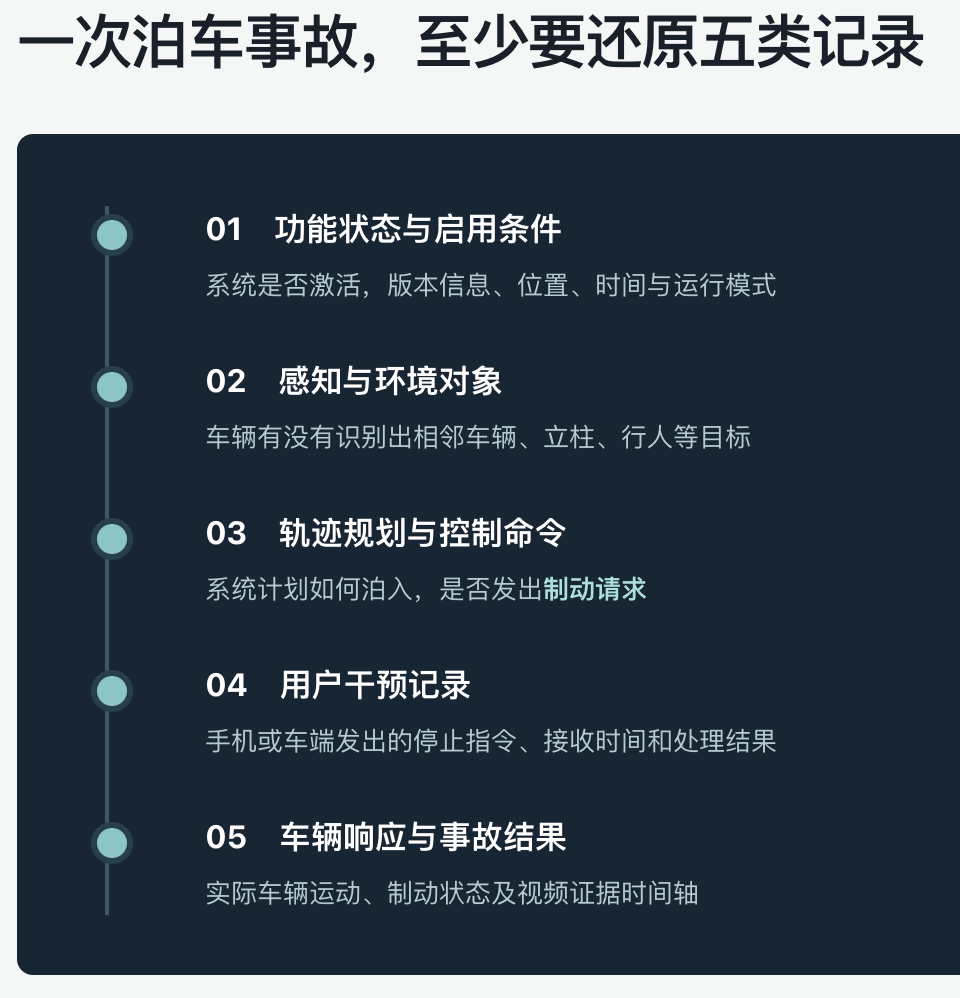
Accident tracing requires a complete parking operation log that can be cross-referenced with time, control status, driver instructions, and software version. Otherwise, the owner may believe the system misjudged, while after-sales blames improper operation, leading to a stalemate.
In recent years, automakers have begun proactively providing intelligent driving accident protection, with parking being the scenario where consumers most perceive this service.
In BYD's 2025 policy, eligible models with the 'Divine Eye' feature enjoy lifelong intelligent parking protection, not limited to the first owner or the vehicle's warranty period.
Relevant repair and loss expenses legally attributable to the vehicle due to parking assistance system abnormalities or algorithmic errors may be covered by BYD, without involving the owner's personal insurance; there is no set payout limit.
At the same time, clear exclusion conditions apply for scenarios such as non-compliance with the manual, unauthorized modifications, certain vehicle damages, and third-party liability.

Manufacturers can provide clearer financial protection for users beyond legal liability determination.
However, 'automaker's responsibility' is a payout commitment with applicable conditions and cannot be directly interpreted as the traffic police always ruling the automaker fully liable. Other brands' protection benefits may also have limitations on duration, applicable functions, and amount, so consumers need to review the actual terms.
For ordinary people, when deciding whether a parking feature is worth paying for, besides success rate and parking speed, they should consider how system errors can be proven and whether the manufacturer's compensation promise can be fulfilled smoothly.

Summary
From cameras and ultrasonic radars to end-to-end models, intelligent parking technology has advanced rapidly.
Now, vehicles can park themselves after the owner exits, raising another question for users: How much control do they still have after entrusting the vehicle to the system? The automotive industry should also make it clear to consumers: If the vehicle parks incorrectly, who has the ability to stop it, who can provide evidence, and who will pay.
-
![]()
Why Should Car Owners Be Held Accountable When the Self-Parking System Fails?
-
![]()
The Second Half of Intelligent Driving: Automakers Must Prove Safety and Then Get Users to Pay
-
![]()
The ultimate intelligence of a car is to ensure the safety of its occupants.
-
![]()
Post-2000s Beauty Product Manager Issues Apology; He Xiaopeng Embraces Being Labeled an 'Old Fogey.' Should Car Buyers Purchase MONA to Prove Their Youth?
-
![]()
Alibaba Cloud and Volcano Engine Compete in Automotive Cloud Market
-
![]()
“After Testing K3.1 Pro Overnight, It Seems Kimi Is Truly Advancing Towards Embodied AI”, “K3.1 Pro, Speed, Task Execution, Allowance, Embodied AI”
-
![]()
BYD Registers Decline in Six Models, Xiaomi Undergoes Leadership Shuffle! Comprehensive Review of BEV Sales Rankings from January to September
-
![]()
DeepSeek’s Product Department Entrusted to a Quantitative Trader