The Second Half of Intelligent Driving: Automakers Must Prove Safety and Then Get Users to Pay
 10/26 2026
 456
Produced by Zhineng Technology
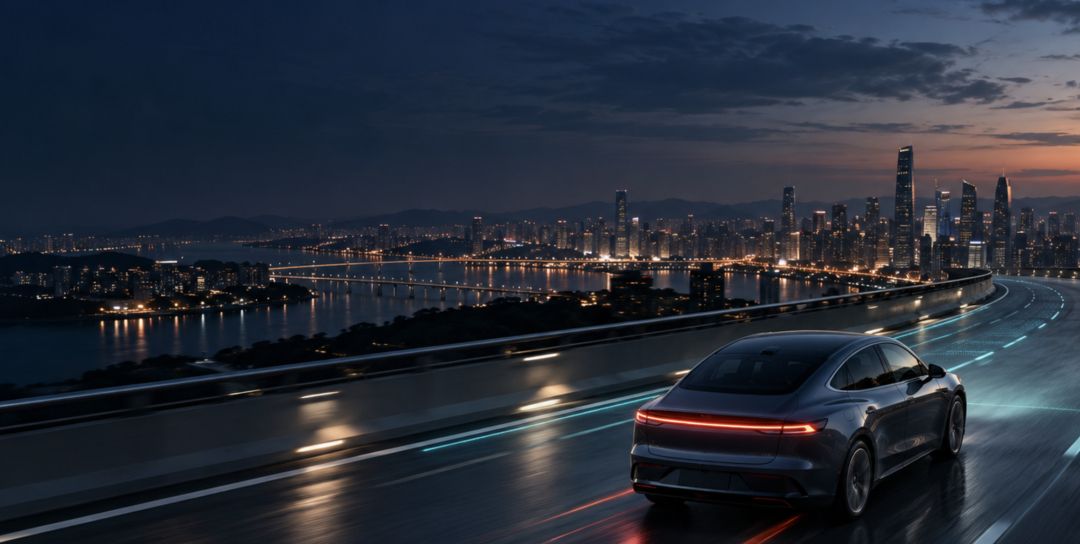
Intelligent driving is no longer a novelty in China. Level 2 combined driving assistance is gradually becoming a standard feature in new cars, with a penetration rate of 70%. Even cars priced at 100,000 yuan can basically achieve urban navigation assistance.
At the 2026 World Intelligent Connected Vehicles Conference, Li Bin, founder of NIO, boiled down the criteria for judging the second half of intelligent driving to two indicators: genuine willingness to pay and quantifiable safety performance.
Simply put, automakers need to let consumers use the technology well, prove its value, and then get them to pay!
01 Safety is the Foundation for Payment
Chinese consumers can easily buy a car with intelligent driving functions.
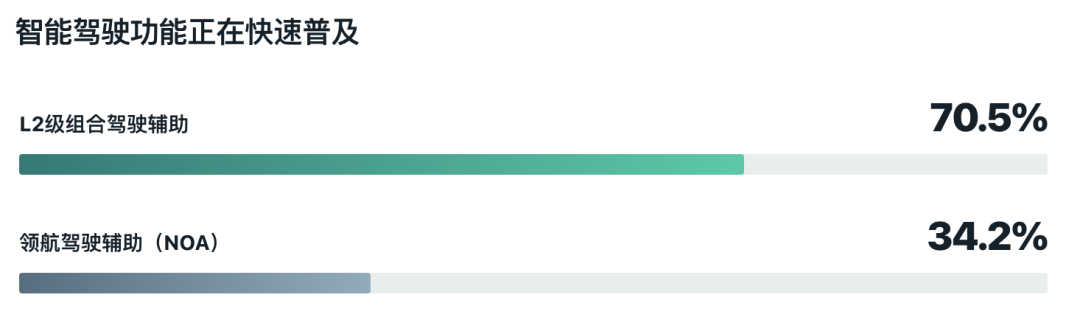
The Ministry of Industry and Information Technology previously disclosed that the penetration rate of Level 2 combined driving assistance functions in passenger vehicles has reached 70.5%, while the penetration rate of navigation driving assistance functions has reached 34.2%.
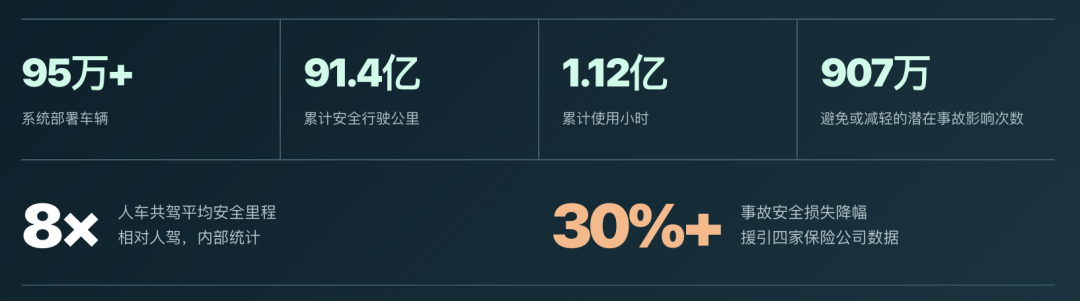
NIO's intelligent driving assistance system, based on world models and closed-loop reinforcement learning, has been deployed in over 950,000 vehicles. It has accumulated more than 9.14 billion kilometers of safe assisted driving mileage, with usage time reaching 112 million hours, preventing or mitigating the impact of 9.07 million potential accidents.
◎ The average safe mileage with human-vehicle co-driving is 8 times that of human driving alone;
◎ Li Bin also cited data from four insurance companies, stating that vehicles equipped with NIO's intelligent driving assistance system have seen a year-on-year reduction in accident-related safety losses, with a decrease of over 30%.
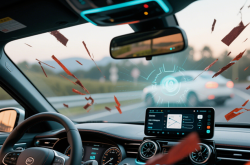
An active brake may avert danger or simply be a premature intervention; a driver takeover may resolve a critical situation or may reflect a lack of confidence in the system.
Insurance payouts, claim frequencies, and personal injury accidents record the real-world costs, and the industry is finally beginning to approach the safety standards understood by ordinary users.
A persuasive safety report needs to compare similar vehicles under similar road conditions over the same statistical period, disclosing the accident rate per million kilometers, the claim rate per thousand vehicles, the severity of accidents, and the differences between when assisted driving is enabled and when it is not.

◎ On January 1, 2027, the "Safety Requirements for Combined Driving Assistance Systems in Intelligent Connected Vehicles" (GB 47955—2026) will be implemented, imposing mandatory requirements on human-machine interaction, driver monitoring, and data recording for Level 2 systems.
◎ On July 1, 2027, the "Safety Requirements for Autonomous Driving Systems in Intelligent Connected Vehicles" (GB 44721—2026) will be implemented, covering safety guarantees, dynamic driving tasks, and minimum risk strategies for Level 3/Level 4 systems.
These two standards establish different safety boundaries for Level 2 and above Level 3 systems.
Li Bin proposed separating technological development from regulatory compliance. Automakers can continuously expand system capabilities on the research and development side, but when a product can operate under specific conditions as a Level 3 system, it must meet corresponding access, operation, and regulatory requirements.
At the Level 2 stage, drivers must still continuously supervise driving; only in approved Level 3 scenarios does the system take on corresponding dynamic driving tasks and takeover mechanisms.

With basic safety data, users won't feel uneasy and will buy with peace of mind.
02 Why Do Users Pay? For Safety or for Extra Time?
Safety builds trust. Over the past few years, domestic intelligent driving has experienced various pricing models, including outright purchase, monthly subscriptions, limited-time free trials, and standard equipment in whole vehicles.
As competition intensifies, advanced functions are gradually being extended to mid- and low-priced models. Consumers can obtain similar navigation assistance experiences across multiple vehicles, naturally reducing the incentive to purchase software separately.
This presents a contradiction for automakers: intelligent driving research and development require long-term investment in training, simulation, in-vehicle chips, testing, and maintenance; yet users increasingly view assisted driving as a capability that should be included when buying a car.
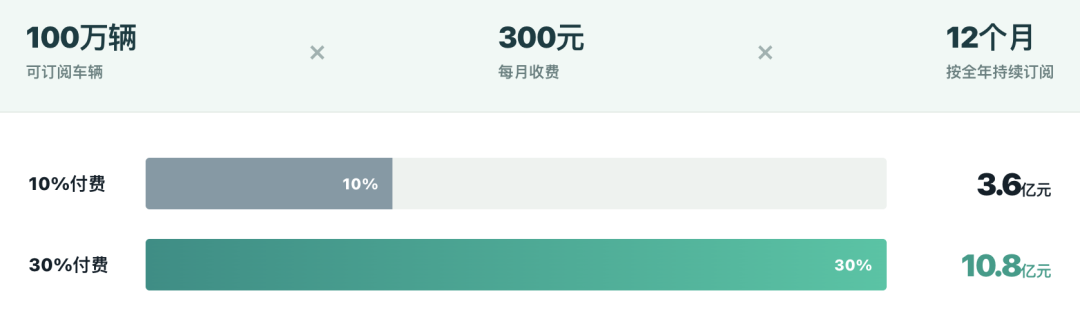
Assuming a certain automaker has 1 million subscribable vehicles, charging 300 yuan per month:
◎ If only 10% of owners subscribe long-term, the annual software revenue is 360 million yuan.
◎ If the payment rate increases to 30%, revenue reaches 1.08 billion yuan.
This does not yet account for software research and development, cloud training, operation, and after-sales costs. Software revenue depends on continuous usage rates, renewal rates, and the prices users are willing to accept. The words "advanced intelligent driving" on a configuration list cannot directly translate into revenue.
NIO was an early adopter of the NOP+ monthly subscription model, providing a sample for exploring intelligent driving pricing in the Chinese market.
This model now faces a more direct test: when competitors include more and more functions as selling points for whole vehicles, why should owners still pay separately?
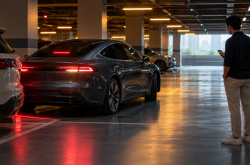
Consumers won't feel they're getting their money's worth just because a system uses world models when they frequently take over in congested traffic, the vehicle hesitates during lane changes, or can't find available parking spaces in parking lots.
Conversely, if commuting routes can be reliably used almost every day, long-distance driving doesn't require constant corrections, and parking processes are predictable, with system updates genuinely handling previously problematic scenarios, users have reasons to renew their subscriptions.
Basic safety capabilities such as automatic emergency braking, collision warnings, and necessary driver monitoring should be integrated into the vehicle's overall safety configuration and regulatory compliance costs, rather than reducing basic safety guarantees for those who haven't purchased software packages.
What can form differentiated pricing are convenience experiences beyond basic configurations, continuously upgradable scenario coverage, and service capabilities.

Safety guarantees are the ticket to enter the market, while advanced experiences have the opportunity to become software commodities. In the future, three concurrent business paths may exist domestically.
◎ Mass-market models will continue to bundle common Level 2 functions into the vehicle price, gaining sales through overall product competitiveness.
◎ Mid- to high-end models will charge software fees through highly reliable urban navigation, parking, and continuous scenario experiences.
◎ Automakers can also convert part of the value of intelligent driving into insurance partnerships, fleet operations, and service revenues.
Users may not be willing to pay monthly for an algorithm name, but they may be willing to pay for the daily saved energy, fewer surprises, and more stable experiences.
Without safety data but only usage experiences, systems struggle to build habits; without safety evidence but only experience demonstrations, users dare not use them long-term.
Insufficient usage frequencies lead to low payment rates; insufficient payment scales make it harder to recover the costs of continuous iteration.

Summary
The first half of China's intelligent driving was about popularization.
In the second half, both automakers and consumers know that someone has to pay.
Does using this function reduce the probability of accidents for consumers? Is driving easier every day? What exactly do I get for spending several hundred yuan more each month?
Automakers need to make the numbers add up.
-
![]()
Why Should Car Owners Be Held Accountable When the Self-Parking System Fails?
-
![]()
The Second Half of Intelligent Driving: Automakers Must Prove Safety and Then Get Users to Pay
-
![]()
The ultimate intelligence of a car is to ensure the safety of its occupants.
-
![]()
Post-2000s Beauty Product Manager Issues Apology; He Xiaopeng Embraces Being Labeled an 'Old Fogey.' Should Car Buyers Purchase MONA to Prove Their Youth?
-
![]()
Alibaba Cloud and Volcano Engine Compete in Automotive Cloud Market
-
![]()
“After Testing K3.1 Pro Overnight, It Seems Kimi Is Truly Advancing Towards Embodied AI”, “K3.1 Pro, Speed, Task Execution, Allowance, Embodied AI”
-
![]()
BYD Registers Decline in Six Models, Xiaomi Undergoes Leadership Shuffle! Comprehensive Review of BEV Sales Rankings from January to September
-
![]()
DeepSeek’s Product Department Entrusted to a Quantitative Trader