【Electrical Equipment】China Railway Chang’an Heavy Industry Supplies Electric Dump Truck Fleet and Complementary Charging Infrastructure to Ethiopia
 10/27 2026
 387
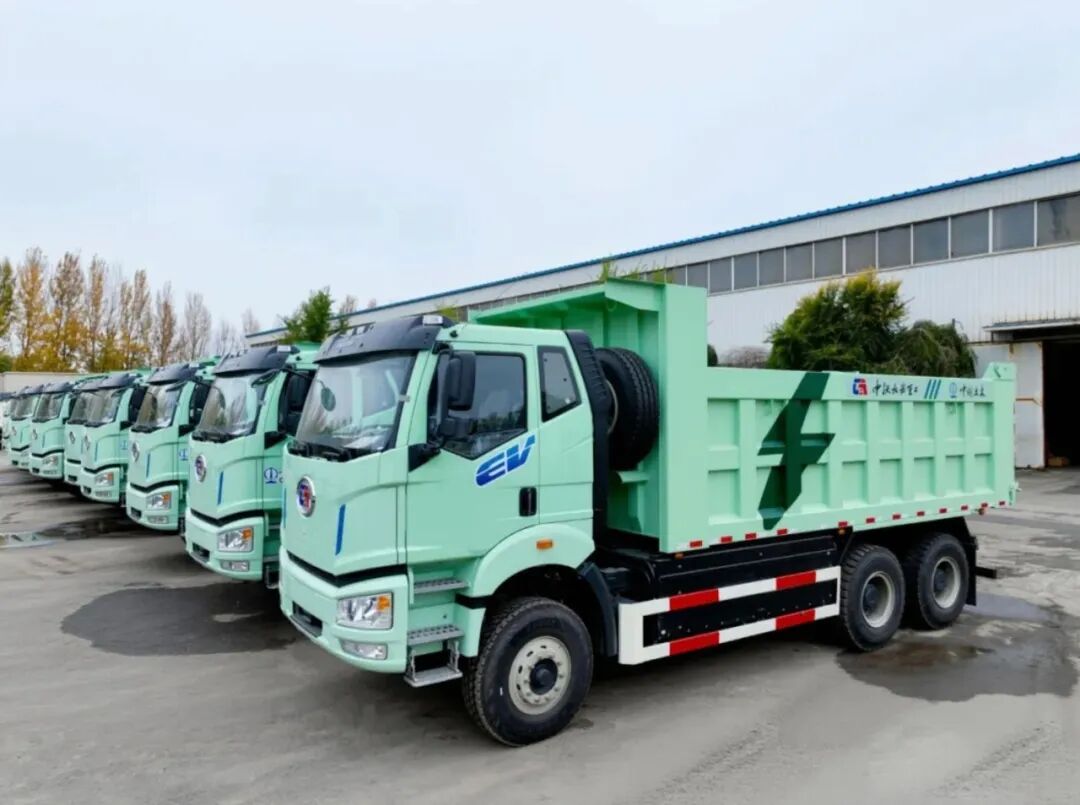
Recently, a fleet of 40 independently developed electric dump trucks, accompanied by 8 supporting high-power charging stations, was dispatched from Qingdao Port by China Railway Chang’an Heavy Industry. This subsidiary of China Railway 20th Bureau Group, headquartered in Shaanxi, is set to deploy these vehicles for earthmoving and material transportation tasks in Ethiopia’s ongoing highway project.
These vehicles have been tailored specifically for overseas markets, boasting a range exceeding 200 kilometers and the capability for 60-minute rapid charging. They come equipped with enhanced multi-function steering wheels, four-way imaging systems, and electric hydraulic lifting mechanisms. Optimizations have been made in terms of load-bearing capacity, power, steering, and braking systems to better suit mining and short-distance engineering applications. As a key player in China’s electric wide-body dump truck sector, Chang’an Heavy Industry offers four distinct technical routes for its 95-ton to 135-ton models: pure electric, battery swap, hybrid, and autonomous driving. By July 2026, the cumulative sales of these models had surpassed 300 units, with operations spanning over ten open-pit mines across Hebei, Xinjiang, and Guangdong. The company has also previously exported to 18 countries, including Angola, Serbia, Uzbekistan, and the UAE.
A particularly noteworthy aspect of this shipment is the inclusion of eight high-power charging stations alongside the vehicles. This underscores a holistic delivery approach that prioritizes fleet operations, energy replenishment, and uninterrupted work over the mere delivery of standalone vehicles. Given the often weak or non-existent public grid access at African construction sites, energy replenishment systems assume a critical role in ensuring sustained operations, arguably even more so than the vehicles themselves. Chinese construction machinery companies have responded by developing a range of energy solutions tailored for overseas markets, including mobile fast-charging stations, battery swapping systems, off-grid microgrids, and hybrid range extenders. Integrated photovoltaic-storage-charging microgrids have found particular popularity in remote mining areas.
From an industry standpoint, the export of electric construction machinery is entering a phase of rapid growth. In the first half of 2026, exports of electric loaders reached 1,643 units (a year-on-year increase of 172%), while electric excavator exports totaled 135 units (up 60.7% YoY). Africa and Latin America are emerging as new growth frontiers, with African exports surging by 51.7% YoY in the first five months—approximately 75% of the demand for excavators stemming from mining operations.
Ethiopia’s market is undergoing a swift electrification process. The country currently spends over $4 billion annually on fuel imports, placing significant strain on its foreign exchange reserves. With hydroelectric projects like the Grand Ethiopian Renaissance Dam (GERD) providing electricity at rates around $0.10 per kWh or even lower, electrification presents a clear cost advantage. In May, 50 new energy heavy trucks manufactured by SINOTRUK were delivered to Ethiopia’s Bishoftu International Airport project, accompanied by 19 charging stations and offering a range of 220 kilometers.
For China Railway Chang’an Heavy Industry, the significance of this export lies in its ability to transfer domestically proven electric transportation solutions to African construction sites. The company already possesses a wealth of operational data in China regarding heavy-load downhill energy recovery, dynamic strategy control, and autonomous driving dispatch. The replicability of this experience under Africa’s challenging operating conditions—characterized by high temperatures, weak grid infrastructure, and long-distance travel—will determine whether its overseas electric equipment can transition from pilot projects to large-scale deployments.
-
[Insight] The airbag control unit (ACU) is a core component of automotive passive safety systems, with numerous market participants in China.
-
![]()
Grassroots Actors, the First Casualties of AI | Wave Trends
-
Anthropic's Nasdaq Rush: The AI Wealth Creation Narrative Faces Reality Check
-
![]()
Another Surge in Prices to Blame! Mid-Range Smartphones in 2026 Fall Short: Telephoto Cameras Vanish, Main Cameras Degrade
-
![]()
Can AI-Generated Actors Outshine Human Stars? Hollywood is Deeply Split
-
China’s AI is Dominating: Token Usage Hits 48% of Global Total, 4.5 Times That of the U.S.?
-
![]()
Doubao and GPT Compete for FDE Roles with Million-Dollar Salaries: What Makes This 'Most Valuable Work Badge' So Expensive?
-
China Manufactures 35.8% of Global Automobiles, Outpacing the Combined Output of the U.S., Japan, India, Germany, and South Korea!