Volkswagen in China: Far More Than Just "in China, for China"
 10/30 2026
 509
In the 42 years since it first entered China, Volkswagen has rolled out one generation after another of locally developed models. But this is the first time the company has made "technology" the central theme, focusing squarely on showcasing the R&D capabilities of its Chinese team in areas such as platforms, architectures, software and assisted driving.
On October 28, Volkswagen Group held its first China Tech Day in Hefei and officially unveiled the VEGA technology matrix. At the same time, Volkswagen announced that its China business is shifting comprehensively from "in China, for China" to "deeply rooted in China, winning together globally." This shift marks that the value Volkswagen has built up in China is extending beyond production scale and market sales into local R&D, engineering validation and vehicle technology integration.
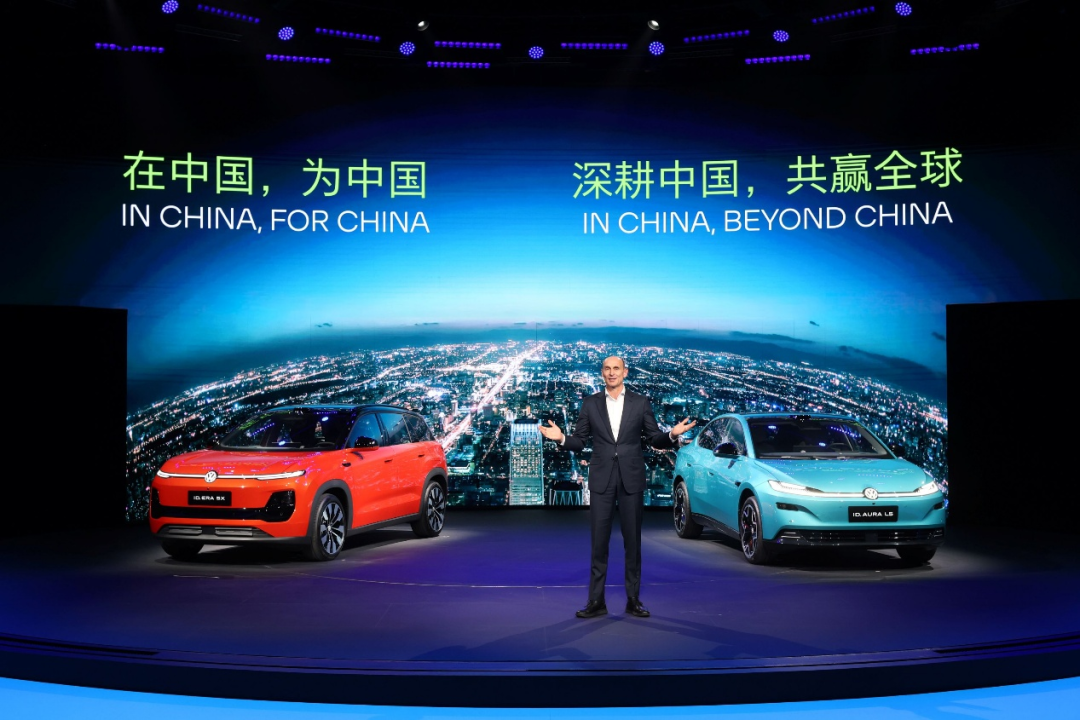
The point of this launch is not simply to introduce a handful of new technologies, but to bring platforms, electronic and electrical architectures, software and assisted driving into an interconnected development system. Volkswagen Group CEO Oliver Blume said that China is becoming an important innovation and technology hub for the Group, and that Volkswagen will drive intelligent, electrified technologies and new-generation products developed in China to go global.
VEGA Is More Than a Technology Launch
At its first China Tech Day, the company focused on showcasing two vehicle platforms, one electronic and electrical architecture and one assisted driving system. Viewed merely as several isolated technologies, it would be difficult to grasp the point of this launch.
These technologies are now unified under the VEGA technology matrix. Volkswagen hopes to improve technology reuse efficiency through synergy among platforms, architectures and assisted driving, providing a common technical foundation for the development of different models.
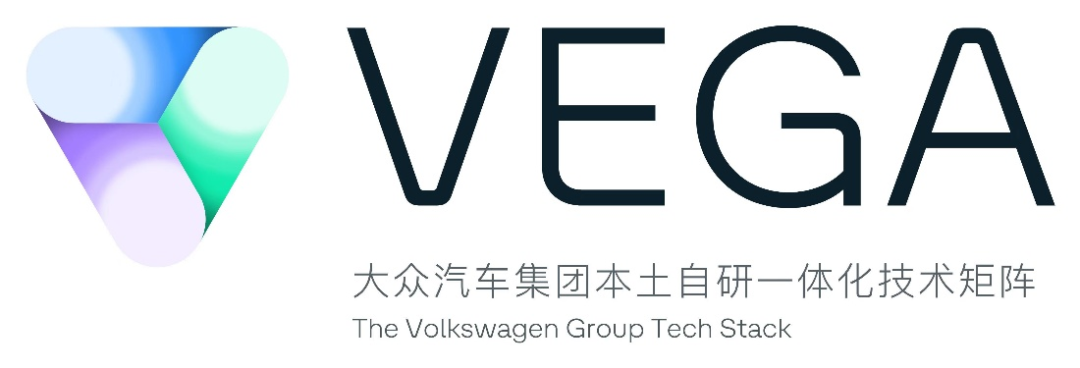
Ralf Brandstätter, Chairman and CEO of Volkswagen Group China, said that the VEGA technology matrix demonstrates Volkswagen's ability to independently develop, integrate and continuously iterate core technologies in China. He believes this system successfully combines the "development speed" required by the Chinese market with Volkswagen's own "scale advantage."
First, the vehicle platforms. The CMP platform, aimed at the A-segment mainstream market, supports both battery-electric and plug-in hybrid powertrains, while the CSP platform, aimed at full-size and flagship models, supports both battery-electric and range-extended powertrains. Both platforms were developed locally by Volkswagen in China and are integrated with the CEA electronic and electrical architecture.
Platforms provide the foundation for model development. CMP and CSP cover different segments and powertrain forms, which also means the Chinese team's work is no longer limited to localized adjustments for a single model, but has begun developing multiple follow-on products around the platforms.
CEA is responsible for the vehicle's electronic and electrical system. It integrates some vehicle control functions into a central computing platform and zone controllers, providing a unified technical foundation for digital cockpits, assisted driving and vehicle software upgrades. CEA began mass production at the end of 2025, has already been applied to five locally produced Volkswagen brand battery-electric models, and is planned to further cover plug-in hybrid and combustion-engine models by 2027.
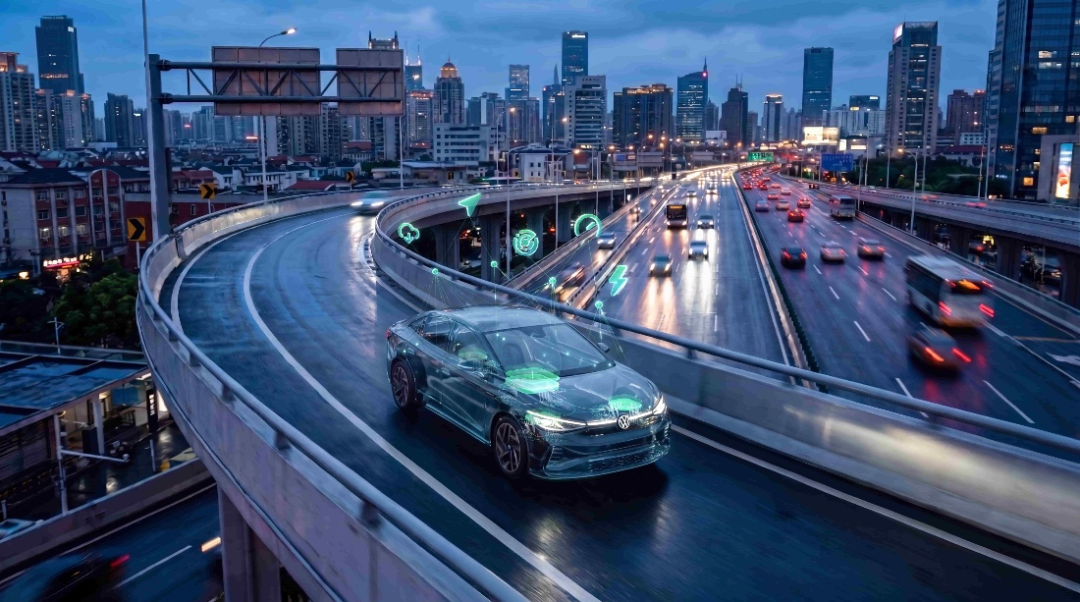
In terms of assisted driving, the HS8 combined assisted driving system developed by CARIZON, Volkswagen China's local intelligent driving team, covers urban and highway navigation-assisted driving as well as full-scenario parking. Volkswagen plans to equip it on seven electrified products from its three vehicle joint ventures within 2026.
The three correspond to different levels of vehicle development. VEGA brings them into the same technology matrix, with the focus on reducing duplicate development among different technology modules and creating conditions for subsequent models to reuse existing results. For example, the integration of platforms and the electronic and electrical architecture helps reduce the workload of repeatedly building underlying systems for different models. However, specific models still need to be adapted according to hardware configurations, regulatory requirements and market demands.
At present, the platforms, architectures and assisted driving systems covered by VEGA have successively entered mass production or installation planning. Volkswagen calls it an integrated technology matrix independently developed in China and says it is the only foreign automaker in the Chinese market with such a technology matrix. This is Volkswagen's positioning of its own technology layout, and its actual competitiveness still needs to be observed in light of subsequent product performance.
What supports this huge R&D system is Volkswagen Group Technology Co., Ltd. (VCTC) in Hefei. The center has about 3,000 Chinese technical experts and more than 100 laboratories, with full-process R&D capabilities from concept development to mass production, and is Volkswagen's largest and most functionally complete R&D base outside Germany.
From vehicle platforms to electronic and electrical architectures and then to assisted driving, VEGA presents the core technologies that Volkswagen China is currently able to develop and integrate. To keep these technologies entering more models, R&D processes, software tools and engineering validation also need to work together.
Faster R&D Relies on More Than Just AI
At the VCTC R&D center, a software problem now takes about "the time for a cup of coffee" from discovery to fix and release. Two years ago, that cycle was two weeks.
Figures released by Volkswagen further demonstrate this efficiency change: it took 18 months for CEA from development start to mass production; based on the new architecture, the vehicle development cycle can be shortened by about 30%; and in some software development stages, testing work that originally took two to three days can be compressed to two to three hours.
These figures correspond to different stages. The shortened development cycle is related to vehicle architecture and development processes; the acceleration of software testing and issue handling is related to the application of technologies such as AI toolchains.
First, CEA has changed the way software and hardware collaborate in vehicle development. In traditional development processes, there is often a sequential dependency among hardware, software and vehicle validation; if one stage is not completed, subsequent work may have to wait. Through software-hardware decoupling, the new software-defined vehicle development process based on CEA allows software, hardware and vehicle validation to proceed in parallel, reducing waiting between different stages.
Volkswagen says that new vehicle development based on CEA is expected to be completed within two years. The efficiency improvement comes not only from faster individual tasks but also from reuse of the underlying architecture. As the unified architecture is applied to more models, subsequent development can build on existing technologies rather than rebuilding the entire underlying system for each new vehicle.
Second, the AI toolchain C-Brain has changed how some software development work is handled. Volkswagen has introduced AI into engineering solution design, code generation, testing and issue diagnosis, seeking to shorten the time from discovering a problem to completing modifications and validation.
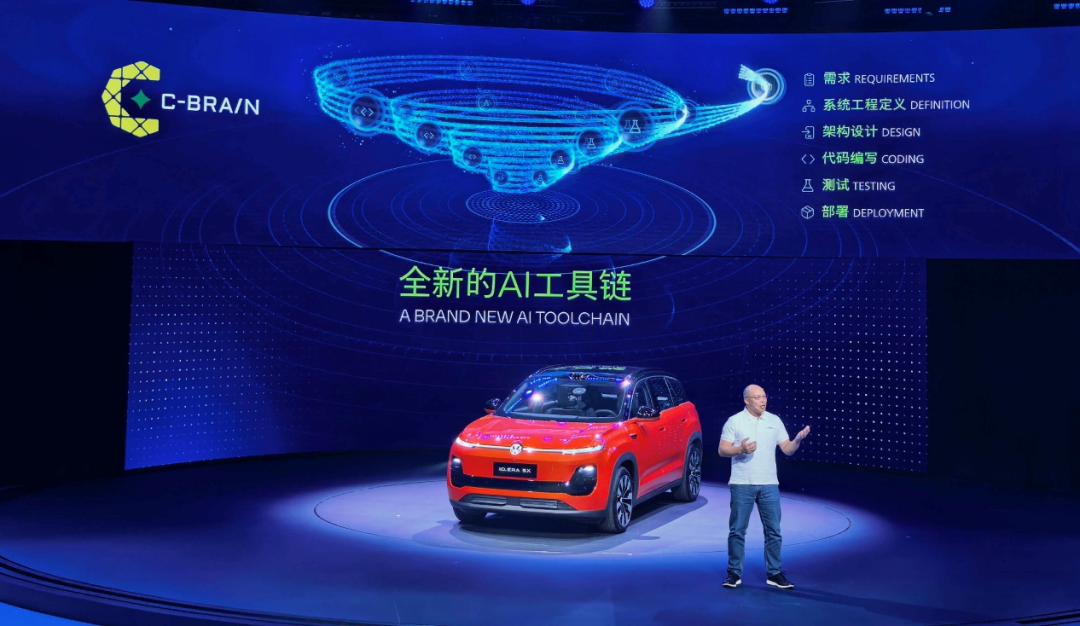
Han Sanchu, Executive Vice President of Volkswagen Group China, Chief Architect of CEA and CEO of CARIAD China, introduced that testing time for some software functions has been shortened from two to three days to two to three hours; in specific issue-handling processes, from problem localization and fixing to version release, what used to require about two weeks of collaboration among multiple teams can now be shortened to 20 minutes.
These two sets of figures do not mean that all software testing and issue handling can achieve the same efficiency, but they show that AI has entered specific R&D processes, and its role is not limited to generating code. For some repetitive testing and troubleshooting work, shorter processing time means teams can validate modifications faster and move on to the next round of development.
Han Sanchu believes that C-Brain is driving software R&D toward a more industrialized approach. For automotive products, as software functions continue to increase, R&D teams must both improve development efficiency and ensure stable collaboration among different software and hardware systems. The actual value of AI tools will ultimately depend on their application effects in specific tasks and whether testing and validation can keep pace with development speed.
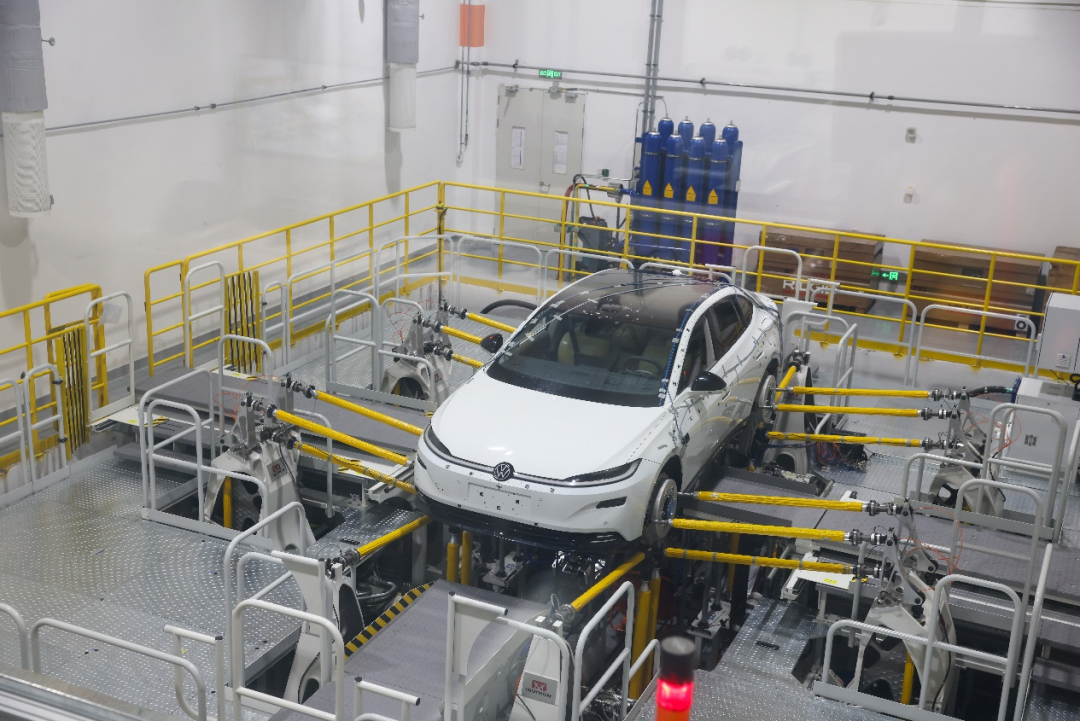
There is another constraint that cannot be bypassed in faster R&D: engineering validation. Through the Super Cycle engineering validation system, Volkswagen organizes work including material analysis, component testing, vehicle system validation and extreme environment testing. The 24K long-stroke full-vehicle road simulator deployed in Hefei can reproduce road loads equivalent to 15 years and 300,000 kilometers of driving in about 10 weeks, used to test the durability of components and complete vehicles.
Validation work is not concentrated only in Hefei. The FAW-Volkswagen Nong'an Proving Ground has a high-speed oval that can be used to validate vehicle stability at speeds of up to 250 km/h; the SAIC Volkswagen Safety Test Center conducts tests such as rollover, spiral flip and sand side rollover. These facilities are distributed in different locations and together form Volkswagen's engineering validation network in China.
A shortened development cycle does not mean engineering validation can be omitted. CEA provides the foundation for parallel development and technology reuse, C-Brain helps compress the time consumed in some software development stages, and engineering validation is responsible for checking product performance in durability, safety and other aspects. The three solve different problems and jointly affect whether R&D results can enter mass production.
CEA's role is not limited to new vehicle development. The unified electronic and electrical architecture provides the foundation for software upgrades and function optimization after vehicle delivery. Han Sanchu said that delivery of a new model is no longer the end point of technological evolution, but a new starting point for the vehicle to continue evolving throughout its lifecycle. For Volkswagen, building the R&D system concerns both the speed of new vehicle development and continuous maintenance and upgrades after products are launched.
From Vehicle Exports to Technology Going Global
As the strategy advances toward "deeply rooted in China, winning together globally," Volkswagen's arrangements from China for overseas markets involve two levels: first, expanding overseas sales of models produced in China; second, applying technology solutions developed locally in China to overseas models. The former extends China's manufacturing and production system, while the latter further tests whether China's R&D capabilities can enter Volkswagen Group's product development system for other markets.
The first path has already unfolded. Currently, Volkswagen and Jetta brand models produced in China have been exported to the Middle East, Uzbekistan, Kazakhstan and sub-Saharan Africa. Volkswagen plans to further expand to Mexico, Egypt and Vietnam by the end of 2026, and gradually cover ASEAN and South American markets.
The second path is in the planning stage. Volkswagen plans to take the lead in introducing China-developed technologies to the South American market before 2030, with the CMP platform and CEA architecture providing the technical foundation for local new-generation new energy, combustion-engine and hybrid models, and later plans to expand to markets such as South Africa.
This does not mean that technologies developed in China can be directly copied overseas. Han Sanchu emphasized that core platform capabilities can remain consistent, but different regions differ in regulatory requirements, digital ecosystems, supply chain systems and user preferences. Maintaining the commonality of the underlying architecture while completing upper-layer application and local function adaptation is an important condition for whether the relevant technologies can be implemented in overseas models.
South America is listed as the first region to introduce China-developed technologies. This arrangement is expected to allow Volkswagen to apply the development efficiency and cost control experience accumulated in the Chinese market to new model development in other markets. However, whether the relevant technologies can be translated into competitiveness of local products still depends on model positioning, cost control and local supply chain coordination, and needs to be tested after the first batch of overseas models is launched.
From CEA starting mass production at the end of 2025 to the plan to introduce China-developed technologies to South America before 2030, Volkswagen is trying to apply local R&D results to other Group markets. Whether the technology solutions can adapt to local regulations, supply chains and user needs still awaits testing after overseas models are launched.
After 42 Years, from "Adapting to China" to "Co-creation by China and Germany"
The day before the Tech Day, German President Steinmeier test-rode a Volkswagen ID. AURA T6 equipped with the HS8 assisted driving system in Hefei. On the test track, he handed driving tasks to the system and also experienced one-tap automatic parking via smartphone.
A test drive showcases intelligent driving technology. But viewed against Volkswagen's 42-year history in China, it also signals another shift: the Chinese team is moving from "adapting to Volkswagen's products" toward participating in the development of Volkswagen's core technologies.
From platforms and electrical/electronic architectures to assisted driving, the R&D work undertaken by the Chinese team continues to push into core vehicle domains. Volkswagen has also begun planning to use China-developed technologies in overseas models. This means China's value to Volkswagen is extending beyond its role as a key production and sales market into technology development and product innovation.
This does not mean a simple swap of R&D roles between China and Germany. The Chinese team has built up experience in development speed, digital innovation, and software-hardware integration, while the German R&D system brings long-established engineering expertise, quality standards, and global regulatory know-how. How the two sides combine these strengths will determine whether China's R&D results can truly go global.
Forty-two years ago, China's auto industry needed Volkswagen's technology and standardized industrial system; 42 years later, Volkswagen needs China's intelligent innovation capabilities and development efficiency. What has changed is the roles each side plays in the cooperation; what remains unchanged is the need to create value together. "Co-creation by China and Germany" going global is precisely an extension of this shift.
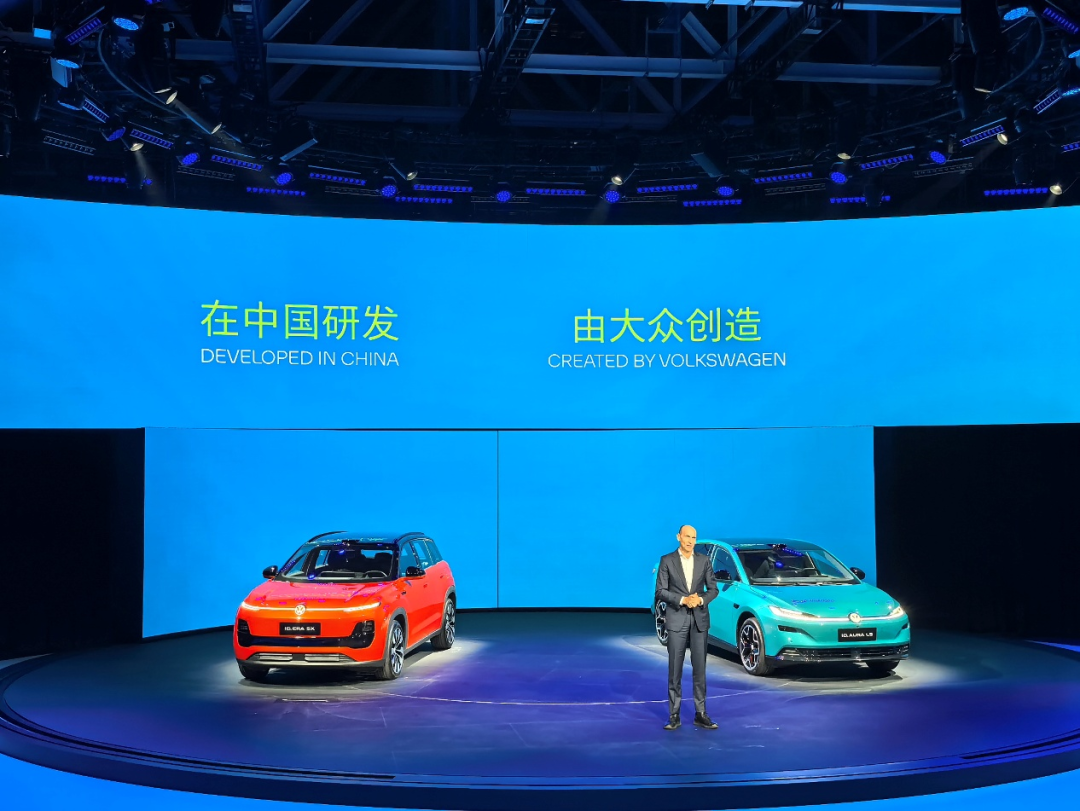

Image: from the internet
Article: Auto Review
Layout: Auto Review
-
![]()
When Every Company Dons the AI "Hat"
-
![]()
Toy Giant ZURU Moves China HQ to Shenzhen's China Resources Tower with 30,000 sqm Lease
-
![]()
SDD Spec-Driven Development Tutorial — The More Features You Add, the More AI Starts "Making Things Up"
-
![]()
Xpeng MONA's Three Models Overlap in Price Range of 119,800 to 176,800 Yuan, Beginning to Compete with Themselves
-
![]()
Avatr Cancels Launch Event: Carmakers Spend 8.12 Million Yuan on a Grand Show, Yet 87% of New Cars Peak in Their First Month
-
![]()
XPeng Robotaxi Cleared for Full-Area Demonstration Operations in Guangzhou — the Real Test Has Only Just Begun
-
![]()
BYD Enters the Million-Employee Era: The World's Largest Automaker by Headcount
-
![]()
Tesla's Q3 Earnings: Profits Halved, Yet the Stock Rose—Here's Why