XPeng Robotaxi Cleared for Full-Area Demonstration Operations in Guangzhou — the Real Test Has Only Just Begun
 10/30 2026
 368
On October 26, XPeng announced that it had received approval for Guangzhou's intelligent connected vehicle application demonstration operations qualification, allowing it to conduct L4 Robotaxi demonstration operations across the entire city of Guangzhou.
This marks another step for XPeng's mobility arm as it moves from road testing and technical validation toward validation in real operations. Yet there is still some distance to go before the business model can be proven viable.
For Robotaxi, whether the autonomous driving system can complete the driving task is only the foundation. The question that must be answered in the next stage is how to organize vehicles, algorithms, dispatching platforms, and mobility services into a system that can operate continuously.
01 Being able to drive a car on the road does not mean being able to run a mobility service
In the autonomous driving R&D stage, evaluating a vehicle's performance generally focuses on whether it can recognize traffic participants, handle complex intersections, complete route planning, and maintain stable operation across different road environments.
Once a company enters the Robotaxi demonstration operations stage, the evaluation dimensions are no longer limited to driving itself.
After a passenger places an order, the system needs to determine which nearby vehicles are available and select an appropriate vehicle to complete the dispatch.
After a vehicle accepts an order, it must plan a route to the pickup point and, upon arrival, handle issues such as passenger positioning, last-minute changes of location, and curbside stopping restrictions.
After the trip ends, the vehicle also needs to enter the next round of service or go for charging, cleaning, and maintenance.
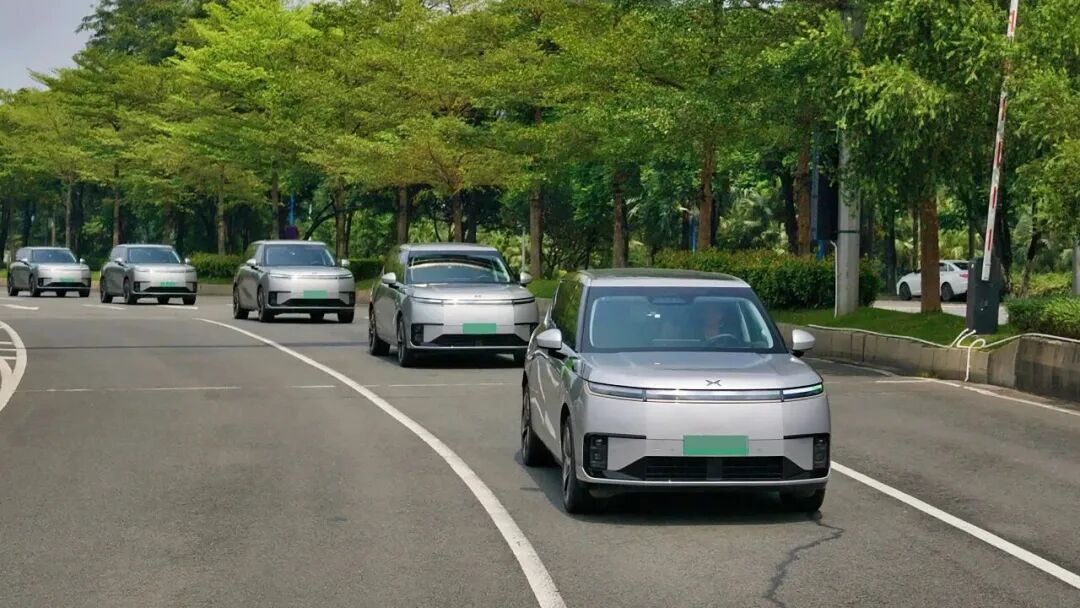
Image source: Internet
These tasks may appear to have little to do with autonomous driving algorithms, but in reality they affect the operational efficiency of the entire system.
For example, a vehicle being able to accurately reach the road where the passenger is located does not mean it can necessarily stop at a suitable pickup location. If stopping is not allowed on that road, or there is a distance between the passenger's location and the vehicle's actual available stopping point, the system needs to re-coordinate the pickup point.
If similar problems occur frequently, even if the driving process itself is smooth enough, it will increase passenger waiting time and vehicle empty mileage.
For another example, after a vehicle completes an order, there may be no new demand nearby. Should the system let the vehicle stay in place and wait, or dispatch it to an area with more concentrated demand?
Traveling to a popular area consumes time and battery, and the vehicle may still fail to receive an order after arriving; staying in place may miss travel demand in other areas.
This is no longer just a route planning issue, but a coordination issue among autonomous driving capabilities, real-time orders, traffic conditions, and fleet dispatching.
XPeng's approval for demonstration operations this time is precisely to further validate links such as order response, vehicle dispatching, passenger pickup and drop-off, and exception handling in real travel scenarios.
The company also stated that it will continue to accumulate experience in vehicle utilization, dispatching efficiency, and fleet management based on actual operational needs.
This also shows that the R&D object of Robotaxi is expanding from a car capable of autonomous driving to a system that needs to provide services continuously.
02 How many effective services can be completed in a day is also a hard indicator
The business performance of Robotaxi largely depends on whether vehicles can be effectively utilized.
For ordinary private cars, how many kilometers a vehicle travels per day is not the indicator users care about most. But for Robotaxi, which needs to continuously provide mobility services, vehicle availability time, order density, empty-driving ratio, and single-service duration all affect operational efficiency.
Suppose a vehicle can complete the driving task, but each time it receives an order it takes a long time to reach the passenger's location, or after an order ends it needs to drive a long distance empty before receiving the next order; then the time actually used for carrying passengers will decrease.
Even if the autonomous driving system itself performs well, the vehicle may not be able to generate enough effective services.
Conversely, higher order density does not necessarily automatically lead to better business results.
If a large number of orders are concentrated in specific periods, the fleet needs to prepare enough vehicles during peak hours; during periods of lower demand, some vehicles may remain idle for a long time.
Continuous adjustments are needed among vehicle deployment scale, service coverage, and order distribution.
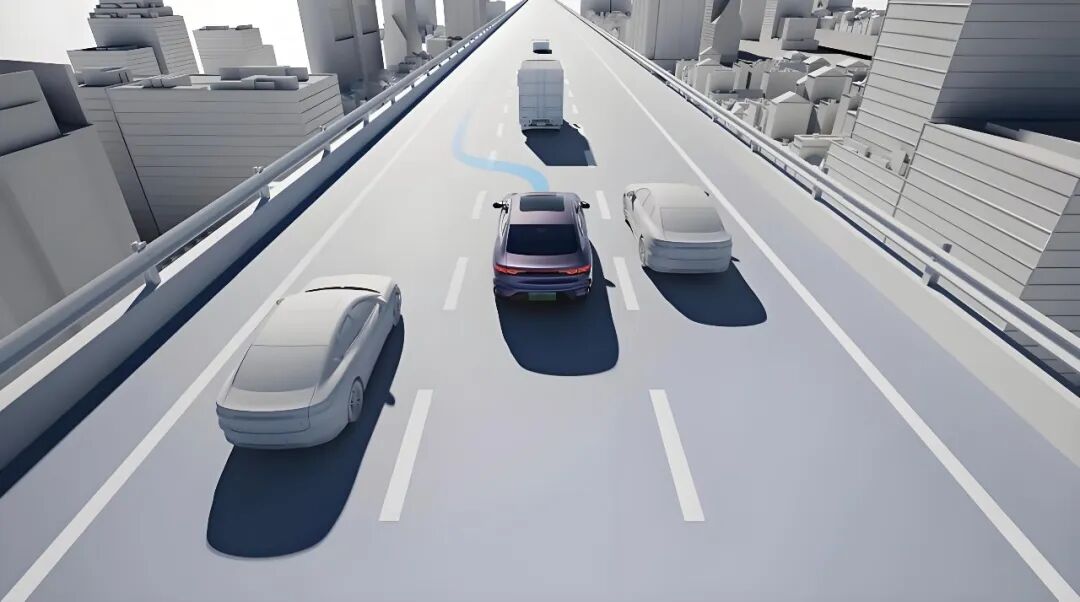
Image source: Internet
Therefore, the Robotaxi operating system must not only solve where to drive next, but also address multiple issues such as which vehicle should serve which order, where vehicles should wait, and when to charge or exit operations.
Vehicle utilization also cannot be simply understood as vehicles constantly driving on the road.
For Robotaxi, continuous operations also involve battery charging, tire and braking system maintenance, interior cleaning, troubleshooting, and situations where vehicles temporarily exit service due to software updates or safety inspections.
If only autonomous driving mileage is considered without accounting for passenger-carrying mileage, empty-driving mileage, order completion rate, and vehicle availability time, it will be difficult to accurately judge the operational efficiency of the fleet.
This is actually the significance of demonstration operations: it allows vehicles to operate under real demand, gradually obtain data that laboratory testing and closed scenarios cannot fully provide, and then adjust dispatching strategies, service processes, and vehicle configuration accordingly.
Of course, the data accumulated during the demonstration operations stage does not mean commercialization has already succeeded.
It only proves that the company has begun to have the conditions to validate these issues in a real service environment; the extent to which operational efficiency can ultimately be improved still depends on subsequent actual performance.
03 Exceptions beyond autonomous driving are the real test
Robotaxi operations cannot be designed only according to ideal processes.
On real roads, passengers may temporarily change pickup locations, construction or temporary traffic control may appear near the destination, and vehicles may also encounter sensor abnormalities, road closures, or inability to continue driving.
Even if the autonomous driving system can identify a problem, it does not mean it can independently complete all subsequent handling.
For example, after a vehicle discovers that the road ahead is temporarily closed, it can try to re-plan the route; but if feasible routes are restricted, or the vehicle cannot determine the upcoming traffic conditions, a clear handling process is needed.
That is, under what conditions the system should continue driving, under what circumstances it should stop safely, and how to notify the operations platform and passengers all need to be designed in advance.
This involves the operational design domain of the autonomous driving system, fault diagnosis, minimal risk condition handling, and coordination between the vehicle and remote support systems.

Image source: Internet
Here it is also necessary to distinguish between remote assistance and remote driving.
Remote personnel can provide information, assist judgment, or coordinate on-site handling within the authorized scope, but this does not mean they can remotely control the vehicle without restrictions, nor does it mean remote personnel can replace the onboard system to complete all dynamic driving tasks.
Guangzhou's current management measures actually impose requirements on demonstration activities such as safety management, real-time remote monitoring, event recording and analysis, and emergency handling, and stipulate that vehicles should be equipped with safety officers as required, and under prescribed conditions safety officers may be provided remotely. Specific operations must still comply with the approved operating conditions and safety requirements.
Therefore, the safety capability of Robotaxi is reflected not only in whether the vehicle can handle complex traffic scenarios, but also in whether the system can promptly identify risks, take appropriate measures, and incorporate problems into a traceable handling process when encountering situations beyond its capability.
For engineering teams, this means extending the validation scope from driving algorithms to onboard software, cloud dispatching, communication links, remote support, operations and maintenance systems, and emergency mechanisms.
No matter how strong a single vehicle's capability is, if these links lack reliable connections, the entire service system may still encounter problems.
04 XPeng's business model still needs operational validation
XPeng Robotaxi is not actually XPeng directly undertaking large-scale offline fleet operations as the main entity, but rather hoping to play the role of technology provider and ecosystem enabler, providing partners with vehicle platforms, autonomous driving software, and AI capabilities, and generating revenue through hardware sales, technical services, and commission sharing.
This route is clearly different from the model of operating a large-scale fleet itself.
If a company operates the fleet itself, it needs to directly bear vehicle asset investment, daily maintenance, dispatching management, passenger services, and the construction of local operating systems.
It can more directly grasp service processes and operational data, but it also needs to invest substantial resources to build localized operating capabilities.
The technology provider model productizes vehicles and autonomous driving technology, and partners conduct business based on local travel demand, service networks, and operational resources.
This can potentially reduce the burden on companies directly managing large numbers of vehicles and also help promote mature solutions to more regions.
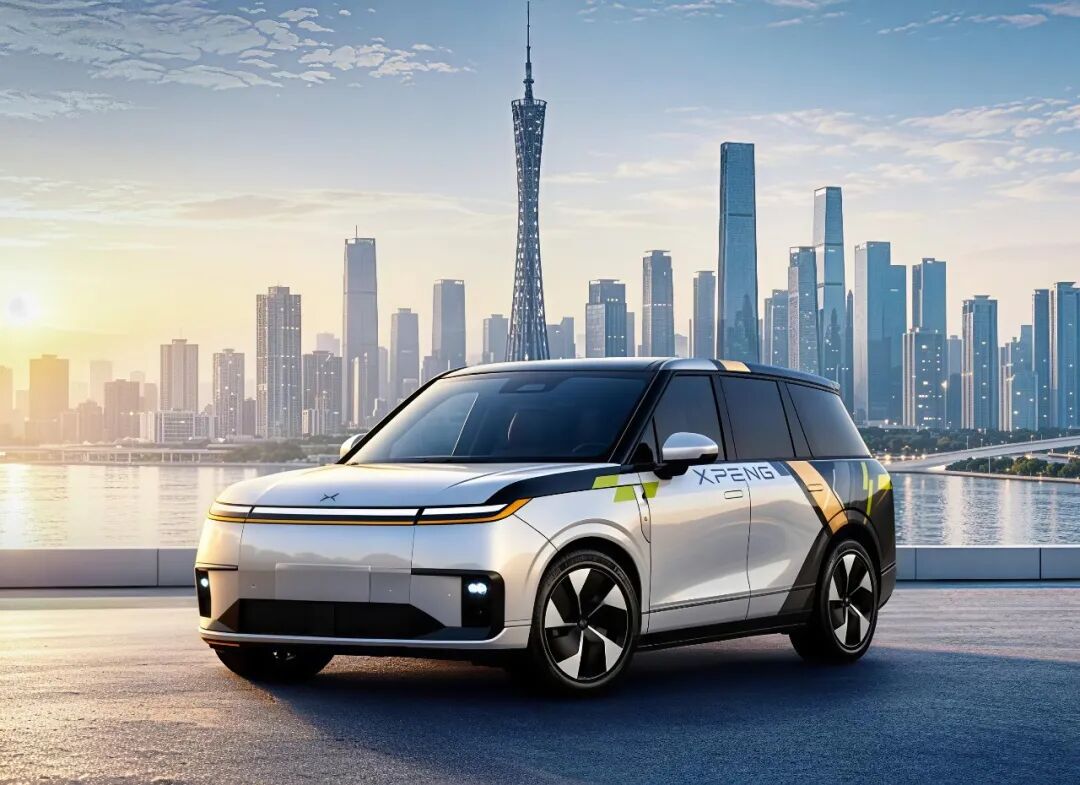
Image source: Internet
However, technology output does not mean operational problems will automatically disappear.
Road conditions, traffic rules, passenger demand, parking environments, and mobility platforms may differ across cities.
A system validated in Guangzhou still needs local adaptation, compliance validation, and service process development after entering other cities.
If entering each city requires a large amount of customized development, the so-called replicable solution may face tests of cost and delivery efficiency.
Whether partners are willing to purchase, whether they can operate stably after purchase, and whether technical service revenue can cover continuous R&D investment all need to be validated by real business.
Therefore, the significance of Guangzhou demonstration operations for XPeng is not just adding another Robotaxi deployment city, but also accumulating a basis for subsequently forming standardized products.
Whether vehicles, software, dispatching systems, and operational processes can be integrated into a deliverable, maintainable, and replicable solution will affect how far this business route can go.
05 Final words
XPeng Robotaxi entering full-area demonstration operations in Guangzhou is an important step from technical validation toward real operations.
What is worth paying attention to next is not only whether the vehicle runs smoothly and whether the system can handle complex road conditions, but also whether it can stably complete orders, properly handle exceptions, and continuously improve operational efficiency under real demand.
Technical breakthroughs in L4 autonomous driving are certainly important, but for Robotaxi to become a sustainable mobility service, it cannot only prove that vehicles can drive. It also needs to prove that the entire system can provide services safely and stably, and that this service can be replicated in more regions.
Being able to drive a car on the road is the starting point of Robotaxi; being able to reliably deliver every trip is the question it must answer to move toward scaled operations.
#XPeng #L4AutonomousDriving #Robotaxi
-
![]()
When Every Company Dons the AI "Hat"
-
![]()
Toy Giant ZURU Moves China HQ to Shenzhen's China Resources Tower with 30,000 sqm Lease
-
![]()
SDD Spec-Driven Development Tutorial — The More Features You Add, the More AI Starts "Making Things Up"
-
![]()
Xpeng MONA's Three Models Overlap in Price Range of 119,800 to 176,800 Yuan, Beginning to Compete with Themselves
-
![]()
Avatr Cancels Launch Event: Carmakers Spend 8.12 Million Yuan on a Grand Show, Yet 87% of New Cars Peak in Their First Month
-
![]()
XPeng Robotaxi Cleared for Full-Area Demonstration Operations in Guangzhou — the Real Test Has Only Just Begun
-
![]()
BYD Enters the Million-Employee Era: The World's Largest Automaker by Headcount
-
![]()
Tesla's Q3 Earnings: Profits Halved, Yet the Stock Rose—Here's Why