Tucson Returns Still a Youth, but the Domestic Market Has Changed Completely
 10/30 2026
 507
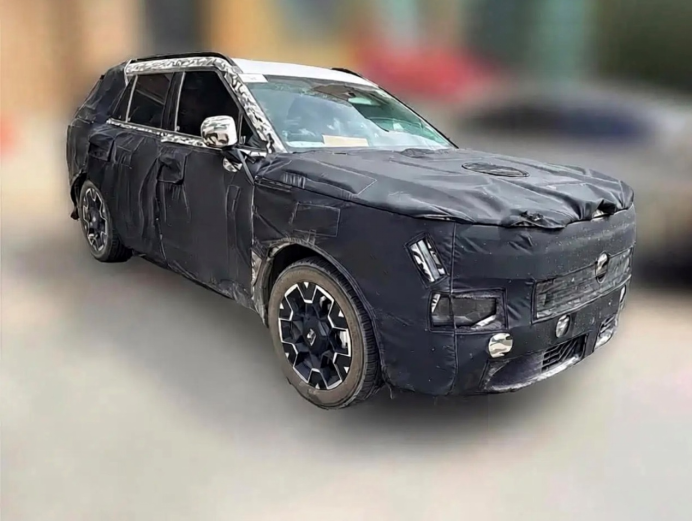
Recently, a set of spy shots of what is suspected to be a Beijing Hyundai all-new Tucson test vehicle was exposed online. According to the normal launch rhythm, the new car will meet the public next year.
It is worth mentioning that the all-new generation Tucson only completed its world premiere at the 2026 Paris Motor Show half a month ago. This shows that the domestic introduction of the all-new generation Tucson is moving very fast.
This also reflects Hyundai Motor's attitude toward the Chinese market.
Over the past few years, Hyundai Motor has long been in a state of standing aloof in the Chinese market, with slow product introduction, hesitation in electrification transformation, and continuously declining brand voice. Only in the past two years has its attitude clearly turned positive. During this year's Beijing Auto Show, Hyundai Motor CEO Munoz explicitly stated that it "will never withdraw from the Chinese market" and announced the launch of the largest product launch plan since entering China.
According to the plan, from 2026 to 2027, Beijing Hyundai will successively launch C-class sedans, B-class SUVs, and C-class SUVs; from 2028 to 2030, it will launch D-class SUVs, MPVs, and sedans, and the Elantra, Tucson, and Custo will all undergo major facelifts. The Ioniq V, positioned as a C-class sedan, has already been launched, and the all-new generation Tucson is very likely to be the all-new B-class SUV in the plan.
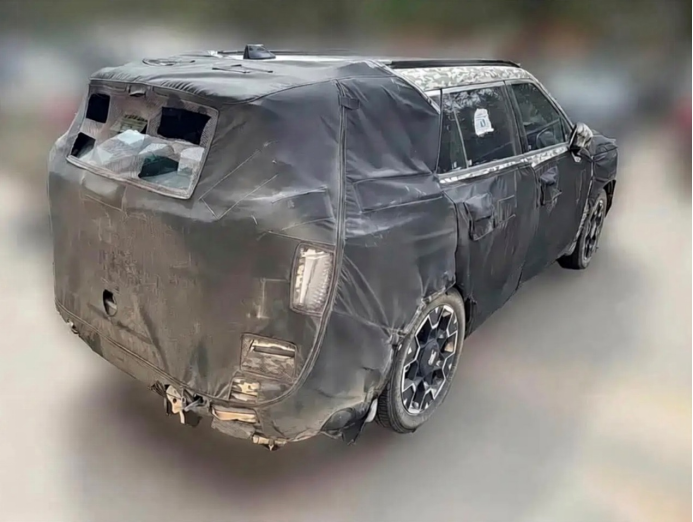
Judging from the spy shots, the domestically produced all-new Tucson follows the design of overseas models, and details such as the overall contour, four pillars, and light clusters are highly consistent with the overseas version. Combined with Hyundai's announced "localized independent decision-making across the entire chain of product definition and R&D iteration," as well as the precedent of the Ioniq V being led by a Chinese team in development and applying Baidu and Doubao dual AI large models and Momenta intelligent driving, localized development of the cockpit system and functional configuration for the domestic Tucson is almost a high-probability event. The all-new Tucson is not only arriving quickly, but will likely also understand Chinese consumers better than any previous Hyundai car. This is Hyundai Motor's sincerity in honoring its commitment through action.
Based on existing information, it is speculated that the all-new Tucson is not only arriving quickly, but will likely also understand Chinese consumers better than any previous Hyundai car. This is Hyundai Motor's sincerity in honoring its commitment through action, and it deserves recognition.
However, a positive posture does not equal optimistic results. The challenges facing the all-new Tucson in the Chinese market are more complex than ever.
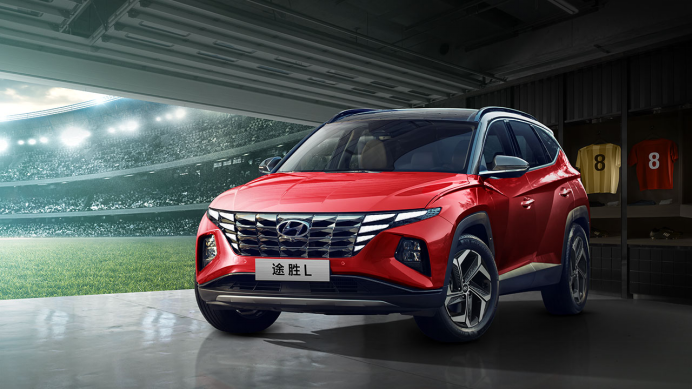
An unavoidable fact is that the Tucson's current performance in the Chinese market is quite sluggish. Public data shows that in September this year, only 654 units of the Tucson L were sold, a year-on-year plunge of 61%. From January to September this year, the Tucson's cumulative sales were only 12,936 units, down 4.6% year-on-year. Since February 2024, the Tucson's monthly sales have been declining continuously and have never exceeded 3,000 units again. In the 100,000 to 200,000 yuan SUV market, where monthly sales of over 10,000 units are common, this figure almost means "not at the table."
It should be noted that the 100,000 to 200,000 yuan SUV segment where the Tucson sits is precisely the red ocean with the fiercest offensive from independent brands. Models such as the BYD Song family, Geely Galaxy, Changan Deepal, and Chery Tiggo have formed systemic advantages in intelligent configuration, electrification options, and cost-effectiveness. At the same time, under the impact of electrification, the market share of traditional fuel vehicles is shrinking day by day, and market favorability is also declining. Many joint venture pillar models continue to see sales decline even when sold at reduced prices.
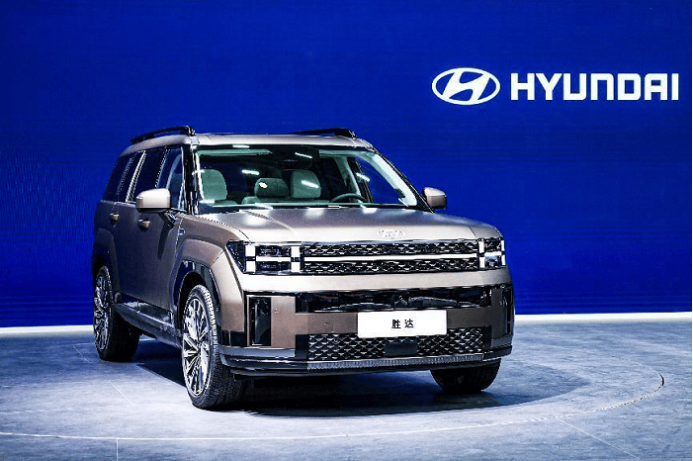
Admittedly, Hyundai Motor and BAIC have jointly increased capital by 8 billion yuan, promoted full-chain localization decisions, and planned an intensive product offensive. These actions show that Hyundai has realized the hard truth that "without investment, there is no presence." But the competition logic in the Chinese market is also changing.
At present, Chinese local brands have moved to the center of the stage, and the presence of overseas brands is noticeably weaker. This is especially true for second-tier joint venture brands such as Beijing Hyundai, whose market presence is even lower. In today's nearly white-hot market competition, how many people still favor Beijing Hyundai and the Tucson has become an unknown. As a result, even if the all-new Tucson's cockpit localization is in place and its configuration is more sincere, it still faces severe challenges.
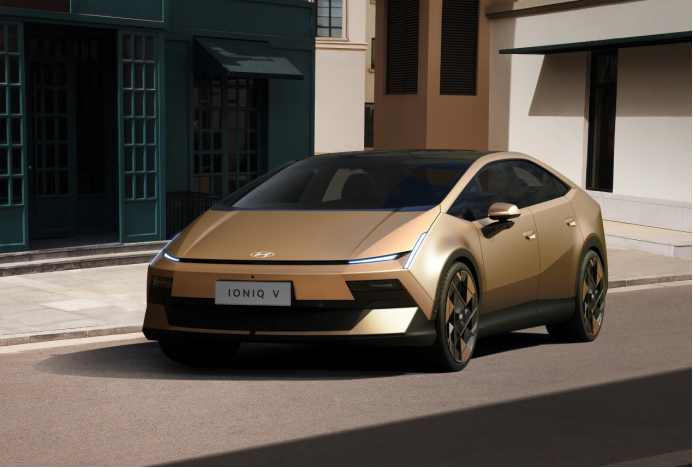
In fact, the market performance of the two all-new models launched by Beijing Hyundai is also difficult to meet expectations. The China-strategic pure electric SUV ELEXIO launched in 2025 had cumulative sales of only 251 units in the first nine months of 2026; the China-strategic model Ioniq V launched this year also had sales of only 558 units in September. Hyundai has already begun localized procurement, has already partnered with CATL and Momenta, and has already launched China-exclusive models, but the market has given almost no positive feedback.
But then again, the ELEXIO, Ioniq V, and the upcoming all-new Elantra and all-new Tucson are returning to Chinese consumers with a brand-new posture. At least, Hyundai has made a positive start. As for the result, time will slowly give the answer.
(Images are from the internet and will be deleted if infringing)
-
![]()
When Every Company Dons the AI "Hat"
-
![]()
Toy Giant ZURU Moves China HQ to Shenzhen's China Resources Tower with 30,000 sqm Lease
-
![]()
SDD Spec-Driven Development Tutorial — The More Features You Add, the More AI Starts "Making Things Up"
-
![]()
Xpeng MONA's Three Models Overlap in Price Range of 119,800 to 176,800 Yuan, Beginning to Compete with Themselves
-
![]()
Avatr Cancels Launch Event: Carmakers Spend 8.12 Million Yuan on a Grand Show, Yet 87% of New Cars Peak in Their First Month
-
![]()
XPeng Robotaxi Cleared for Full-Area Demonstration Operations in Guangzhou — the Real Test Has Only Just Begun
-
![]()
BYD Enters the Million-Employee Era: The World's Largest Automaker by Headcount
-
![]()
Tesla's Q3 Earnings: Profits Halved, Yet the Stock Rose—Here's Why