Mona L05 Launch Party's Youthful Vibe—Where Looks and Smart Driving Dance Together?
 11/02 2026
 573
On October 29 in Nansha, Guangzhou, Xpeng transformed the launch venue for the MONA L05 at the Greater Bay Area Cultural and Sports Center into a party space called "MONA World." Five thousand car owners began filing in at 4 p.m. for games, food stalls, and live bands—and it wasn't until 7 p.m. that the new car finally took the stage.
1. At the Heart of the Youthful Vibe Is "Not Yet Having Settled Terms with Life"
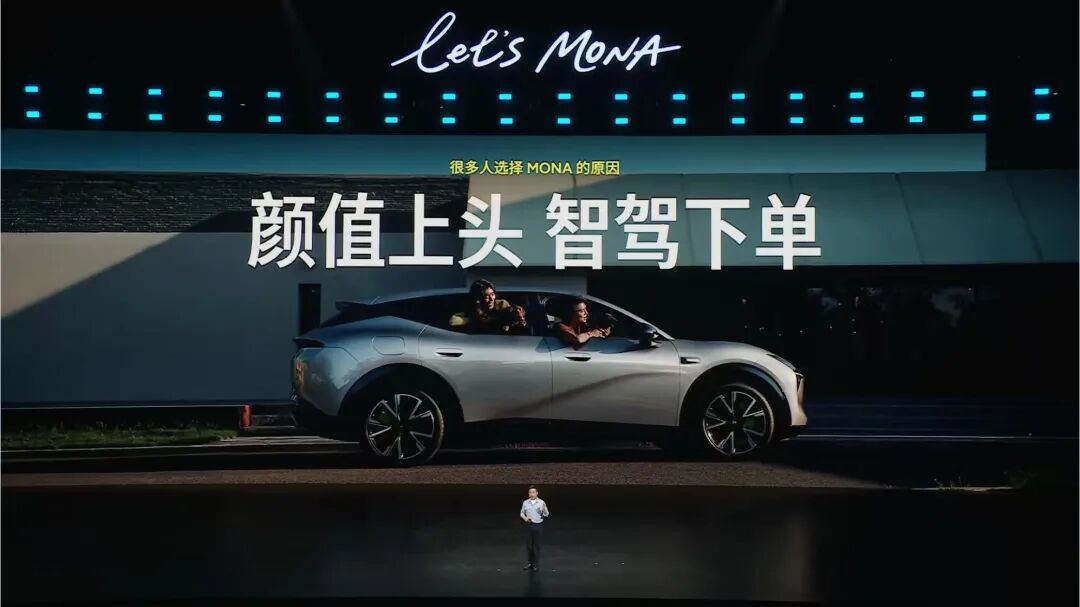
The "youthful vibe" that keeps appearing in official messaging is more than just an adjective. The design was led by Juanma Lopez, former head of exterior design at Ferrari, together with a post-2000s design team, continuing the "Vital Flow" design language: a vehicle length of 4,870mm, height pressed down to 1,636mm, wheels pushed to the four corners for a low-slung, wide-body stance, frameless doors, frameless rearview mirrors, hidden waterlines, and an AGS active grille. A large five-seat SUV of nearly 4.9 meters was coaxed into a coupe-like posture.
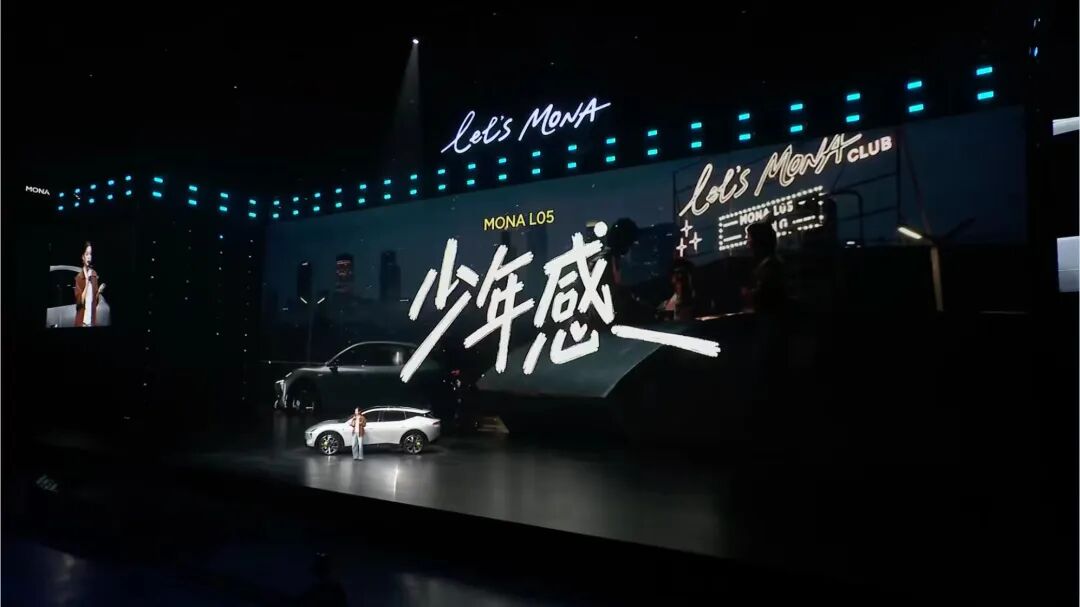
The spiritual core of this youthful vibe isn't youth itself—it's "not yet disciplined." What it rejects is the previous generation of Chinese family cars' "old-guy aesthetic" of boxy styling plus wood-grain and chrome trim—which is also why the product manager sparked controversy at the launch by shouting "reject the old-guy aesthetic." What it sells is an attitude: I haven't yet settled terms with life.
Official guide price: 144,800–176,800 yuan; limited-time price starting at 139,800 yuan. A full 30,000 yuan lower than the presale price.
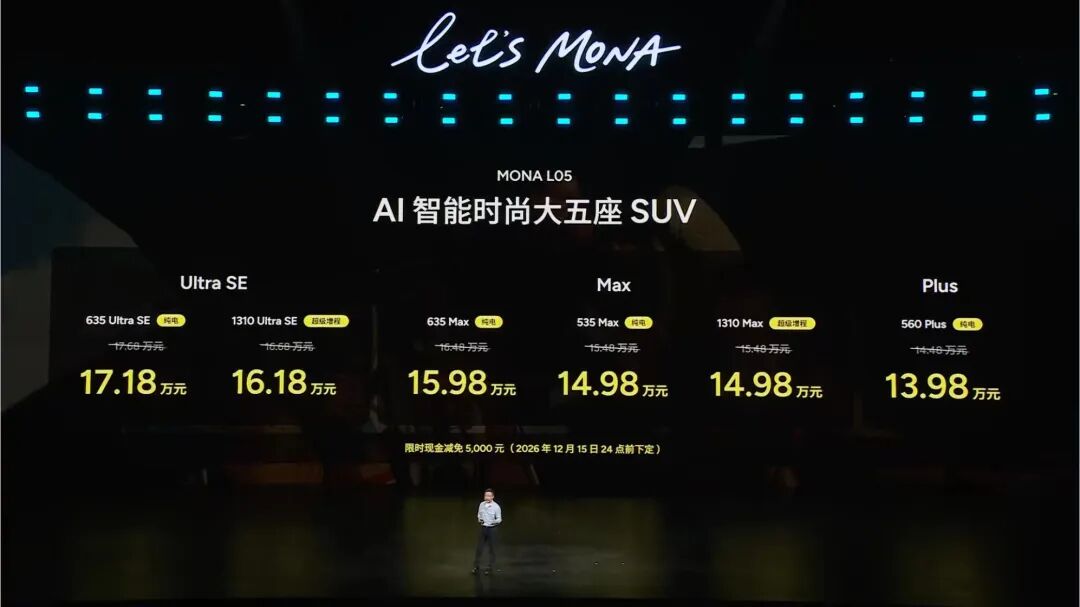
At 139,800 yuan, how does it avoid seeming cheap?
Xpeng's solution is to spend money on the places "you touch every day," rather than on spec-sheet items no one ever sees. Interior soft-touch coverage exceeds 74%, and materials pass OEKO-TEX maternal and infant-grade certification; 256-color waterfall ambient lighting; a zero-gravity passenger seat with 14-point massage; a 17.3-inch central control screen plus a same-size rear eye-protection screen, and 20 speakers. Wheelbase 2,940mm, cabin utilization rate 87%, 102L front trunk, and a 702L rear trunk expandable to 1,913L when folded.
What was cut? The 800V platform (the L05 is 400V), lidar (all versions use pure vision), and front MacPherson suspension. It trades charging specifications and hardware redundancy for touch, visuals, and space.
2. The Music Festival Party Provides Emotion, While Ouyang Nana Is the Trust Anchor
Turning the launch event into an owners' music festival has two effects.
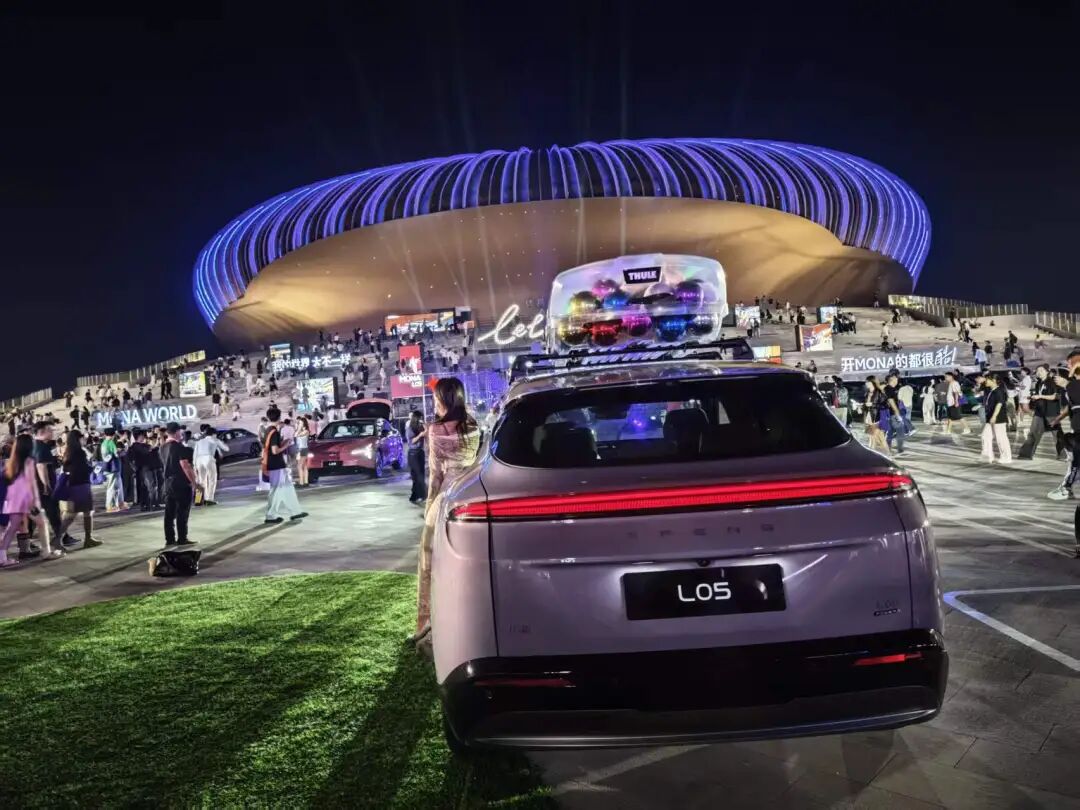
On the surface, it's about conversion efficiency. Car owners bring friends and family, post on Xiaohongshu with topics, and each person can earn up to 4,000 points—5,000 people means 5,000 content nodes. Five thousand near-production cars have already rolled off the line, with same-night allocation at the fastest, and deliveries starting on November 1.
Deeper down, it's about identity confirmation. When buying a 140,000-yuan car, what users fear most is "I can't afford something better." But when you stand among thousands of peers singing along with the band, what you gain is the confirmation that "I belong here." This eliminates the sense of cheapness more than any spec ever could.
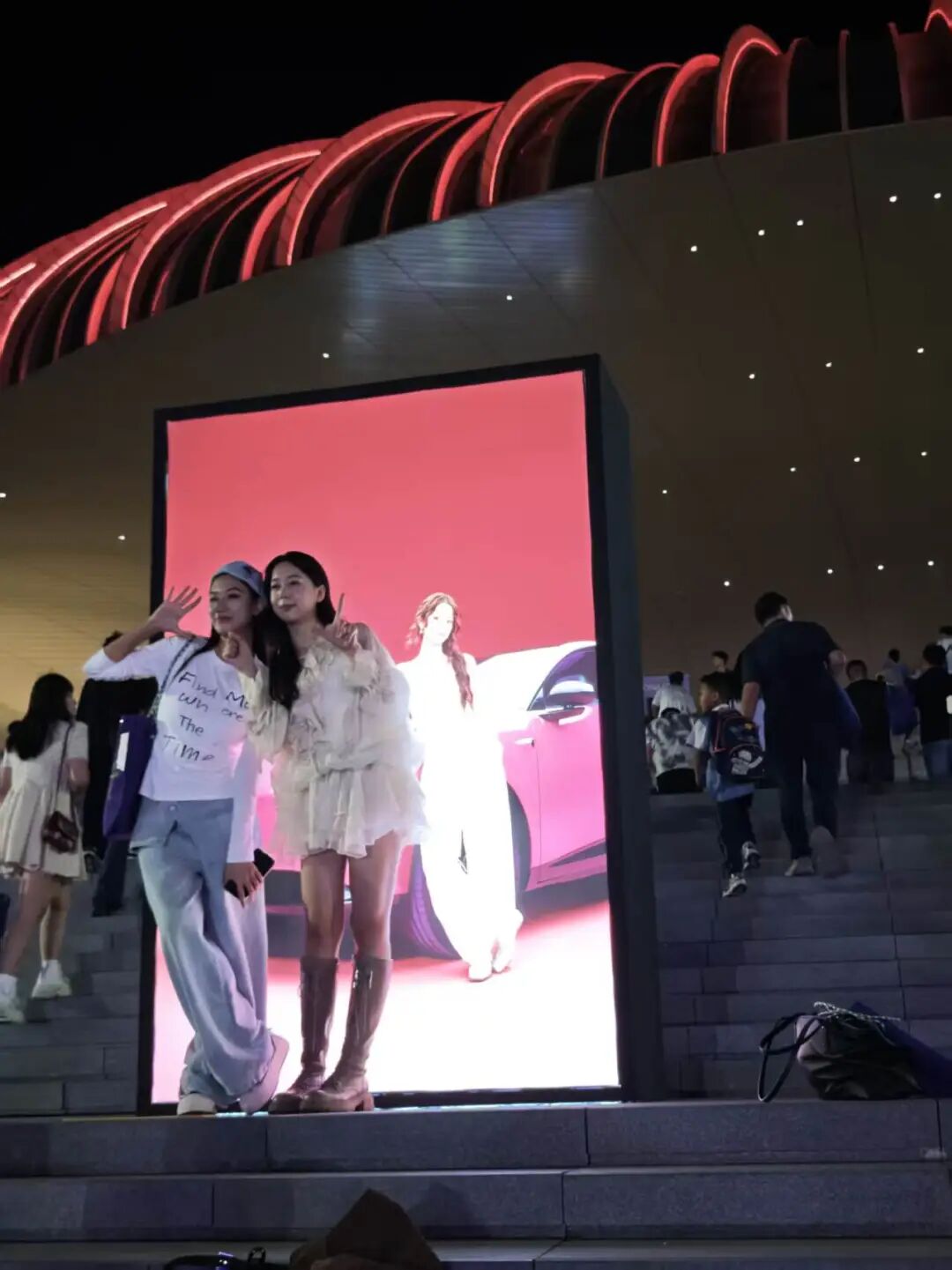
Ouyang Nana is the key to this layer of logic. This is her fourth appearance, but her identity is car owner rather than spokesperson: she bought an M03 Max herself as her first car in life, later purchased an X9, and has driven 10,000 kilometers commuting. She raised 17 improvement suggestions, 11 of which were implemented—the makeup mirror was enlarged 2.7 times and given three-level dimming, a dual-phone holder was added, and narrow-road U-turn assistance was optimized. He Xiaopeng said she "would make a very good product manager if she ever became one."
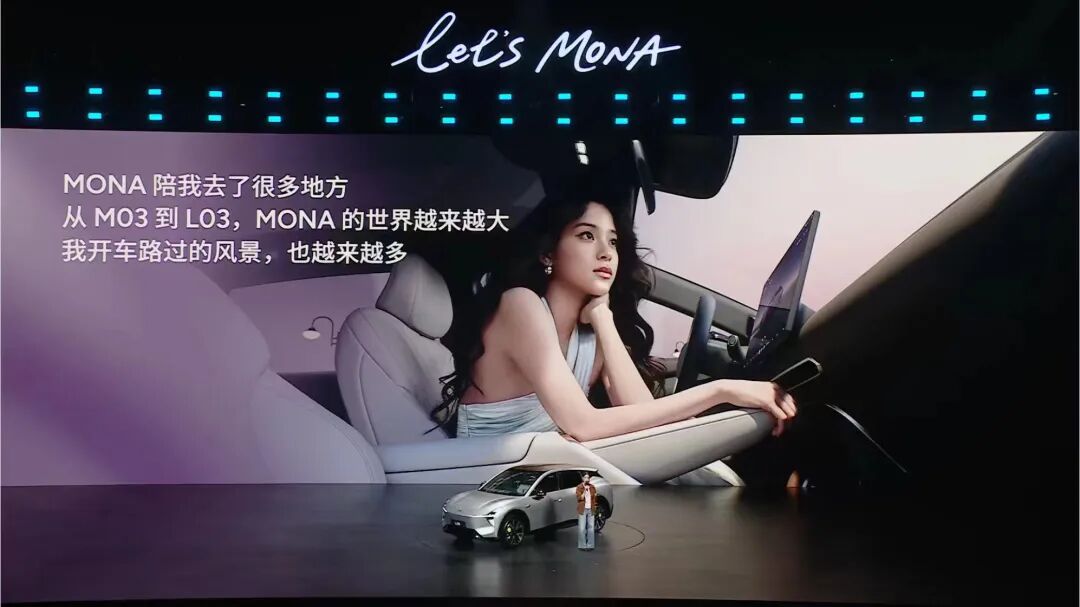
Music solves "we are one of us," while Ouyang Nana solves "she is also one of us." She isn't a celebrity here to read a script, but a user who will be particular about the makeup mirror light not being done well. This is precisely the most genuine point of resonance between music and young people.
3. Behind the 93.21% "Smart Driving" Usage Rate, a Safety Question That Needs a Direct Answer
Xpeng's second-generation VLA report shows: during the May Day holiday, average daily smart driving usage was 93.21%, monthly active rate 96.97%, the proportion of new cars enabled every day in the first week was 97.43%, and assisted driving mileage share exceeded 50% for the first time (50.44%).
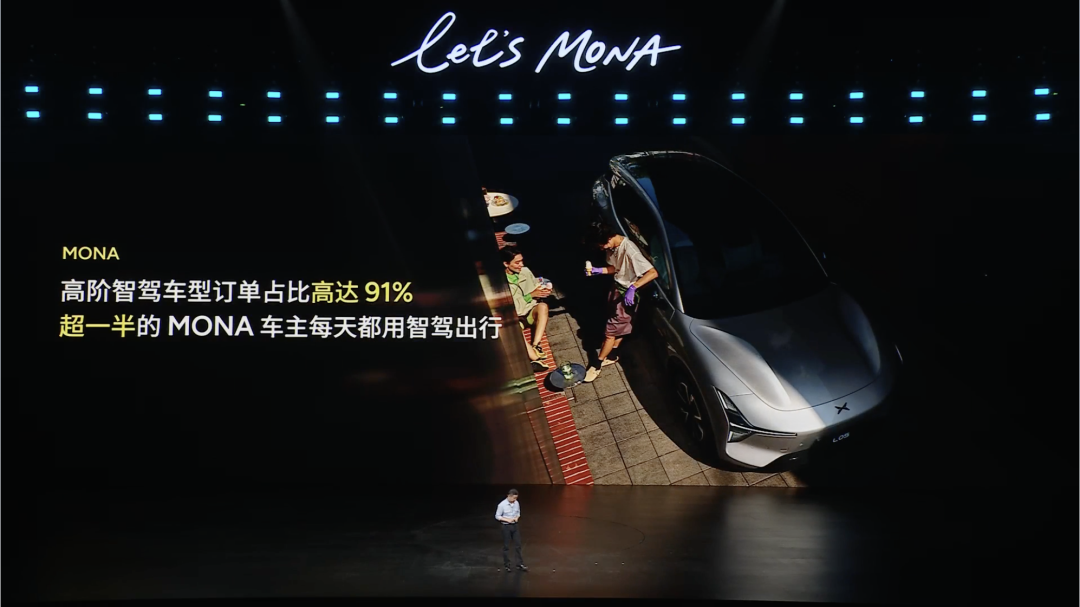
The numbers are real. But they are the numerator—the denominator is "people who already dare to use it."
Zoom out: Jin Yuzhi, CEO of Huawei Yinwang, said that fewer than 10% of users in China have truly used driving assistance; at the same time, over ten years, the number of people taking driving tests has decreased by 43%.
So the core question arises: when a novice driver drives a car with a "90%+ usage rate" from the first day of getting a license and relies long-term on assistance that is only L2, is that safer or less safe?
My judgment is: safer in the short term, more dangerous in the long term, and the danger comes from the one-way loss of ability.
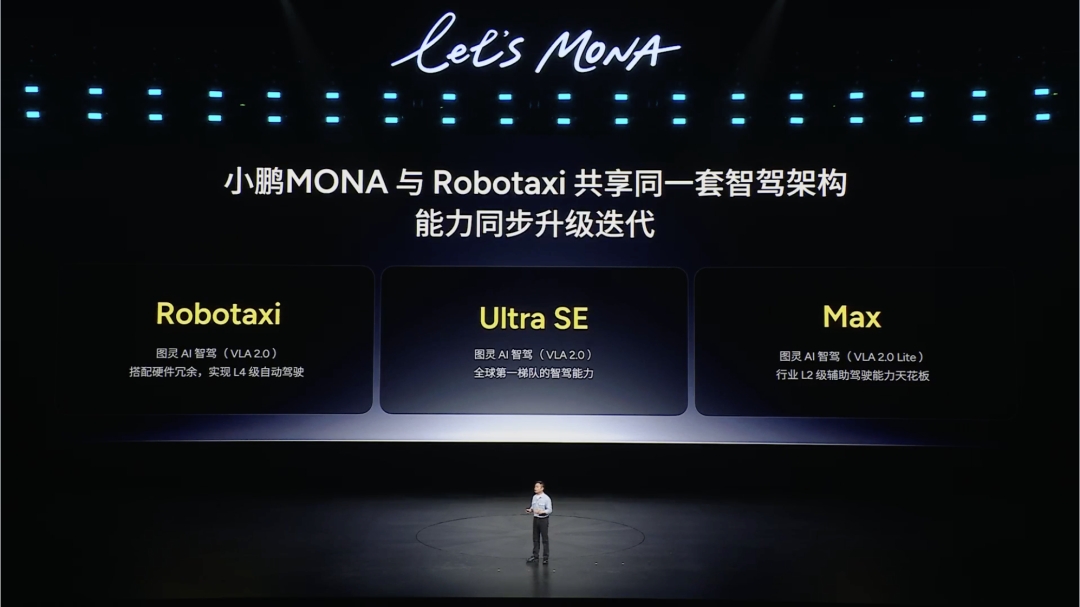
But the essence of L2 is "the human drives, the system assists," and the driver is always the first responsible party. The system behaves like an experienced driver 95% of the time, which creates the illusion that "it is better than me." Takeover ability, however, is a skill that degrades: if you haven't truly handled a complex intersection for three months, when the system suddenly disengages on a stormy night in the fourth month, your reaction may be worse than that of someone who has never used smart driving. More subtle is attention—when the system runs smoothly, the human brain automatically enters "supervisor mode," and humans are precisely bad at monitoring a machine that almost never makes mistakes. This is a classic conclusion of human factors engineering.
The two new national standards in 2027 are aimed precisely at this gap.
GB 47955—2026 (L2, effective January 1, 2027): prompt after 5 seconds of hands-off, warning at 10 seconds, reminder after gaze leaves the road for 5 seconds, and mandatory disablement for at least 30 minutes after multiple violations; vague expressions such as "L2.5/L2.9/L2++" are prohibited; mandatory confirmation of completed safe-use training before first activation; and an equipped tamper-proof smart driving data recording device.
GB 44721—2026 (L3/L4, effective July 1, 2027): under L2 mode the driver bears full responsibility; when L3 is activated the automaker bears primary responsibility; under L4 responsibility is fully transferred to the automaker; L3 must be equipped with takeover capability monitoring, with no fewer than 2 indicators and a judgment cycle of no more than 30 seconds.
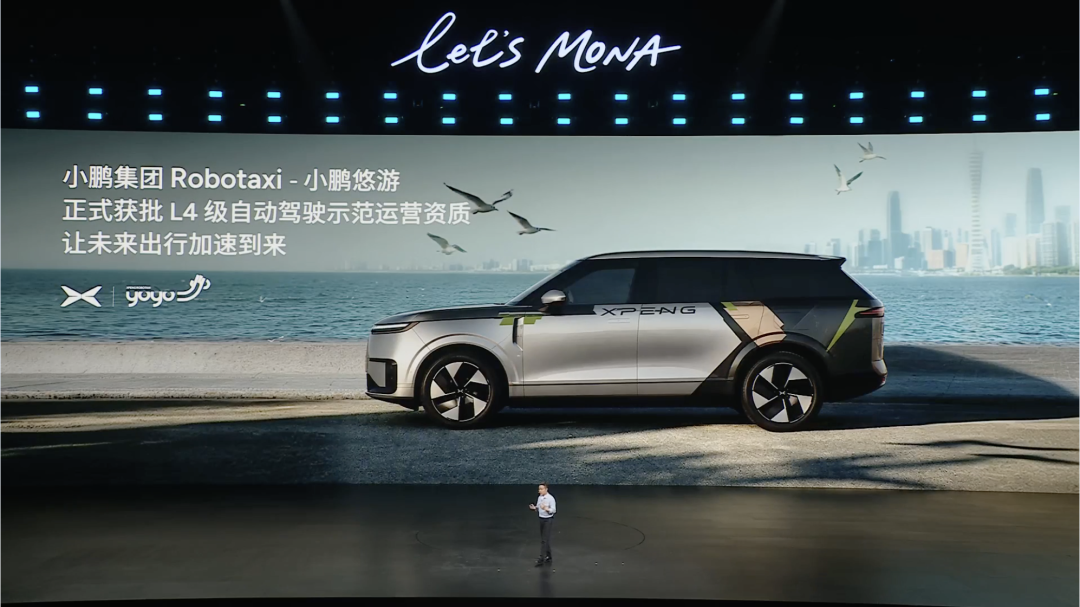
The state has used mandatory standards to acknowledge one thing—automakers' marketing language has already outpaced users' safety awareness. And the "mandatory safety training" item is the most valuable, turning "human-machine co-driving" from a disclaimer into a prerequisite action.
Once the boundary of responsibility is clarified, automakers can no longer sell the imagination of "autonomous driving" under the name of "assisted driving," which will instead force real technological progress.
4. A New Round of Competition, but the Direction Has Changed
The Mona L05 faces extremely dense competition: Deepal S07 (from 159,900 yuan, Huawei Qiankun lidar smart driving, 600 version 3C fast charging in 9 minutes), Leapmotor C10 (from 122,800 yuan, 132,800 yuan with lidar, 800V), BYD Song Ultra DM-i (from 129,900 yuan), Sea Lion 06 EV (from 159,900 yuan), and Hyper S600 (from 179,900 yuan).
Sales of new energy SUVs in the 150,000–180,000 yuan range grew 78.3% year on year, already accounting for 42.1% of the new energy SUV market, with family users accounting for nearly 70%.
But this round of competition is no longer about price; it is about eliminating the "smart driving premium." In the past, high-level smart driving was a privilege of models above 250,000 yuan; the L05 offers 750TOPS plus second-generation VLA Lite in the 169,800-yuan Max version, and 1500TOPS plus the full-blooded VLA in the 191,800-yuan Ultra SE, while also achieving the same price for pure electric and extended range—the only one at this price point. It is turning "whether smart driving is good" from a differentiated selling point into an entry condition.
In terms of sales forecast, the L05 faces a red ocean where family users account for nearly 70% and leading products have already secured stable share, and it must also confront internal cannibalization from its own G6 (from 176,800 yuan, 800V). A rational estimate for steady-state monthly sales is 8,000–12,000 units.
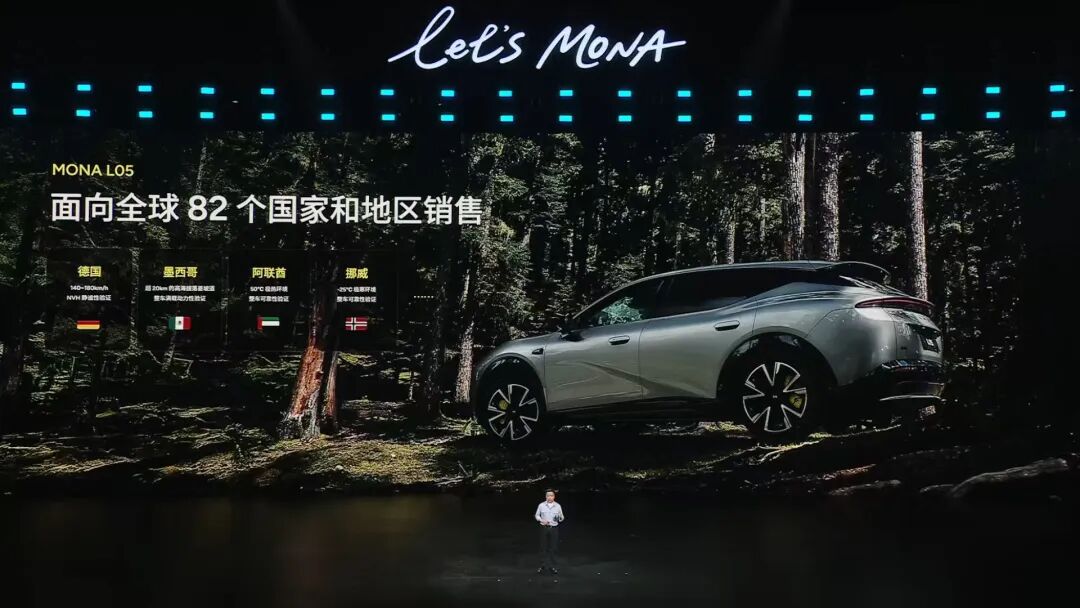
And overseas may be more promising. The L03 began European deliveries in October and has launched in markets including Hong Kong, China, the Philippines, Australia, and Indonesia. MONA's product definition—high looks, large space, same price for pure electric and extended range, and development according to the three major five-star safety standards of China, Europe, and Australia—naturally suits markets with imperfect charging facilities. The extended-range version's fit in Southeast Asia, Australia, and Latin America is likely higher than in China.
Conclusion:
The youthful vibe, music festival, and Ouyang Nana maxed out the L05's buzz on launch day.
But what will determine its success six months later is what those 5,000 young car owners write in forums after taking delivery on launch day.
-
![]()
AI Cannot Cure the CEO's Serious Illness
-
![]()
In the Era of Stock Competition, Why Quality Competition Must Look at Both "How Well It's Built" and "How Long It Lasts"
-
![]()
Kuaishou: The Perennial Runner-Up — Can Kling AI Become Its Second Growth Curve?
-
![]()
Over 6,000 Yuan Profit per Car—Is Geely's Per-Vehicle Profit Inflated?
-
![]()
Kling 4.0 Hands-On Test: Creating an Exhibition Walkthrough Video with Zero On-Camera Talent — How Far Is AI from Delivering a "One-Stop Finished Video"?
-
![]()
AI Code Refactoring in Practice: Assess First, Then Tackle Technical Debt
-
![]()
Fold 5 Times and It Leaks — ¥8,000 Repair Bill: Who Set Up Apple's Foldable Screen Scam?
-
![]()
Xiaomi Spends 1.7 Billion Yuan to De-CATL-ize: Is Lei Jun Content to Be a "Worker" for the Ning King?